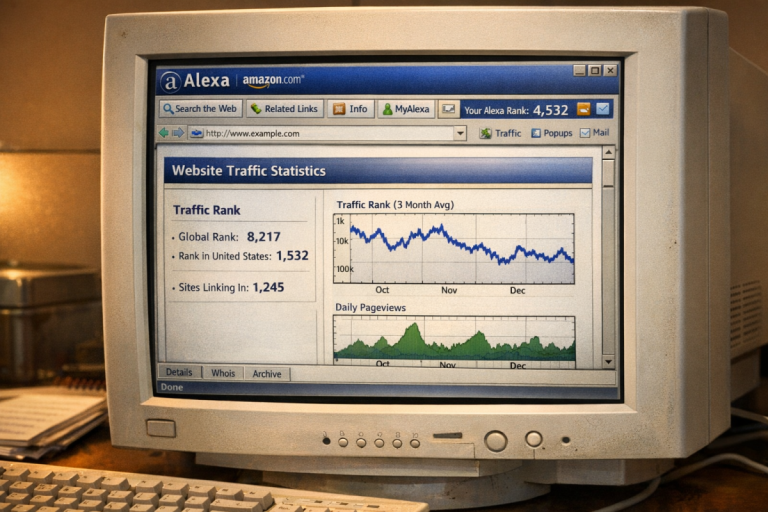
Traffic estimators are pretty useful tools for a certain demographic. Not everyone has need of one, but they come in handy when you're a marketer looking to, say, figure out how much traffic your competitors are getting. You can estimate their traffic and compare it to your own to get a decent idea of how well their marketing strategies are working.
Of course, all of this relies on the traffic estimator working well enough to provide you accurate information. There are a lot of different estimators out there, but for a long time the two biggest options were Alexa and SimilarWeb. However, things have changed significantly since this comparison was first written - so let's get into what's actually relevant in 2026.
Key Takeaways
- Amazon shut down Alexa.com on May 1, 2022, making SimilarWeb the dominant standalone traffic estimation tool available.
- SimilarWeb combines panel data, ISP data, scraped sources, and direct measurement from hundreds of millions of devices globally.
- SimilarWeb can overestimate traffic by 400%+ on average, but lands within 70-130% of actual traffic for roughly 1 in 4 sites.
- Always calibrate SimilarWeb against your own analytics before benchmarking competitors, to avoid misleading apples-to-oranges comparisons.
- SEMrush and Ahrefs include traffic estimation features, potentially offering better value if you already use their SEO toolkits.
What Happened to Alexa?
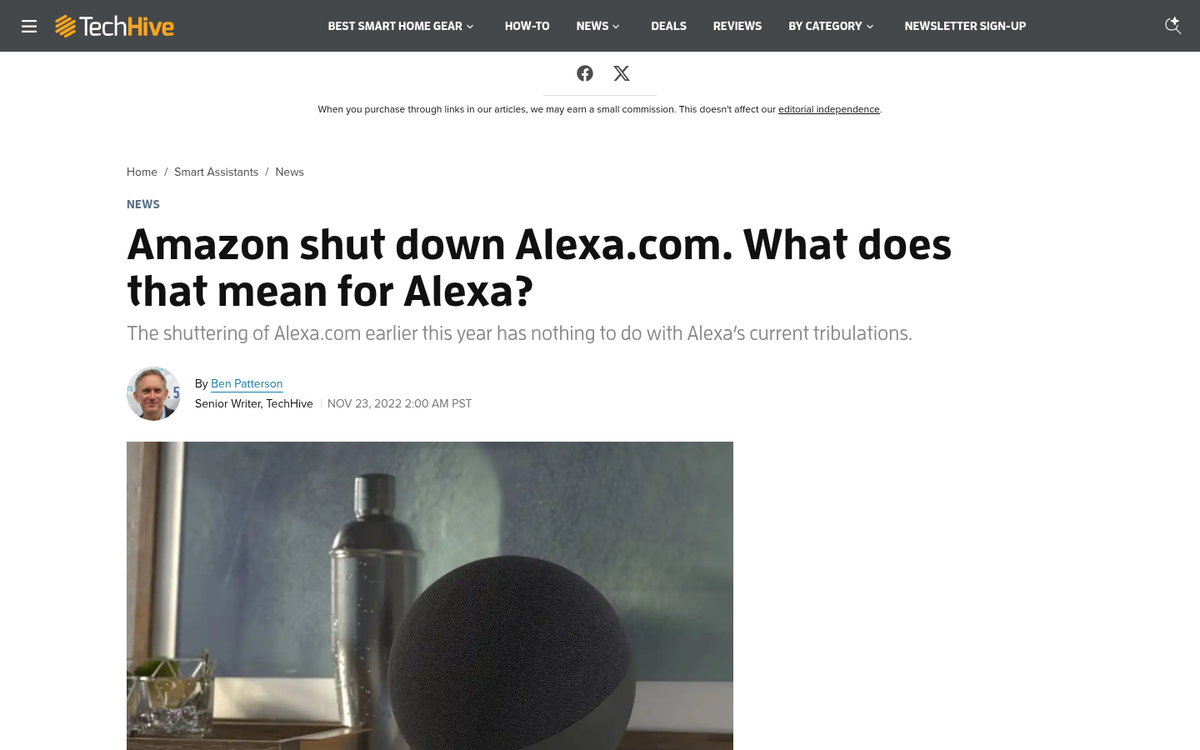
Before we go any further: Amazon shut down Alexa.com on May 1, 2022. That's right - the service is gone. If you've been reading older blog posts comparing Alexa to SimilarWeb, you can stop. Alexa is no longer a viable option, and hasn't been for several years. Amazon made the decision to discontinue the web traffic ranking and analytics service entirely, ending decades of (often questionable) data.
This means the comparison has shifted. SimilarWeb is now the dominant player in the traffic estimation space, with competitors like SEMrush and SparkToro also worth considering depending on your needs. If you're researching whether a high Alexa rank still matters, the answer is now moot - but understanding traffic estimation tools remains as important as ever.
Testing Traffic Estimates
No traffic estimator will be perfect. The only way to see a truly accurate traffic number for any site is to have analytics code running on that site directly. You can see your own traffic within Google Analytics or similar platforms, but you cannot see the traffic on another website without having internal access to their data.
If you want to check how accurate a traffic estimator is, you need to run it on your own site and compare. Here's the process:
- Choose a time frame.
- Determine how much traffic your site received in that time frame, via an analytics platform like Google Analytics 4, Plausible, or Fathom.
- Check SimilarWeb or another traffic estimator to see what they estimate your site traffic to be.
- Compare the data several times over the course of several months as your traffic changes, particularly if a spike happens due to a viral post or marketing push, and check how the estimators account for it.
This may or may not cost you money, depending on the traffic estimator you're using. In fact, accounting for price is pretty important, so we'll discuss that below.
Data Sources

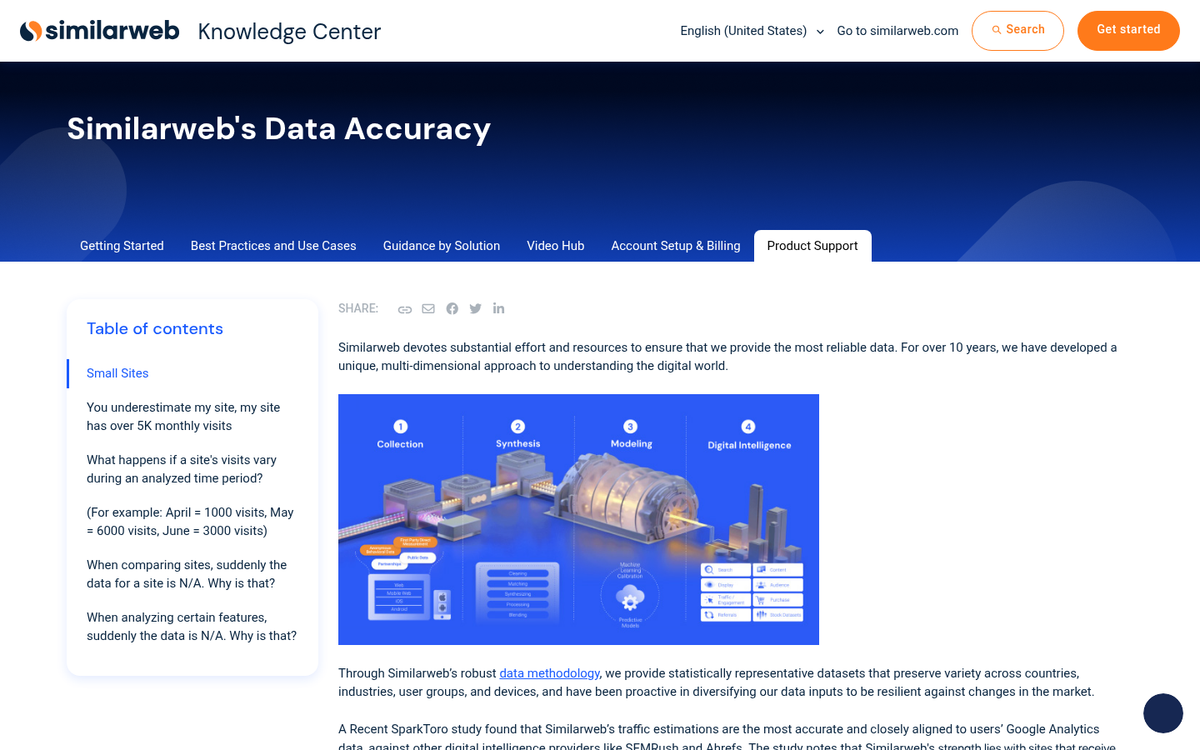
SimilarWeb has an entire page dedicated to explaining their data methodology. They combine multiple groups of data for their analytics: panel data from partner apps that send them behavioral information, ISP data with anonymized user behavior, publicly scraped data sources, and direct measurement from sites using their own services. Essentially, hundreds of millions of user devices globally are contributing data in some form, which SimilarWeb uses to model and estimate web traffic patterns at scale.
It's worth noting that Alexa historically collected data via over 25,000 browser extensions, which gave them a reasonably large panel - but that panel skewed heavily toward tech-savvy users, which introduced significant bias. It was one of many reasons their data was unreliable for the average website. That methodology died with the service in 2022.
Pricing

Pricing is an important consideration when evaluating any data tool.
SimilarWeb offers a free tier that gives you limited results - typically a few data points per metric and a rolling window of recent web traffic data. It's useful for a quick gut-check but won't give you anything deep.
Their paid Starter plan runs around $125/month for their Competitive Intelligence offering as of 2026, though pricing can vary based on features and seat count. Enterprise plans with full historical data, deep segmentation, keyword analysis, audience demographics, and more are available but require a custom quote - expect to pay significantly more at that tier.
For comparison, SEMrush and Ahrefs also include traffic estimation features within their broader SEO toolkits, which may be a better value if you're already paying for keyword research and backlink analysis tools. Bundling these features into a single platform subscription often makes more financial sense than paying separately for a dedicated traffic estimator.
Data Accuracy

This is where things get genuinely complicated. Per SparkToro's analysis, SimilarWeb reported 400%+ of actual traffic on average across a broad sample of sites - meaning they can overestimate dramatically. However, that average is heavily skewed by outlier cases. When looking at how often SimilarWeb lands in a reasonable range, they got within 70-130% of actual traffic for nearly 1 in 4 sites tested - which isn't bad for a tool working without internal data access.
Other independent tests have found SimilarWeb overshooting actual sessions by roughly 20-30% compared to Google Analytics figures for many mid-sized sites. That's actually a pretty manageable margin if you're using the tool for trend analysis rather than precise numbers.
The key takeaway: SimilarWeb is best used for directional insights and trend tracking, not precise traffic counts. If a competitor looks like they're growing, they probably are. If a site looks like it dwarfs yours in traffic, it probably does - even if the exact number is inflated.
One additional accuracy note worth knowing: Alexa (when it existed) was reasonably accurate for sites with more than 60,000-70,000 visitors per month, but had little to no usable data below that threshold. SimilarWeb has a similar limitation for very small sites, though their data coverage tends to be broader. Per independent testing, both SimilarWeb and SEMrush have data coverage on 85%+ of sites tested, while older tools like Compete and Quantcast historically struggled below 35% coverage.
Appropriate Comparisons
Any time you're using a tool for competitive intelligence, you need to understand that the tool is not operating in objective reality. All tools are limited by their data sources and statistical modeling assumptions.
What this means practically: compare apples to apples. If you're looking at a competitor's traffic on SimilarWeb, those numbers are likely higher than reality. If you then compare that to your own Google Analytics numbers, you're going to feel like you're perpetually losing - even if you're not.
Instead, run the same SimilarWeb check against your own site first. Benchmark yourself before you benchmark others. Note the gap between SimilarWeb's estimate and your actual analytics number, and apply that same adjustment when interpreting competitor data.
My Choice
So which tool would I recommend in 2026? SimilarWeb remains the go-to option for standalone traffic estimation, and with Alexa gone, it's not really a contest anymore.
SimilarWeb's free tier is genuinely useful for a quick competitive snapshot, and their paid plans give you enough depth to do real competitive research. Yes, they overestimate - sometimes significantly - but as long as you understand that going in and calibrate accordingly, it's a valuable tool.
If you're already paying for SEMrush or Ahrefs, check whether their built-in traffic analytics features meet your needs before paying separately for SimilarWeb. For many marketers, the overlap is significant enough that a second subscription isn't warranted.
Now, all of this only really matters once you've built your site up to a meaningful traffic level. If you have fewer than several thousand monthly visitors, estimated data is going to be too noisy to act on regardless of which tool you use. Focus on growing your own traffic first, then use these tools to benchmark yourself against competitors who are playing in your space.
Use SimilarWeb's free account to get started, calibrate it against your own known traffic numbers, and then use that calibration to interpret what you see when you look at competitors. If you need richer data, the paid tier is worth evaluating - but always remember you're working with estimates, not ground truth.