





Key Takeaways
- Google removed the hard 3-ad-unit cap in August 2016, allowing unlimited AdSense ads per page technically.
- Current rules focus on ad-to-content ratio: ads should never outweigh actual page content.
- Recommended safe ranges vary by site strength: 1-2 units for thin sites, 4-5 for established authority sites.
- Fewer, well-targeted ads can outperform many generic units, generating higher clicks and better CPCs.
- Actively testing ad density over 30-60 days helps find the optimal balance between revenue and user experience.
Google AdSense Ad Density in 2026: How Many Ads Are Too Many?
Google's AdSense program remains one of the easiest ad networks to get into as a blogger, which makes it a go-to choice for many people trying to monetize their sites. But there's still a constant balancing act you have to play to stay on Google's good side. I'm not talking about SEO or content quality in isolation - I'm talking about ad density.
Google has been fighting a long battle against people using the web for little purpose other than to make money. Many of their algorithm updates over the years have been aimed at hurting sites that put revenue ahead of user value. Their ideal is a world where a user can find anything they want to know at a moment's notice, and the people providing that information can be compensated for it at a reasonable rate.
The problem is, every time someone churns out a site that barely ranks, stuffed wall-to-wall with ads, it degrades the experience for everyone. That site rakes in cash through sheer ad density while more legitimate sites lose out. Either those legitimate publishers pile on more ads to compete, or they suffer quietly. Meanwhile, inflated ad inventory drives down ad values, conversion rates drop, ad blocker usage climbs, and it gets harder to make a living blogging at all.
Google occupies a uniquely tricky position as both the enforcer of ad density standards and a provider of ads themselves through AdSense. They can't play obvious favorites, but they also can't torpedo the system that generates a massive slice of their revenue. It's a tightrope they've been walking for years - and in 2026, they're still walking it.
A Brief History of AdSense Limitations
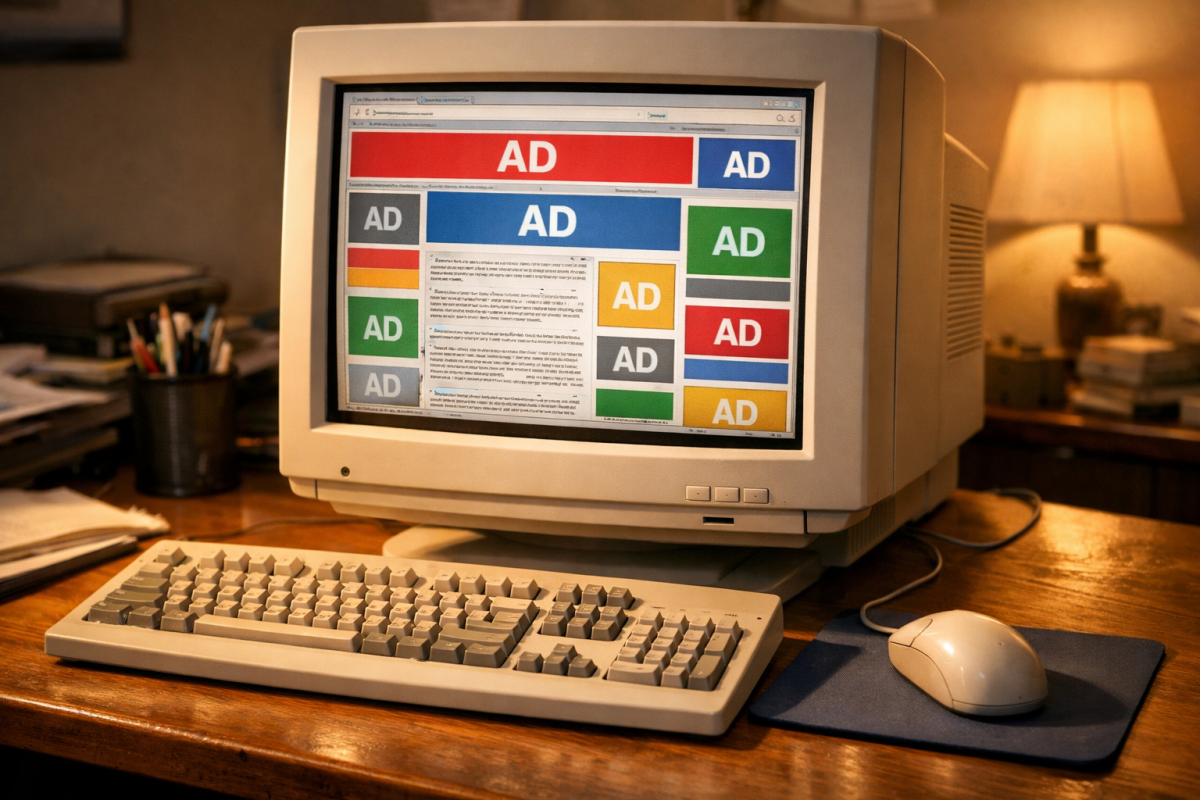
For a long time, Google's AdSense policy included a hard cap: no more than 3 ad units, 3 link units, and 2 search boxes per page. Certain "premium partners" were allowed up to 6 ad units, but for the average publisher, 3 was the ceiling.
That changed in August 2016, when Google officially lifted the ad unit limit entirely. From that point forward, publishers could technically place an unlimited number of AdSense ads on a single page without violating the letter of AdSense policy.
Several factors drove that decision. For one, the old limit was easy to circumvent - publishers would run 2-3 AdSense units alongside banners from other networks and a handful of affiliate links. The cap wasn't really keeping ad-heavy sites in check. For another, the rise of infinite-scrolling pages and mobile-first layouts made the definition of a "page" increasingly fuzzy. If your page loads content continuously as a user scrolls, where exactly does the page end and the ad limit kick in?
Removing the hard cap gave publishers more flexibility to experiment with layouts - but it also opened the door to abuse, which is why Google shifted the conversation from hard limits to something more nuanced.
The Real Rules in 2026: Quality Over Quantity
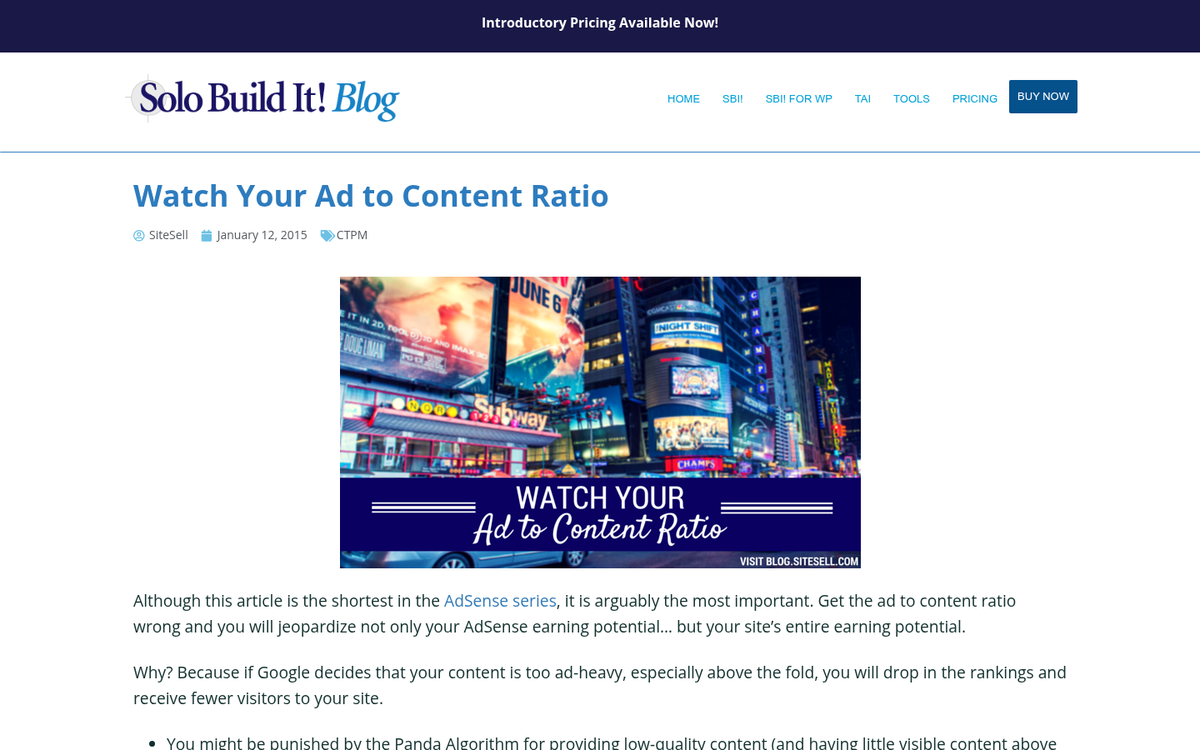
Google no longer tells you "you can only have X ads." Instead, the guidance has evolved into something more principled but also harder to pin down: ads should not outweigh content.
The core principle from Google's own documentation is that the amount of ad content on a page should not exceed the amount of actual content. A page that is more ads than substance - regardless of the raw number of units - puts you at risk of a manual action, reduced ad serving, or algorithmic demotion.
On top of that, Google's various algorithm updates over the years have continued to punish low-value, ad-heavy pages. Sites that prioritize revenue over user experience remain squarely in the crosshairs. The signals Google looks at include ad-to-content ratio, page layout, how quickly users bounce, and whether the page actually serves the search intent that brought someone there in the first place.
Ad serving limits are another mechanism worth understanding. If Google detects invalid traffic or policy violations on your account, they can temporarily restrict how many ads are served on your site. According to Google's official support documentation, these limits typically resolve within 30 days for most publishers - but they're a warning sign worth taking seriously if they appear in your AdSense dashboard.
How Many Ads Are Actually Safe?
There's no magic number, but there are reasonable benchmarks based on what publishers and networks have found to work in practice.
MonetizeMore, one of the more well-known AdSense optimization firms, recommends aiming for 4-5 ad units on desktop for long-form articles, while keeping mobile placements to roughly 1 unit above the fold and 1-2 in-content units. That's a useful starting framework - not gospel, but grounded in real testing data.
Here's how I'd break it down practically:
Thin or newer sites with content around 1,000 words of fairly generic material should keep it conservative - 1-2 ad units per page. The weaker your content and brand authority, the less ad weight you can carry without your rankings taking a hit. If you're unsure whether your site is ready, it helps to think about how many hits per day you should have before using AdSense.
Mid-tier sites with solid content in the 1,500-2,000 word range, some multimedia, and a recognizable brand can comfortably support 2-3 ad units, potentially alongside an affiliate link or two. The key is that no individual screen view should feel dominated by ads.
Stronger, more established sites with high-quality content in the 2,000-4,000+ word range, strong branding, and genuine audience trust can push toward 4-5 units on desktop without much risk - provided those ads are well-placed and not clustered. Mobile should always be treated more conservatively regardless of site strength. It's also worth knowing how to get more safe clicks on your AdSense ads as you scale up.
At the top end, sites with real authority and loyal audiences have more room to experiment. At that level, you've built up enough equity that you can test more aggressive ad layouts and pull back quickly if the data tells you to. Some publishers at this stage also explore getting paid per ad view instead of per click to diversify their revenue approach.
Quality Still Beats Quantity - Every Time
Here's something worth understanding with a concrete example.
Take two pages: Page A and Page B. Page A is a broad, general-interest article that gets 10,000 monthly visitors. The blogger runs 5 ad units. Each one converts at a modest rate - say, about 20 clicks each. Total: 100 clicks. A 1% conversion rate across all visitors.
Page B is a focused, specific article targeting a narrow audience. It only pulls 5,000 visitors. But because every visitor arrived with a clear intent, the blogger placed one well-targeted ad. That ad converts at 5%. Total: 250 clicks - more than double Page A, with half the traffic and one-fifth the number of ads.
Page B also earns higher CPCs, because advertisers are bidding more for that focused, high-converting audience. Page A is earning less per click and burning through goodwill with visitors who feel like they landed in an ad maze.
This is the model Google keeps nudging publishers toward. Fewer, better-targeted ads that serve real user intent will outperform a wall of generic units almost every time. Understanding how to keep visitors engaged rather than overwhelmed is a key part of making that work.
What Makes Your Site Strong Enough to Support More Ads?
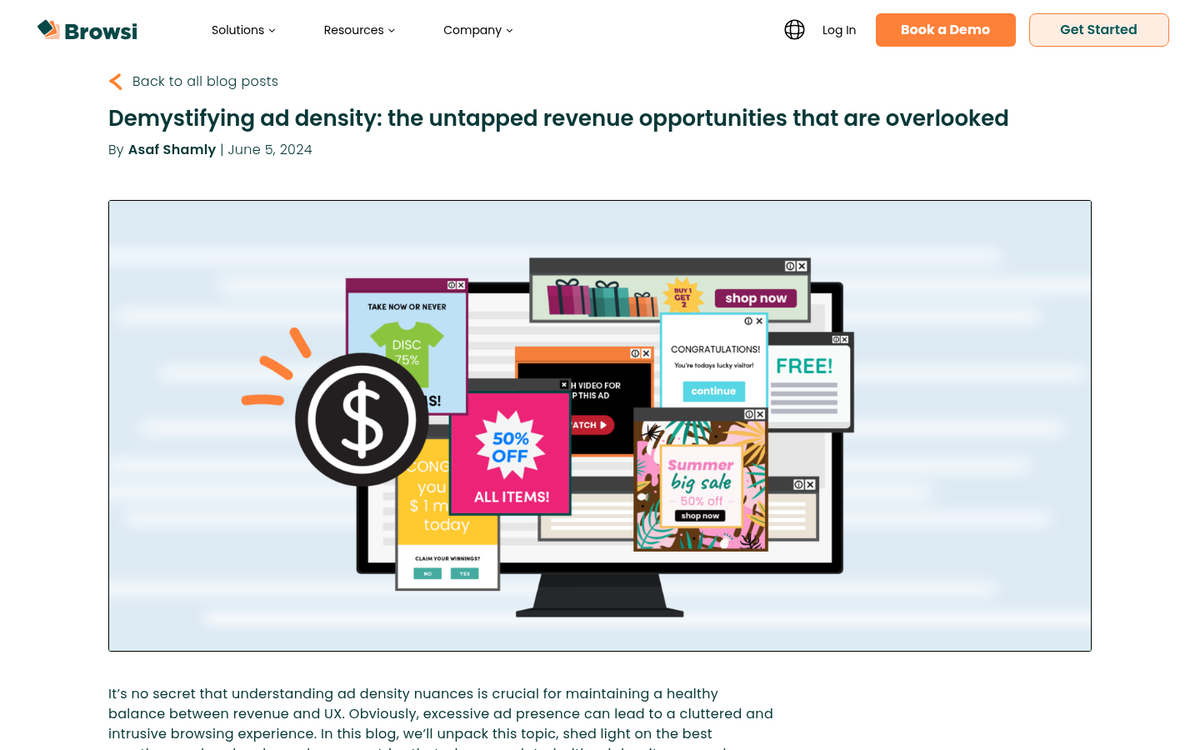
If you want to run more ad units without getting penalized, you need to invest in the signals Google uses to assess content value:
- Content depth and quality. Length matters, but value density matters more. A 3,000-word article that answers a question thoroughly is worth far more than a padded 3,000-word article that circles the same point five times. If you're struggling to attract readers, check out 25 reasons your blog isn't getting enough traffic.
- Multimedia. Embedded videos, original images, infographics you can create for free using Canva, and interactive elements signal genuine effort. They also improve engagement metrics that Google increasingly pays attention to.
- Strong, distinctive branding. A site with a recognizable identity - a real logo, consistent design, a brand name that isn't just a keyword - carries more weight than a generic niche site built around exact-match domains.
- Ad-free content. Google looks favorably on sites that have pages with no ads at all - content created purely for user value. Not every page needs to be monetized. Some of your best content should just... be great, with no strings attached.
Test, Don't Guess
Wherever your site sits on that spectrum, the best thing you can do is test your ad density actively. If you're running four ad units, drop to three and monitor your rankings, revenue, and conversion rates over 30-60 days. Sometimes reducing ad load actually increases income because user engagement improves and ad clicks become more intentional rather than accidental.
Learn as much as you can about your audience and use that knowledge to place targeted ads rather than generic ones. One high-converting, well-placed ad on a focused page will outperform a cluster of mediocre units on a bloated page almost every time.
The goal hasn't changed since AdSense launched: create something genuinely useful, show ads that are relevant to the people reading it, and don't let the ads eat the content alive. In 2026, that principle is more enforced - and more measurable - than ever.



4 responses
Thoughtful replies only - we moderate for spam, AI slop, and off-topic rants.
Good one...!!!
Didn't know about the new limitations.
Thanks for sharing
I'm working on Adsense from many years. As of my knowledge, adsense is not that easy. Keeping rules and regulations in the mind, one should be very careful in doing so.
Your information would help a lot of upcoming marketers.
Thank you
Thank you for an accurate answer. I was on a page that sported twelve Google ads and wanted to know what the current limit was. AI said it was three which I knew was old information. Twelve seems excessive. The site has one paragraph of maybe 4-5 sentences with an ad between each paragraph until the end of the article which has no further ads.
Great catch on the outdated AI info, Gail! While Google no longer enforces a strict ad limit, twelve ads for a handful of sentences is a pretty extreme ratio. The general guideline is that ads shouldn't outweigh content, so that page is definitely pushing it. User experience tends to suffer when readers feel like they're navigating an obstacle course just to finish an article!