With online business, possibly your most important asset is your email list. A mailing list is a source of traffic and engagement that is independent of other forces. With SEO, Google can push an update and wreck your traffic. With social media, you can be hampered or banned through the actions of others or through simple mistakes. With a mailing list, you have value that is not beholden to anyone but you.
The numbers back this up. In 2024, automated emails generated 37% of all email-driven sales from just 2% of total email volume, and 1 in 3 people who clicked through an automated email made a purchase, compared to just 1 in 18 for standard scheduled campaigns (Omnisend). Businesses using email automation also achieved 320% more revenue than those relying on non-automated campaigns. That is a staggering gap, and it makes the case for setting up a proper drip campaign better than anything else could.
Now, there are two forms of email you can send out. One is the broadcast email, which goes out to everyone in your mailing list at the same time. Everyone signed up will see this message. The other is the autoresponder, or the drip campaign. This is a timed set of emails that trigger when a new user signs up for your mailing list. Each user experiences these on their own schedule, independent of other users.
With both sorts of email, the purpose is clear: get users one step further down the sales funnel. However, broadcast emails tend to be more passive about it. After all, your mailing list is going to be made up of all sorts of people. Some have only a passing interest and no purchase intent. Some are keenly active in your community. Some hang on your every word but won't buy a thing. Some have been members so long they have started ignoring your emails.
What I'm going to focus on are the autoresponse messages. When a user signs up for your mailing list, they are expressing immediate intent to engage with your brand. It might not be specifically for a purchase, but it's teetering on the brink. These people are at their most vulnerable in terms of getting them to perform actions for your brand. Keep in mind that nurtured leads produce 50% more sales-ready opportunities at 33% lower cost and go on to make purchases that are 47% larger on average. The math strongly favors putting real effort into your drip sequences.
There are also other times when you can initiate a drip campaign, based on specific events. Signing up for a mailing list is one, but so is a shopping cart abandonment event, or a product purchase. Keep these in mind; you can adapt the five step process for each of them.
Key Takeaways
- Automated emails generate 37% of all email-driven sales from just 2% of total email volume, proving automation's outsized impact.
- Segmenting your list by behavior and funnel stage prevents mismatched messaging and directly improves conversion rates.
- Follow the 80/20 rule: 80% of emails should deliver genuine value, with only 20% being explicit sales pitches.
- Subject lines are critical-if subscribers don't open your email, the copy inside is completely irrelevant.
- Review and optimize drip sequences every one to two months using open rates, click-through rates, and UTM-tracked conversions.
Step 1: Identify the Purpose of Your Email Campaign
There are a bunch of different possible purposes for your campaigns, so this will be the foundation of everything that follows. Here are some examples:
The welcome sequence. This is a series of emails that welcome a user to the fold, to the community, or to the product. For example, many SaaS tools send a drip campaign when you register for their platform. The first email is a simple, broad overview of what they do and how to accomplish some specific goals. The next, two days later, gives you more advanced tutorials. Two days after that, you get another with more varied use cases. This process continues as a way of onboarding you, driving engagement with the product, and building the kind of trust that eventually converts free users into paying customers.
The challenge. This series of emails is aimed at provoking a reaction from new subscribers. It works by providing a miniature course or structured tutorial with steps to be performed over time, with emails every few days to keep momentum going. You see this model frequently in fitness, diet, personal finance, and productivity niches, where a 30-day challenge keeps subscribers engaged while weaving in product recommendations throughout.
The basic sales funnel. This is the most common form of drip campaign. It works best when the mailing list signup is tied to something like a free ebook, checklist, or webinar that does not require or expect an immediate purchase. The emails begin with education around your brand, the problems your audience faces, and how your product addresses those problems. Longer campaigns can go deeper, building trust over weeks before ever making an explicit sales ask. This matters because 80% of deals require five or more touchpoints, yet 44% of sales reps give up after just one follow-up. Your drip campaign is what bridges that gap automatically.
The upsell. This is often triggered by a purchase event. A user buys something, and your sequence follows up with related products, complementary accessories, usage tips, and social proof designed to encourage a second purchase or an upgrade. E-commerce brands and subscription services rely heavily on this model to increase lifetime customer value.
Step 2: Divide Your Email List Into Relevant Segments
Honestly, you should be doing this prior to thinking about sales funnels, but many people don't think about it until it's too late to start proactively. Essentially, what you want to do is divide up your email list into several sub-lists, focused around specific buyer personas and/or specific stages of your sales funnel.
For example, out of the total pool of your entire mailing list, you might have half a dozen different segments. You have current subscribers to your service. You have people who have expressed interest but not yet purchased. You have people who signed up specifically for a free giveaway and haven't engaged since. You have people who abandoned their carts. Each of these people will have different interests. Sending a basic explanation of your product to people who already subscribe is going to be largely ineffective, and so will sending advanced product tutorials to people who haven't even decided whether they want to buy.
Consider this: 68% of companies have not identified or measured a sales funnel, and 79% of marketing leads are never converted into sales. Proper segmentation is one of the most direct ways to attack both of those problems at once.
You can also divide users by interests and demographics if your mailing list is large enough to warrant it. Smaller lists won't necessarily benefit from highly granular targeting, but for larger brands it pays off to layer additional divisions on top of the behavioral segments above.
The specific steps needed to segment your list will vary depending on the email platform you use. MailChimp, AWeber, ActiveCampaign, Klaviyo, and Drip are all strong options in 2026, each with robust segmentation and automation tools built in. Klaviyo in particular has become a dominant choice for e-commerce brands due to its deep integration with Shopify and its behavior-based triggers. OptinMonster remains useful as a lead capture tool that feeds into these platforms rather than as a standalone email service. InfusionSoft, now rebranded as Keap, is still around but has lost significant ground to more modern alternatives.
Step 3: Map Out Your Drip Campaign
At this point you know the basic phase and requirements of the audience segment you're targeting, and you have an email manager in place to do the scheduling and sending. What you need to do now is figure out what you're going to send and when you're sending it.
How long will your email campaign be? Let's use an onboarding process as an example. You have a landing page that attracts users and gets them to sign up. When they sign up, you send them a welcome email, and a sequence of subsequent emails about your product, service, or process. This is all relationship-building material, geared at getting the user to come back to your site and engage further. In general, you should have at least three emails, though you can go longer.
Here's what I recommend: start with something like 10 to 12 emails and monitor conversion rates across the sequence. Watch how many emails you can send before open rates collapse or conversions drop to zero. At that point, the messages are no longer effective, and you can re-segment those users into a lower-frequency re-engagement bucket.
How far apart should your messages be sent? This depends on the segment you're targeting. A new subscriber onboarding sequence might only need one email every two or three days. A new buyer receiving tutorials might also want a few days between messages, giving them time to act on your advice before the next email arrives. On the other hand, a cart abandonment campaign or a time-sensitive offer might require several emails in a single day, urgently reminding the user to act before a deadline.
Also, remember the Pareto Principle. 80% of your results will come from 20% of your effort. In this instance, make sure 80% of your emails are providing genuine value to the reader without expecting anything in return. This builds goodwill and positions you as a trusted resource. The remaining 20% are your sales messages. So if you're sending five emails to new users, the first four should be value-driven in some meaningful way, and only the fifth is an explicit pitch.
At this point you should explicitly map out your drip campaign. A simple outline works fine at this stage. Something like "Email 1: welcome and thank you, brief overview of what to expect." You do not need to worry about specific copy yet. Think of it as a skeleton to be filled in later.
Step 4: Write Copy
At this point you need to create the actual copy for your emails. This will depend on all of the decisions you have made up to this point, so I can only offer general guidance here.
First, make sure you are always keeping the reader in mind, and not just in an abstract sense. Remember what segment you're targeting, what experiences they've had with your brand so far, and what mindset they will be in when the email lands. This shapes the tone, the length, and the ask.
Consider the value you're providing your reader. Are you helping them identify a pain point and offering a solution? Are you solving real problems they have, even ones that don't strictly require your product to fix? The more genuinely useful your emails are, the more your audience trusts you when the eventual sales message arrives.
Make sure to include an element of personalization. At minimum, use the subscriber's first name in the greeting. Modern email platforms in 2026 go much further than this, allowing you to personalize based on behavior, purchase history, location, and engagement patterns. Use what data you have.
You also need to make sure your messages are visible on all devices and through all clients. While rich HTML emails with graphics and branding can look great, they can be filtered or rendered poorly on certain clients. Plain text or lightly formatted emails often outperform heavily designed ones in deliverability and engagement. Speaking of deliverability, keep in mind that the average email deliverability rate in 2024 was just 83.1%, with 10.5% landing in spam and 6.4% going undelivered entirely. Deceptive subject lines, poor domain reputation, certain trigger words, unverified sending domains, and missing SPF or DKIM authentication can all hurt your deliverability. Make sure your technical setup is solid before worrying too much about creative.
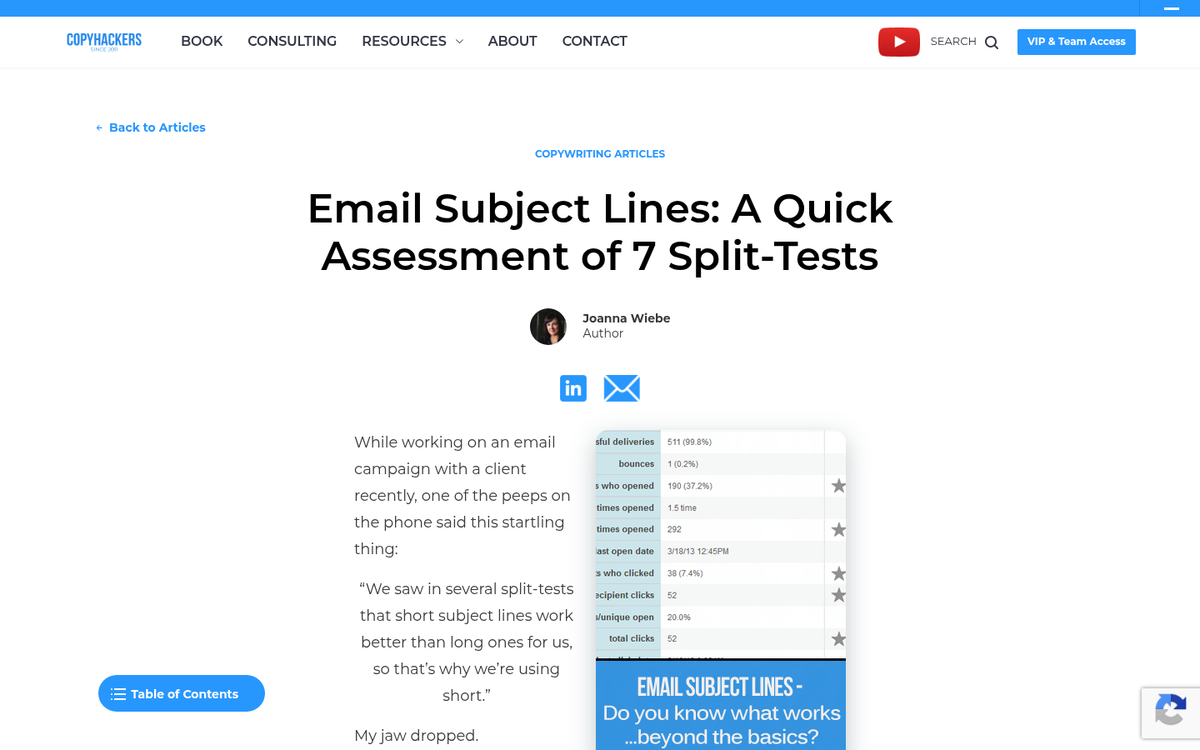
You'll also want to spend time on subject lines, and probably run split tests on them. In most email clients, the subject line and the first few words of the preview text are all you get to convince someone to open the email. If the reader never opens it, the copy inside is irrelevant. Treat subject line optimization as a serious ongoing task, not an afterthought.
This is probably the most intimidating part of the whole process, so you might consider hiring a copywriter to do the heavy lifting. Freelance writers who specialize in email marketing can be a worthwhile investment. Alternatively, AI writing tools have become significantly more capable by 2026 and can serve as a useful starting point, though human editing and brand voice refinement are still important.
Step 5: Track, Iterate, Improve
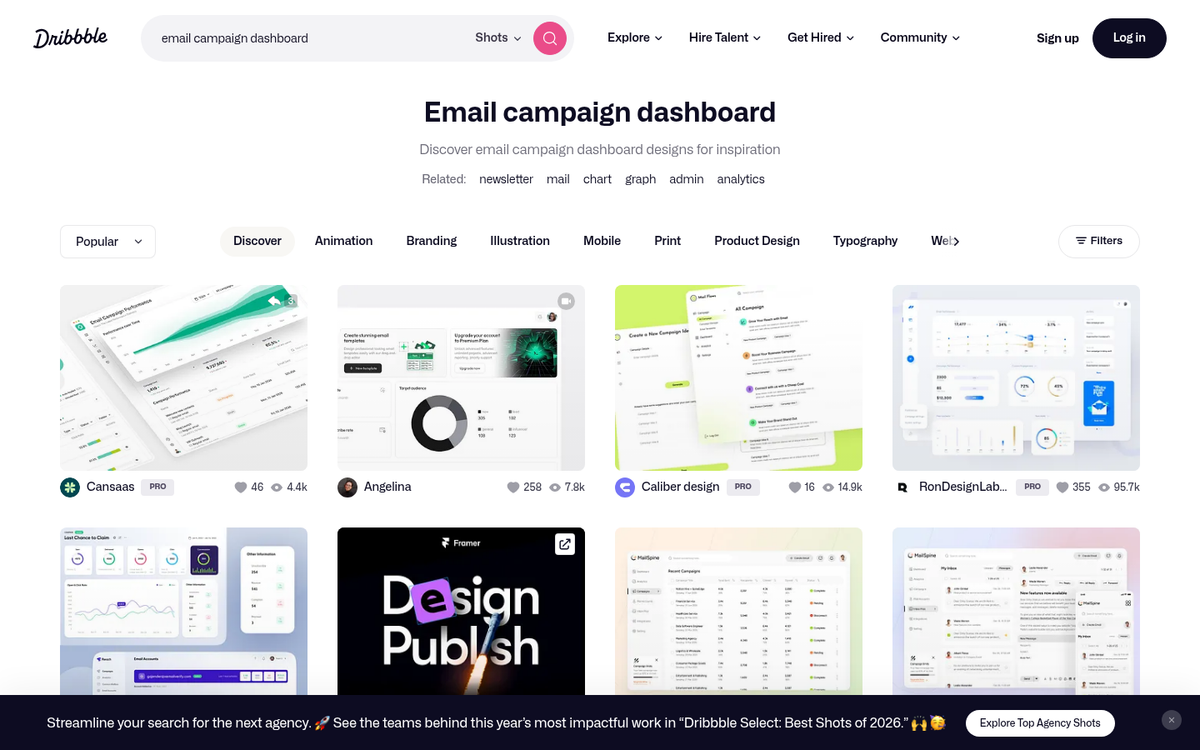
Autoresponder drip campaigns can and should be continuously optimized. You get useful data from your email platform in the form of open rates, click-through rates, unsubscribe rates, and bounce rates. These metrics help you fine-tune subject lines, sending times, email length, and the overall structure of your sequence.
Beyond open and click rates, make sure you are tracking downstream behavior. Use UTM parameters on every link so your web analytics correctly attribute traffic and conversions back to specific emails and specific segments. A split test comparing two subject lines means nothing if both links report to the same campaign tag in your analytics. Keep your tracking parameters distinct and consistent.
Your email platform's automation tools can also help you build branching logic into your sequences. If a subscriber clicks a specific link, they can be moved into a different branch of the campaign that speaks more directly to what they just expressed interest in. This kind of behavioral segmentation, automated and running in the background, is where modern drip campaigns pull far ahead of simple linear sequences.
Email drip campaigns are primarily a hands-off system once they are set up, but that does not mean you can ignore them indefinitely. Spend time reviewing and improving your sequences every month or two, and you will steadily convert more of your audience over time. Given that automated emails already generate a disproportionate share of email revenue at a fraction of the volume, the return on that investment in optimization is exceptionally high.