




For website owners, this distinction matters more than it might seem. When AI-powered answer engines like ChatGPT, Gemini, or Perplexity pull information to respond to a user's query, they are actively looking for honest, well-structured sources to ground their output. If your content is accurate and authoritative, it can become a candidate for that grounding process - meaning your site gets cited, referenced, or surfaced in AI-generated answers.
Think of grounding as the bridge between what an AI could say and what it chooses to say based on content. The stronger and more reliable that bridge is, the more likely an AI is to use your content as its foundation. This post breaks down how grounding works, why it matters for your AEO strategy, and what you can do to make your content the kind that AI systems trust and cite.
Quick Answer
Grounding in AI refers to the process of connecting an AI system's language or representations to real-world knowledge, facts, or context. It helps reduce hallucinations by anchoring model outputs to verified information sources, such as databases, documents, or real-time data. Techniques like Retrieval-Augmented Generation (RAG) are common grounding methods. A grounded AI is less likely to generate false or fabricated information because its responses are tied to concrete, external references rather than relying solely on patterns learned during training.
What It Means When an AI Answer Is "Grounded"
Think of it as the difference between an AI that cites its work and one that speaks with confidence and hopes for the best.
When an AI is ungrounded, it generates text based on patterns absorbed during training without connecting that output to any verifiable source of information. The answer might sound plausible and even be technically accurate. But there's no traceable link to a source that could confirm it. That difference between "sounds right" and "can be verified" is where grounding lives.
This matters more than it might feel. Research presented at NAACL 2024 found that a known share of AI-generated sentences are ungrounded - even in replies that are factually correct. That finding is worth sitting with for a bit. Correctness and grounding are not the same thing, and an AI can get the right answer for the wrong reasons.
A grounded response anchors its claims to a document, database, webpage, or data source that was retrieved at the time of the response.
Ungrounded replies come from the model's internal knowledge. That is not necessarily a problem - basic facts about the world don't always need a cited source. But for anything time-sensitive, domain-specific, or high-stakes, relying on training data alone is where errors and outdated information like to appear. This is somewhat similar to how diagnosing and fixing server errors requires tracing back to a verifiable root cause rather than guessing.
The clearest way to frame this is as a question of traceability. A grounded AI can show its work. An ungrounded one can't - not because it's being deceptive, but because there's essentially no external anchor to point back to.
It is also worth mentioning that grounding is not binary. A response can be partially grounded; some claims connect to sources and others float free. That partial state is actually one of the harder scenarios to handle, and it's something researchers and developers are actively working to address in how these systems retrieve and use information.
How AI Systems Pull and Verify External Information
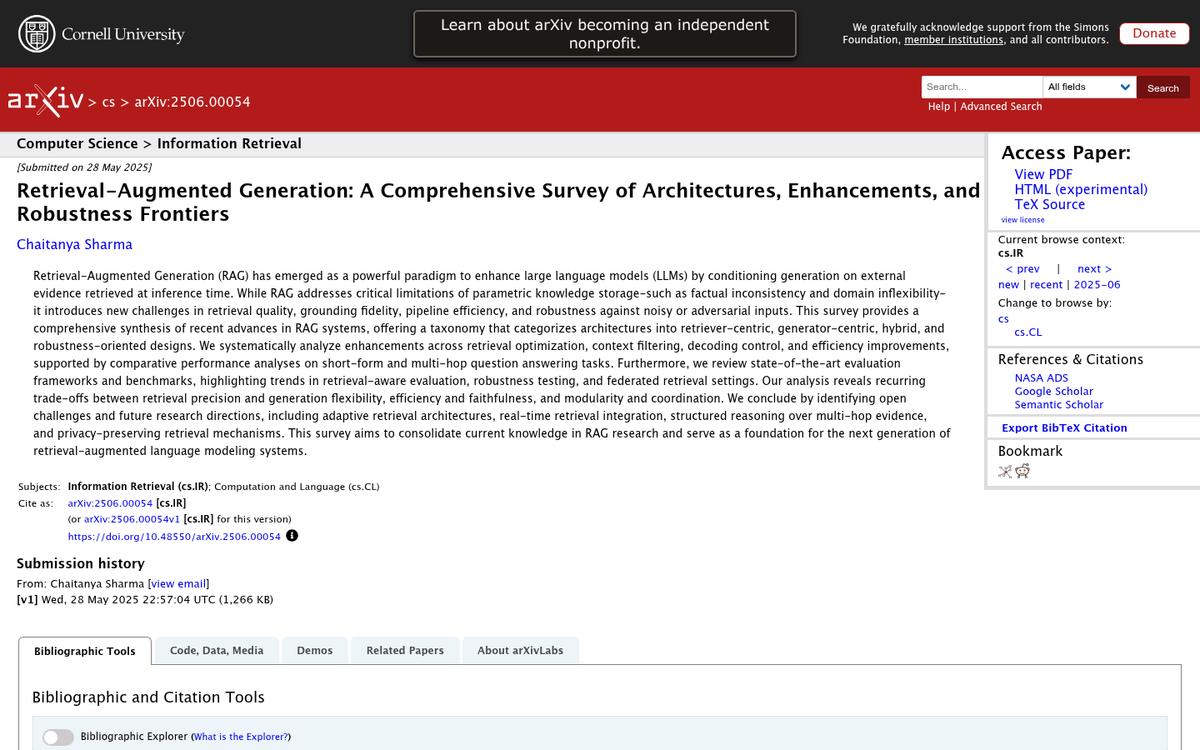
There are a few ways an AI system can ground its replies. But one of the most commonly used strategies is called Retrieval-Augmented Generation, or RAG. Instead of relying only on what the model learned during training, a RAG pipeline actively goes out and fetches relevant information before it generates an answer.
The basic flow works like this: a user asks a question and the system searches a connected database or document store to find information that matches the query. It then passes that retrieved content to the language model along with the original question, so the model can build its response around source material instead of memory alone.
The cross-checking step is where things get interesting. Some pipelines are designed to compare what the model produces against the retrieved content and flag any part of the response that can't be traced back to a source. Not foolproof, but it gives you an actual layer of verification that purely generative systems don't have. A February 2026 consortium study across hundreds of production deployments found that RAG pipelines reduced hallucination rates by 71%, which is a meaningful difference in real-world performance.
The quality of the grounding depends heavily on what the system is pulling from, which is why the underlying data infrastructure matters. Google's Data Commons is an example of what purpose-built grounding infrastructure can look like at scale. It holds around 250 billion data points from organizations like the UN and the WHO, all structured so AI systems can query it reliably and trace any retrieved fact back to its origin.
That structured, sourced data is very different from scraping the open web, where content quality is uneven and sources are hard to verify. A grounded system is only as honest as the information it draws from, so the design choices behind the data layer carry weight.
It is also worth mentioning that grounding is not necessarily a live process. Some systems ground replies at inference time by querying external sources in real time, and others are grounded during a fine-tuning or indexing phase before deployment. Both strategies attach external information to the model's outputs, but they work differently and have different trade-offs around freshness, speed, and accuracy.
The Real Cost of Ungrounded Responses in High-Stakes Topics
When an AI gives a wrong answer about a movie release date, it's annoying. When it gives a wrong answer about a drug interaction or a legal filing deadline, the consequences are something else entirely.
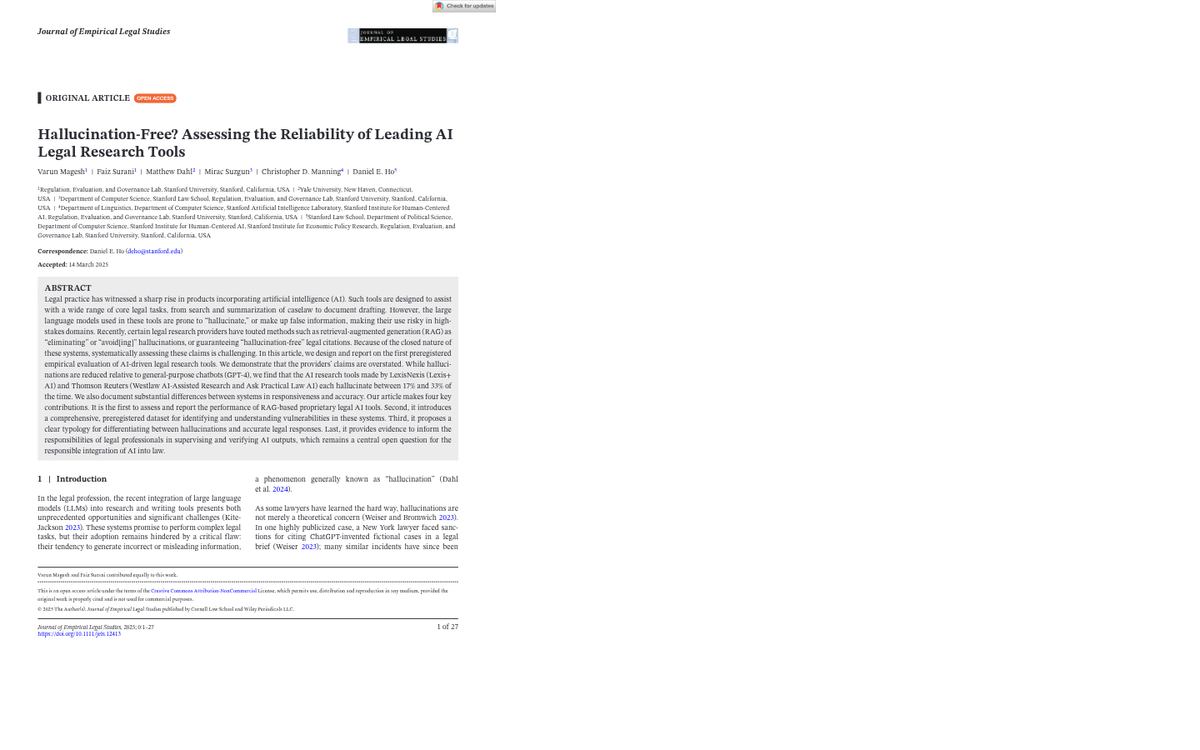
Hallucination rates can vary quite a bit depending on the subject area, and the numbers are worth learning about. Research into domain-specific AI accuracy has found that legal queries produce hallucinations roughly 18.7% of the time, medical queries around 15.6%, and coding queries around 17.8%. That means nearly one in five legal answers an ungrounded AI gives could be factually wrong.
Consider what that looks like in practice. A user asks an AI about the statute of limitations for a personal injury claim in their state. The AI confidently names the wrong timeframe. The user misses their window to file; it's not a minor error - it's a life-changing one, and the AI had no idea it was wrong.
Medical information carries the same weight. Ungrounded AI in these spaces creates exposure for the places that deploy it.

Oxford University scientists developed a hallucination-detection strategy that reaches around 79% accuracy, outperforming previous strategies by about 10 percentage points; it's actual progress. But it also tells you something that matters: even the best detection tools aren't close to perfect yet.
This is why grounding matters in sensitive verticals. An AI that pulls from verified, up-to-date sources before it responds is far less likely to fabricate a legal precedent or invent a clinical guideline - it has something to work from instead of generating a plausible-sounding answer from patterns alone.
The liability question is also becoming harder to dismiss. Businesses in legal, medical, financial, and healthcare spaces are starting to find that deploying an AI without grounding mechanisms is a real danger. Regulators are paying attention too, and the expectation that AI outputs should be traceable to sources is gaining traction fast.
Ungrounded AI doesn't flag its own uncertainty - it just answers, and that's what makes the stakes so different in these verticals compared to low-consequence queries: the user has no way to know when the confidence is warranted and when it isn't.
How Your Website Content Can Become a Grounding Source
It's worth asking a helpful question: is your content the kind of thing an AI would trust enough to cite? This is a standard that AI systems apply when they pull from the web to ground their replies.
AI models that use retrieval tend to favor content that's verifiable and well-structured. Vague or generic pages don't give a model much to work with. But a page that states a fact, links to a credible source, and organizes information in a logical way is far more likely to be picked up and used accurately.
Cite Your Sources Within the Content Itself
One of the easiest things you can do is reference authoritative data directly in your text. If you state a statistic, name where it comes from and link to it - this helps human readers and AI systems confirm that the claim is grounded in something. A figure without a source is a claim; a figure with one is evidence.
Keep those references current too. AI systems trained on or connected to live web content will deprioritize pages with outdated data because stale information increases the chance of a wrong answer.
Write in a Way That's Easy to Parse
AI doesn't read the way humans do - it processes structure. That means headings, short paragraphs, and direct sentences all make your content easier to extract meaning from. If an important fact is buried inside a long paragraph full of qualifiers, a model might not pull it cleanly.
Write your most important points as direct, standalone statements. Think of it less like prose writing and more like a reference document that someone could scan in seconds and walk away well-educated. If you're concerned about content integrity, it's also worth knowing what percent of plagiarism is allowed in a blog post.
Use Schema Markup to Signal What Your Content Is
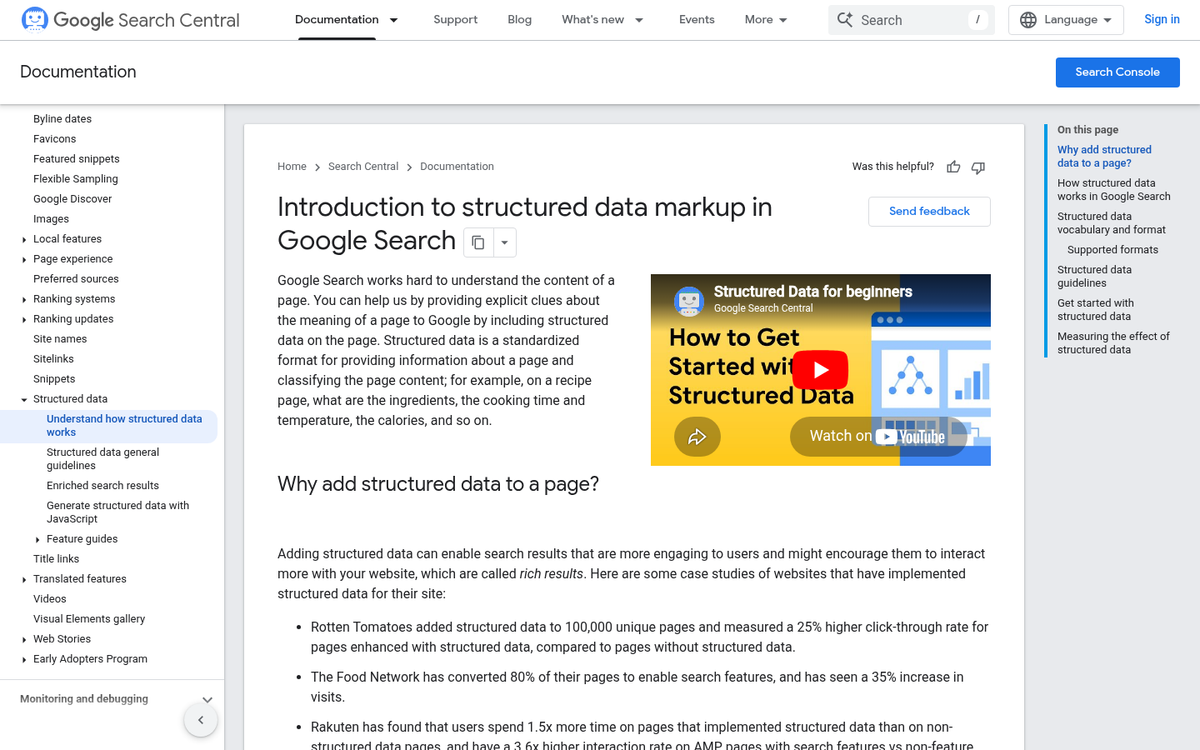
Schema markup is a type of code you add to your pages that tells search engines and AI systems what content they're looking at - it can identify your page as a post, a FAQ, a product page, or a how-to guide. This metadata gives AI systems more context to use your content accurately and attribute it.
It also helps establish authorship and publication dates, which are signals that speak to credibility. If your site already has schema in place, check that it aligns with your content accurately. These technical details are what separate content that gets cited from content that gets skipped. You'll also want to make sure your site is properly set up - for example, understanding whether to install your blog on a separate domain can affect how your content is indexed and attributed.
Structured Data and Source Signals That Build AI Trust
Schema markup is one of the most helpful ways to signal to AI systems that your content is credible and well-organized - it's basically a layer of code you add to your pages that labels what things are - an article, a dataset, a question-and-answer section - so AI can read it with confidence instead of guessing.
Different schema types send different signals. The table below breaks down a few of the most relevant ones for grounding purposes.
| Schema Type | What It Signals to AI | Best Used For |
|---|---|---|
| Article | This is authored, dated content from an identifiable source | Blog posts, news pieces, editorial content |
| FAQPage | Direct question-and-answer structure with clear intent | Support pages, product explainers, how-to content |
| Dataset | Structured, citable data with a defined scope | Research summaries, statistics pages, reports |
| Person / Organization | Authorship and entity credibility behind the content | Author bios, about pages, contributor profiles |
Author credibility matters more than many realize. A post that names a named author with a linked bio, verifiable credentials, and a steady publishing history gives AI systems a signal they act on. An anonymous page with no author attribution is harder to trust as a grounding source.
Timestamps are another small thing that carries weight. AI systems - and the retrieval tools that feed them - want to know when information was published and when it was last updated. A page with a publication date and an honest revision date is far more citable than one that looks frozen in time with no indication of how current the information is.
Citation patterns also matter. When your content links out to primary sources like studies, official reports, or government data, it shows that your claims have a foundation - this works in both directions - content that references credible sources is more likely to be treated as credible itself. If you've recently changed a blog URL, make sure your internal citations still resolve correctly so nothing breaks that chain of trust.
If you use statistics or research findings anywhere on your site, name the source directly in the text instead of in a footnote that might get lost. Make it easy for AI to trace the claim back to something. Tools like HubSpot's blog marketing suite can also help you track how well your content is performing as a citable resource.
Make Your Content Worth Grounding To
Take a few minutes to audit what you already have with that lens. You don't need to rebuild everything at once. Small, deliberate improvements compound faster when AI models are continuously re-indexing the web for reliable sources.
- Review your most important pages for factual clarity - every claim should be specific, verifiable, and easy to pull out of context without losing meaning.
- Add or update citations and sources - link to authoritative references and make sure your own credentials or expertise signals are visible on the page.
- Check publication and revision dates - outdated content is a grounding liability; a simple review-and-refresh schedule goes a long way.
- Improve structure - use concise paragraphs, descriptive headers, and plain language that doesn't require interpretation to understand.
- Close the gap between what you claim and what you prove - if a statement would raise an eyebrow without context, add the context.
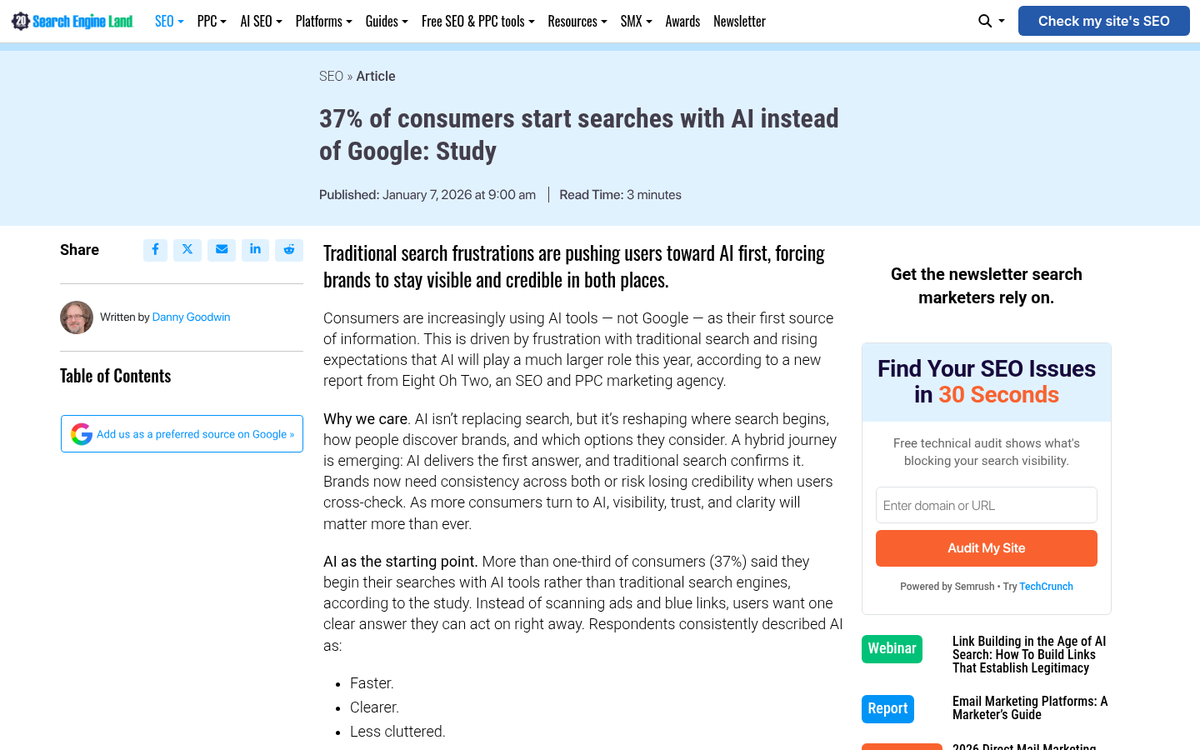
Grounding-readiness is not an AI optimization strategy in isolation - it's the discipline of publishing well. Accurate, well-sourced, structured content has always served readers better. The difference now is that it also determines if your work reaches the growing share of people who get their answers from AI instead of a list of links. Build for that standard and you're building something worth finding either way. You can also use our AEO readiness checklist to make sure your content meets that bar before publishing.
FAQs
What does it mean for an AI response to be "grounded"?
A grounded AI response anchors its claims to a retrieved external source, like a webpage or database, rather than relying solely on training data. This makes the response traceable and verifiable, unlike ungrounded replies that may sound accurate but have no external reference point.
What is RAG and how does it support grounding?
Retrieval-Augmented Generation (RAG) is a method where an AI fetches relevant external information before generating a response. This grounds the output in real source material rather than memory alone, and has been shown to reduce hallucination rates by up to 71% in production deployments.
Why is grounding especially important for high-stakes topics?
Ungrounded AI produces hallucinations roughly 15-19% of the time in legal, medical, and coding queries. In high-stakes contexts, a single wrong answer about a drug interaction or legal deadline can have serious real-world consequences for users.
How can website content become a source AI systems cite?
Content that is factually specific, well-structured, and linked to authoritative sources is more likely to be retrieved and cited by AI systems. Using clear headings, direct statements, current data, and proper source attribution all increase your content's grounding potential.
How does schema markup help AI trust your content?
Schema markup labels your content so AI systems can identify what it is, who wrote it, and when it was published. Types like Article, FAQPage, and Dataset signal credibility and structure, making your content easier to accurately retrieve and attribute in AI-generated answers.