Key Takeaways
- Affiliate marketing contributes 42.2% of the average blogger's total income, making it one of the most effective monetization strategies.
- 45% of bloggers earning over $50,000 annually sell their own products or services, most commonly online courses.
- Display ads are passive but low-value; premium networks like Mediavine and Raptive pay significantly more than Google AdSense.
- 28% of bloggers earn within six months, and 34% reach full-time income within two years, treating blogging like a business.
- AI-generated content flooding search results has reduced organic traffic, making email lists and loyal audiences increasingly critical.
Making money from blogging is the dream of many and the reality of a growing number of people - but the landscape has changed dramatically, especially with the rise of AI tools, shifting search algorithms, and new monetization platforms. It's not easy. But it's not impossible. The bloggers who struggle most are usually those who chase shortcuts, ignore the fundamentals, or fail to adapt to how the industry has evolved.
Before we start, I'd like to make a note about shortcuts. In general, stay away from trying to be great and cutting corners. Far too often, I see bloggers come up with a "brilliant" idea that turns out to be an old black hat technique that gets their site de-indexed or penalized - especially relevant now that Google's AI-powered ranking systems are more refined than ever at detecting manipulative tactics.
Any time you have a great idea for a shortcut or a growth hack, consult with a person who knows what they're doing before executing it. You may have a genuine edge - but it's worth confirming first.
One thing worth mentioning before we get started: blogging in 2026 is a business. According to industry research, 28% of bloggers start earning within six months and 34% reach full-time income within two years. The content marketing industry is expected to reach $584 billion by 2027. There's money here - but it goes to those who treat it like a business.
What I've done is compiled a list of every way you can make money from a blog, grouped into large categories. Keep in mind that each monetization method below has real depth and room to customize.
Use a Patreon or Membership Platform
Patreon is the modern spin on the old tip jar concept - improved and more helpful than slapping a PayPal donate button on your sidebar. A one-time $5 tip is nice. But a recurring $5 per month from a loyal reader compounds faster as your audience grows.
Patreon lets content creators offer tiered memberships with different benefits at each level - early access to posts, exclusive content, behind-the-scenes updates, or direct Q&A access. For bloggers, this works best when you have a legitimately engaged audience that sees you as a trusted voice in your niche.
Beyond Patreon, platforms like Substack have become increasingly dominant for bloggers monetizing through paid newsletters. Substack lets you offer a free tier to grow your audience and a paid tier for premium content, all in one place. Many bloggers in 2026 have migrated toward the newsletter model specifically because it gives them a direct line to their audience that isn't dependent on Google's algorithm or social media reach.

Other alternatives worth thinking about include Buy Me a Coffee and Ko-fi, both of which give you lighter-weight versions of the Patreon model with lower friction for casual supporters.
Even if none of these become a primary income stream, setting one up in the background is low effort and can at minimum cover your hosting costs each month.
Display Ads
Display advertising - where a third party pays you to place content or ads on your site - remains one of the most common monetization methods, particularly for newer bloggers. According to research from Growth Badger, Google AdSense is used by 33% of lower-income bloggers, which makes it the single most common starting point for ad-based monetization.
Let's talk about what usually falls under display advertising:
- CPM Ads. These pay you per thousand impressions. They require significant traffic volume to generate meaningful income, since individual views are worth fractions of a penny.
- PPC Ads. These pay you per click. Higher value per action than CPM, but require relevant, well-targeted ads to perform. Google AdSense operates on this model.
- Premium Ad Networks. Once you reach meaningful traffic thresholds, networks like Mediavine (50,000 sessions/month minimum) and Raptive (formerly AdThrive) (100,000 pageviews/month minimum) pay significantly more than AdSense. These are the networks serious bloggers aim for.
- Banner Ads. Fixed placement ads that can look spammy if overused. Work best when kept to a minimum and matched to your layout.
- In-Content Ads. Ads that appear inline within your posts. These tend to perform better than sidebar ads since readers are more likely to see them while reading.
- Video Ads. With the rise of embedded video content on blogs, pre-roll and mid-roll ads have become a viable income stream for bloggers who produce video alongside written content.
- Direct Sale Ads. Ads you sell directly to advertisers rather than through a network. More work to manage, but you keep more of the money and can charge premium rates.
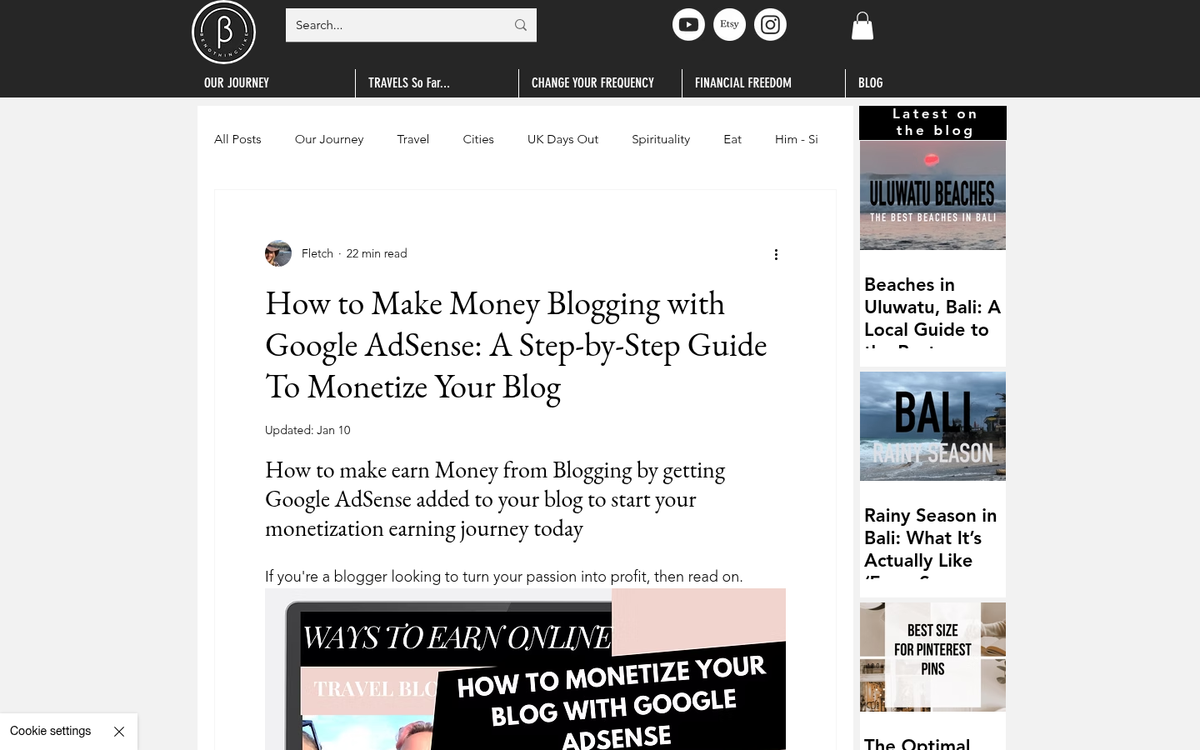
As a whole, display advertising is a high-volume, lower-value income stream - it's passive and hands-free once set up. But it won't make you rich on its own unless you're driving significant traffic. Think of it as a foundation - not a ceiling. If you want to optimize your earnings, it's worth studying the highest earning AdSense layouts for blogs.
One important 2026 consideration: AI-generated content flooding the internet has made Google's algorithm updates more aggressive in rewarding sites with genuine expertise and audience engagement. Thin sites built purely around ad revenue are hit harder than ever. Build content and an audience first - the ad revenue follows.
Affiliate Marketing
Affiliate marketing is one of the most effective monetization strategies available to bloggers, and the data backs this up. Studies show that affiliate marketing contributes 42.2% of the average blogger's total income and 55% of WordPress blogs have experimented with it. Among those using it, it contributes an average of 30% of total revenue for monetized WordPress sites.
The core model is straightforward: you link to a product or service using a referral URL. When someone clicks and makes a purchase, you earn a commission. No inventory, no customer service, no fulfillment - just content and links.
You have three large categories to specialize in:
- Physical products - Amazon Associates is the most well-known program here, though commissions are low (typically 1-4%). Niche-specific retailers often pay significantly more.
- Digital products - Software, courses, and tools often pay 20-50% commissions, sometimes recurring. This is where affiliate income can get serious.
- Services and SaaS - Many subscription-based software tools offer recurring commissions, meaning you earn every month a referred customer stays subscribed. This builds genuinely passive income over time.
The biggest change in affiliate marketing heading into 2026 is the impact of AI on search traffic. With Google serving AI-generated answer summaries at the top of search results, informational content that used to funnel affiliate clicks is receiving fewer organic visits. Bloggers who are thriving are those who have built strong email lists, loyal audiences, and content that answers questions AI overviews don't address - comparison posts, personal experience reviews, and niche content.
You only get paid when someone buys something, so it's not entirely passive - steady publishing and traffic are needed to keep the income flowing. That said, a single well-ranking review post can generate affiliate income for years.
Sponsored Posts and Brand Partnerships
Sponsored content is when a brand pays you to write a post featuring or recommending their product or service - it's different from affiliate marketing in that you're paid a flat fee upfront instead of earning per conversion, which can work in your favor when your audience is highly engaged and the brand may overestimate the value of your referrals.
Sponsored posts need disclosure. Both FTC laws and Google's policies require that you label sponsored content. Google specifically requires sponsored links to use the rel="sponsored" attribute to avoid manual penalties - this isn't optional.

In 2026, brand partnerships have evolved well beyond simple sponsored posts. Influencer-style long-term brand ambassador deals are increasingly common; a brand pays a blogger a monthly retainer for regular mentions, social posts, newsletter features, and product integrations. These deals tend to be more lucrative than one-off sponsored posts and create more predictable income.
Paid reviews are another variation - you receive a product (sometimes with additional compensation) and write an honest review. The best blogs in this space are known for genuinely honest reviews - even unfavorable ones - which actually increases reader trust and makes sponsored review slots more valuable over time.
To attract sponsors, you'll usually need a media kit - a one or two-page document outlining your traffic, audience demographics, niche, and rates. Most businesses won't reach out cold without one.
Selling eBooks and Digital Guides
eBooks remain one of the most accessible ways to monetize your expertise. If you can write a blog post, you can write an eBook - it's the same skill applied at greater depth and packaged as a standalone product.
The benefits are obvious: no manufacturing, no inventory, no shipping. You create it once and sell it indefinitely. You can revise and release updated editions with minimal effort and keep it relevant year after year.

eBooks can be sold directly through your own site using tools like Gumroad, Lemon Squeezy, or Payhip, or through third-party marketplaces like Amazon Kindle Direct Publishing. Selling directly keeps more of the revenue in your pocket. But marketplaces give you wider distribution and built-in trust.
In 2026, AI writing tools have made it faster than ever to draft a first manuscript - but the blogs that sell the most eBooks are those where the author's genuine expertise and voice shine through. Readers can spot generic AI-churned content, and they won't pay for it. The value is in your knowledge, experience, and perspective. If you're looking for ways to convert that traffic into sales, having a clear strategy behind your eBook offer makes all the difference.
Selling Online Courses
Online courses are arguably the most valuable product a blogger can sell, and the data is clear: 45% of bloggers earning over $50,000 per year sell their own product or service, compared to just 8% of lower-income bloggers. Courses are usually the product in question.
The economics are strong. A $197 course sold to 200 students is nearly $40,000. You create it once (with periodic updates) and sell it repeatedly. Platforms like Teachable, Thinkific, Kajabi, and Podia make it easy to host and sell courses without needing a custom tech stack.
The key to a successful course is specificity. Broad courses on general topics are hard to sell and easy to undercut. A course solving a specific, painful problem for a well-defined audience is much easier to market and worth more to buyers.
Course launches can be standalone events or run as evergreen funnels - where new students enroll continuously via automated email sequences. Many successful blogger-course creators use a combination of both.
Selling Writing and Content Services
Your blog is a live portfolio. If you write well, it signals to potential clients that you can do the same for them. Many high-earning bloggers supplement their passive income streams with writing services - guest posts for other publications, ghostwritten articles, email newsletter copy, and long-form content for businesses.

To attract clients, you need two things: visible proof of your writing ability and a way to hire you. A dedicated "Hire Me" or "Work With Me" page on your blog is an absolute must if you want inbound inquiries. If you're looking to scale, it's also worth knowing how to hire a writer off Freelancer.com or Upwork so you're not doing everything alone.
One change worth mentioning in 2026: businesses are increasingly cautious about AI-generated content because of Google penalties and reputational concerns. Skilled human writers who can produce genuinely authoritative, experience-driven content are in higher demand than ever - especially for YMYL (Your Money or Your Life) topics like health, finance, and legal content.
Selling Consulting and Coaching Services
Consulting is one of the highest-dollar-per-hour income streams available to an established blogger. If you've built genuine expertise in your niche, people will pay for direct access to your knowledge applied to their situation.
The model is straightforward: you offer one-on-one or small group sessions, usually via video call; clients bring their problems and you help solve them. Rates can vary enormously by niche - marketing consultants, financial advisors, and business strategists can charge a few hundred to over a thousand dollars per hour. Coaching, which tends to be less intensive and more ongoing, usually runs at lower rates but gives you more predictable monthly income.

Group sessions and cohort-based coaching programs have become increasingly popular, allowing you to serve more clients at once without proportionally increasing your time investment. A live cohort of 30 students at $500 each is $15,000 for what could be four weeks of group calls.
Consulting and coaching work best when you have a demonstrated track record and an audience that trusts your expertise - it's less of a starter monetization strategy and more of a capstone as your platform grows.
Selling Digital Products
Beyond eBooks and courses, there are a number of online products bloggers can create and sell. The appeal is the same: create once, sell repeatedly, with no physical fulfillment.
Examples include:
- Templates - Notion templates, spreadsheet dashboards, email swipe files, social media content calendars. These have exploded in popularity and can be sold at accessible price points with high volume.
- Presets and design assets - Lightroom presets, Canva templates, font packs, and stock photography for bloggers in visual niches.
- WordPress plugins and themes - Higher development effort but potentially very high revenue if they solve a common problem. Plugins that help you sell ad slots are one popular example.
- Software and tools - Full applications, browser extensions, or niche micro-tools. The development barrier is higher, but so is the ceiling.
- Prompts and AI toolkits - A genuinely new category in 2025-2026. Curated prompt libraries, custom GPT configurations, and AI workflow guides have become viable products, particularly for productivity and marketing bloggers.
Selling Physical Products
Physical products are further from the core blogging model but can be a natural extension for bloggers with strong brand identity or niche audiences. Print-on-demand services like Printful and Printify make it easy to sell branded merchandise - t-shirts, mugs, notebooks - without managing inventory or fulfillment yourself.
Beyond merch, bloggers in craft, food, lifestyle, and similar niches sell physical products directly to their audiences. Platforms like Etsy, Shopify, and WooCommerce make it fairly accessible to set up a physical storefront connected to your blog.
Dropshipping remains an option for those who want to sell physical goods without manufacturing them, though the margins have compressed and competition is strong - it works best when tightly integrated with a niche blog audience rather than as a standalone venture.
Offering Paid Memberships and Communities
Membership models have matured considerably. Rather than simply gating blog posts behind a paywall - which remains largely ineffective for smaller blogs and damages organic search visibility - the more successful strategy in 2026 is to build a paid community around your expertise. If you're still figuring out how your blog can generate revenue, it's worth exploring business models for blogs that actually make money before committing to a membership approach.
Platforms like Circle, Mighty Networks, and Discord (with paid roles via bots) allow bloggers to create private communities where members pay for direct access, peer conversation, expert Q&As, and exclusive resources.