Key Takeaways
- Content marketing costs 62% less than traditional outbound marketing while generating roughly 3x as many leads.
- DIY content marketing can cost nearly $0 to a few hundred dollars monthly, primarily requiring time rather than financial investment.
- Quality freelance blog posts typically cost $300-$1,000, with performance-focused posts averaging $1,500-$6,000 including research and optimization.
- Full-service blog management ranges from $4,000-$10,000 monthly for small businesses to $10,000-$40,000 for medium businesses in competitive verticals.
- The most successful content-driven businesses spend over 10% of their total marketing budget on content, according to Semrush research.
If you hopped into a time machine and traveled back to the early 2000s and interviewed a thousand marketers about their impressions of content marketing, most of them would probably tell you it doesn't make much sense - that a basic site with an FAQ and a few tossed-up pages is perfectly fine. Fast forward to today and that perspective looks almost comically shortsighted.
Content marketing has existed for decades in some form or another. Bill Gates wrote an essay about it in 1996. However, it's only since around 2011 that true, modern content marketing took center stage - driven largely by Google's growing algorithm and, more fundamentally, by what people actually want from the web. Since then, the discipline has matured enormously and the budgets behind it have grown to match.
It is no longer a question of whether or not you should invest in content marketing. If you want to have a chance of ranking in the modern web world, you'll have to. According to data from Semrush, 80% of the most successful businesses have a documented content strategy and 79% of them spend over 10% of their marketing budget on content. Content marketing also costs as much as 62% less than traditional outbound marketing while generating roughly 3x as many leads. The question is not if to invest - it's how much to allocate and where.
Dividing the Problem
There are a number of elements that go into content marketing. But I'm not going to cover every one of them. Content marketing as a whole covers the research that goes into creating content ideas, the creation of content itself and the promotion of that content once it has been published. In some cases, it will even include the cost of paying for guest post placements and other more uncommon forms of distribution.
I am also going to categorize content marketing into three large categories.
These are:
- The Complete DIY
- Minor Outsourcing
- Major Outsourcing
The first is the cheapest in terms of money, because you're doing the legwork yourself. You will have to pay for tools. But you save money in the creation process.
Minor outsourcing and major outsourcing are a sliding scale. I see minor outsourcing to be a pretty lean plan; you manage content ideation in-house but pay others to turn those ideas into finished content. Major outsourcing is full blog management - everything except some high-level content direction is handled by an outside company.
Tools to Buy
Almost every level of content marketing means purchasing tools that help you be more effective. There are a number of options available across all budget levels. I've listed a few key ones here. But for a more full overview, check out our dedicated post on content marketing tools.
Semrush for keyword research and competitive content analysis - it's one of the most capable SEO and content marketing platforms available and gives you keyword tracking, content gap analysis, topic research and more. Pricing starts at around $140 per month for the Pro plan, with higher tiers for agencies and bigger teams.
Ahrefs is similarly priced to Semrush and the two are usually compared. Which one you choose can depend on personal preference. But both are well worth the investment if content is a channel.
BuzzSumo for content trend research and influencer identification - it lets you see what content is performing well in a given niche, track brand mentions and find relevant voices to connect with. Reaching out to influencers on a budget is also an option worth exploring. Pricing starts at $199 per month as of 2026, so it's more of a tool for teams that are serious about content at scale.
Canva for visual design. While I'm not strictly covering the graphic design side of content creation in depth here, it's still an important feature. Canva lets just about anyone produce clean, professional-looking graphics. The free tier is workable and the Pro plan runs around $15 per month per person. For anything more complex, hiring a freelance designer is still the better call.
Notion or similar tools for organization and content calendar management. Evernote was once the favorite. But teams have shifted toward Notion, which has more flexibility for content planning and collaboration - it has a generous free tier, with paid plans starting at around $10 per user per month.
The idea here isn't to give you an exhaustive list - it's to illustrate the types of recurring costs to factor in. Personally, I think it's worth investing in a few tools instead of grappling with free alternatives that slow you down. But the right stack can depend on your budget and how you're approaching content.
The Complete DIY
If you're going the DIY path, one thing worth calculating is how much your time actually costs. Figure out your effective hourly rate - and that of any teammates involved - and multiply it by the hours spent on content each week. If you and two colleagues are collectively valued at $100 per hour and you spend eight hours a week on content, that's $800 in weekly man-hours, or roughly $3,200 per month. Could you find a capable freelancer or small agency for the same work for less? Possibly.
Not everyone has that budget flexibility. Spending $3,200 in man-hours doesn't mean you have $3,200 sitting around to reallocate. You're not cutting your own salary to fund your content strategy. But it's a helpful exercise to show you how much content marketing is actually worth to your business. Don't reflexively balk at a freelance quote that's lower than your own internal cost for the same work.
So what does the DIY actually cost in out-of-pocket spending? Honestly - not all that much.
For content ideation, you can get quite far with free or low-cost tools - Google Search Console, Google Trends, AnswerThePublic's free tier and basic keyword research within a free Semrush or Ahrefs account - it takes more time. But the dollar cost can be close to zero.
For the content itself, if you're a competent writer with knowledge of your subject matter and web writing best practices, you can produce blog posts at no direct cost. The occasional paywalled research source or stock image might add a few dollars here and there. But it's largely a time investment instead of a financial one.
For graphic design, Canva can get you fairly far for free or close to it. If you need something more polished, a freelance designer is the better call. Simple blog header images on platforms like 99designs or through a trusted Upwork freelancer can run anywhere from $25 to $150 per image depending on complexity.
Video is harder to DIY on a budget. If you don't have the equipment or expertise, tools like Descript or Adobe Express can help you produce basic video content without a full production setup. Pricing for these tools usually ranges from free to around $30-$50 per month depending on the tier.
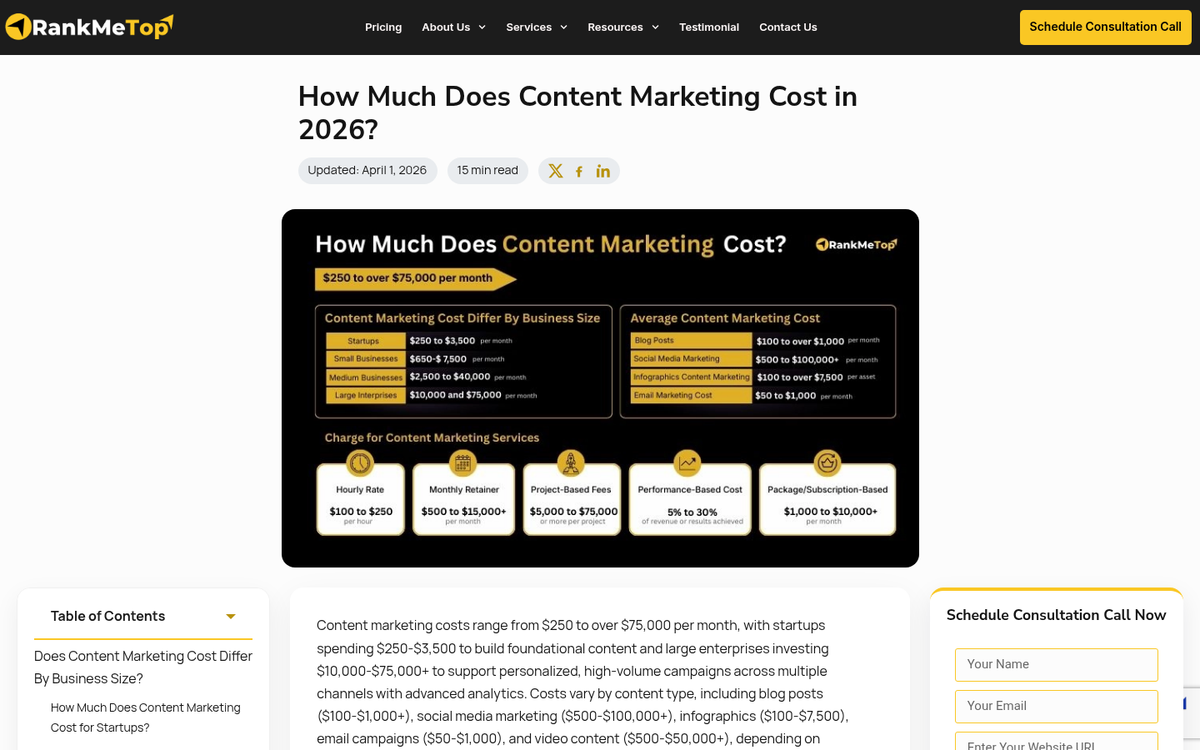
Overall, a true DIY content marketing budget can run anywhere from nearly $0 to a few hundred dollars per month in direct costs, depending on which tools you subscribe to and whether you need supplementary assets like custom graphics or licensed imagery.
The Minor Outsourcer
When you start outsourcing content creation, the cost picture changes - and the range is wide depending on who you hire and what you expect.
For content ideation, you'll probably want to keep that in-house. You know your audience and your business better than any freelancer will, at least at this stage. Budget $100-$200 per month for the tools that support this process and you're in good shape.
For content creation, the market has shifted considerably. The era of buying passable $12 blog posts is over - not because those services have disappeared. But because low-cost, low-effort content is increasingly filtered out by Google's quality signals. If you're still buying low-grade content on content mills, you're likely producing content that does more harm than good to your SEO.
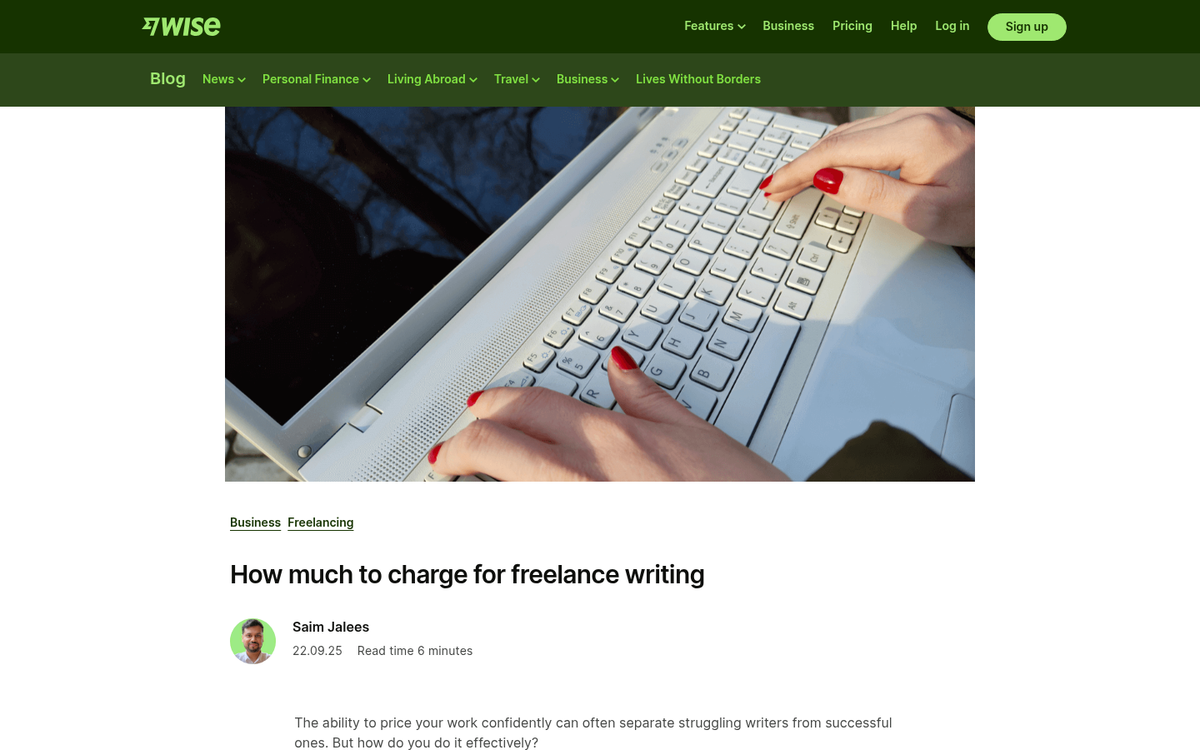
The basic range for freelance blog content looks like this: basic posts from generalist writers run around $100 per post. But experienced writers with subject matter expertise usually charge $0.10 to $2.00 per word. A well-researched, outcome-driven 2,000-word post from a strong writer will realistically cost $300 to $1,000. According to data from SiegeMedia, a quality, performance-focused blog post - the kind designed to rank and convert - costs between $1,500 and $6,000 on average, factoring in research, writing, editing and optimization. That number surprises. But it aligns with what content actually costs to produce well.
For graphic design, the same principle applies. Cheap design from unvetted sources risks copyright problems and can undermine your brand identity. Budget $50-$150 per post for custom blog imagery from a reliable freelancer, or set up a relationship with a designer who can work on retainer.
At three blog posts per week - even at a mid-range cost of $400 to $600 per post all-in - you're looking at roughly $5,000 to $7,500 per month; it's a real budget. But it buys you quality content and frees you up to focus on other areas of the business.
The Major Outsourcer
If you're going the full blog management company path, you'll have to go in with clear expectations. The cheapest full-service options just re-outsource your work to the same low-cost freelancers you could have hired directly, with a markup and less accountability. Quality control varies wildly at the low end.
If you're outsourcing your blog entirely, you have to be willing to pay for quality. The current market looks roughly like this: small businesses working with full-service content agencies should expect to spend $4,000 to $10,000 per month. Medium-sized businesses in competitive verticals are usually paying $10,000 to $40,000 per month for content marketing management. These figures include strategy, ideation, writing, editing, design, publishing and sometimes distribution and reporting.
For larger enterprises or businesses in very competitive industries, the ceiling is unlimited. Content marketing budgets at the Fortune 500 level routinely reach six figures per month given the full scope of what's involved.
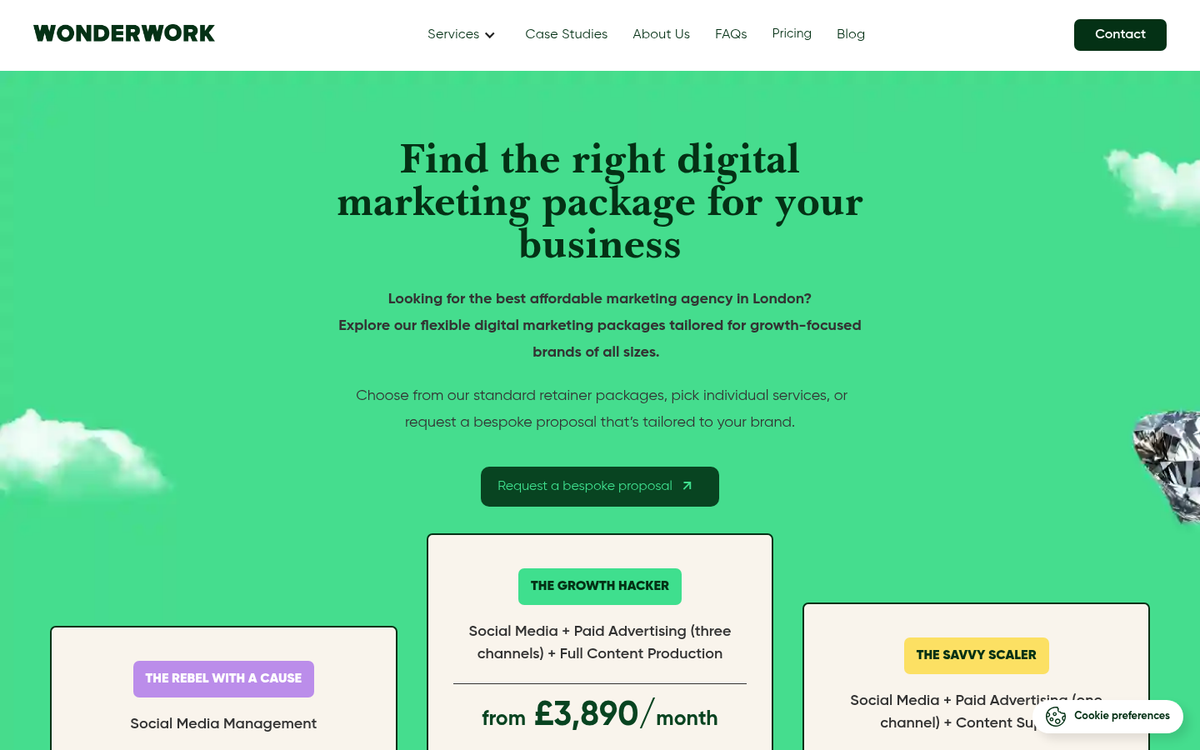
When thinking about what to spend, a helpful frame is percentage of marketing budget instead of a fixed dollar figure. Semrush's research found that the most successful content-driven businesses are spending over 10% of their total marketing budget on content. HubSpot data has found that 26% of marketers are working with quarterly content budgets between $40,000 and $80,000 - which works out to roughly $13,000 to $27,000 per month.
The bottom line for outsourcing: pay for what your business actually needs and don't let the sticker shock fool you. Content marketing managed well is still one of the highest-ROI channels available - it's just that "managed well" has a price tag attached to it.