





ClickBank is one of the larger affiliate networks out there, and it's also been around long enough that plenty of people have written it off entirely - labeling it a scam, a waste of time, or a relic of a bygone era of internet marketing. Of course, the same has been said about email marketing, SEO, and paid social at various points, so it's worth digging into whether that reputation is actually earned.
Picture this scenario. A newbie marketer, fresh off a Reddit thread or a YouTube "passive income" rabbit hole, signs up for ClickBank. They scroll through the marketplace, grab the first offer with a decent-sounding commission, throw up a basic site with a few pages of AI-generated content, and blast some cheap traffic at it from a shady source. Nothing converts. They pull the plug, decide ClickBank is garbage, and go post about it online to warn others.
Savvy marketers will recognize there are a number of flaws with this strategy. Let's list off a few of them, shall we?
- The marketer only checked out basic offers without doing proper research. These offers will naturally tend to be lower quality and higher competition, because thousands of other novice marketers are doing the exact same thing.
- The marketer didn't build a real site - they generated some thin content and hoped it would be enough. In 2026, with AI-generated content flooding every corner of the internet, audiences and search engines alike are far more discerning than ever before.
- The marketer paid for low-quality traffic, and probably received as many bots as real people. Whatever real traffic came through was likely completely misaligned with the offer. They may have only spent $20, but they got exactly what they paid for.
- The marketer chose to blame their tools - the affiliate network specifically - rather than examine their own approach. In their mind, they followed the guides, so their technique couldn't possibly be the problem.
The fact is, ClickBank is a perfectly valid affiliate network. The platform has been operating for 27+ years, has paid out more than $7.3 billion to affiliates over its lifetime, and paid out over $300 million to affiliates in 2024 alone. It currently has over 200,000 active affiliate marketers and generates an estimated $864 million in annual product sales. No platform sustains those numbers by being a scam. It works - and anyone telling you it doesn't either didn't put in the effort themselves, or broke the terms of service and refuses to admit it.
Key Takeaways
- ClickBank is legitimate, having paid out $7.3 billion to affiliates over its lifetime and $300 million in 2024 alone.
- Failed affiliates typically choose poor products, use thin AI content, buy cheap traffic, and blame the platform instead of their strategy.
- ClickBank offers 50-75% commissions, 60-day cookies, and recurring products, but requires filtering out many low-quality marketplace offers.
- Pre-selling through in-depth, genuine content builds audience trust before pitching, making conversions significantly more likely.
- Building an email list and offering a valuable lead magnet creates an owned audience resilient to algorithm and platform changes.
The Pros and Cons of ClickBank
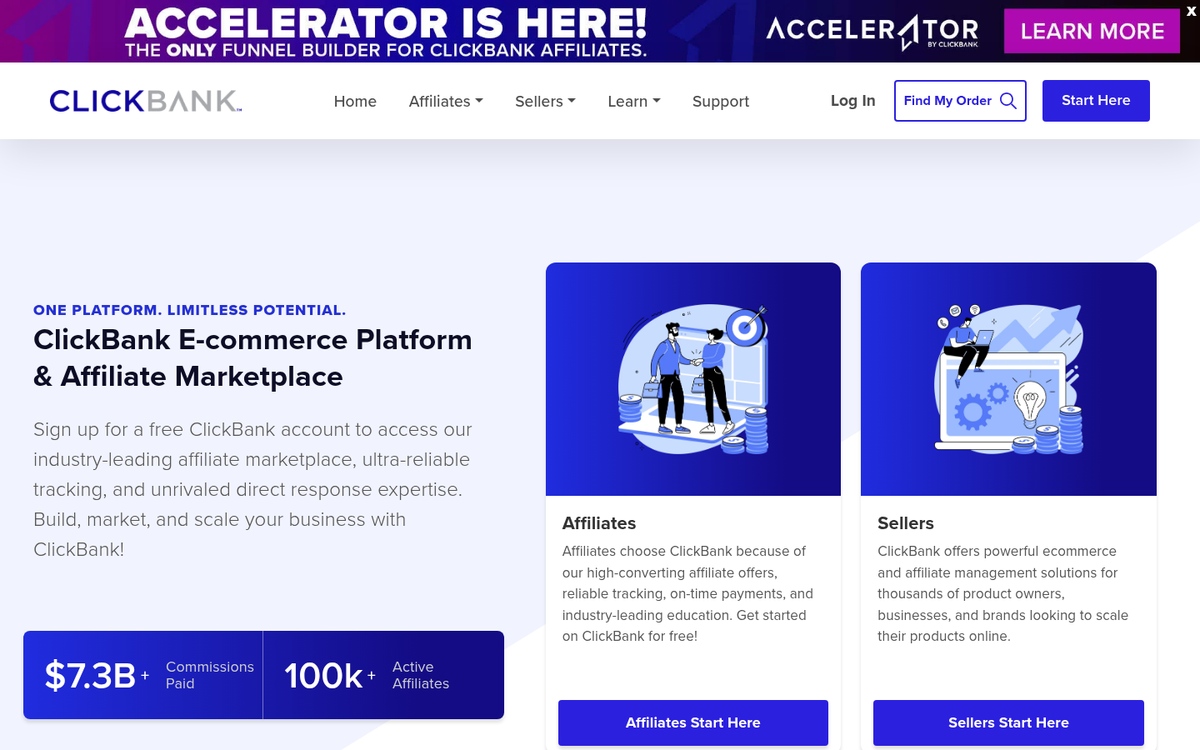
That's not to say ClickBank is a perfect network. On the one hand, they genuinely do have a lot going for them. Commissions typically run between 50% and 75% of the sale price, which is unusually generous compared to most affiliate programs. They're available in the vast majority of countries worldwide, so affiliate marketers from Australia, Brazil, Vietnam, or Peru can still participate, though offer availability may vary by region. They offer a solid selection of recurring commission products - subscriptions and memberships - which can build meaningful passive income over time. They also handle the technical heavy lifting: payment processing, affiliate tracking, refund management, and reporting are all baked in. Their 60-day cookie duration is also longer than many competing networks, giving you a better shot at getting credit for delayed conversions.
On the other hand, because ClickBank's marketplace is open to virtually anyone, there are a lot of low-quality products mixed in with the legitimate ones. You'll need to filter through a fair amount of noise to find offers worth promoting. The best-performing products already have established affiliates competing for the same audience, so breaking in requires either a genuinely differentiated angle or a willingness to target less saturated offers. It's also difficult to predict how well an offer will convert until you've actually sent traffic to it, which means there's an inevitable testing cost for newer marketers.
Picking Products to Make Money
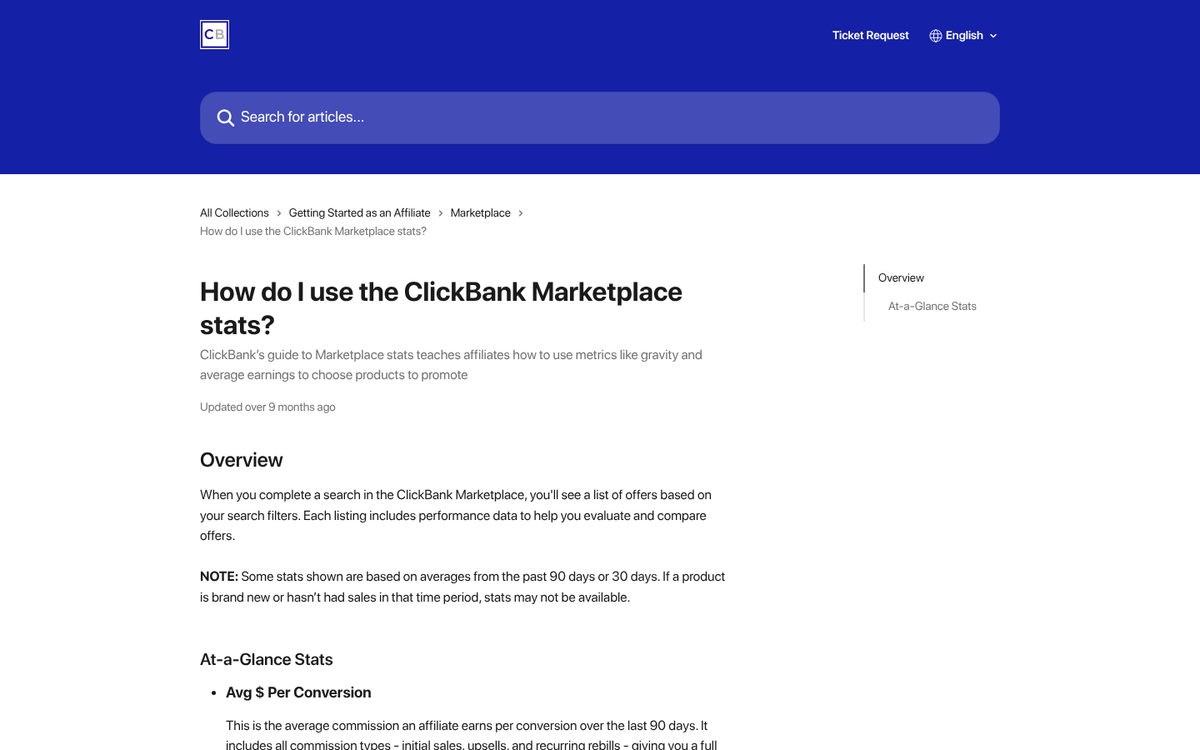
The amount of money you can make depends heavily on the product you choose. Something with a high ticket price might sell rarely, while a lower-priced offer with strong upsells and a high conversion rate can massively outperform it. The key is understanding what the metrics actually mean before you commit.
ClickBank provides several metrics for their products, and you should understand what they mean before making a decision:
- Initial sale value: The amount you earn per sale before any upsells are factored in.
- Average sale percent: Your commission as a percentage of the total sale price.
- Gravity score: A rolling metric reflecting how many unique affiliates have made at least one sale of the product in the last 12 weeks. Higher gravity generally signals a proven converter.
- Rebill metrics: The recurring commission data for subscription-based products - your ongoing earnings from customers who stay subscribed.
A good product is one that has an accessible entry price point with multiple upsell paths built in. You want the front-end offer to be easy to say yes to, and the upsell sequence to do the heavy lifting on revenue. This structure also gives you multiple angles to work with in your marketing.
A good product will also have a strong, professional landing page. Click through the affiliate link yourself and evaluate it honestly. Does it look like something you'd feel comfortable buying from? In 2026, audiences are increasingly skeptical of anything that feels dated, over-hyped, or cheaply produced. Video sales letters and well-written long-form pages still work, but only if they're polished and credible.
A good product should have solid reviews and a legitimate reputation online. Before you commit to promoting anything, search for it independently. Real customer feedback matters, and products with a history of complaints or high refund rates will cost you credibility and commissions.
A good product should also have a respectable gravity score. A gravity above 20 is a reasonable starting point, though context matters. A very high gravity score isn't automatically a red flag - it often means the audience is large enough that even newer affiliates can carve out a slice. Extremely low gravity, on the other hand, usually means the product isn't converting for anyone, and that's a much harder problem to solve with traffic alone.
Beyond the numbers, it's worth noting that ClickBank has hundreds of Platinum clients generating a minimum of $250K per year on the platform, and Diamond clients generating $5M or more annually. Those aren't outliers propped up by luck - they're the result of picking the right products and building proper systems around them.
Tips for Making Real Money with ClickBank
I'm not going to walk you through affiliate marketing from scratch. You should already have a working understanding of how funnels, tracking, and content work. Instead, here are the tips that actually matter in 2026 - along with a few mistakes worth avoiding.
First, ditch the banners. Display ads are an afterthought for most audiences now. Ad blindness is real, and anyone who's been online for more than five minutes has learned to visually filter them out. The vast majority of your conversions will come from contextual links embedded in genuinely useful content.
It all comes down to pre-selling. Pre-selling is the practice of building trust, providing value, and warming up an audience before you ever ask them to buy something. It's the difference between a cold pitch and a recommendation from a trusted source. Done well, by the time someone reaches your affiliate link, the sale is already mostly made.
Content is the engine of all of this. Every product you seriously want to promote needs at minimum one substantial piece of content dedicated to pre-selling it - ideally more. The most durable model is still the authority review site: in-depth product reviews, comparison posts, tutorials, use-case breakdowns, and category-level content that builds topical trust over time. Reviews need to be written well and provide real insight - not a surface-level summary of what the sales page already says.
This matters more now than it ever has. With AI-generated content flooding the web, Google and other search engines have become far more aggressive about rewarding genuine expertise and firsthand experience. Thin content doesn't just underperform - it actively gets filtered out. If you're using AI tools to assist with content creation (and in 2026, most serious marketers are), the differentiator is the layer of real insight, opinion, and experience you add on top of it.
You need to lead with value. The front end of your site - the content most likely to reach new audiences - should be largely free of hard pitches and heavy CTAs. Why? Because people share genuinely useful content. A resource that actually helps someone solve a problem gets bookmarked, linked to, and passed around. A page that reads like a sales brochure gets closed in three seconds.
To build a more durable business, double down on value and build a mailing list. Email remains one of the highest-converting channels in affiliate marketing, and it gives you an audience you actually own - one that isn't subject to algorithm changes or platform shifts. Your site content should serve two purposes: providing value to drive organic reach, and funneling interested readers toward an opt-in. From there, you can pitch offers directly through email to an audience that already trusts you.
You can accelerate list growth by offering something of genuine value for free. A well-produced lead magnet - an ebook, a framework, a mini-course, a template - related to the niche you're operating in can convert browsers into subscribers at a meaningful rate. The lead magnet itself can contain your affiliate links, making it a revenue asset as well as a list-building tool. The key is that it needs to actually be useful, not just a thinly veiled pitch document.
On the traffic side, make sure you're tracking properly and setting up retargeting. Most visitors won't convert on their first visit - that's just the reality of the funnel. Retargeting lets you re-engage people who showed enough interest to visit your site but didn't take action, reaching them again at a better moment. Even a modest retargeting setup can meaningfully improve your overall conversion rate without requiring you to acquire entirely new traffic.
One broader strategic note worth making in 2026: the affiliate marketing industry as a whole has grown into a $27.8 billion market, and competition has intensified across every major niche. The era of the five-page microsite is firmly over. What works now is depth - topical authority, genuine expertise, and a content ecosystem that gives people real reasons to trust you before they ever see an affiliate link. That's a higher bar than it used to be, but it's also a more defensible position once you've built it.
All of this combined gives you a genuinely solid foundation for success with ClickBank in 2026, but as always, how far you go with it depends entirely on the motivation, consistency, and resources you bring to the table. In other words, it's still up to you.

1 response
Thoughtful replies only - we moderate for spam, AI slop, and off-topic rants.
Where did you get those income screenshots from?