





Key Takeaways
- Buffer is significantly cheaper, costing ~$180/year versus Hootsuite's ~$1,188/year for a single user managing three channels.
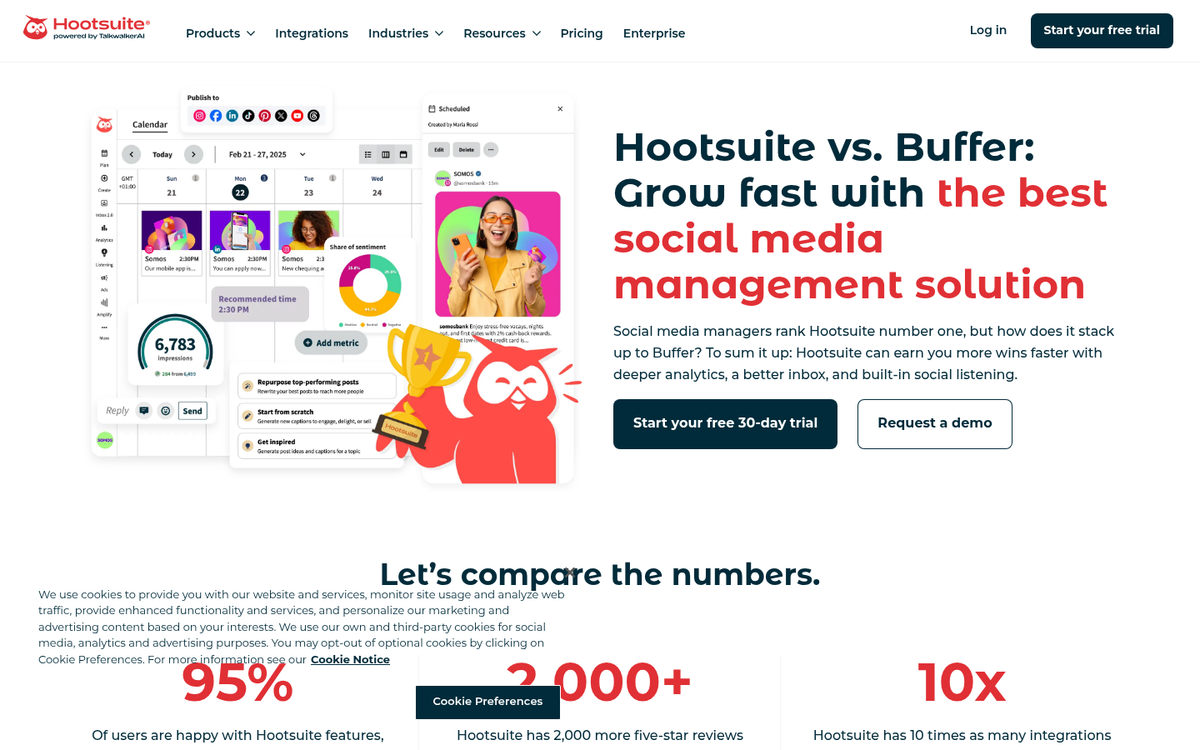
- Hootsuite offers ten times more integrations and far superior social monitoring capabilities compared to Buffer.
- Buffer suits small businesses and solo creators; Hootsuite targets enterprise users with complex, multi-platform needs.
- Hootsuite discontinued its free plan in 2023, with paid plans now starting at $99/month.
- Analytics is considered a draw - Buffer offers simplicity while Hootsuite provides deeper, more customizable reporting.
Buffer and Hootsuite are both compelling, high-profile platforms that link into your social media accounts and help you manage them across numerous sites and profiles. They allow you to simplify management and collaborate with teams, should you desire. However, quite a bit has changed - like pricing, features and who each tool is actually built for. So which is better in 2026?
Social Coverage
When you're choosing a platform to manage your social profiles, you want it to manage the profiles you run.
Buffer supports the places you'd expect: Instagram, Facebook, Twitter/X, LinkedIn, Pinterest, TikTok, YouTube, Mastodon and more - it covers pages, profiles and groups across the relevant networks and has done a good job keeping up with the places that matter most to small and mid-sized businesses. If you're using it to drive traffic, see how Buffer can increase your blog traffic.

Hootsuite supports the above and then some. With ten times as many integrations as Buffer, Hootsuite's network reach is wider. If you're managing a complex, multi-platform presence across niche or business-level networks, Hootsuite has an advantage in coverage.
For most small businesses and content creators, Buffer's network support is enough. But if breadth of social coverage matters to you, Hootsuite wins this category.
Image Sharing
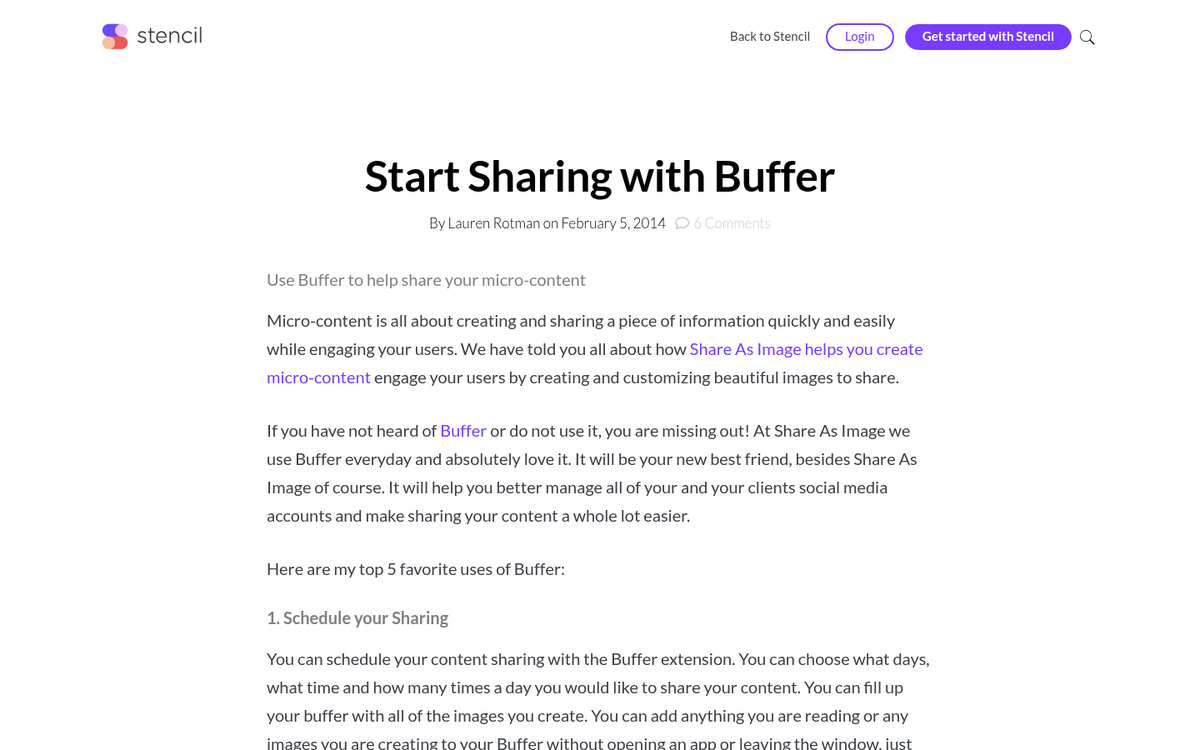
Buffer has long had a smoother image-sharing experience that lets you right-click an image in your browser and share it directly without downloading it first. Hootsuite's image workflow has improved over the years but still means more steps. For users who frequently share visual content on the fly, Buffer remains the more frictionless option here.
Social Monitoring
Buffer has made improvements to its engagement tools over the years. But it remains primarily a publishing and scheduling platform - it's not built for deep social monitoring or real-time feed watching.
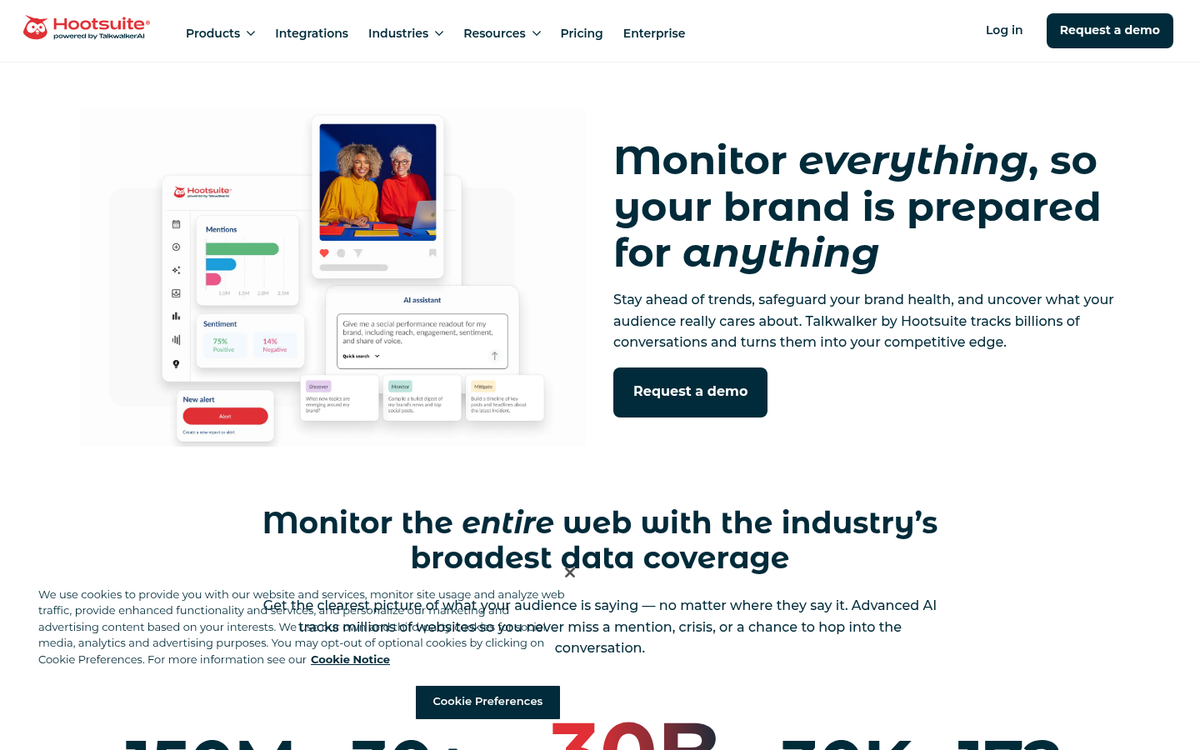
Hootsuite, on the other hand, was built with monitoring in mind. You can set up streams of feeds, showing social mentions, messages, followers, hashtags, or keywords - all from a single dashboard. For teams that need to actively monitor and respond across multiple channels, this is a significant benefit. You can also check the social signals of a website to get a broader picture of your content's reach.
Hootsuite wins this category and it's not especially close. If social monitoring is a priority for your business, Buffer simply isn't the right tool.
Analytics
Both platforms give you analytics. But the depth and accessibility can vary considerably.
Buffer's analytics are clean, straightforward and legitimately helpful for smaller operations. You can track post performance, engagement trends and audience growth without being overwhelmed. The data is presented in a digestible format, which is a big plus for solo operators and small teams.
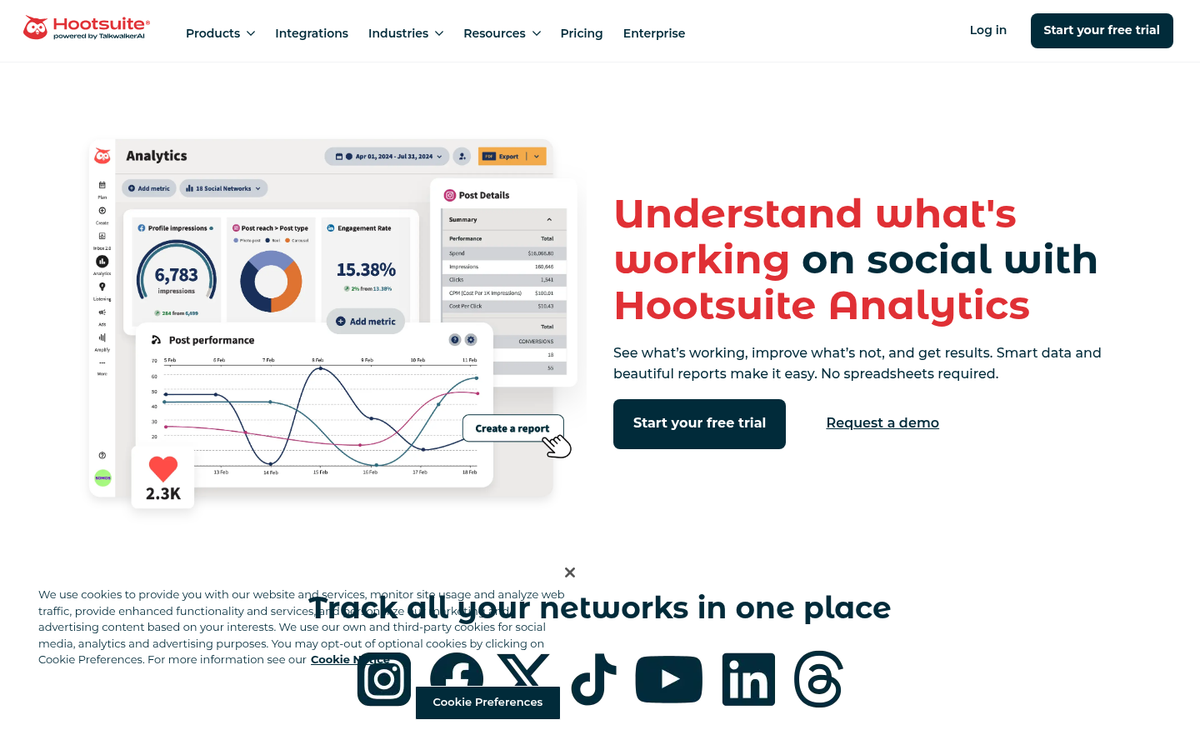
Hootsuite's analytics are far more robust and give you custom reports and deeper performance metrics across channels. That said, the most powerful reporting features are usually locked behind higher-tier plans, which can make the total cost climb faster. If you're evaluating whether premium tools justify their price, it's worth asking whether the added cost is actually worth it.
If you need business-grade analytics, Hootsuite is the stronger tool. If you want clean, easy-to-read insights without complexity, Buffer holds its own. You can also use UTM parameters to track your blog traffic alongside either platform for a more complete picture. This one is a draw depending on your preferences.
Integrations
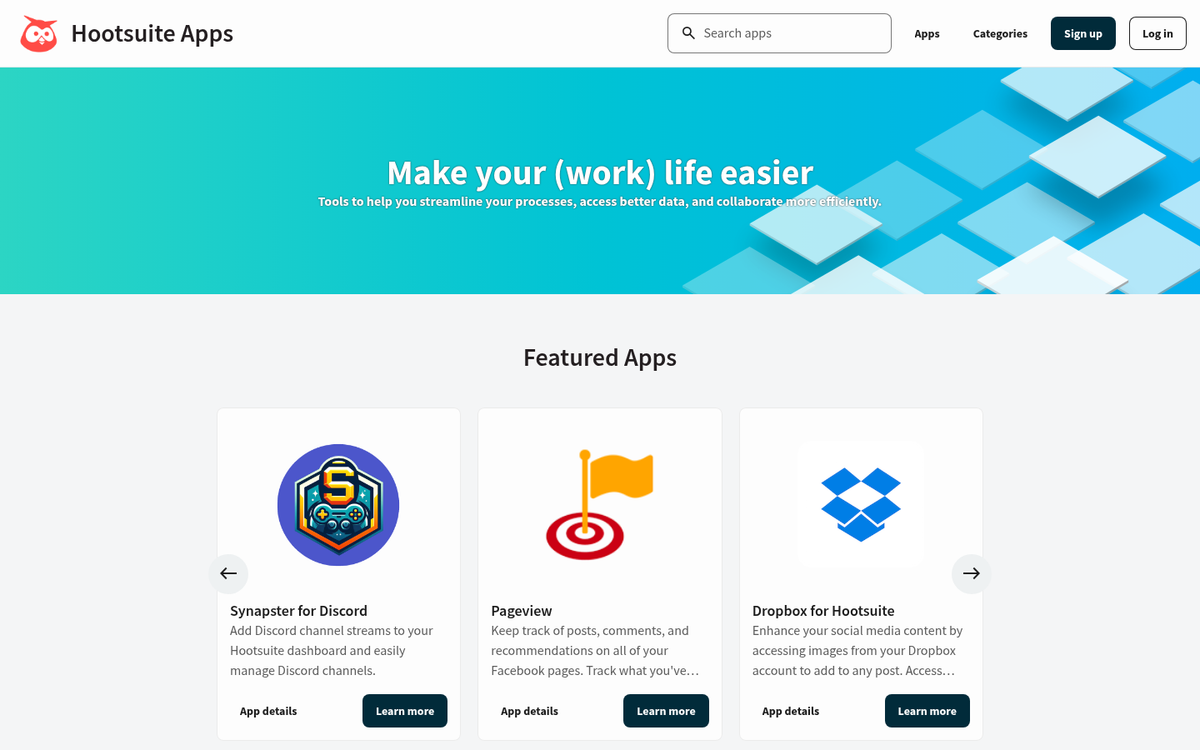
Hootsuite has roughly ten times as many integrations as Buffer. That gap matters at scale. From CRM tools to ad platforms to content libraries, Hootsuite's app ecosystem is vastly bigger. Buffer has a respectable set of integrations - like Zapier, IFTTT and RSS tools - but it doesn't come close to matching Hootsuite's breadth.
Hootsuite also has over 2,000 more five-star reviews than Buffer across review platforms, reflecting its larger and more established business user base.
For businesses that depend heavily on tool stacking and workflow automation, Hootsuite is the winner here.
Pricing
Pricing is where the two platforms diverge most dramatically - and where your choice may be made.
Buffer has a free plan that supports up to 3 channels with basic scheduling. Paid plans start at $5 per channel per month (billed annually) or $6 per channel per month on a monthly basis. The Team plan runs $10 per channel per month - this per-channel pricing model makes Buffer very scalable in a cost-friendly way for smaller operations.
Hootsuite discontinued its free plan on March 31, 2023. Their Professional plan now starts at $99/month (billed annually) and the Team plan costs $249/month annually. There is no actual entry-level option anymore.
To put this in perspective: a solopreneur managing 3 channels pays approximately $180/year on Buffer versus $1,188/year on Hootsuite. A five-person team managing 5 channels pays roughly $600/year on Buffer versus $2,988/year on Hootsuite - it's a staggering difference.
Buffer serves over 70,000 paying customers with an average revenue per user of around $25, reflecting its strong foothold with small businesses and independent creators. Hootsuite, by contrast, generates over $350 million in annual revenue compared to Buffer's $31.1 million - a clear indicator of where each platform sits in the market.
For pricing, Buffer wins decisively - especially for small businesses, freelancers and growing teams.
The Bottom Line
The right choice depends almost entirely on the size and complexity of your operation.
Choose Buffer if: You're a small business, solo creator, or growing team who needs reliable scheduling, clean analytics and an affordable price point. Buffer's per-channel pricing is transparent, fair and scales gracefully without punishing you as you grow.
Choose Hootsuite if: You're managing a large, multi-platform presence, need business-grade social monitoring and reporting and have the budget to support it. Hootsuite is a legitimately powerful platform - but you'll pay for it.
In 2026, these two tools are no longer competing for the same customer. Buffer owns the small-to-mid market; Hootsuite dominates enterprise. Know which one you are and the choice largely makes itself. If you're still building out your strategy, it's worth exploring business models that actually make money and reviewing the tools available to support your growth.



2 responses
Thoughtful replies only - we moderate for spam, AI slop, and off-topic rants.
I have a question for you. I was told if you use Hootsuite, you can only monitor the click throughs if you post through Hootsuite to your various social media platforms, (Fbook, Twitter), etc. But if I like Buffer's posting system better, and I choose to use them to post my posts, then my Hootsuite reports won't pull this info, correct? If that's true, how do people use both Hootsuite and Buffer and get correct data pulled, or is there a social media management tool that allows me to managment fbook, twitter, linkedin and youtube and I can also use buffer/bit.ly?
Nice one there! I've heard so much about Hootsuite and I decided to give it a try lately but wasn't very impressed with the current pricing on their official website currently. It's against the little you said about it here. Firstly, there's no Free plan, it's just a 30-day trial. Also, the basic price has gone up too.