Key Takeaways
- Free, accurate, all-in-one social signal checkers are largely gone due to API restrictions and platform shutdowns.
- BuzzSumo remains the top paid option for per-post social data, despite costs reaching $199/month in 2026.
- SharedCount is the best free tool, but only tracks Facebook engagements and Pinterest pins.
- "Dark social" sharing via Slack, Discord, and AI chat tools creates a growing blind spot for traditional trackers.
- Native platform analytics offer the most accurate data for your own content, but require checking multiple dashboards separately.
Social signals are one of the most important metrics for a website to monitor, if they consider user engagement to be paramount. There are other helpful metrics: traffic, conversions and costs are all very important to know. However, social signals are proof of brand exposure, they're evidence of positive sentiment, and they're a way users can see that other users like a piece of content. It's a way to measure discovery, a way to measure viral exposure, and a way to influence future visitors.
So how do you track social signals, for your website or for someone else's? Here are five tools you can use.
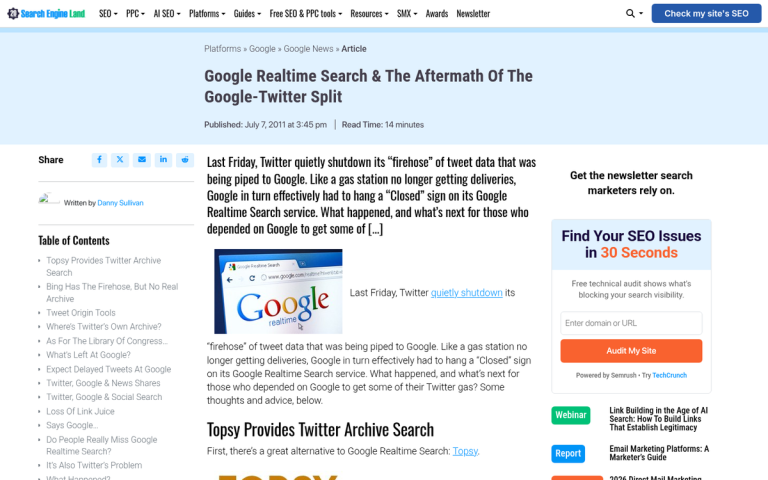
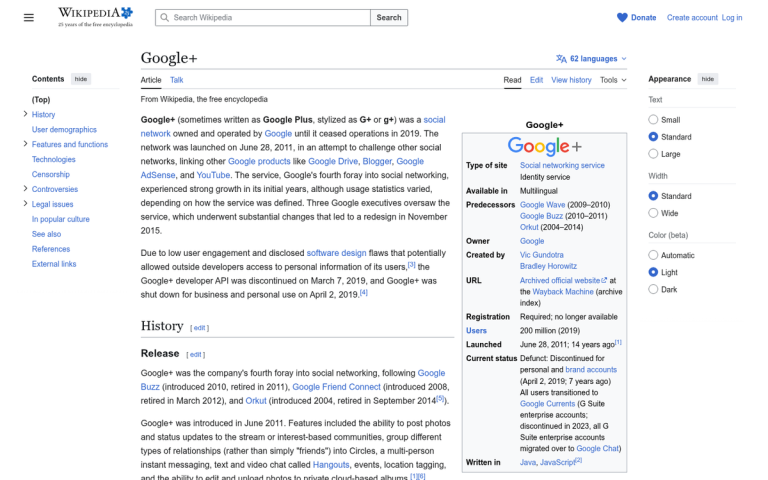
One thing should be said here before we start. Tracking social signals has become increasingly tough over the years. Twitter (now rebranded as X) removed tweet counts from their button and API long ago, Facebook limits third-party access to engagement data, Google+ has been shut down since 2019, and StumbleUpon no longer exists. AI-driven content discovery and algorithmic feeds have changed how content spreads online, which makes traditional share-count metrics only one part of a much bigger challenge. Make sure you understand the limitations of any tool you use before drawing conclusions from the data.
The Landscape Has Changed Significantly Since 2016
When this post was written, tools that pulled Google+, StumbleUpon, and Twitter share counts were common. All three of those data sources are now gone. Google+ shut down in April 2019. StumbleUpon shut down in June 2018 and rebranded as Mix, which itself has faded into obscurity. X (formerly Twitter) has locked down its API so aggressively since 2023 that most third-party tools have no access to tweet or engagement data without paying API fees, which means many of the older tools reviewed in the original version of this post are now partially or completely broken.

Additionally, the rise of AI-generated content and AI-powered content discovery tools like Perplexity, ChatGPT, and others has changed how users find and share content. Social sharing as a raw metric has become less easy to interpret, because content can go "viral" in private channels like Slack, Discord, WhatsApp, and AI chat interfaces where no public share count is ever recorded. These are usually referred to as "dark social" referrals, and they represent a growing blind spot for traditional social signal checkers.
1. BuzzSumo
BuzzSumo remains the most reliable option for tracking social signals on a per-content basis. It has evolved considerably since the mid-2010s and is now more of a full content intelligence platform than a simple social checker. It tracks Facebook engagements, X (Twitter) engagements where data is available, LinkedIn shares, Pinterest pins, and Reddit engagements. It also incorporates backlink data, journalist databases, and AI-powered content trend analysis.

The free tier is now extremely limited - you get only a handful of searches per month before hitting a paywall. Paid plans start at around $199 per month as of 2026, which is a bit of a jump from the $100/month pricing of a few years ago. That said, for content marketers and SEOs who need reliable per-post social data, it's still the clearest winner on the market. No other tool comes close to its combination of accuracy, depth, and extra content research features.
One important caveat: BuzzSumo's X/Twitter data has become increasingly unreliable since Elon Musk's API restrictions in 2023. Treat any Twitter/X figures from BuzzSumo as estimates instead of hard counts.
2. Keyhole
Keyhole has grown into a legitimate social analytics platform that tracks hashtags, keywords, accounts, and URLs across Instagram, X (Twitter), Facebook, LinkedIn, TikTok, and YouTube. For tracking how a piece of content is spreading across social platforms, it offers real-time monitoring with cleaner dashboards than most legacy tools. If you rely on social media to promote your content, having this kind of visibility can make a real difference.

Pricing is not cheap - plans usually start around $99 to $179 per month depending on the feature set - but for businesses that need ongoing social signal monitoring instead of one-off checks, Keyhole gives more useful data than most of the older URL-checker tools that are now largely broken. It's worth considering alongside your broader content marketing strategy to make sure you're spending wisely.
3. Mention
Mention is a brand monitoring tool that captures social signals indirectly - instead of pulling share counts from a URL, it tracks every time your brand, content, or URL is mentioned across social media, news sites, forums, blogs, and review platforms. This sidesteps the API access problem that kills most share-count tools, because it monitors the conversation instead of querying platform APIs for counts.
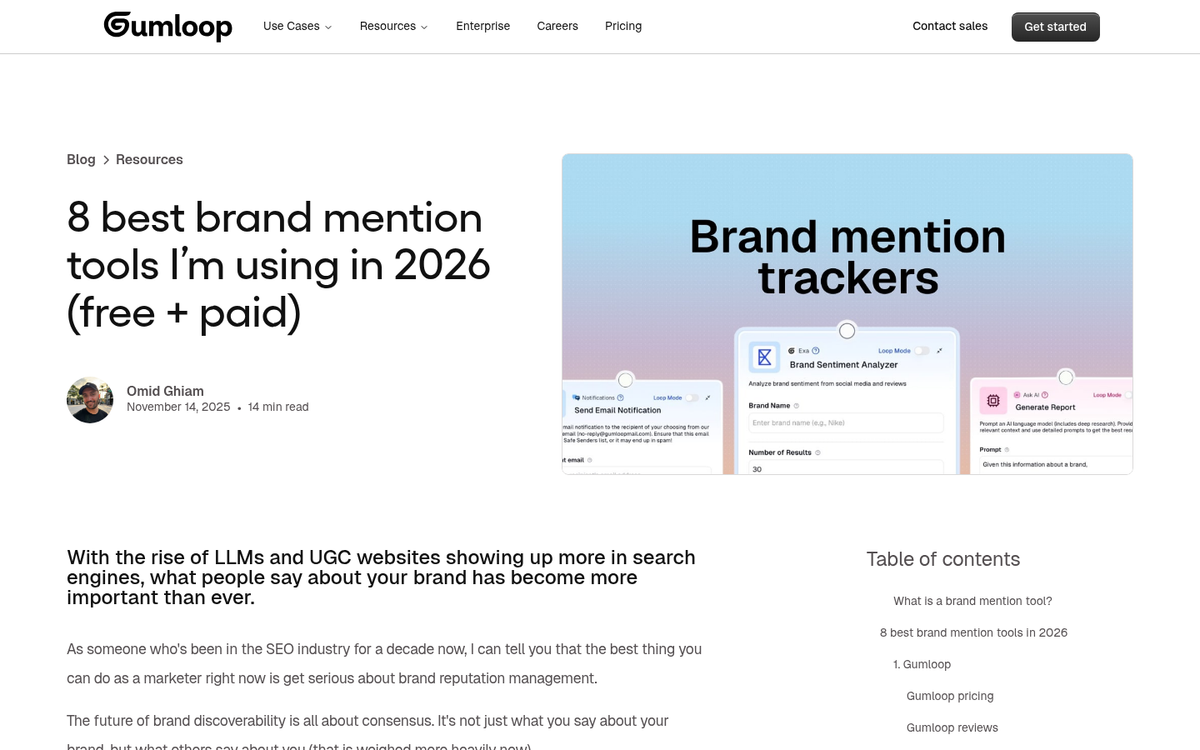
For measuring social signal results in 2026, it's arguably more useful than raw share counts anyway. A piece of content being actively talked about on Reddit, LinkedIn, or X tells you far more about sentiment and reach than a share button counter that most platforms no longer expose publicly. Mention has a free plan with limited alerts, and paid plans start around $49 per month.
4. Sprout Social
Sprout Social is a full social media management platform. But its analytics suite doubles as a strong social signal tracker for your own accounts and content. If you are monitoring signals for your own website and social profiles instead of a competitor's, Sprout Social gives you engagement data across Facebook, Instagram, X (Twitter), LinkedIn, Pinterest, TikTok, and YouTube in one dashboard.
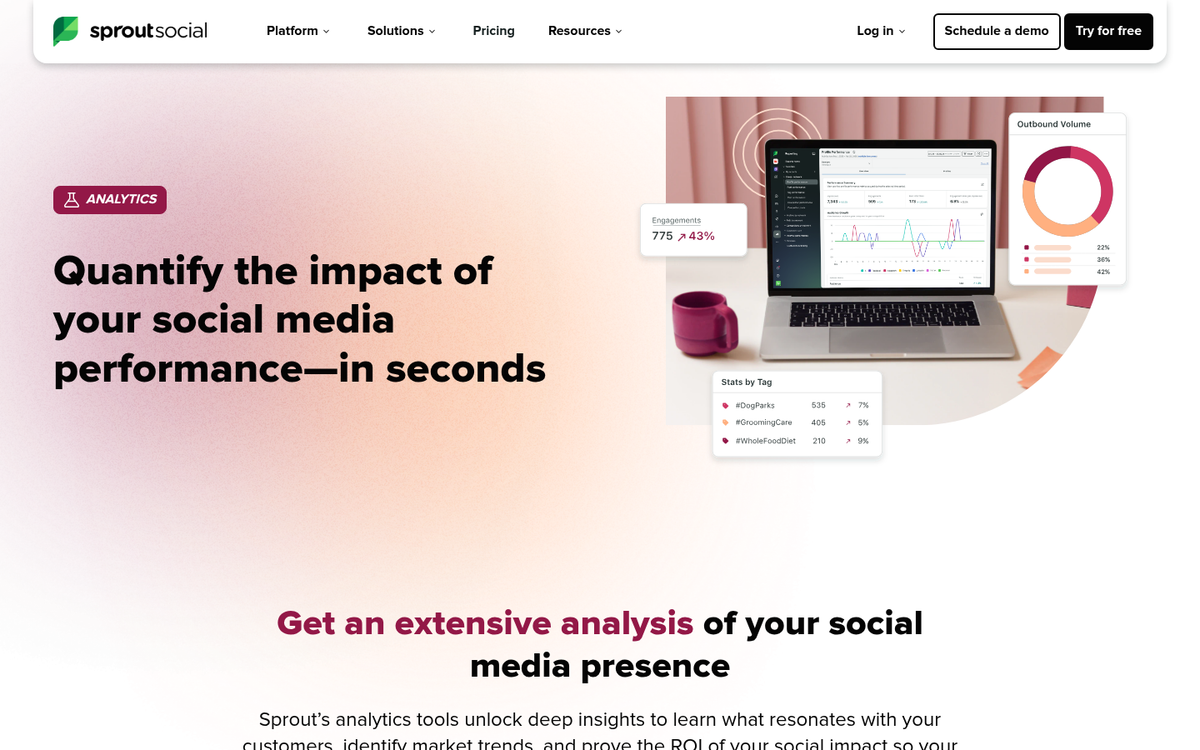
Where it falls short is competitor and third-party URL analysis - you can't simply paste a competitor's post URL and get their share counts, as some older tools once allowed. But for tracking your own content's social performance over time, the historical data, trend charts, and post-level reporting are excellent. Plans start around $249 per month, which makes this a tool for marketing teams instead of casual users.
5. SharedCount.com
SharedCount was mentioned in earlier versions of this post as a tool that had gone dark. As of 2026, SharedCount is functional again and remains one of the few free tools that can pull social engagement data for any URL without requiring a login. It currently tracks Facebook engagements (reactions, comments, and shares combined via the Facebook OpenGraph API) and Pinterest pins - that's it - but that's two more than most free tools reliably deliver.
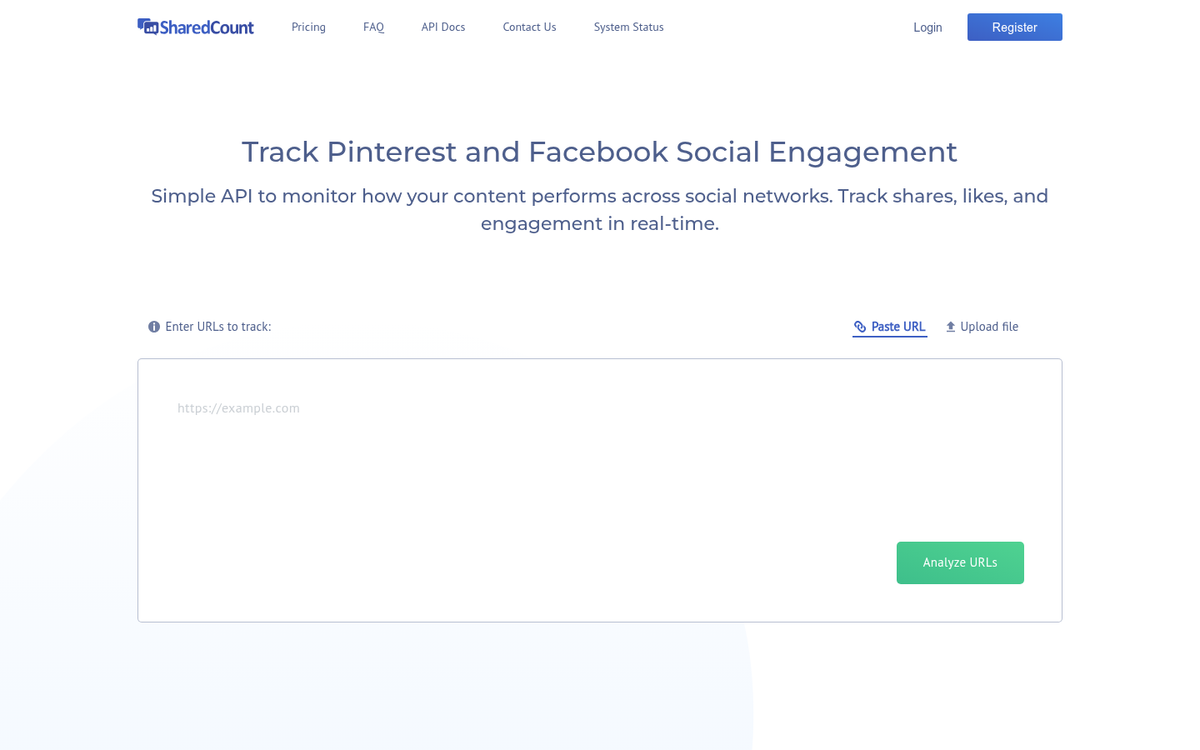
It is barebones by design. There is no dashboard, no historical tracking, no trend data, and no competitor monitoring. You paste a URL and you get numbers. For a free, no-account quick check, it's still one of the more honest and functional tools available, as long as you go in with realistic expectations about what two data points can tell you.
Bonus: Native Platform Analytics
For your own content, the most accurate social signal data in 2026 comes from the platforms themselves. Facebook Business Suite, LinkedIn Analytics, Pinterest Analytics, TikTok Analytics, and X (Twitter) Analytics all give you engagement data that no third-party tool can match for accuracy. If you have claimed your brand pages and verified your website domain where applicable, these native dashboards will give you cleaner, more up-to-date data than any scraper or API-dependent checker.

The trade-off is fragmentation - you have to check five or six different dashboards instead of one unified view. Tools like Sprout Social, Hootsuite, or Buffer exist largely to solve that problem, though at a cost.
Final Thoughts
The blunt truth is that the era of free, accurate, all-in-one social signal checkers is largely over. Platform API restrictions, the shutdown of Google+ and StumbleUpon, and X's aggressive monetization of data access have closed most of the doors that older tools relied on.
If you need a free quick check, SharedCount is your most reliable option for Facebook and Pinterest data. If you need per-post analysis, BuzzSumo remains the industry standard despite its price. And if you want to monitor your own content's social performance over time, native platform analytics combined with a tool like Mention or Sprout Social will serve you quite a bit better than the legacy URL checkers that are now mostly broken or abandoned.