Key Takeaways
- Display ads alone won't replace a salary; at roughly $1.96 per 1,000 views, scale is required.
- Digital products like courses and templates are highly scalable, requiring one-time creation but generating indefinite revenue.
- Selling skills directly is lucrative but unstable; AI has compressed rates at the lower, commodity end of freelancing.
- Affiliate sites must provide genuine, expert-driven value; Google's recent updates have severely penalized thin, low-quality affiliate content.
- Successful blogs in 2026 typically combine multiple monetization models rather than relying on any single strategy.
Making money from a blog sounds simple on the surface. But turning it into a genuine income is going to need a real strategy. Anyone can slap a few display ads on a site and earn a few dollars a month - at an industry average of around $2.80 per 1,000 banner ad impressions, and with ad networks taking roughly 30% of that, you're looking at about $1.96 per 1,000 views after their cut; it's not a living. If you want your blog to replace a salary, you need a deliberate business model built around one of a handful of great strategies.
The rise of AI has dramatically changed the landscape since some of these strategies were first written about. Content production is faster and cheaper than ever, competition has intensified in nearly every niche, and the tools available to solo bloggers are more powerful than anything that existed even five years ago. That context matters as we talk about each model. There are a lot of variations on the core strategies here. But they all share a few characteristics in common, so we can lump them together and talk about them as one idea; it's what I've put together: five core ideas you can use to make money from your blog in 2026.
Model 1: Selling Physical Products
The first option is to basically become a business like any other. A retail store sells products, a mom and pop store sells products, a gas station sells products, and you too can sell products. I list it first not because it's the best, but because it's one of the most demanding to execute well.
Physical products are a tough game to break into. You'll need an actual financial buffer, because you won't be profitable immediately - no store ever is - it's best to have something you already make or do as a hobby and turn it into a business, though that doesn't guarantee success on its own.
Physical products need the trappings of a web-based business. You need to manage payments securely, manage customer shipping information responsibly, fulfill orders accurately and promptly, and keep your customers satisfied. You need an inventory system, a reliable manufacturing process, or the ability to produce on demand.

That's why product sellers outsource as much of this as possible. They sell through places like Etsy, Amazon, or eBay, which manage payments, customer service, and data security on their behalf. For those who want more control and branding, places like Shopify remain a popular choice, offering a branded storefront without building from scratch. Running your storefront on your own domain costs more, but it builds your brand instead of someone else's.
Crowdfunding has become a legitimate launchpad for physical product businesses. Since its 2009 launch, Kickstarter alone has helped fund over 193,000 projects, with more than $6.6 billion pledged by over 48 million backers. If you have an original product idea, a successful crowdfunding campaign can validate demand and fund your first production run before you've spent a dollar of your own money.
The biggest issue physical sellers face is scaling. Starting small is fine - it's encouraged - and the most common point of failure is taking on more than you are able to manage too soon, or expecting fast growth before you've earned it.
Model 2: Selling Digital Products
Almost every problem with selling physical products comes from the physical nature of the products themselves. If you're selling handmade goods, you have to make them, store them, ship them, and absorb the costs of anything that goes wrong in transit.
Digital products remove most of that friction. There's no manufacturing, no shipping, no storage, and no inventory to manage. You produce once and sell indefinitely, which makes digital products one of the most scalable monetization models available to bloggers.
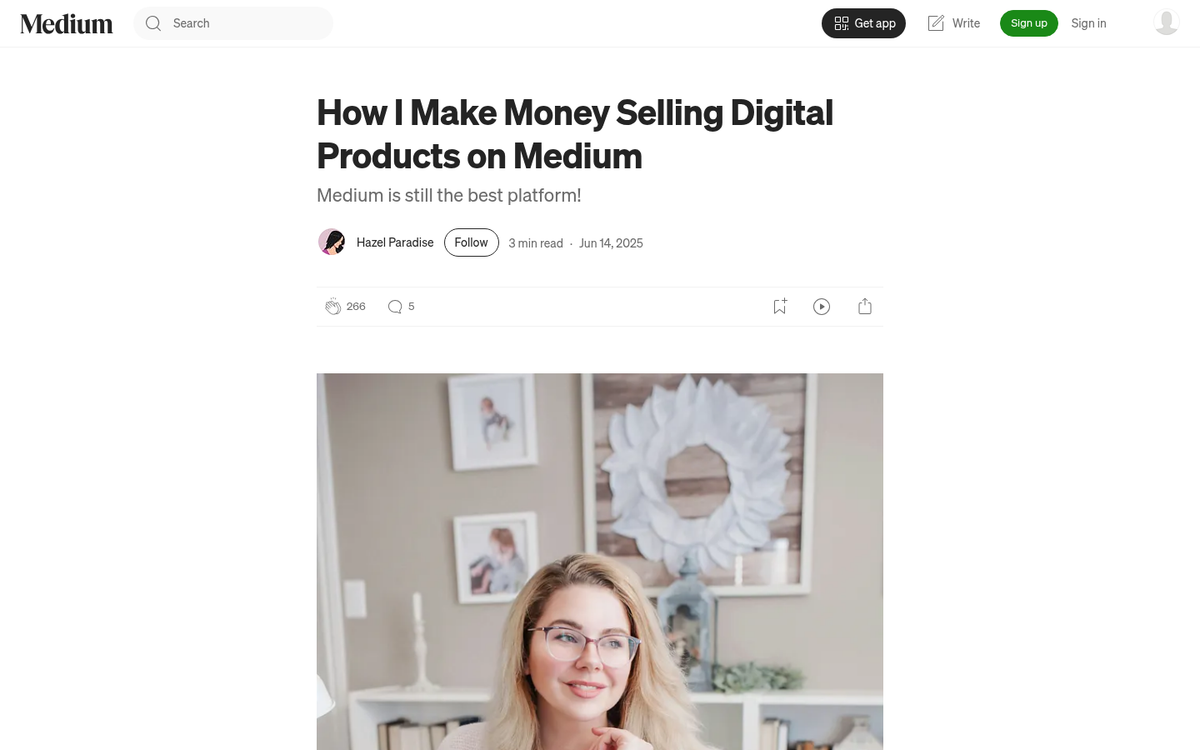
So what do you sell? There are a few main paths you can take.
- eBooks. eBooks are relatively simple to produce and can be sold through your own site, Amazon, or direct download platforms like Gumroad. The barrier to entry is low, so competition is fierce. You'll need either a substantial audience or a genuinely differentiated angle to stand out. In 2026, AI-assisted writing has flooded many categories with mediocre content, which paradoxically creates an opportunity for bloggers who bring real depth and expertise.
- Software and tools. From niche utility apps to browser extensions to AI-powered micro-tools, software remains a high-value digital product category. The caveat is that you need either the coding skills to build it yourself or the budget to hire developers while still maintaining healthy margins. No-code and low-code platforms have lowered the barrier here considerably.
- Online courses and memberships. Structured video courses and membership communities remain among the strongest digital product models for bloggers with genuine expertise. Platforms like Teachable, Kajabi, and Podia make it straightforward to host and sell courses directly. You can sell a course as a one-time purchase or bundle it into a recurring membership that generates predictable monthly revenue - a model covered in depth in our guide to selling coaching services on your blog.
- Templates, prompts, and AI assets. A newer but fast-growing category: selling ready-made assets like design templates, spreadsheet systems, or curated AI prompt libraries. If you've developed workflows or tools that save people meaningful time, there's a real market for packaging and selling them.
Most digital products are best sold directly through your own website or a dedicated platform, as it gives you full control over pricing, customer data, and margins. If you're weighing your options, it's also worth exploring ways to integrate a shop and sell products on your blog without relying on third-party marketplaces. Apps and games remain the primary exception; third-party distribution through the App Store, Google Play, or Steam is basically mandatory for actual reach.
Model 3: Selling Your Skills
Why create a product at all when you can sell your expertise directly? Rather than selling an eBook about copywriting, sell your copywriting. Rather than selling a course on SEO, sell your SEO consulting.
This model can be very lucrative, and that's especially true if you're legitimately skilled and have the track record to prove it. Freelance writing rates, just to give you an example, range from around $25 per post at the low end to over $1,000 per piece for high-level specialist work. The difference between those two numbers comes down almost entirely to expertise, niche, and the quality of your reputation - all things a well-maintained blog can actively build.
The primary downside is instability. Your income depends entirely on active work. Unlike a course or an eBook that generates revenue while you sleep, freelance and consulting income stops when you stop. Contracts can end without much notice, and you carry none of the protections of traditional employment.
It's also worth addressing the elephant in the room: AI has disrupted the lower end of the freelance writing and content market. Commodity content work has been compressed in volume and rates. The bloggers who are thriving in this environment are those who've positioned themselves at the strategic end - offering judgment, brand voice, subject matter expertise, and original information that AI tools can't reliably replicate. If you're considering outsourcing any of this work, it's worth understanding why cheap content services can hurt your SEO.
There are two primary paths here. Freelancing means selling your labor and the work you produce - writing, design, development, video production, and so on. Both are valid; the right choice can depend on what you're legitimately skilled at and how you like to work. Understanding the difference between blogging and content marketing can also help you decide where your skills fit best.
Model 4: Affiliate Marketing
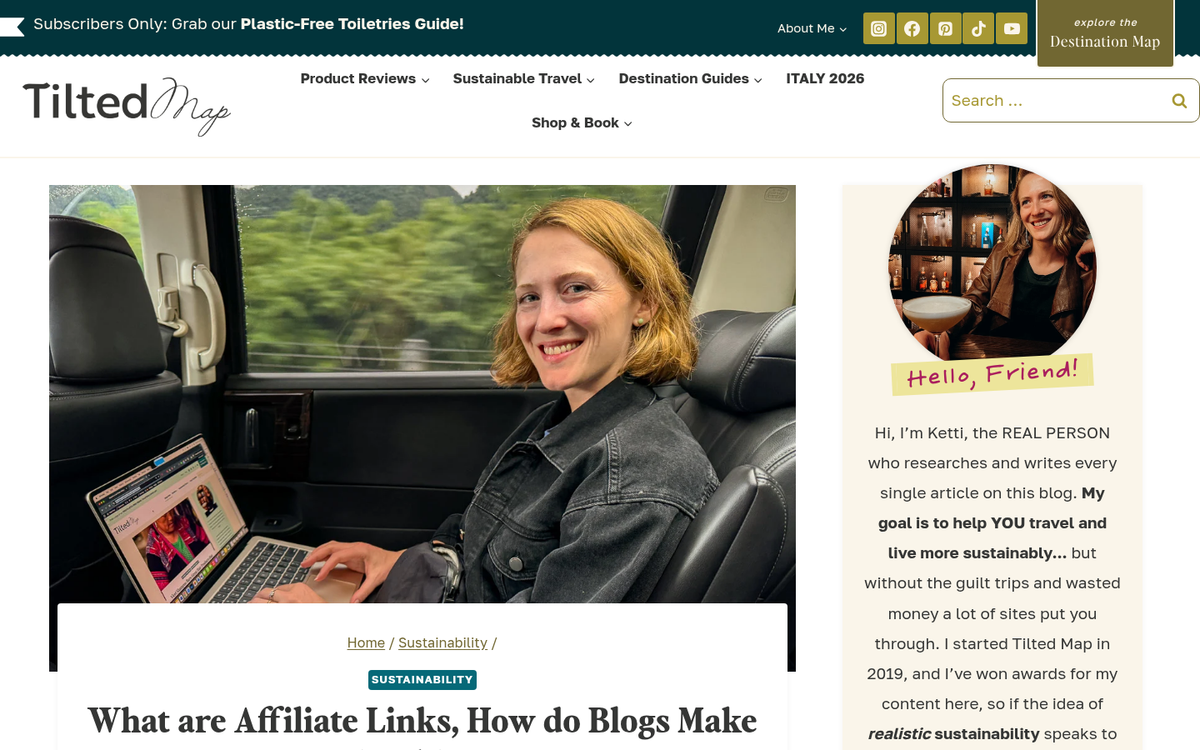
Affiliate marketing is one of the most blog-native monetization models that exists. Rather than creating your own product, you earn a commission by recommending other people's products and driving sales through tracked links on your site.
It works best when your blog already serves an audience with an interest in a category of products - gear reviews, software roundups, financial tools, cooking equipment, and so on. The more trust you've built with your readers, the more your recommendations convert.
Here's a general process that still holds up in 2026:
- Research to find a niche with genuine search demand, manageable competition, and products that carry solid commissions and strong conversion rates.
- Build a site structured to serve as an authoritative hub for that niche - product reviews, comparisons, buying guides, and supporting informational content.
- Create content that ranks in search engines and genuinely helps readers make informed decisions. Organic search traffic is the backbone of most affiliate businesses because it arrives with purchase intent already established.
- Build topical authority and earn quality links so your content reaches the people actively looking for what you're covering.
- Earn commissions on purchases made through your affiliate links.
One honest update for 2026: Google's algorithm updates over the past few years have hit thin affiliate sites hard. Sites built primarily to rank and redirect, with little genuine value added, have lost visibility. The affiliate sites that are performing well are those that offer legitimately helpful, well-researched content written by people with experience in the subject matter; it's a higher bar than it used to be. But it also means there's less low-quality competition at the top.
Amazon Associates remains one of the most accessible affiliate programs given the breadth of products available, though its commission rates have been cut from their earlier highs. For better margins, bloggers now layer in direct affiliate relationships with businesses or work with networks like ShareASale, Impact, or CJ Affiliate, and that's also the case in higher-commission niches like software, finance, and education.
Both growing a single site into an authority publication and converting your blog traffic into sales through a portfolio of focused niche sites are viable strategies. Which you go after can depend on your passion for the subject, the ceiling of the niche, and how you like to work.
Model 5: Selling Information and Expertise
Monetizing your expertise and information takes a few forms. At the broadest level, it's what every blog does - publish knowledge that attracts an audience, and then convert that audience through ads, affiliate links, or product sales. But at a more direct level, it means charging for access to your best thinking.
Display advertising is the most passive version of this, but the math requires scale. At a premium RPM of $40, you'd need around 2,500 page views just to match what a single mid-range freelance post might pay. Ad revenue works as a real income stream, but usually only once you've built big traffic.
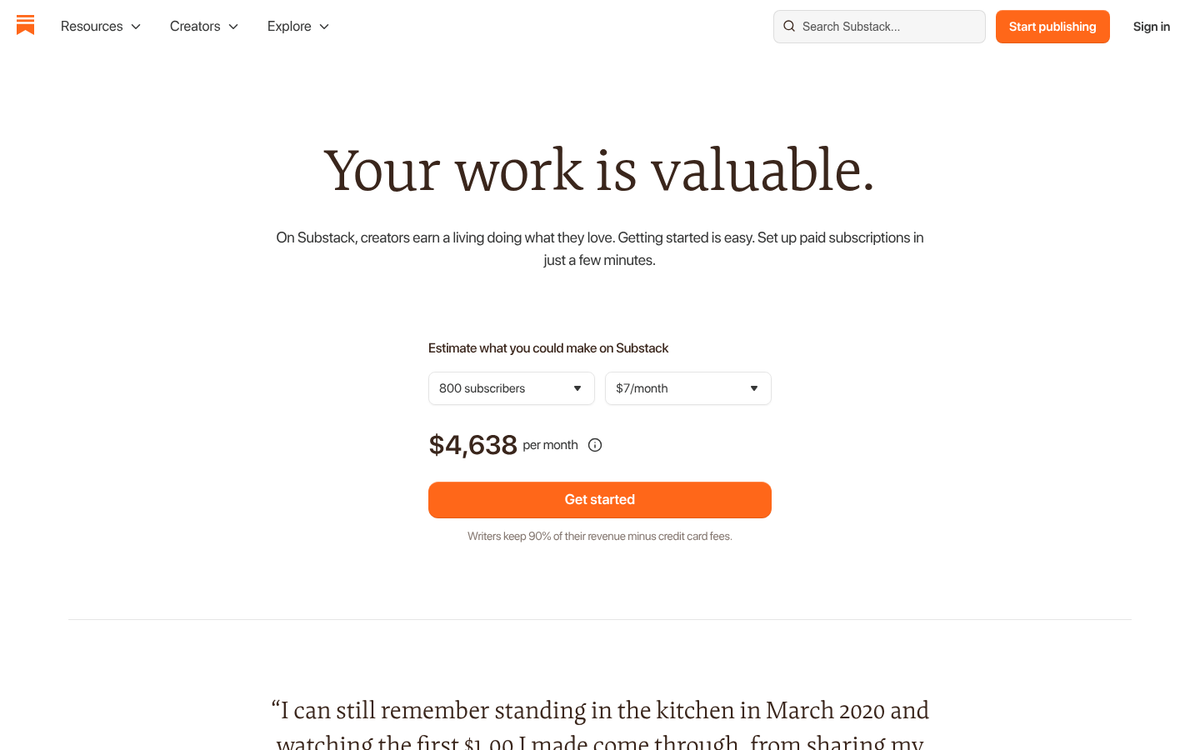
The more interesting opportunity is paywalled communities and premium content tiers. Newsletter platforms like Substack have normalized the idea of paying directly for a writer's best work. Discord communities, private forums, and membership sites built around genuine expertise can command recurring monthly fees from audiences who value the access and the community. The key distinction is that these models work when you're giving people something they legitimately can't get for free elsewhere - analysis, direct access to you, a curated peer community, or proprietary research.
One important note for 2026: the bar for free content has never been higher. AI can generate surface-level explanations of almost anything instantly. Readers who are willing to pay for content are paying for your perspective, your judgment, your curation, and your voice - things that remain distinctly human. Lean into that, and the information model remains strong. Try to compete on volume or comprehensiveness alone, and you'll struggle.
Selling information works best as one layer in a wider monetization strategy. Use your expertise to build an audience, build trust with that audience, and then convert it across multiple channels - ads, affiliates, products, and premium access. The blogs that generate income in 2026 don't use a single model.