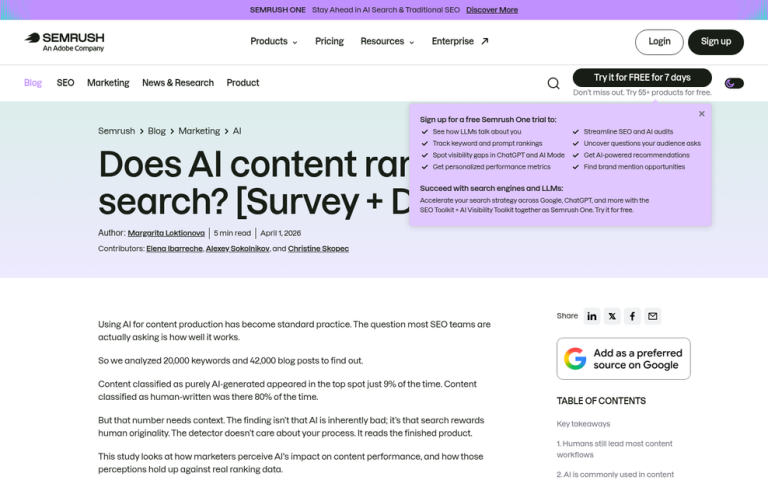
At the same time, the labor market data is starting to reflect that reorganization. Some projections suggest online content writing jobs could drop by as much as 50% before 2030. For anyone working in content strategy - or hiring for it - it's a number worth sitting with for a bit. Because there's a difference between AI making a strategist's job easier and AI making the strategist optional.
That's the tension worth looking at here. Tools like ChatGPT, Jasper, and a growing ecosystem of AI-powered platforms can now produce briefs, generate first drafts, analyze performance data, and recommend content calendars in a fraction of the time a human team would need. On paper, that's a productivity upgrade. But content strategy has never been just about output - it's about judgment, audience intuition, brand voice, and knowing which story to tell and why.
So the question isn't if AI can do some of what a content strategist does - it can. The more uncomfortable question is how much of the job it actually covers, and what's left when you subtract it; that's what this post is here to work through.
Key Takeaways
- AI tools handle execution well-drafting, SEO clustering, asset tagging-but consistently struggle with strategic judgment and audience intuition.
- Content writing jobs could decline 50% by 2030, while AI saves marketers 6.1 hours weekly and cuts production costs by 42%.
- Brand voice, editorial prioritization, stakeholder alignment, and crisis management remain firmly human responsibilities AI cannot reliably perform.
- Smart teams divide labor clearly: AI generates first drafts and metadata; human strategists set direction, approve content, and align teams.
- Strategists who emphasize judgment, audience empathy, and storytelling over pure execution will remain relevant as the role shifts toward content direction.
What AI Content Tools Can Actually Do in 2026
AI writing and content tools have come a long way, and it's worth being honest about how capable they are right now. They can draft blog posts, generate social captions, rewrite copy for different audiences, and produce first-pass content at a speed no human team can match on their own.
Repurposing is one of the most helpful day-to-day wins. A tool can take a long-form post and turn it into a summary, a handful of social posts, and an email intro in minutes. That output used to take a content coordinator most of an afternoon. There are right and wrong ways to repurpose blog content, and AI doesn't always know the difference.
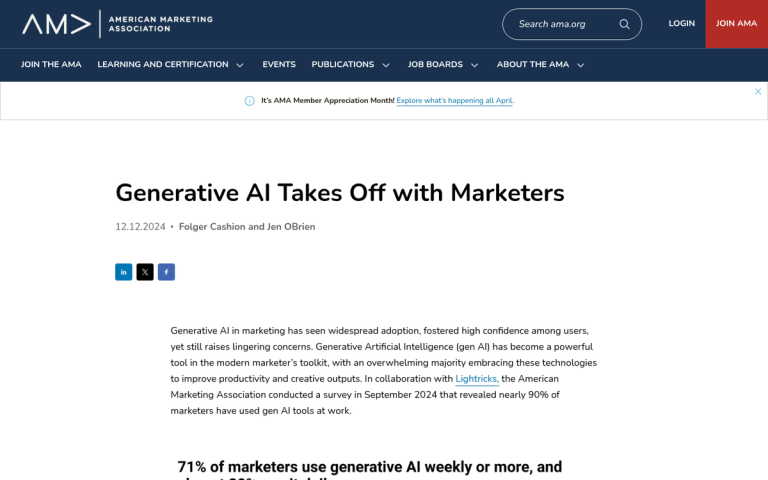
On the SEO side, AI tools can build keyword clusters, map content to search intent, and flag gaps in an existing content library. They can also manage metadata tagging and content categorization at scale - which is helpful for teams taking care of hundreds of assets. According to a Canto and Ascend2 study, 51% of marketing pros use AI to speed up content creation and asset tagging, which tells you this isn't a niche use case anymore.
For content teams, "acceleration" looks like this in practice. A writer gets a brief, the AI drafts a working structure, and the human refines and adds depth. The work that used to eat up hours gets compressed into a much shorter window.

Volume and quality are two different things. AI can dramatically increase how much content a team produces. But more output doesn't automatically mean better output. A lot of teams have learned this the hard way after publishing waves of AI-assisted content that felt thin or generic to their readers.
The tools are also better at content organization tasks like internal linking suggestions, content audits, and performance-based recommendations. These are time-savers for strategists who would otherwise do this work manually in spreadsheets.
| Task | AI Capability Level |
|---|---|
| First-draft content creation | Strong |
| SEO keyword clustering | Strong |
| Asset tagging and categorization | Strong |
| Content repurposing | Strong |
| Audience-aware tone and positioning | Moderate |
| Strategic content planning | Limited |
The picture that emerges is of a set of tools that manage execution well and have a hard time with judgment. That distinction matters more than most teams acknowledge.
Where AI Consistently Falls Short on Strategy
Knowing what AI can do is helpful. But where it breaks down helps you make better decisions about your content team.
Strategy means learning about what to say, when to say it, and why it matters to an audience. That last part is where AI struggles most - it can process data about an audience. But it can't interpret what that data means for a brand with a tough history, a sensitive customer base, or a product that just had a rough quarter.
Brand voice is an example of this. AI can be trained to mimic a tone, and it can do that reasonably well in stable conditions. But brand voice is a judgment call made constantly, in response to context that changes in ways no prompt can capture. A human strategist knows when to soften the tone, when to go quiet entirely, and when to lead with something different compared to what was planned.
The Human Logic Behind Editorial Priorities
Editorial prioritization is another gap. A content calendar comes with decisions about what the business needs most. AI can generate a calendar based on keyword data and publishing cadence. But it doesn't weigh the business context behind those options - it doesn't know that the sales team is pushing a new vertical, or that a competitor just made a move worth responding to.
Stakeholder alignment is almost entirely a human job. Getting buy-in from a marketing director, a product lead, and a CEO means reading the room, managing competing priorities, and building trust over time. No AI tool does that.
Where the Real Risk Lives
Consider a brand navigating a PR crisis or a sudden product failure. In those moments, a content strategist isn't just picking what to publish - they're picking what not to publish, what to pull back, and how to protect the brand's credibility while things are unstable. AI-generated content in that scenario, without a human to filter and contextualize it, can do genuine damage.
Long-term planning has the same problem. A 12-month content strategy requires assumptions about where the business is going, what the competitive landscape might look like, and how audience needs could change. AI can surface patterns from the past. But it can't reason about an uncertain future the way a strategist can. This is also why content decay becomes a real cost when no one is actively managing the strategic layer.
These aren't minor limitations - they're the core of what strategy actually is.
The Numbers Behind AI's Impact on Content Teams
The data paints a picture that's good for budgets and harder to sit with from a workforce perspective. HubSpot's AI Trends 2026 report found that marketers are saving an average of 6.1 hours per week with AI tools; it's actual time back for strategy, research, and the thinking that doesn't scale with automation.
On the cost side, Firewire Digital found that AI adoption can cut content production costs by 42%. For teams under pressure to do more with less, that number is hard to dismiss.
Then there's the other side of the table.
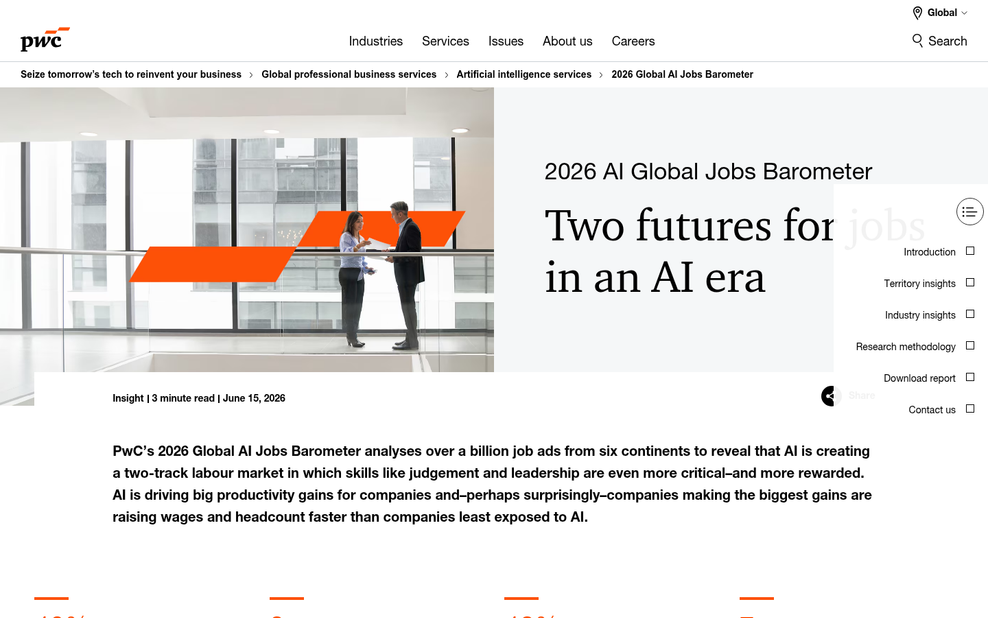
DemandSage projects a 50% decline in content writing jobs by 2030. And a BCG microeconomic model estimates that 50% to 55% of US jobs will be influenced by AI within the next two to three years. These aren't distant hypotheticals - the restructuring is already underway at content teams.
| Metric | Finding | Source |
|---|---|---|
| Hours saved per marketer/week | 6.1 hours | HubSpot AI Trends 2026 |
| Reduction in content production costs | 42% | Firewire Digital |
| Content writing jobs lost by 2030 | Projected 50% decline | DemandSage |
| US jobs reshaped by AI in 2-3 years | 50%-55% | BCG Microeconomic Model |
The difference between what these numbers measure is what makes them worth sitting with. Efficiency gains and cost reductions show up in quarterly reports. Workforce displacement shows up in people's careers. Both are real and are happening at the same time.
It's also worth mentioning what the data doesn't capture. A savings of 6.1 hours per week doesn't tell you what those hours get used for, or whether the output produced during the remaining time is any better. A 42% drop in production costs looks like a win until you factor in the editorial oversight, the strategy work, and the quality control that still needs a human to manage it.
The numbers make the business case for AI easy to make. They make the human case harder to get through.
How Smart Content Teams Are Structuring Human-AI Collaboration
The most helpful content teams are not trying to choose a side. They are drawing a line between what AI works with and what a human owns, and they are being very deliberate about where that line sits.
In practice, that means AI takes on the early, repeatable work. First drafts, meta descriptions, title variations, content briefs pulled from keyword data - these are all tasks that AI can produce fast and at scale. The human strategist comes in to set the angle before any of that starts and to make the final call on what actually gets published.
That repositioning matters more than it looks on paper. A strategist who defines the brief, shapes the narrative direction, and then edits AI output for tone and accuracy is doing fundamentally different work than one who writes from scratch - it's less about production and more about judgment.
Prompt engineering has become a genuine skill in this setup. A prompt is not just a question typed into a chatbox - it means giving AI the right context, constraints, and examples so the output needs less correction. Strategists who invest time to get at this move much faster without losing editorial control.
Cross-team communication has also grown in importance. When AI is generating content across multiple formats and channels, someone has to connect the dots between what the SEO team needs, what the brand team will approve, and what the audience actually responds to. That connective role is harder to hand off to a tool.
| Task | Who Handles It |
|---|---|
| First draft generation | AI |
| Metadata and title variants | AI |
| Content angle and brief | Human strategist |
| Editorial judgment and final approval | Human strategist |
| Cross-team alignment | Human strategist |
| Prompt design and iteration | Human strategist |
Editorial taste is the hardest thing to move to a machine. Knowing when a piece of content is technically fine but still feels flat, or when the right angle is the less obvious one - that instinct comes from experience and it remains in human hands.
Skills a Content Strategist Needs to Stay Relevant Right Now
Here is an honest way to remember your position: if most of your value comes from execution - writing drafts, scheduling posts, formatting content - then AI tools are a direct challenge to that. But if your value comes from judgment, direction, and what an audience actually needs, you are more in demand than you were a few years ago.
Strategic thinking is the skill that matters most right now. Clients and content teams need a person who can look at a content plan and ask the right questions - what are we trying to achieve, who are we speaking to, and is this the best strategy to get there?
Audience empathy is harder to teach and impossible to automate in any actual way. AI can analyze behavior data and find patterns. But it can't feel the frustration of a customer who sees content that misses the mark. That information comes from experience, curiosity, and a genuine interest in people.
Brand storytelling is another area where human judgment leads. A brand has a voice, a history, and a reputation to protect. AI can replicate a tone guide. But it takes a strategist to know when a piece of content feels off - even when it technically follows the rules.
Content measurement is a skill worth building more if you have not already. The ability to tie content performance to business goals, interpret data in context, and use that to inform future decisions is what leadership teams want from a strategist. Numbers without interpretation are just numbers.
AI tool fluency matters too. But not in the way you might expect. You don't need to know how large language models work under the hood. What you do need is the ability to use AI tools well, to prompt them effectively, and to know when the output needs rethinking before it goes anywhere near a client or a publish button.
The strategists who are hired and retained are the ones who can do what AI can't: make judgment calls, build relationships with clients, and take responsibility for a content direction. Execution skills still matter. But they work best when they sit underneath a layer of genuine strategic thinking.
The Strategist Isn't Going Anywhere - But the Role Is Changing
The strategists who will feel the squeeze aren't the ones AI is replacing - they're the ones ignoring it. The change happening isn't replacement but role redefinition. The content strategist of 2026 looks less like a content producer and more like a content director: setting the vision, making the calls AI can't make, and using tools to execute faster without sacrificing quality or intent.
To future-proof your position, do two things this week. First, spend an hour with one AI content tool you haven't used yet - not to replace your process, but to know where it legitimately helps and where it doesn't. Second, write down the three decisions you made this month that required human judgment. Those are your differentiators. Get clearer on them and you'll get clearer on where to invest your energy going forward.
The strategists who grow in 2026 won't be the ones who resisted the change or the ones who handed everything to a chatbot. They'll be the ones who figured out, early, what only they could do - and doubled down on that.