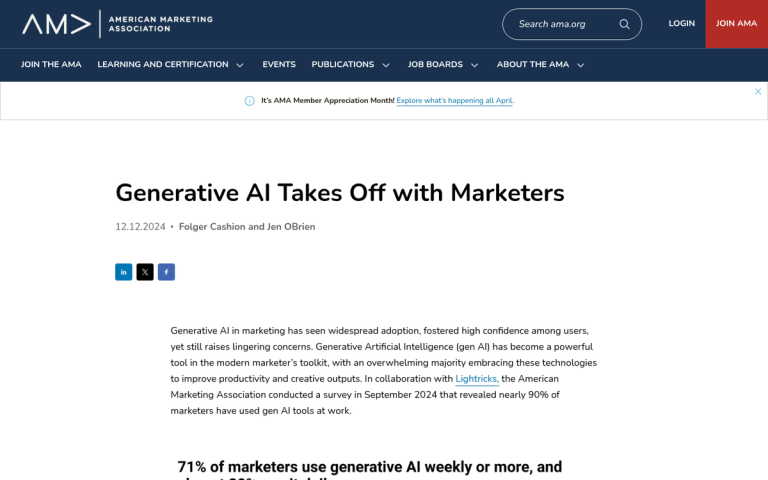
Here is the tension at the center of it all: AI genuinely does make content production faster - sometimes dramatically faster. But speed and search performance are not the same thing, and treating them like they are has already burned teams who moved too fast without asking the harder question. Does AI-generated content, published without actual human editing, actually rank?
The answer is more complex than either camp wants to admit. The data does not cleanly support the "AI content is fine" crowd. But it does not vindicate the purists either. What research and real-world case studies are starting to show is that the type of content, the level of AI involvement, and the presence or absence of human editing all interact in ways that produce legitimately interesting results.
This is not about opinions on AI - there's enough of those. Instead, it walks through what the available evidence actually shows about how AI content performs in search, where drop-offs tend to happen, and what that means for teams trying to make a helpful choice about their workflow.
Key Takeaways
- Purely AI-generated content ranks #1 only 9% of the time, while human-written content achieves that spot 80% of the time.
- 81.9% of top-ranking pages blend AI and human writing, suggesting collaboration outperforms either approach alone.
- Ahrefs found a near-zero correlation between AI content percentage and rankings, indicating quality matters more than content origin.
- Both Google and AI citation engines like ChatGPT favor human-written content, with 82-86% of top results being human-authored.
- Human editing adds judgment, specificity, and depth that AI cannot provide - making the post-draft editing phase the most critical step.
What the Data Actually Says About AI Content and Rankings
The numbers here are pretty striking. A Semrush study found that purely AI-generated content held the number one position in search results just 9% of the time. Human-written content, in contrast, claimed that top spot 80% of the time.
That gap alone is worth mentioning.
Ahrefs ran their own analysis and found that 81.9% of top-ranking pages were a combination of AI and human writing. They also found a correlation of just 0.011 between the percentage of AI content on a page and how well it ranked - which is about as close to zero as you can get.
Those two findings point in the same direction: pure AI content doesn't reach the top. But pages with AI involvement rank well as long as a human has had a hand in shaping the content.

| Content Type | Likelihood of Ranking #1 |
|---|---|
| Purely AI-generated | 9% |
| Human-written | 80% |
| AI-human blend (top pages overall) | 81.9% of top results |
The 9% vs. 81.9% difference is the most helpful part of this whole picture. AI content can rank when it's part of the combination. The problem is relying on AI for the whole job from start to finish.
The near-zero correlation from the Ahrefs data also pushes back against the idea that Google is detecting and penalizing AI writing. If that were happening at scale, you wouldn't see AI-assisted pages dominate the top results the way they do. The issue seems to be about quality and depth instead of origin.
These two studies point to the same conclusion from different angles. The percentage of AI in your content matters far less compared to what a human brings to it.
Why "AI-Assisted" Outperforms "AI-Only" in Search
Speed is helpful, but it isn't everything. A stat worth sitting with: 70% of SEO teams say AI helps them work faster. But only 19% say it helps with the quality of their writing. That gap tells you something important about how these tools are used.
Fast and good are not the same thing. AI can produce content quickly, which is a basic workflow choice. But it doesn't automatically get you better content - it gets you more content, faster - and those are very different results.
What human editing can add is harder to quantify but easy to see in practice. A skilled editor will catch logical gaps where the AI made a confident leap without connecting the dots. They'll cut filler sentences that pad word count but say nothing, and they'll add the real-world context that only comes from experience or genuine research.
AI also tends to flatten perspective - it pulls from patterns in existing content, so it reproduces what has already been said instead of adding a new angle. This is especially visible when you look at the telltale signs content was written with Claude or similar tools. Human editors are the ones who push back on that and ask if the piece actually says something worth reading.
What Blended Content Looks Like in Practice
A blended workflow doesn't mean lightly skimming an AI draft and hitting publish - it means using AI to manage the structural groundwork - an outline, a first draft, background research - and then having a human shape it into something with a point of view.
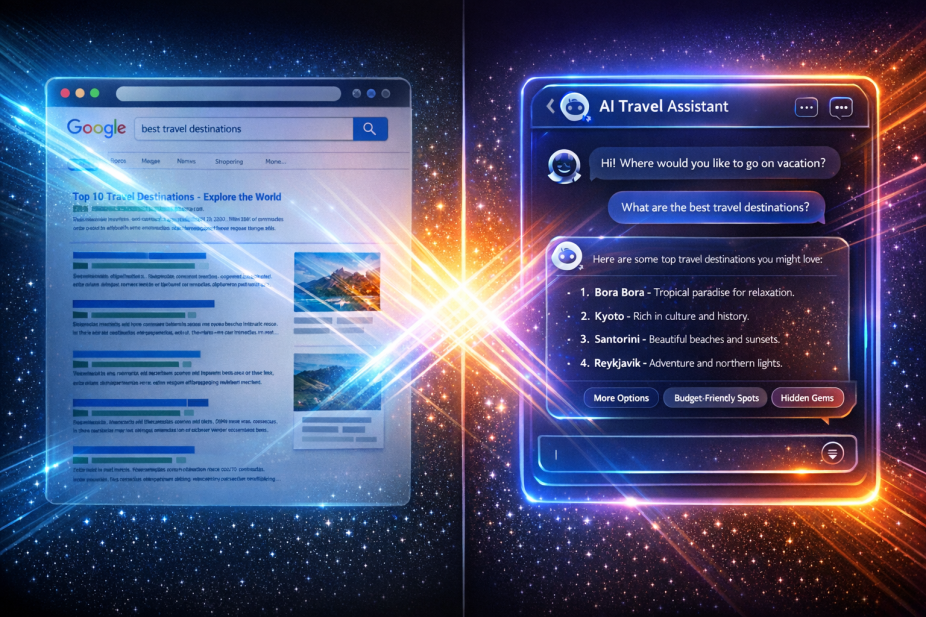
The editing pass is where the writing happens; it's when vague claims get replaced with specific ones, when the tone gets adjusted to match an audience, and when the piece starts to sound like it came from a person instead of a pattern-matching system. First-hand experience plays a bigger role in AI visibility than many teams realize, and that's something only a human can bring to the draft.
It's also where depth gets added. AI drafts tend to stay at a surface level because they are built on aggregated information. A human editor who knows the subject can push past that and write something that goes deeper into how the topic works in practice.
The disconnect between speed and quality isn't a flaw to work around - it's a signal about where human judgment still needs to sit in the process. The teams getting the best results from AI aren't using it to replace the thinking. They're using it to get to the thinking faster.
How Google Search and AI Answer Engines Rank Content Differently
Most treat Google rankings and AI citations as two separate goals. But the data shows something different. Research from Graphite found that 86% of Google's top-ranked results were human-written and 82% of sources cited by AI answer engines like ChatGPT and Perplexity were also human-written. That overlap is not a coincidence.
It seems like something worth noting: the tells that get content ranked in Google tend to be the same tells that make content worth citing. Depth, credibility and authorship all matter in both places.
Google is the more transparent of the two. Its E-E-A-T framework explicitly rewards experience, expertise, authority and trustworthiness. That means content with author credentials, a track record on a credible domain and genuine depth on a subject gets an actual lift. Fully AI-generated content without any of the tells sits near the bottom - only about 9% of number-one Google results are AI-written.
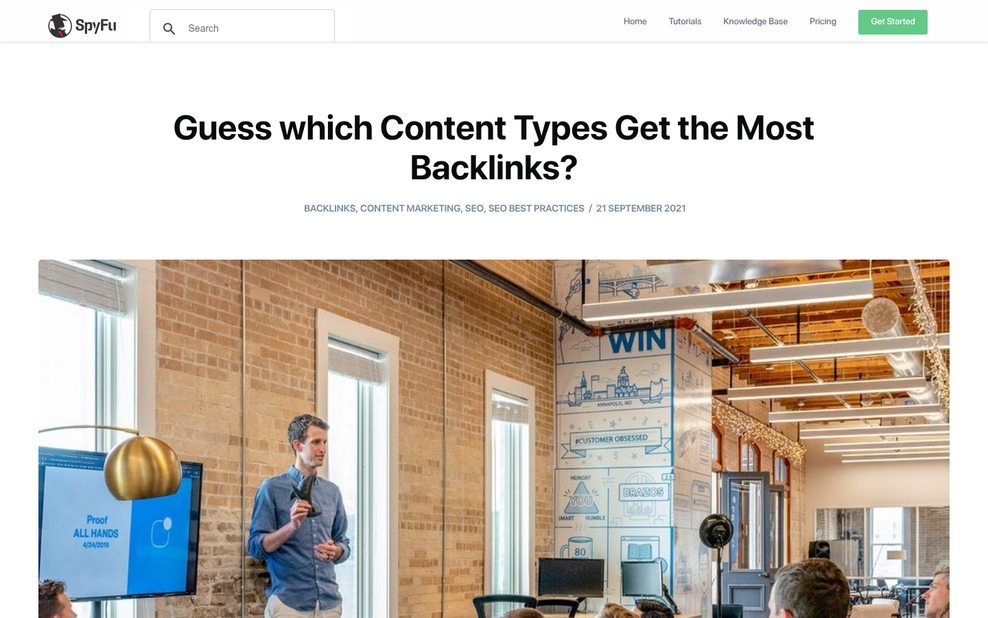
AI answer engines are less transparent about their ranking logic. But the pattern holds. These tools are trained to pull from sources that users would trust, so they favor the same well-sourced, thorough content that Google rewards. Update frequency is one area where the two diverge a little - Google rewards fresh content more. But recency signals in AI citations are less predictable.
Here is a side-by-side look at how the two compare across a few factors that matter.
| Factor | Google Search | AI Citation Engines |
|---|---|---|
| Authorship signals | Strong weight via E-E-A-T | Moderate - favors credible sources |
| Content depth | High importance | High importance |
| Update frequency | Rewarded | Less clear, recency varies |
| Fully AI content performance | Weak (9% at #1) | Weak (82% citations are human-written) |
The takeaway from that table is not that AI content never shows up - it does. But it performs weakly in environments without the authorship and depth tells that human-edited content carries. If you want to understand how Perplexity's citation algorithm works in more detail, the mechanics are worth studying separately. The two can vary in their mechanics. But they converge on what they value.
The Editing Decisions That Separate Ranking Content from Filler
A Flying Cat study found that 67% of respondents saw organic traffic grow regardless of how much AI they used. That is not a case for or against AI - it's a case for execution. What you do with the output matters far more than which tool produced it.
The first thing to fix is the angle. AI tends to write toward the broadest possible interpretation of a topic, which means it covers everything and says nothing memorable. A human editor sharpens that into a single, defensible point of view that gives readers a reason to stay on the page.
Generic phrasing is the next thing to cut. Phrases like "in today's fast-paced world" or "it's important to note" are invisible to readers because they carry no weight. Replace them with the thing that actually earns trust - a number, a named example, a concrete situation readers can picture.
Specificity is the difference between content that gets linked to and content that gets ignored. Vague claims feel safe to write but they don't give anyone a reason to reference or share your page. Real context - the kind that comes from experience or research - is what makes a piece feel credible.
This is where editing stops being a cleanup job and becomes the real work of writing. The work is not about fixing grammar or smoothing sentences - it's about picking what the piece is for, who it's written to, and whether every paragraph pulls its weight toward that job.
A helpful way to remember it: read each section and ask what the reader gets from it that they couldn't get from the ten other pages on the same topic. If the answer is nothing, that section needs to be rewritten or removed. Content decay can cost you more than you'd expect when pages stop pulling their weight over time.
AI is fast and steady. But it doesn't have judgment - it can't tell you that your second subheading is where readers will lose interest, or that your conclusion answers a different question than your introduction asked. That reading takes a person, and it's the part of the process that tools can't shortcut. This is also why content velocity alone won't move the needle if the underlying quality isn't there.
The difference between average content and content worth ranking isn't in the draft - it's in the decisions made after the draft exists.
So, Is It Good Enough? Here's the Honest Answer
If you want to put this into practice, start here:
- Audit your existing AI content. Pull your lowest-performing pages and look for thin sections, generic claims, or missing expertise. Those are your editing targets.
- Build a simple editing checklist. At minimum: fact-check key claims, add one original insight or example, tighten the intro, and make sure the content actually answers the search intent.
- Decide which content types need more human input. High-stakes topics - health, finance, legal, anything YMYL - demand heavier editing. Informational how-tos may need less.
- Set a minimum edit time per piece. Even 20-30 focused minutes of human review can meaningfully close the quality gap.
The goal was never to remove humans from the process - it was to free them up for the work that moves the needle. AI gets you 70% of the way there faster than ever before, and your judgment, experience, and editorial eye close the gap; it's your edge. If you're not sure where to begin, auditing your existing content library is a practical first step.