The entirety of search engine optimization, social media marketing, content marketing, and all of the rest of the components of internet marketing leads up to one thing: boosting your ranking for relevant queries in search. Okay, well, really it all leads up to making more money, but in large part the way you do that is through higher Google search rankings.
Since so much of it relies on improving your search ranking, it should be common knowledge how to track that ranking.
What? You mean you don't know? Or you don't use anything special, you just run searches occasionally and write down the results? Well, buddies and pals, have I got news for you. SERPs tracking is a major part of internet marketing, and keeping track of how your ranking changes in response to internal and external changes is hugely important. It can't be left as an afterthought or footnote in your marketing.
SERPs tracking - that's tracking your position in the Search Engine Results Page - comes in many forms. It's often tacked on to various marketing suites, but we're looking for something a little more dedicated. A little more focused. You're not going to buy a subscription to a full analytics platform for one minor feature, are you? No, you want something free and something functional.
Key Takeaways
- Google Search Console is the best free baseline tool, offering clicks, impressions, CTR, and average position data directly from Google.
- Most free SERP tracking tools have keyword limits, making them suitable for small businesses but insufficient for large portfolios.
- Ahrefs Free Webmaster Tools offers powerful rank tracking but requires site ownership verification, limiting competitor research capabilities.
- Mozcast helps identify Google algorithm updates by showing daily SERP turbulence, useful for explaining unexpected ranking fluctuations.
- Mangools, though not free, serves as a strong paid benchmark when free tools no longer meet your tracking needs.
Honorable Mention: Mangools (KWFinder / SERPWatcher)
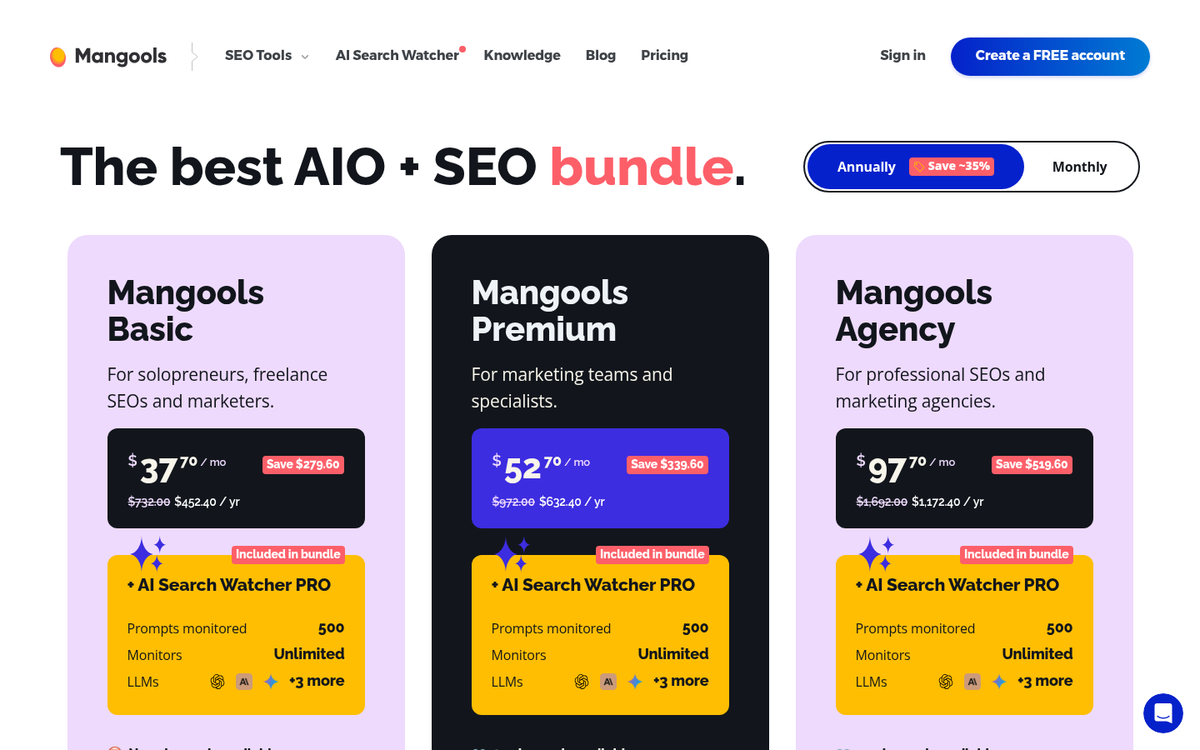
Mangools has been trusted by more than 2.8 million SEO pros, agencies, and business owners since 2014, and it's easy to see why. Their SERPWatcher tool is one of the cleanest, most intuitive rank trackers on the market. You plug in your keywords, set your target location, and it handles the rest - tracking daily movements, showing you a handy "Dominance Index" score, and sending you alerts when rankings shift.
What really sets Mangools apart is the local tracking capability. Their tools check local SERPs for any keyword in more than 65,000 locations worldwide, which is genuinely impressive and practically unmatched at this price point.
So why is it only an honorable mention? Same reason as always - Mangools is not free. They offer a free trial, but after that you're looking at paid plans:
- Entry: Tracks 200 keywords across your sites, costs $29 monthly.
- Basic: Tracks 700 keywords, costs $49 monthly.
- Premium: Tracks 1,500 keywords with unlimited competitor lookups, costs $69 monthly.
- Agency: Tracks 4,000 keywords with white-label reports, costs $129 monthly.
For a small business, the Entry or Basic tier is usually plenty. But again, this post is about free tools, so keep Mangools in your back pocket as a benchmark. If a free tool isn't cutting it, this is where you go next.
Honorable Mention: Mozcast
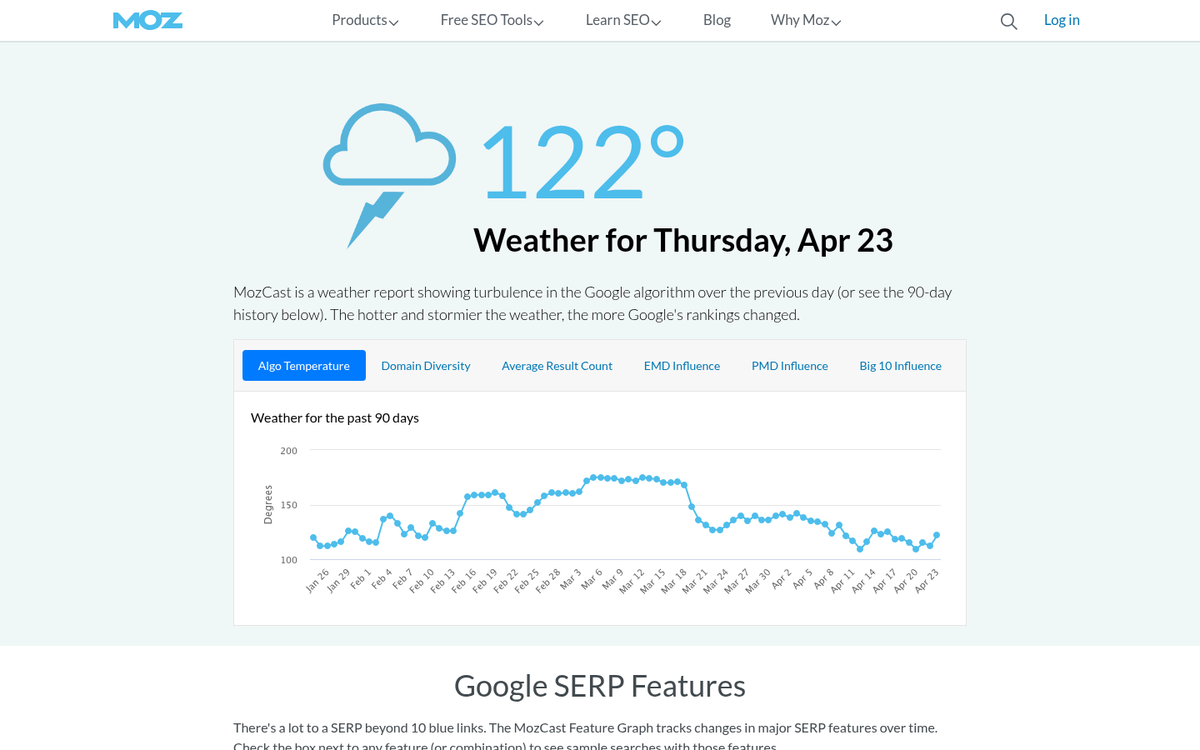
This tool is more of a gimmick than it is an actual functional tool, but it's a useful gimmick. Mozcast compiles data about ranking fluctuations across Google's results and gives you a "weather forecast" for how turbulent the SERPs are on any given day. Hot and stormy means lots of movement; cool and calm means Google hasn't done much.
This data won't apply directly to your site. What it does do, however, is allow you to draw correlations with your own data. When you measure your SERPs changes, what you want to know is what caused those changes. If you made a change - a new link building campaign, freshly published content, a technical fix - you want to know if it moved the needle. If your ranking shifts and you haven't touched anything, check Mozcast. If that day was particularly turbulent, it might indicate a Google algorithm update is at play, and you may need to adapt accordingly.
With Google rolling out core updates multiple times per year and AI-driven changes to the results page becoming increasingly common, Mozcast is more relevant now than ever as a gut-check tool.
1. WhatsMySerp
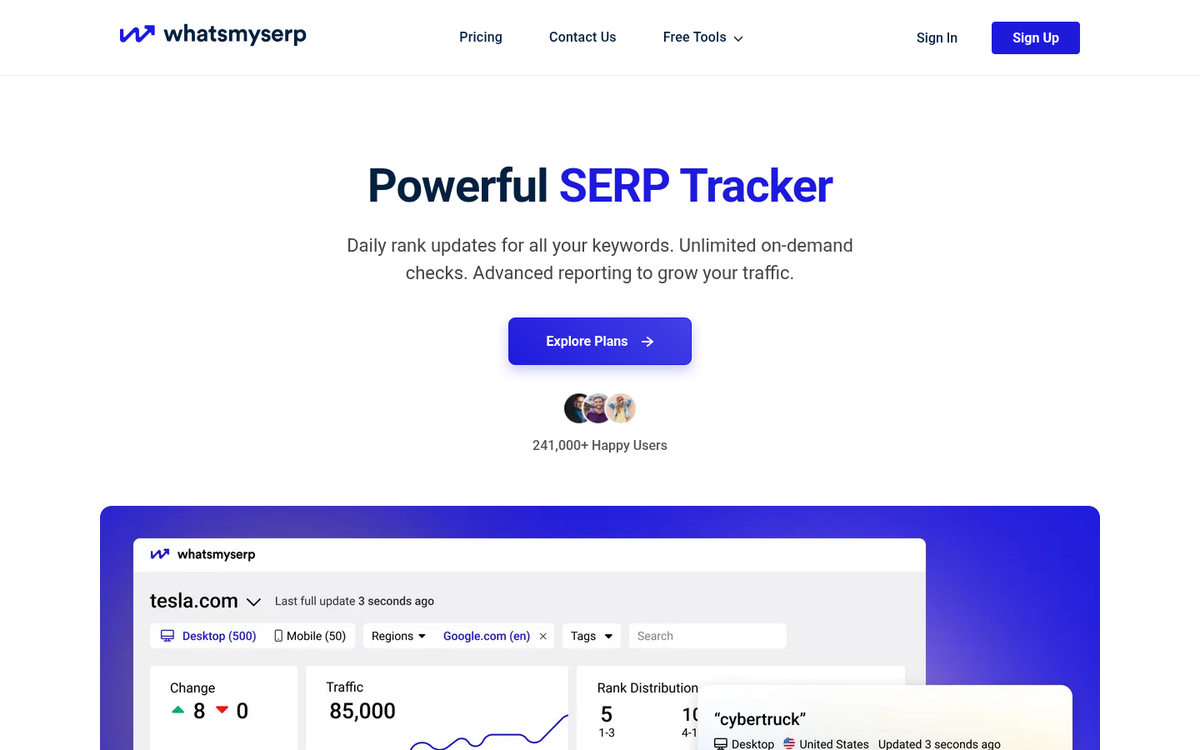
WhatsMySerp is one of the more straightforward free rank checkers around, and it earns the top spot on this list precisely because of its no-nonsense approach. No trial period, no credit card required - just 10 free checks per day right out of the gate.
You enter your domain and a keyword, and it shows you where you're ranking in Google along with the specific URL that's showing up. It's clean, fast, and doesn't try to upsell you every five seconds. For a small business owner or solo marketer who just needs to keep a pulse on a handful of key terms, this is genuinely all you need.
The limitations are obvious - 10 checks per day won't cut it if you're managing a large keyword portfolio - but for casual monitoring or spot-checking after a site change, it punches well above its weight for a free tool.
2. Google Search Console

At the end of the day, a lot of people overlook what Google offers natively with Search Console (formerly Webmaster Tools). Yes, a lot of keyword data is still somewhat limited, but the platform has improved significantly over the years. The Performance report shows you average position, clicks, impressions, and CTR for all your ranking keywords - and you can filter by country, device, page, and date range.
It's not perfect. You can't track true daily position changes with the granularity of a dedicated rank tracker, the data is averaged over time, and competitor tracking is nonexistent. But it's free, it's directly from the source, and it integrates with Google Analytics 4 to give you a fuller picture of what's working.
If you're not using Search Console as your baseline, start here before you invest in anything else.
3. Moz Rank Tracker (Free Tier)
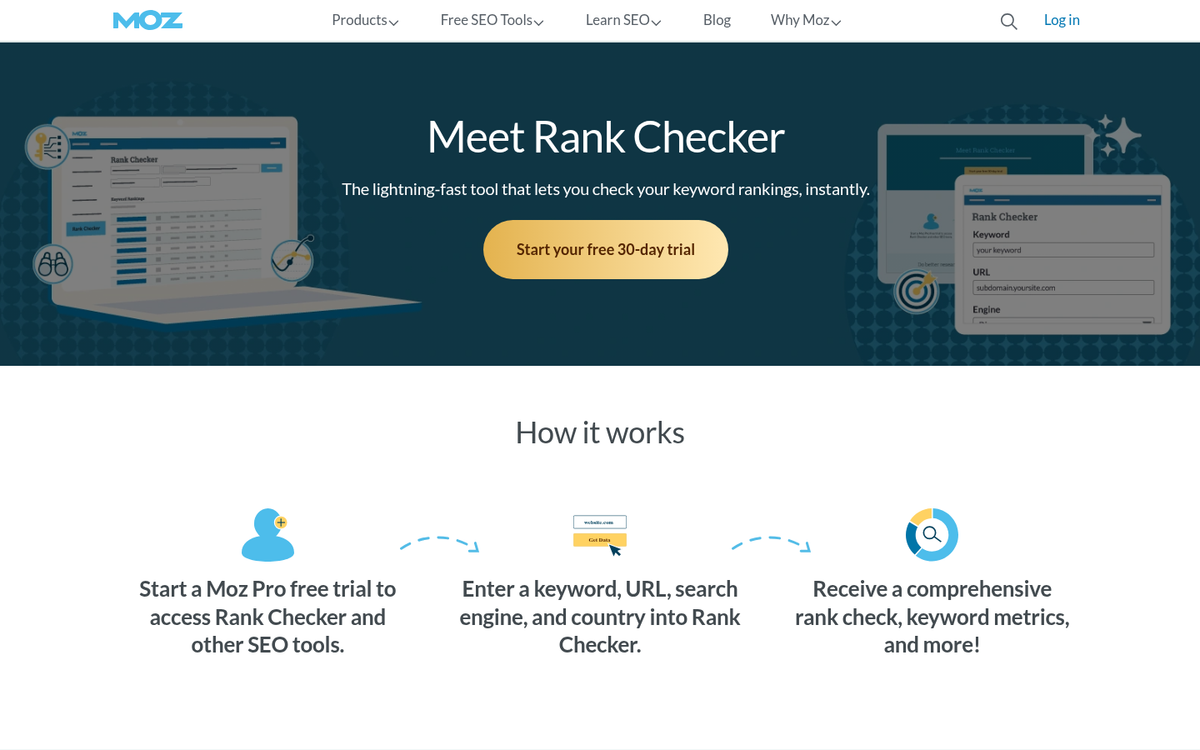
Moz has long been one of the most respected names in SEO tooling, and their rank tracker is no exception. The free tier - accessible with a free Moz account - gives you limited but functional access to keyword tracking, including position history and SERP feature data.
The free version is restrictive in how many keywords you can track and how frequently it updates, but for someone just getting started with SERP monitoring, it's a solid and trustworthy option. Moz's Domain Authority metric has also become an industry standard, so having your rank data alongside DA context is genuinely useful. If you're wondering how long it takes to rank a new blog, tools like this can help you set realistic expectations.
If you outgrow the free tier, their paid plans start at $99 monthly, but honestly at that point you're probably better served by Mangools or a more dedicated platform. It's also worth exploring free techniques to improve your SEO alongside any rank tracking tool you choose.
4. Ahrefs Free Webmaster Tools
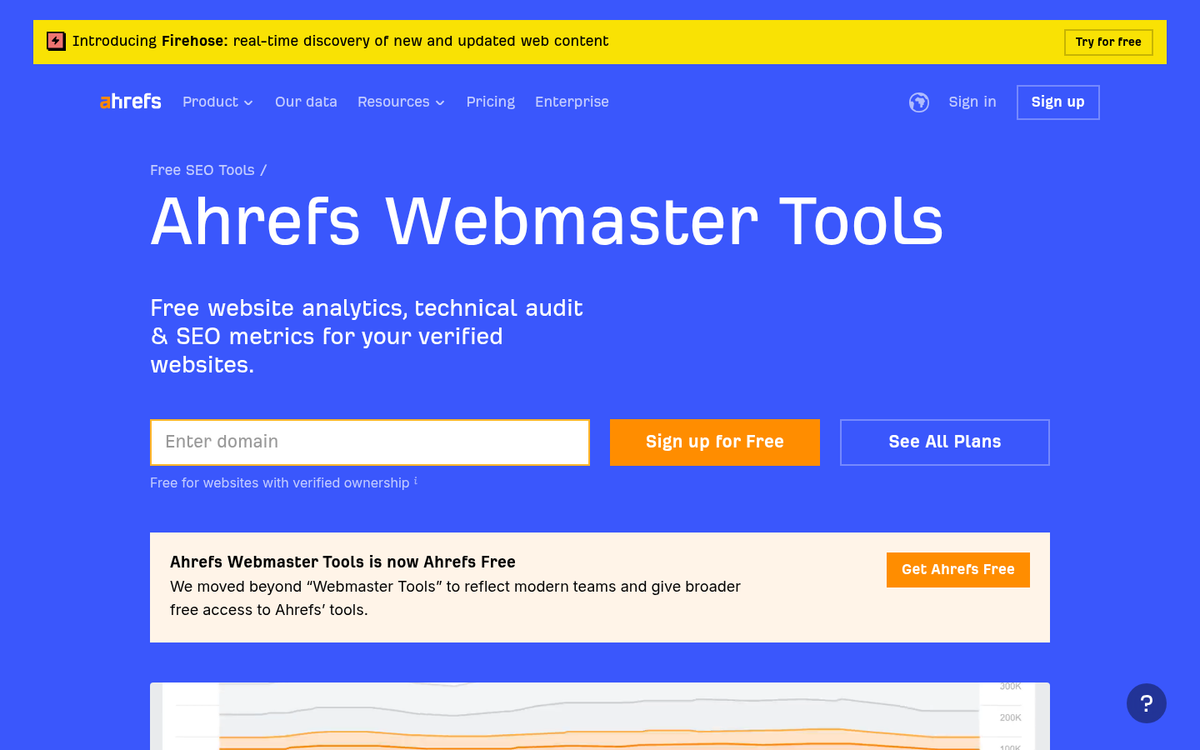
Ahrefs is widely considered one of the best SEO platforms in the world, and while the full suite is far from free, their Free Webmaster Tools program gives verified site owners access to a surprisingly capable slice of the platform - including basic rank tracking, site audit, and backlink data.
You won't get the depth of a paid Ahrefs subscription, but for tracking your own site's keyword positions and understanding what's moving, it's one of the most powerful free options available in 2026. The catch is you need to verify ownership of your site, so this isn't a tool for casual competitor research - it's built for tracking your own properties.
5. SEO SERP Workbench (Chrome Extension)
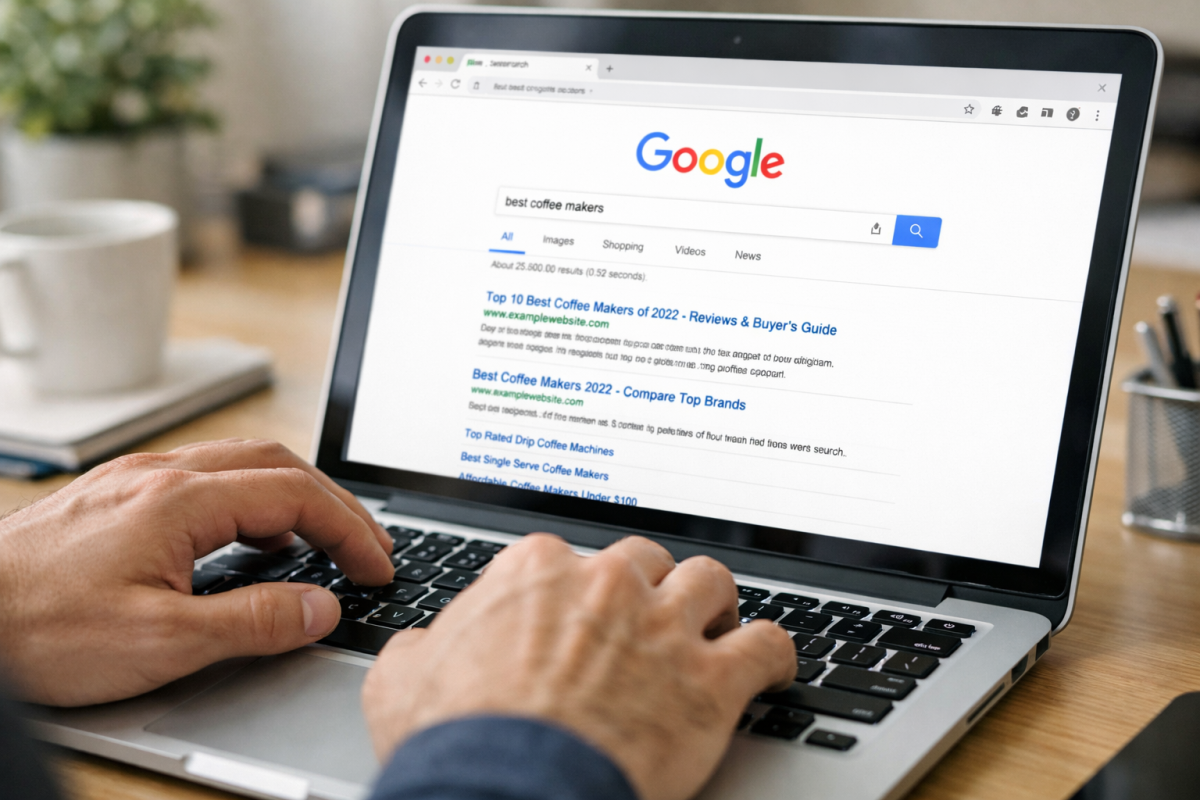
For Chrome users who want a quick, browser-based rank check without logging into a platform, SEO SERP Workbench is a handy little extension. It lets you check rankings directly from your browser, shows position data across multiple keywords, and displays changes on a graph.
It's a manual tool, so you're not getting automated daily tracking - and bulk importing or exporting data isn't really in its wheelhouse. But for a fast spot-check or a quick look at how a page is sitting for a given keyword, it does the job without any fuss.
6. SEMrush (Free Tier)
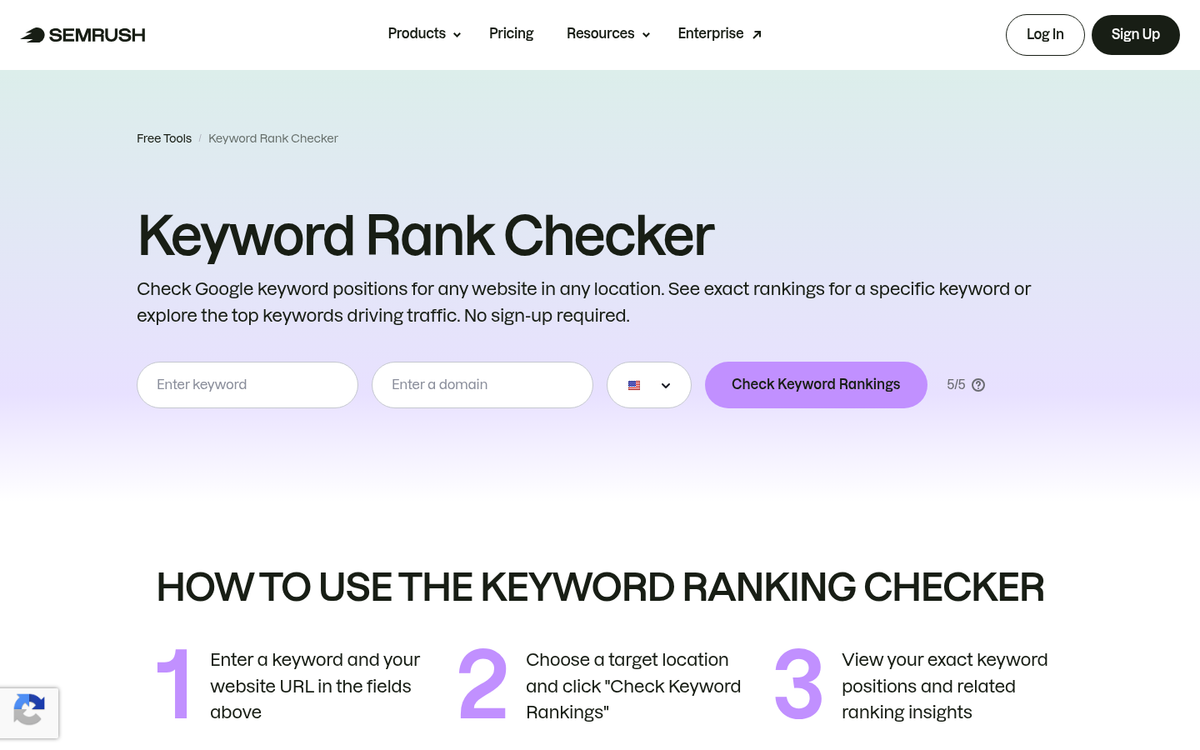
SEMrush has become one of the dominant all-in-one SEO platforms, and even the free version gives you meaningful access to rank tracking data. You can track a limited number of keywords and see position history, estimated traffic, and SERP feature visibility.
Like most freemium tools, the free tier will eventually leave you wanting more. Their paid plans start at $139.95 monthly, which is a significant investment. But if you're already using SEMrush for keyword research or competitor analysis, take advantage of the rank tracking feature rather than spinning up a separate tool.
7. Web CEO
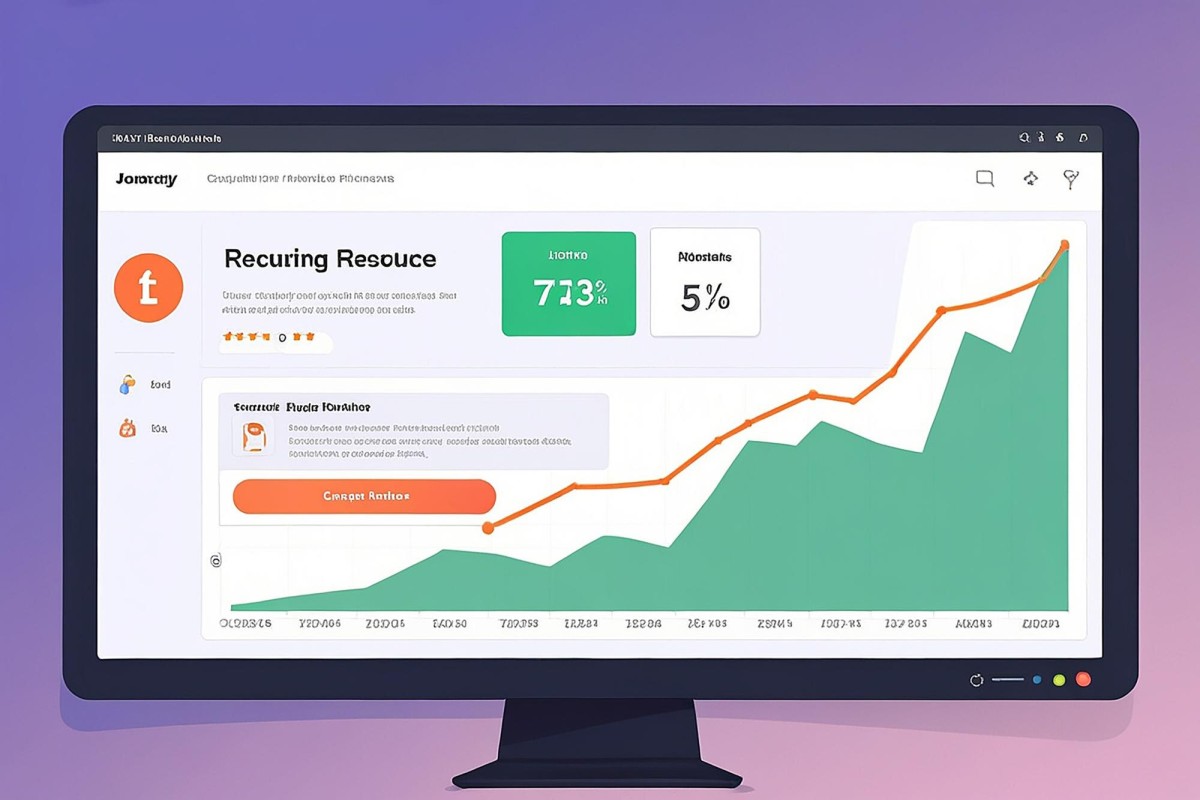
Web CEO has been around for a while and continues to offer a free tier that includes basic rank tracking alongside a suite of SEO audit features. You can see your top keywords, movement up and down, position changes, and ranking distribution.
The limitation is familiar: the free version only lets you track a handful of keywords at a time. For a small local business with a tight keyword focus, that might actually be fine. For anyone managing more than a few pages worth of content, you'll hit the ceiling quickly. Their pro plans start around $99 monthly, but at that price point there are stronger alternatives available.
8. Digital Point's Rank Tracker
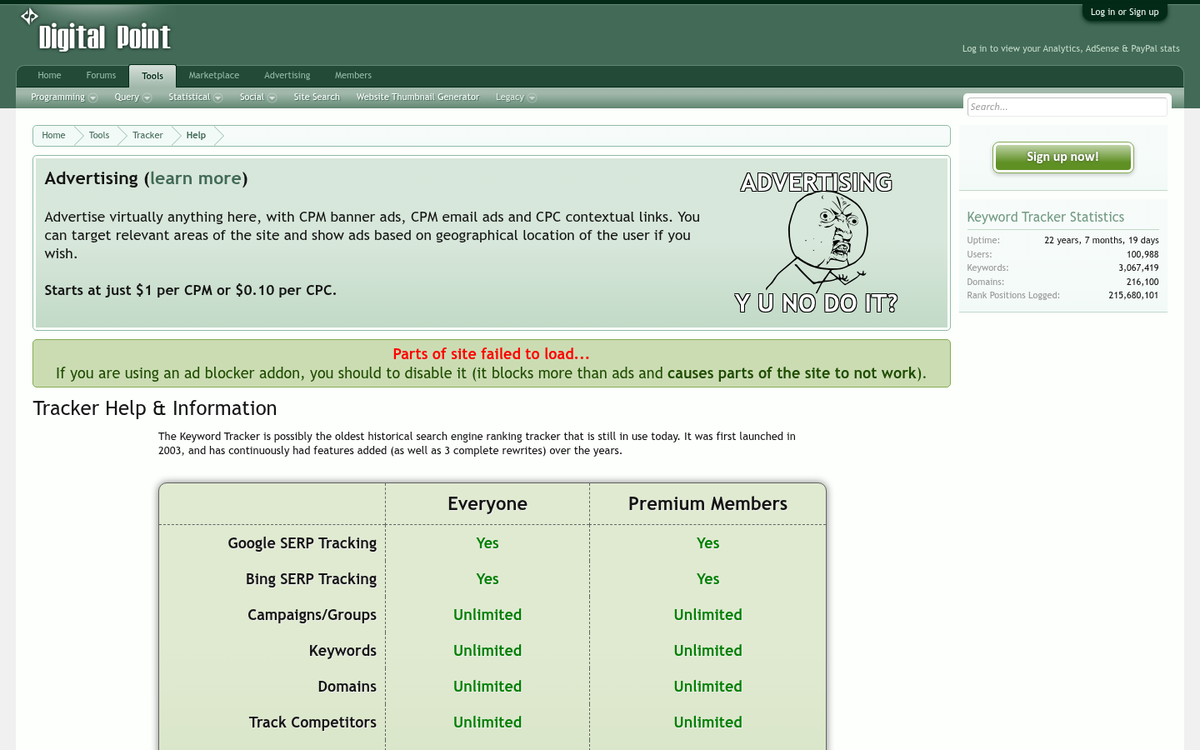
Digital Point has been a fixture in the SEO world for a long time, and no one is more data-obsessed than the marketers who hang around that forum. Their SERP tracker is old, functional, and still operational - which is more than can be said for a lot of tools from that era.
The free version doesn't have automatic daily checking, lacks API access, and only tracks positions above 20. If your site doesn't rank in the top 20, it simply won't appear. The paid version extends that to the top 100 for Google, which is a modest improvement. On the plus side, it tracks by country, supports competitor tracking, and handles unlimited keywords and domains - which is genuinely generous for a free tool.
It's not glamorous, but if you just need something that works and doesn't cost anything, it's worth keeping in your toolkit.