




The shift is already well underway. In 2025, zero-click searches account for 58.5% of all U.S. searches - meaning more than half of queries end without a single visit to any website. Inside Google's AI Mode, that figure climbs to a staggering 93%. For website owners, this isn't a distant forecast for some day - it's the environment your content is competing in right now.
What that means in practice: the strategies that drove traffic for the past decade - targeting keywords, earning backlinks, and optimizing meta tags - are still relevant. But they're no longer enough on their own. AI systems don't rank pages; they synthesize information and choose sources they deem credible, clear, and well-structured. If your content isn't built to meet those criteria, it won't be chosen - regardless of how well it performs in traditional search.
This entry breaks down what AI Search Optimization actually means, why it matters for your site's long-term visibility, and the concrete steps you can take to position your content as a favorite source for AI-generated answers.
Quick Answer
AI Search Optimization involves tailoring your content so AI-powered search engines and chatbots (like ChatGPT, Perplexity, and Google's AI Overviews) surface and cite it accurately. Key strategies include writing clear, authoritative, well-structured content; using natural language that matches conversational queries; providing direct answers to common questions; earning authoritative backlinks; and ensuring your site is technically sound. Unlike traditional SEO, the focus shifts toward being a trusted, citable source rather than ranking for keywords alone.
How AI Search Differs From Traditional Search Engine Optimization
Traditional SEO has one job: get your page to rank as high as possible so users click on it. The whole game is built around visibility in a list of links. AI search works differently, because the engine doesn't show users a list to choose from - it reads your content, forms an answer and either cites you or doesn't.
With traditional SEO, a user types a query, scans the results and picks a link. With AI search, the user gets a direct answer and may never visit any website at all - it means the click - which was the whole point of traditional SEO - is no longer guaranteed even when your content is used. This is closely related to the growing phenomenon of zero-click search, where users get what they need without ever visiting a site.
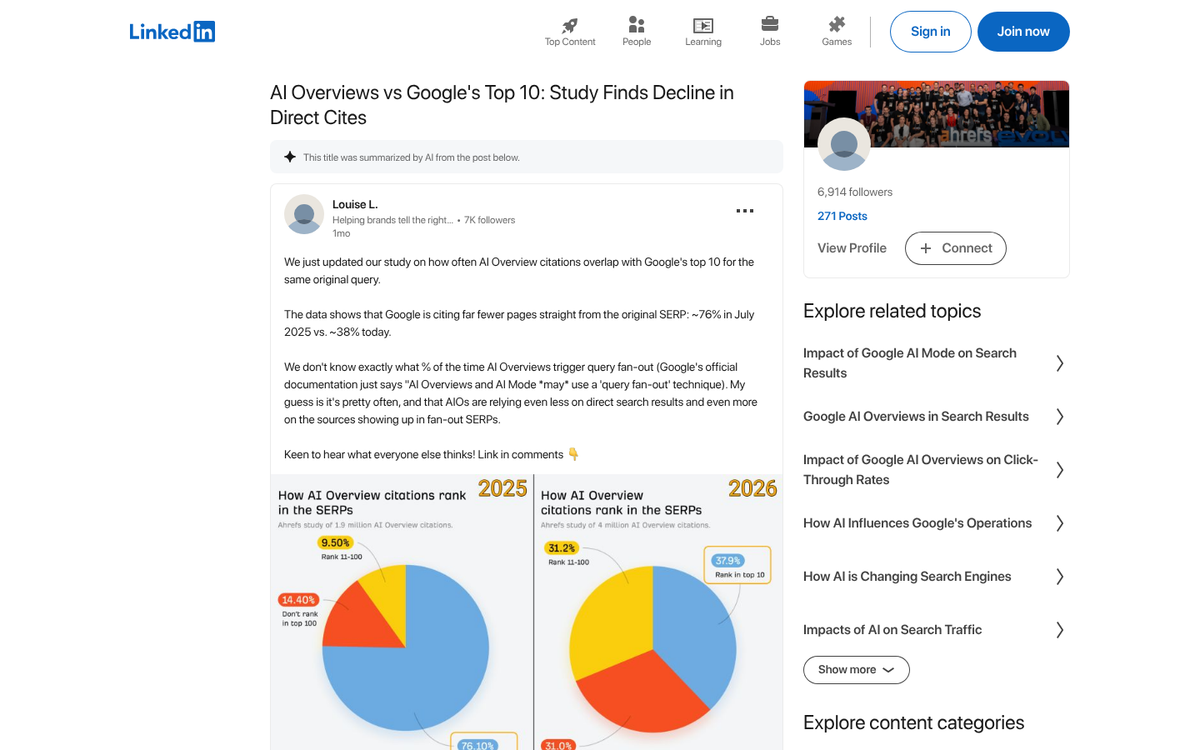
Gartner predicted in 2024 that traditional search engine volume would fall by 25% by 2026; it's a signal that user behavior is changing fast. More users are turning to AI tools to get answers directly and that number will keep growing.
The table below breaks down how the two strategies vary across a few key dimensions.
| Dimension | Traditional SEO | AI Search Optimization |
|---|---|---|
| Goal | Rank high in search results | Get cited as a trusted source |
| Output | A ranked list of links | A direct answer with source references |
| Ranking signal | Backlinks, keywords, page authority | Content clarity, factual depth, structure |
| User behavior | User scans links and clicks through | User reads the answer and may not click at all |
The tactics that used to move the needle - backlink counts, keyword density, metadata - carry less weight when an AI engine is picking what to pull into its answer. What matters now is whether your content is clear, well-structured and factually reliable enough to be trusted as a source.
So the rules haven't just changed a little. The thing you're optimizing for has changed entirely.
Why Being Cited by AI Engines Matters More Than Ranking #1
Getting to page one used to be the goal. But if an AI engine answers the question directly on the results page, most users never scroll past it to click anything at all.
That changes the math on visibility in a pretty dramatic way. Research from Conductor found that click-through rates drop by 61% year-over-year when an AI Overview appears in results and your brand is not cited in it. You can hold a strong organic ranking and still lose the majority of your possible traffic to a competitor who gets named as a source.
The flip side is just as worth learning about. Seer Interactive found that organic click-through rates are actually 35% higher when a brand does appear inside an AI Overview. A brand named by the AI gains a layer of credibility that a blue link sitting below the fold can't match.
Think about it from the user's perspective. They ask a question, an AI gives them a direct answer, and it names one or two sources. Those sources get the click, the trust, and the association with a correct answer. Everyone else on the page is competing for whatever attention is left.
Citation is the new first-page ranking. You want to be chosen by the AI as an honest source worth referencing, and that distinction carries weight because the AI is vouching for your content in front of the user.
The difference between cited and not-cited is wide, and it gets wider as AI search tools handle more queries. Brands that get cited build a compounding visibility benefit over time. Brands that don't get cited can watch their organic traffic shrink even without losing a single position in traditional rankings.
It's also worth mentioning that AI citation and traditional ranking are not mutually exclusive. A page can rank well in standard results and also be cited in an AI Overview. But the priority for content strategy is changing toward citation because that's where user attention is landing first.
The signals AI engines use to evaluate and choose sources go beyond traditional ranking factors - and understanding them is what separates businesses that get named from businesses that get passed over.
The Signals AI Engines Use to Choose Their Sources
AI engines don't pick sources randomly. They're trained to pull from sites that look credible, and that credibility can depend on a handful of measurable things.
Domain authority is a big one. A site with a long track record, lots of inbound links, and large recognition across the web looks more trustworthy to an AI than a newer site with thin history. From the AI's perspective, it has no way to interview you or check your credentials directly, so it reads tells the same way a researcher might scan a bibliography.
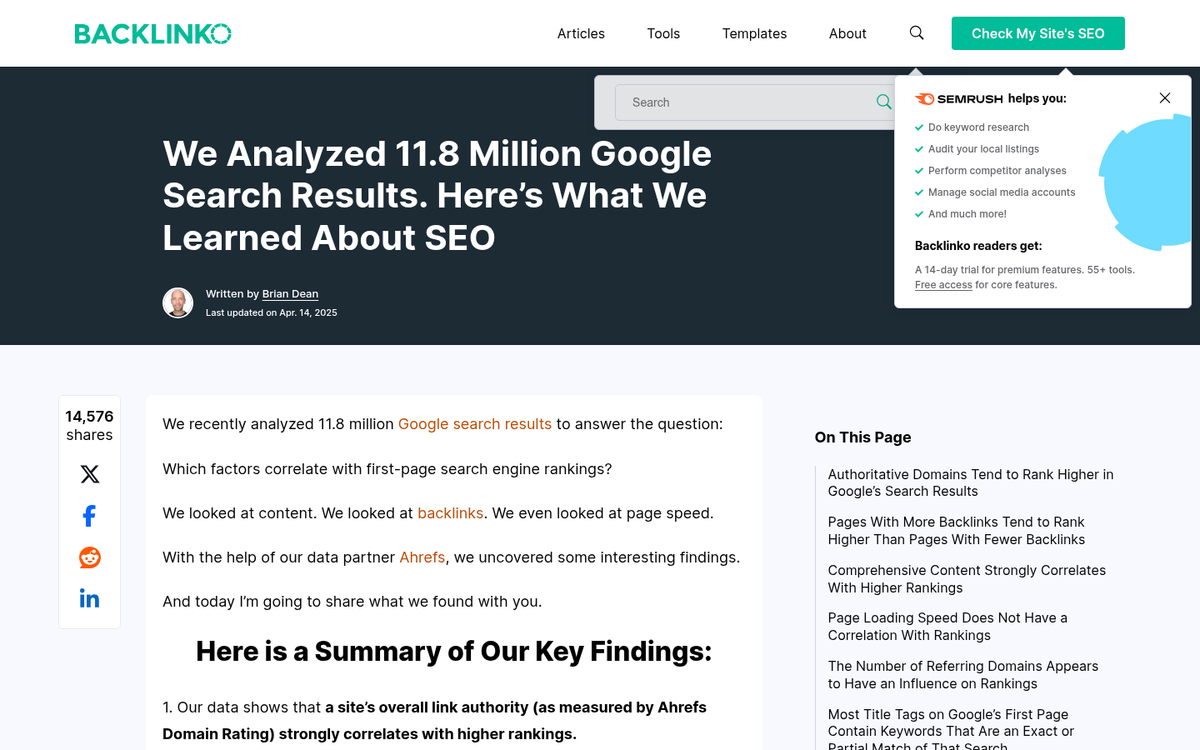
Referring domains matter more than most know. Research from SE Ranking found that sites with over 32,000 referring domains are 3.5 times more likely to get cited by ChatGPT than sites with less; it's a known gap that tells us AI engines use link footprint as a proxy for how much the rest of the web trusts you.
Topical authority is another factor that carries weight. A site that covers one subject in depth tends to rank higher in AI trust than a generalist site that touches on everything lightly. Content that goes deep on a topic and builds a coherent body of knowledge around it is more likely to be treated as a favorite source in that space.
E-E-A-T signals - experience, expertise, authoritativeness, and trustworthiness - also feed into this. These are the same principles Google uses to review content quality, and AI engines trained on web data have absorbed those same patterns. Author credentials, editorial transparency, and factual accuracy all factor into how an AI weighs your content against other sources on the same topic. If you're looking to strengthen these signals, there are practical ways to improve your blog's E-A-T score worth working through.
Content structure factors in too, though that gets into its own territory in the next section. What matters here is that well-organized content is easier for an AI to parse and extract value from.
| Signal | Why AI Engines Care About It |
|---|---|
| Domain authority | Indicates a long-standing, widely recognized web presence |
| Referring domains | Shows how much the broader web endorses your content |
| Topical authority | Signals depth and focus in a subject area |
| E-E-A-T signals | Reflects credibility, accuracy, and editorial standards |
The throughline across these is trust. AI engines are trying to give users reliable answers, so they gravitate toward sources that have already earned credibility in multiple ways.
Structuring Your Content So AI Can Actually Use It
AI engines don't read your content the way a person does. They parse it, extract the most relevant pieces, and pull direct answers to match what was asked. That means the way you put together your content matters just as much as what you say.
The good news is that the structural habits AI engines like are the same ones that help human readers too. According to Ahrefs, 43.2% of pages that rank first in Google are also cited by ChatGPT. That overlap tells you something helpful - readable, well-organized content tends to perform well across the board.
Use Questions as Headings
When someone asks an AI a question, the AI looks for content that mirrors that question as closely as possible. A heading like "What is domain authority?" is far more helpful to an AI than "Domain Authority Overview". Think about the questions your audience types and let those steer your heading structure.
Your most important sections should align with how people ask about a topic, though not every heading needs to be a question - this gives AI a direct path to pull the right content from the right place.
Define Terms Early and Answer Fast
AI models favor content that gets to the point without a long setup. If your page is about an idea, define it in the first sentence or two of that section. Readers benefit from this too, so it's a habit worth building into your writing process.
Keep your answers tight. A two-sentence definition followed by supporting detail is much easier for an AI to extract than a definition buried in the middle of a long paragraph. Front-load the answer, then explain it.
Break Complex Ideas Into Smaller Pieces
Long blocks of text are hard for AI to parse accurately. When you have a tough idea to explain, break it into shorter sections with descriptive subheadings instead of trying to cover it all in one dense paragraph, and each chunk should be able to stand on its own and still make sense.
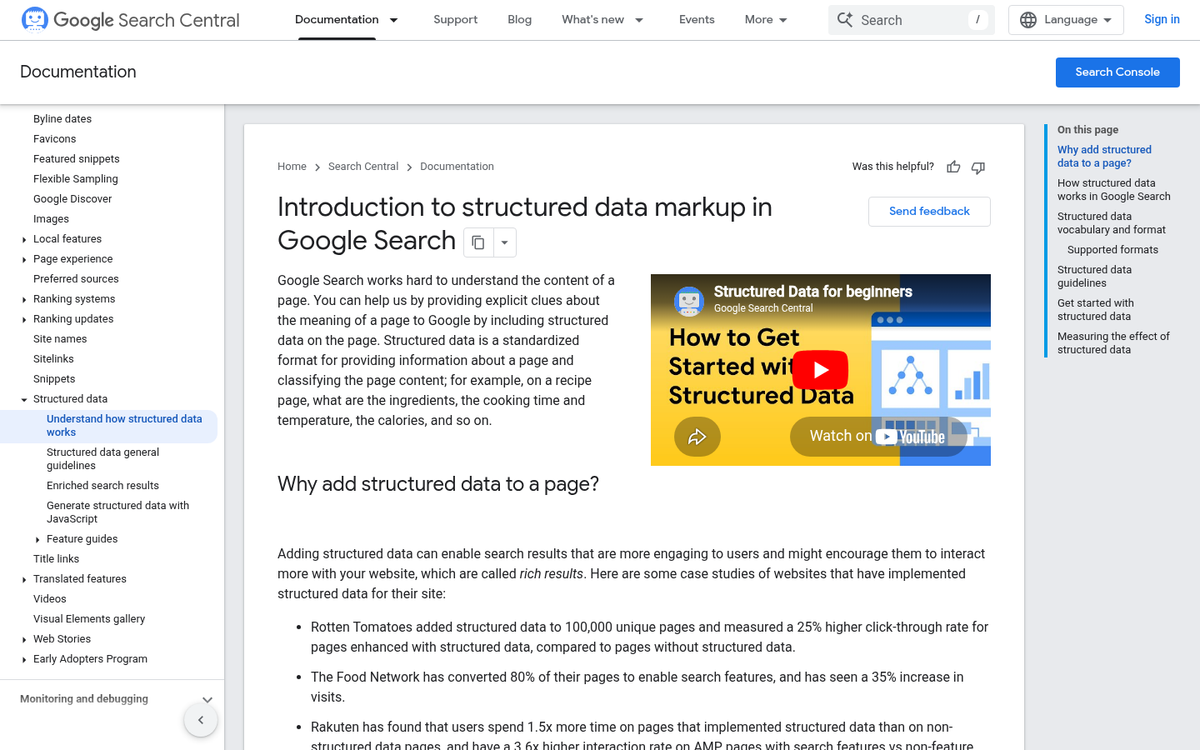
Schema markup is also worth your time. Structured data helps AI systems understand what type of content they're looking at - a product, an FAQ, a how-to guide. That context helps them choose when to pull from your page.
FAQ sections deserve a mention. They match the question-and-answer format that AI engines are built around, and adding FAQ schema gives that content even more weight in how AI reads your page.
Building the Authority and Backlink Profile AI Models Reward
Great content structure gets you part of the way there. But AI models also need a reason to trust your site as a source. That trust comes from authority tells - and backlinks from credible linking domains are still one of the strongest tells available.
SE Ranking's research into AI citation patterns found a strong connection between the number of linking domains pointing to a page and how likely that page is to get cited by AI tools.
An AI model wants to pull from sources that are credible, accurate, and usually recognized. A thin link profile tells the model that your content hasn't earned much recognition from the wider web. On-page adjustments alone won't fix that.
What Actually Builds the Right Kind of Authority
Digital PR is one of the most direct ways to earn citations from publications that AI models already trust.
Topical depth matters too. A site that covers a subject closely across pages looks more like an authority than one that has a single well-written post surrounded by unrelated content. To be recognized as a reliable source on a topic, your site needs to back that up with steady, focused coverage across connected subjects.
The question worth asking is whether your site looks like a credible source to a machine - not to a reader who already knows your brand, but to a system that has never seen your site before and has to make a fast judgment based on tells.
A helpful way to review your own position is to look at three things side by side. Directory submissions alone won't move the needle - what matters is the quality and diversity of sites linking back to you.
| Signal | Weak Profile | Strong Profile |
|---|---|---|
| Referring domains | Few, low-authority sites | Diverse, reputable publications |
| Topical coverage | Isolated articles | Deep, connected content across a subject |
| Citation sources | Directories and self-links | Earned mentions from trusted outlets |
Building this profile takes time. But it's what separates sites that get cited from sites that get skipped. If you rely on low-quality content sources, that reputation can follow your site and work against the authority signals you're trying to build.
Tracking Whether Your AI Search Optimization Is Working
Standard rank tracking tools were built to monitor your position in traditional search results. They won't tell you if ChatGPT or Perplexity is citing your content, so you need a different set of tells to get a picture of what's working.
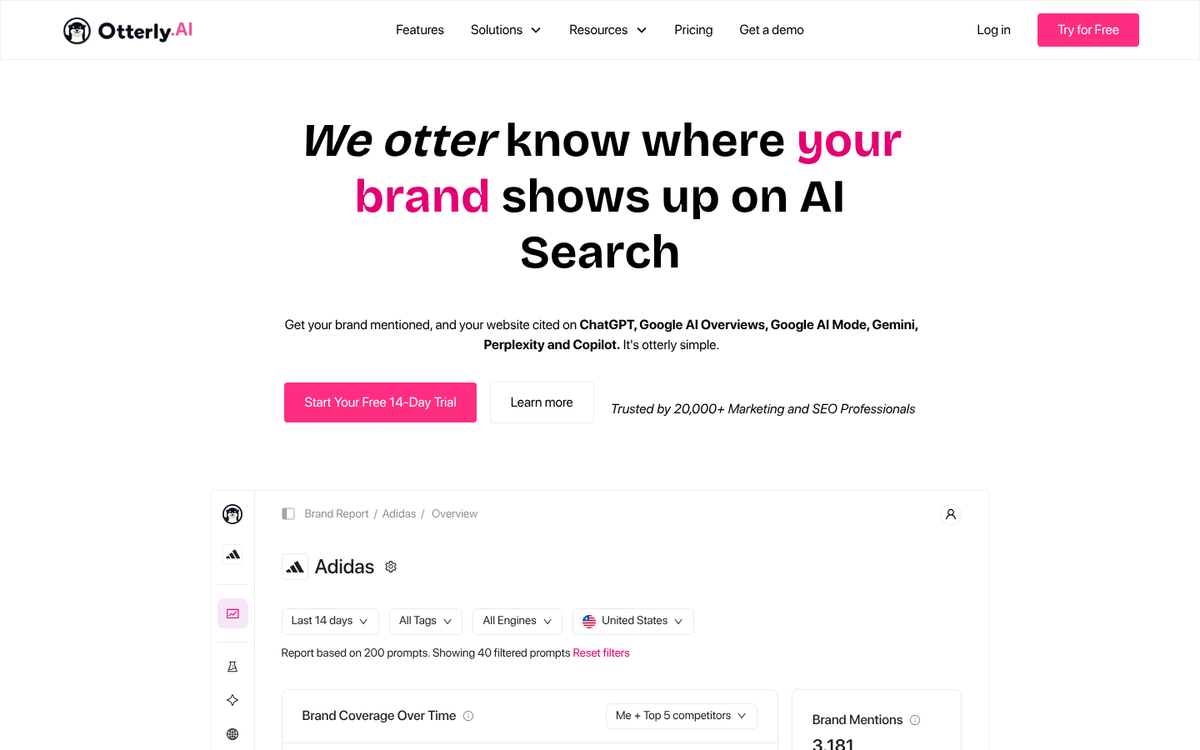
The most direct thing to track is your brand name appearing inside AI-generated answers. Some monitoring tools now let you run test queries and record if your site gets mentioned in the response - still a building space. But tools like Profound, Otterly, and AthenaHQ are specifically built to track AI citations - it's worth looking at a few to see which fits your workflow.
Referral traffic from AI platforms is another concrete metric to watch. You'll find this in Google Analytics by looking at traffic sources for chatgpt.com and perplexity.ai. To put some numbers to it, BrightEdge reported that ChatGPT referral traffic grew 44% and Perplexity grew 71% in a single month - so even a small slice of that audience piles up fast. If those sources are sending you zero traffic, that's a helpful data point on its own.

Organic click-through rate is worth watching too, and that's also the case if AI Overviews are appearing for your target queries. When an AI Overview takes up the top of the page, fewer people click the traditional results below it. A drop in CTR alongside stable or improving rankings can mean your content is being pulled into AI answers - a win - even if the surface numbers don't reflect it. This is also relevant if you're thinking about how Google interprets signals on your content more broadly.
| What to Track | Where to Find It |
|---|---|
| Brand mentions in AI answers | AI citation tools like Profound or Otterly |
| Referral traffic from AI platforms | Google Analytics - source/medium report |
| Organic CTR changes | Google Search Console |
| AI Overview presence for your queries | Manual search checks or rank tracking tools |
A lot of site owners are working without any of this in place right now - it's not a criticism - the tools and the playbook are still being written. But creating even basic tracking across these areas will put you in a much better position to know what's actually driving results. If you're also monitoring how on-site decisions affect your traffic, combining those insights with AI referral data gives you a more complete picture.
Make Your Site the Answer, Not Just a Result
The levers that matter most are easy in principle - even if they need standard effort in practice: content that answers questions directly, topical authority built through depth and consistency, backlink credibility that tells peers trust and structured formatting that makes your content easy for humans and machines to parse. Pull these consistently and you build a presence that AI systems can confidently use.
A helpful exercise is to audit your site with fresh eyes and ask one honest question: Would an AI engine confidently surface this page as the definitive answer? Any uncertainty points directly to your next priority. Look for gaps in coverage, thin coverage of subtopics, or pages that don't have the structural signals - schema markup, hierarchies, cited sources - that reinforce credibility. If you're building on WordPress, the right plugins can help reinforce many of these signals automatically.
The businesses and publishers who invest in these foundations now will have an actual head start as AI-driven search continues to change how people find information. Waiting for the landscape to stabilize is itself a strategic choice - just not a favorable one. The best time to build authority is before everyone else decides to.
FAQs
What is AI Search Optimization?
AI Search Optimization is the practice of structuring and positioning your content so AI-powered search engines choose it as a cited source when generating direct answers for users, rather than simply ranking it in traditional search results.
How does AI search differ from traditional SEO?
Traditional SEO focuses on ranking pages in a list of links. AI search engines synthesize information and deliver direct answers, citing select sources. The goal shifts from earning clicks to being chosen as a trusted reference.
Why do AI citations matter more than ranking first?
When AI Overviews appear, click-through rates drop 61% for brands not cited. Being named as a source by AI boosts organic CTR by 35% and builds credibility, making citation more valuable than a traditional top-ranking position.
What signals do AI engines use to choose sources?
AI engines evaluate domain authority, referring domains, topical authority, and E-E-A-T signals like expertise and trustworthiness. Sites with strong backlink profiles and deep subject-matter coverage are significantly more likely to be cited.
How can I track AI Search Optimization performance?
Use AI citation tools like Profound or Otterly to monitor brand mentions, check Google Analytics for referral traffic from ChatGPT and Perplexity, and review Google Search Console for organic click-through rate changes on AI Overview queries.