




For website owners, this distinction matters more than ever. AI-powered answer engines like ChatGPT, Perplexity, and Google's AI Overviews don't retrieve pages the way traditional search engines do - they interpret questions and pull answers from content that most directly satisfies the user's intent. If your content answers the literal question but misses the point behind it, an AI engine will basically look elsewhere.
Think of it this way: someone asking "how do I fix a slow website" probably isn't looking for a definition of page speed - they want helpful steps they can take right away. Content that recognizes that distinction and responds to it is content that gets surfaced, cited, and trusted by AI systems.
What follows breaks down how it works and what you can do to put it into practice on your own site.
Quick Answer
Intent matching is the process of identifying what a user wants to accomplish from their input and mapping it to a predefined action or response. In conversational AI and chatbots, it involves analyzing user messages to determine their goal (the "intent") and triggering the appropriate workflow or reply. This is typically achieved through machine learning models, keyword recognition, or natural language processing (NLP). Accurate intent matching is critical for delivering relevant, helpful responses and improving user experience in virtual assistants and automated systems.
How Answer Engines Interpret What People Actually Mean
Traditional search engines were built to match keywords. You typed words and the engine looked for pages that contained those words.
Modern answer engines go further through a process called semantic understanding, and it's the foundation of how tools like ChatGPT, Perplexity and Google's AI Overviews process a question. Instead of scanning for word matches, these systems analyse the full context of a query to figure out the intent behind it. They ask themselves: what does this person want to know, do, or find?
Think about the difference between typing "best running shoes" versus asking "what shoes should I wear for a half marathon with flat feet?" Both relate to footwear. But the second query tells an AI so much more - it tells a goal, a physical constraint and a desire for a recommendation that fits a situation.
That interpretation process means more than grammar. Answer engines pull in context from the surrounding conversation, the platform being used and patterns from how similar questions have been answered before. They're trained to recognise what response a query is calling for - a simple fact, an explanation, a product recommendation, or a comparison.
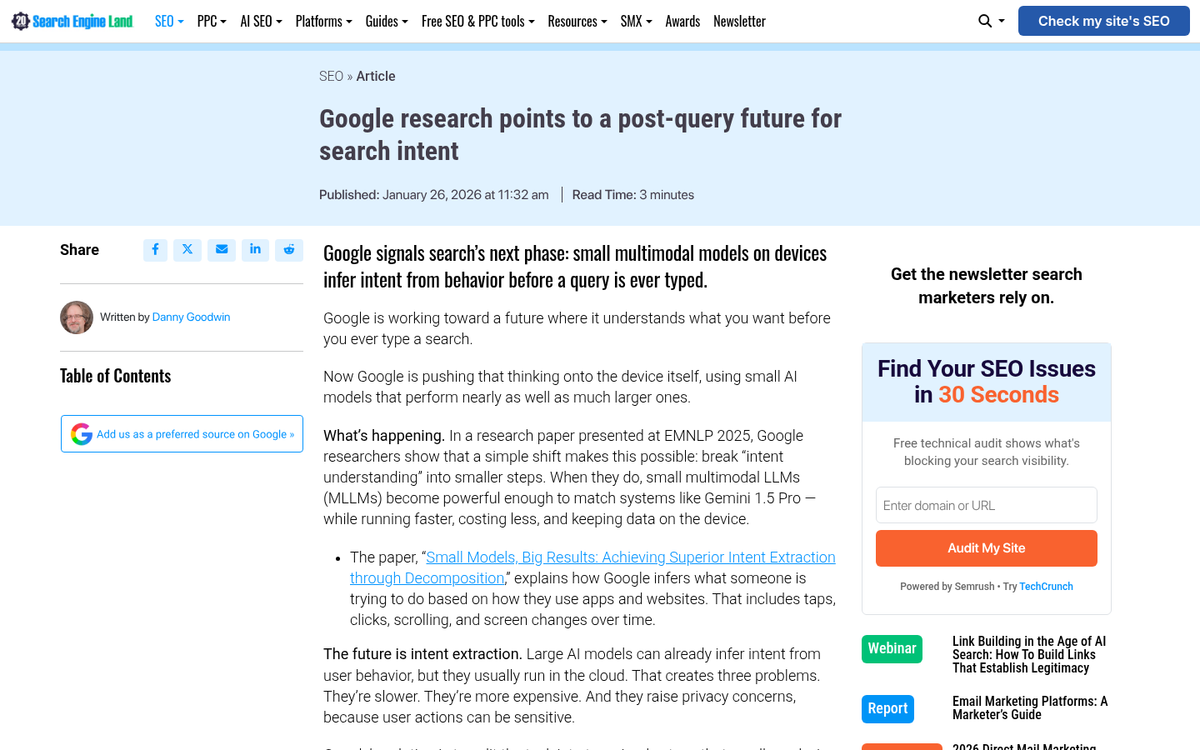
This is where intent matching can become something content creators need to take seriously. If your content answers the literal question but misses the underlying need, an answer engine will probably pass it over in favour of something that gets closer to what the person was after. A page that lists running shoe businesses won't serve a person who needs input for a physical condition and a race distance.
The difference between what someone types and what they actually mean is something these systems are designed to close. They're not perfect at it. But they're better at reading between the lines. A short query like "half marathon training" could mean a beginner looking for a plan, an experienced runner wanting to improve their time, or someone deciding if they're ready to sign up at all.
The AI uses every signal it has to make its best guess at which of these is true. Your job is to make sure your content speaks to one of those needs - not all of them at once.
The Four Types of Search Intent and Why Each One Changes Everything
Every query a person types falls into one of four categories, and the category it lands in changes how an AI engine decides to respond. These four types are informational, navigational, transactional, and commercial investigation. Getting familiar with them is one of the most helpful things you can do as a content creator or site owner.
Informational intent is what it sounds like. The person wants to learn something, understand an idea, or get an answer to a question. AI engines like to respond to these queries with direct answers, summaries, or explanations pulled from sources that cover the topic well.
Navigational intent is when someone already knows where they want to go. They're typing a brand name or a website into the search bar to get there faster. AI systems usually treat these as destination queries and point users straight to the right place instead of generating a large response.
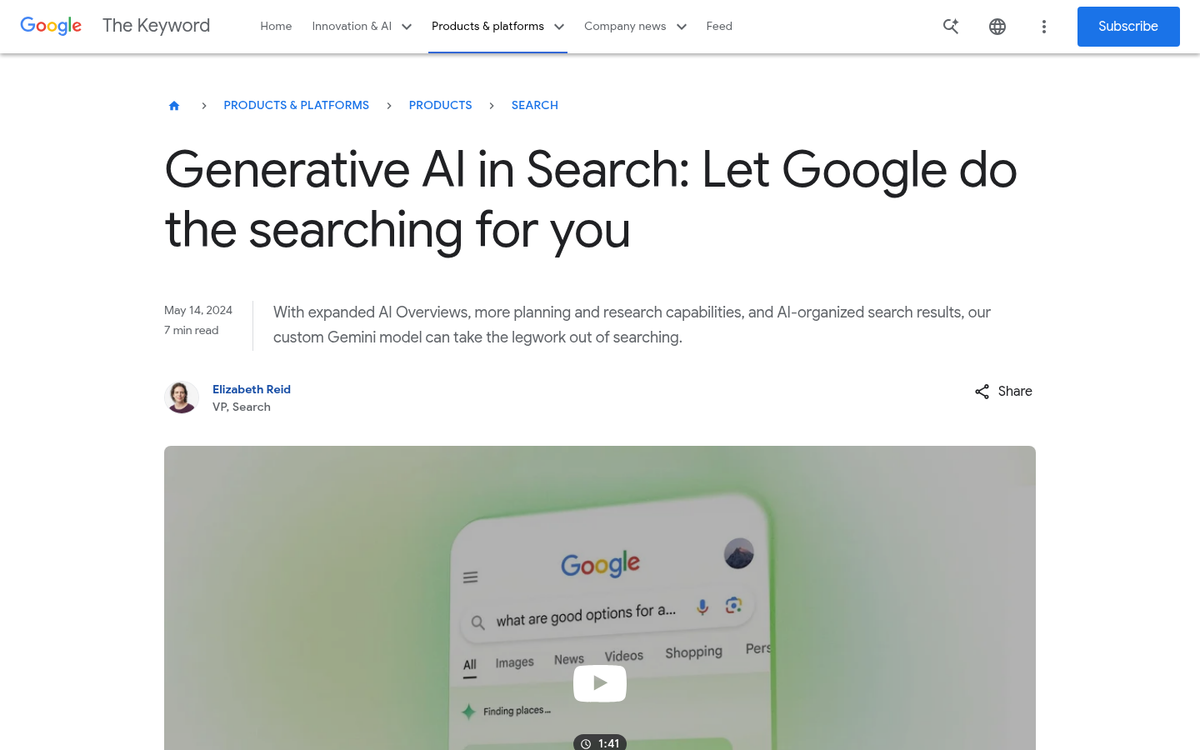
Transactional intent is where the person is ready to take action. They want to buy something, sign up, download, or book. AI engines reading this intent like to surface pages that make it easy to complete that action immediately.
Commercial investigation sits between informational and transactional. The user is close to a choice but not quite there yet. They're comparing options, reading reviews or weighing up what something costs. It's an especially important intent type because the right content can catch users at this moment and move them forward.
| Intent Type | Example Query | What the User Wants | How AI Typically Responds |
|---|---|---|---|
| Informational | "How does solar power work?" | To understand a topic | A direct explanation or summary from a credible source |
| Navigational | "Spotify login page" | To reach a specific destination | A direct link or pointer to that exact page |
| Transactional | "Buy running shoes online" | To complete a purchase or action | Pages that make it easy to act immediately |
| Commercial Investigation | "Best project management tools 2024" | To compare options before deciding | Comparison content, reviews, and structured breakdowns |
What makes this framework so helpful is that AI engines don't treat all queries the same way. A response built for informational intent looks very different from one built for transactional intent, and content that ignores that gap tends to get passed over.
Mapping Your Existing Content to User Intent Signals
Knowing the four intent types is one thing. But the real work is checking if your content actually matches them. Most website owners assume their pages are doing the right job, and that assumption is worth testing.
Start with your product and service pages. Ask yourself: is this page written for a person who is ready to buy, or for a person who is still weighing their options? A page loaded with background information and feature comparisons might serve a researcher well. But it can leave a ready-to-buy visitor with nowhere to go. The reverse is also true - a page that jumps straight to pricing without any context can push away a person who just needs a little more information first.
Your FAQ pages deserve the same honest look. The questions you wrote two years ago might align well with what you thought people would ask - not what they are actually typing into search engines or AI tools. User language changes, and so do the things they want to know.
Google Search Console is a helpful place to start this audit. Pull up the queries that are bringing traffic to each of your pages and check if those queries match what the page actually delivers. A page ranking for "how does X work" that lands visitors on a product page built for buyers is a mismatch. That mismatch costs you.
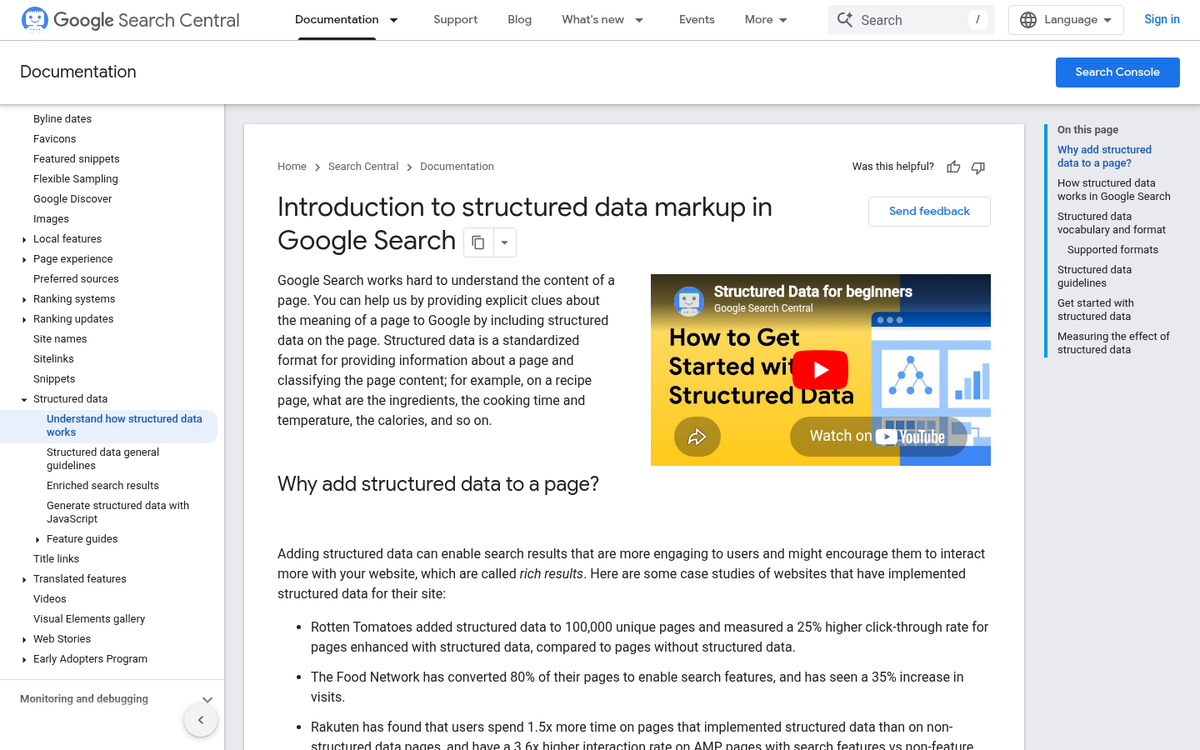
AI query testing is worth adding to your process. Type your target queries into tools like ChatGPT or Google's AI Overviews and look at what kinds of answers come back. If the AI is returning educational content for a query you thought was commercial, that tells you something important about how that intent is being read.
Go page by page and ask two questions: what intent does this page assume, and what intent does the incoming traffic actually show? You can do this in an easy spreadsheet with columns for the page URL, the top queries driving traffic, the intent those queries suggest, and the intent your page currently serves. If you have changed URLs along the way, recovering your share counts after a URL change is also worth factoring into your audit.
| Page | Top Queries | Query Intent | Page Intent | Match? |
|---|---|---|---|---|
| Product page | "best X for Y" | Commercial | Transactional | Partial |
| FAQ page | "how does X work" | Informational | Informational | Yes |
| Homepage | "X company reviews" | Commercial | Navigational | No |
Even a rough version of this exercise will show you where your content is pulling in the wrong direction.
Signals AI Uses to Judge Whether Your Content Matches Intent
Once you have mapped your content to user intent, it helps to know what AI is actually looking at when it decides if your page is a match. AI is not reading your words alone - it's weighing a combination of tells to judge how well your content fits what the user was trying to find.
Semantic relevance is one of the most important tells. A page about "how to fix a leaking pipe" that also covers water pressure, pipe materials, and when to call a plumber will usually score better than one that repeats the phrase "fix leaking pipe" ten times.
Entity relationships matter quite a bit here as well. Entities are the people, places, products, and concepts that appear in your content and how they connect to each other. A 2024 study published in Neural Computing and Applications found that using intent-entity relationships to review content improved semantic accuracy by 12.6%. That is a real gain, and it shows why content that covers a topic in a connected way tends to perform better than content that feels isolated or thin.
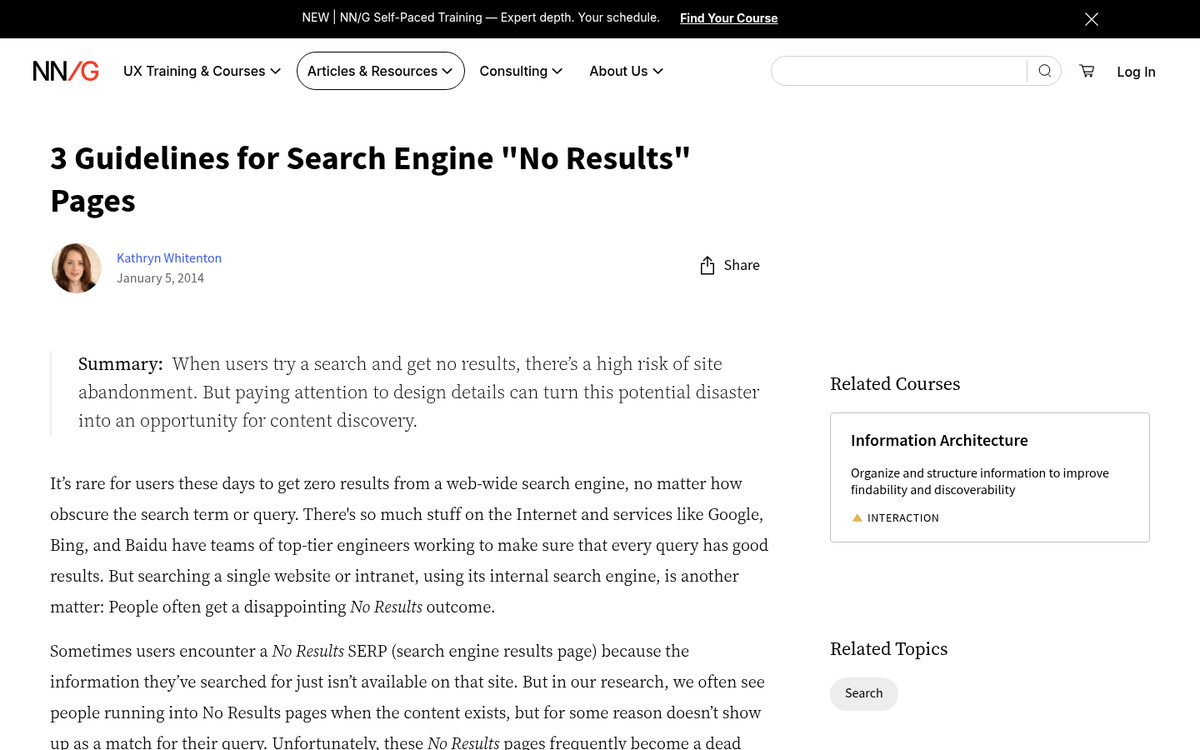
Format is another signal that often gets ignored. AI systems look at whether your content is presented in a way that fits the intent behind the search. A question that should have a direct answer gets better results from a short paragraph than from a wall of text. A comparison search does better with a table. A process benefits from a numbered list.
Structured data also factors in. When your page uses markup to label what things are - a recipe, a product, a FAQ - it gives AI a faster and more reliable way to understand your content's purpose. This does not replace good writing, but it does help AI place your content in the right context. If you use infographics as part of your content strategy, adding an embed code to your infographic page can also support structured presentation.
The most direct signal of all is how your page answers the question. AI is looking at whether a person who lands on your page would actually get what they came for. A page that answers the main question and addresses the natural follow-up questions will usually be judged as a better match than one that answers only part of what the user needs.
Where Intent Matching Breaks Down - and What Goes Wrong
Even well-written content can miss the mark, and it usually comes down to a difference between what the writer thought a searcher wanted and what the searcher actually wanted. That gap is more common than you'd think, and it has nothing to do with effort or expertise.
One of the most common problems is writing content around keywords instead of questions. A page could be optimized for a phrase like "project management software" but never actually answer what the searcher at that stage wants to know. The keyword matches. But the intent doesn't, and AI systems pick up on that difference.
A related problem is writing for search bots instead of people - this produces content that ticks the technical boxes - keyword density, headers, word count - but reads like a list of facts loosely stitched together. It doesn't feel like it's talking to anyone, and AI increasingly treats that as a signal that the page isn't legitimately helpful.
Answers buried too deep are another way intent matching falls apart. Someone who wants a quick yes or no answer shouldn't have to read four paragraphs of background first. When the content structure forces people to dig, AI can interpret that as a mismatch between what the page delivers and what the query needed.
Then there's the problem of misreading transactional intent as informational. If someone searches "buy noise-cancelling headphones under $100," they're ready to choose. A page that responds with a long explainer about how noise cancellation works is answering a very different question. The content could be accurate and helpful in other contexts. But it's not what that person came for.
A lot of site owners have legitimate content that just doesn't connect because the framing or structure is off. The information is there. But it's packaged in a way that doesn't match how the question was asked. It's a fixable problem, and it's worth separating from content that's actually thin or unhelpful - similar to how content quality and pricing decisions require understanding what your audience actually needs before you publish.
Those two things sound similar but behave very differently in practice.
Structuring Pages So AI Can Match Them to the Right Queries
Once you understand what breaks intent matching, you can start to build pages that work with it instead of against it. A few structural options make a difference here.
Start with a direct answer at the top of the page. AI systems scan for the clearest response to a query, and if your answer is buried three paragraphs down, you lose the match before the page even gets a fair read. Lead with the point, then explain it.
Your headers matter more than you give them credit for. Phrasing them as natural questions - the kind a person would actually type or say - helps AI connect your content to queries. A header like "How long does the application take?" does more work than "Application Timeline Overview" because it mirrors how people phrase their searches.
Formatting matters too. Short paragraphs, clean sentences, and logical flow make it easier for AI to extract a coherent answer from your page. Dense blocks of text make that harder - not because AI can't read them, but because the signal gets muddied when everything runs together.
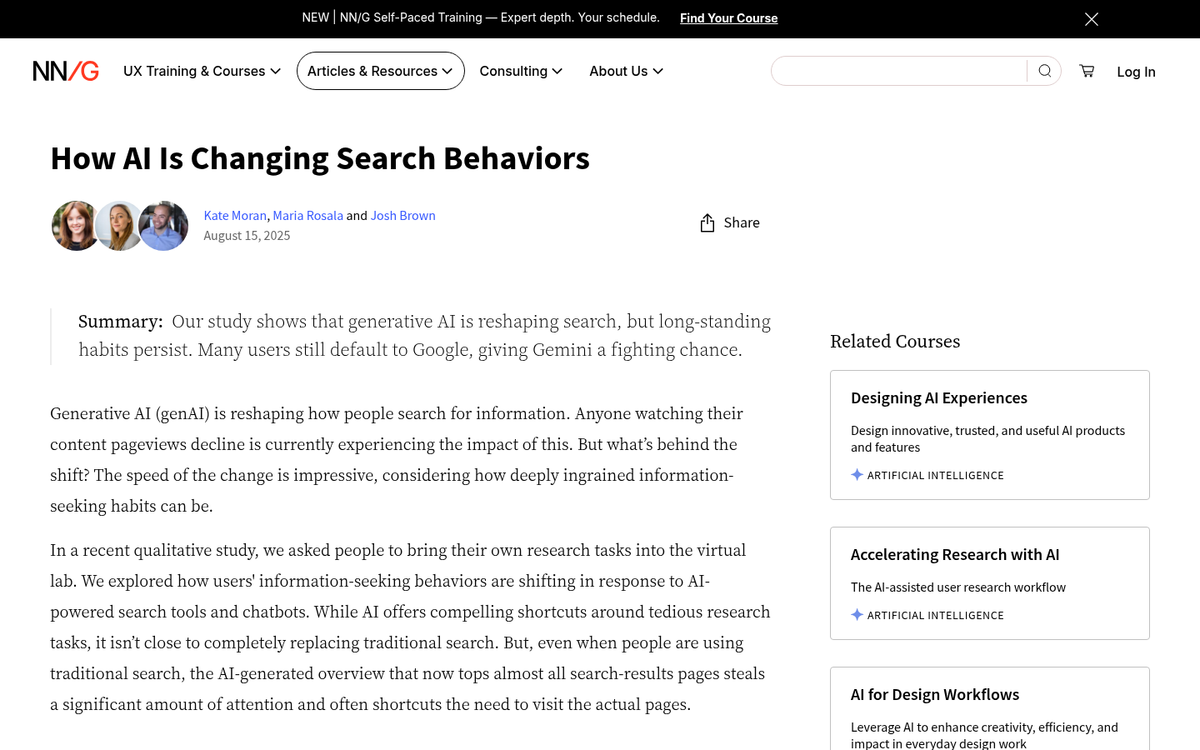
Structured data is worth adding where it fits. If your page covers a product, a how-to process, or an FAQ, marking it up with schema gives AI an extra layer of context about what the page is and who it's for. It's not a magic fix, but it removes ambiguity. If you're working on a Squarespace blog or a WordPress site, schema plugins can handle most of this for you.
The following table is a quick reference for the structural options that have the most impact on intent matching.
| Page Structure Element | Intent-Matching Benefit |
|---|---|
| Direct answer in the opening paragraph | Signals relevance to the query immediately |
| Question-based headers | Mirrors natural query phrasing for better alignment |
| Short, focused paragraphs | Makes it easier to extract a clean, useful answer |
| Logical content order | Supports accurate intent reading from top to bottom |
| Schema markup | Reduces ambiguity about page type and purpose |
None of this needs to happen all at once. Pick the pages that are closest to ranking or being surfaced and apply these principles there first. Good structure is something you can layer in as you go. If you're also thinking about how to scan your WordPress posts for errors before applying these updates, it's worth doing that cleanup first.
Make Every Page Answer What Someone Actually Came to Ask
That change in perspective - from what do I want to say to what does this person need - is what separates content that performs in an AEO environment from content that exists without purpose. Answer Engine Optimization is built on the premise that AI systems are becoming the first point of contact between users and information. Intent matching is how you ensure that when that contact happens, your content is the one that earns trust, delivers value, and gets surfaced as the answer worth giving. If you want to evaluate where your content currently stands, the AEO Readiness Checklist is a practical starting point.
The writers and website owners who will grow in this space are not the ones who chase formats or reverse-engineer algorithms. They are the ones who genuinely understand their audience's needs at a granular level and build content that meets those needs with accuracy and clarity. That is not a tactic - it's a standard - and if you hold your content to it, everything else follows.
FAQs
What is intent matching in AI search?
Intent matching is when AI answer engines analyze the meaning behind a search query, not just its keywords, to find content that best satisfies what the user actually needs.
What are the four types of search intent?
The four types are informational, navigational, transactional, and commercial investigation. Each represents a different user goal, and AI engines respond differently depending on which intent a query signals.
Why does my content get ignored by AI engines?
Your content may answer the literal question but miss the underlying need. AI engines prioritize content that matches user intent accurately, so mismatches in format, framing, or depth can cause your page to be passed over.
How can I check if my content matches user intent?
Use Google Search Console to compare incoming queries against what your pages actually deliver. You can also test queries directly in AI tools like ChatGPT to see what intent those tools are reading.
What page structure helps AI match content to queries?
Lead with a direct answer, use question-based headers, keep paragraphs short, and add schema markup where relevant. These signals help AI quickly identify your content as a relevant match for specific queries.