




For website owners, this matters more than it might initially seem. When an AI system reformulates a query before pulling an answer, it may be interpreting your content through a slightly different lens than the words a user actually typed. That means the way your content is structured, phrased, and optimized can determine if it gets surfaced - or gets passed over in favor of a source that better matches the reformulated version of the query.
In the context of Answer Engine Optimization (AEO), query reformulation gives you a helpful edge - it changes the focus from targeting a fixed set of exact-match keywords to building content that speaks to the intent behind a question, in whatever way that intent could be expressed.
What follows breaks down how query reformulation works, why AI systems use it, and what you can do as a website owner to make sure your content remains visible and authoritative no matter how a question gets reworded.
Quick Answer
Query reformulation is the process of modifying or rewriting a search query to improve the relevance and quality of results. It involves techniques such as expanding queries with synonyms or related terms, correcting spelling errors, removing ambiguous terms, or rephrasing the question entirely. Search engines and information retrieval systems use query reformulation automatically, while users may do it manually when initial results are unsatisfactory. It helps bridge the gap between how users express their needs and how information is indexed.
How Search Engines and AI Engines Handle Query Reformulation Differently
Traditional search engines and AI-powered answer engines are two very different environments, and they treat reformulated queries in different ways. That difference matters quite a bit if you create content meant to be found.
With a traditional search engine like Google, each reformulated query triggers a fresh results page. The engine matches keywords and signals to rank pages, so even a small difference in wording can pull up a different set of results. A user who gets unsatisfying results will rephrase their search and try again, and the engine responds by serving a new list of options.
AI-powered engines work differently at a basic level - each synthesizes an answer from multiple sources and presents it as a direct response, so the user may never need to rephrase at all. The AI fills in the gaps by inferring intent from context and conversation history.

This means the bar for content is higher in an AI-driven environment. If your content only targets surface-level phrases, it can become less helpful to engines that prioritize meaning over matching.
| Feature | Traditional Search Engines | AI Answer Engines |
|---|---|---|
| Response to reformulated query | New results page | Refined or synthesized answer |
| Keyword sensitivity | High - wording changes results | Lower - intent is inferred |
| User effort to rephrase | Frequently needed | Less frequently needed |
| How content gets matched | Keyword and signal matching | Semantic and contextual matching |
Both environments reward content that's well-structured and legitimately helpful. But the path to visibility looks different in each one. In traditional search, being found after a reformulation can depend on how well your page covers related variations of a topic. In an AI environment, it can depend on how well your content communicates the full answer to an underlying need.
Knowing which environment your audience uses most will shape how you write, structure, and optimize your content going forward. If you're building a blog and want to grow your reach, it's worth understanding ways to promote a new WordPress blog across both traditional and AI-driven channels.
Why Users Reformulate Queries in the First Place
Users reformulate queries because they did not get what they needed the first time. That difference between what they asked and what they wanted is more common than most people know.
Research from Jansen et al. found that between 46% and 52% of users modified their queries during a search session. That is nearly half of all users, on any given day, recognizing that their first attempt missed the mark. For developer-related searches specifically, that number climbs to 76% - meaning the majority of people looking for technical answers had to rephrase before they found something helpful.
These numbers tell a story about intent. A user does not usually reformulate because they typed something wrong. They reformulate because the results they got did not match the mental picture they had when they started searching. There is a difference between the words they used and the meaning they intended, and reformulation is how they try to close it.
This gap shows up in a few ways. Sometimes the original query is too broad and the results feel scattered. Other times it's too narrow and they miss relevant content entirely. And sometimes the user does not yet have the vocabulary to describe what they are looking for - they are basically searching their way toward an idea they have not formed yet.
That last point is especially interesting. Reformulation is not necessarily a sign of frustration - it's sometimes part of the thinking process itself. Users refine their questions as they learn more from the results they see, which means the search session can become a dialogue between the user and the engine.
Satisfaction gaps play a big part here as well. When a result answers a slightly different question than the one intended, users don't stop and accept it. They adjust, rephrase, and try again.
That pattern - the trail of reformulated queries - turns out to be actual data. It shows where intent was misread, where content failed to connect, and where users had to work harder than they should have to get a helpful answer.
How AI Answer Engines Predict and Handle Reformulated Intent
Modern AI answer engines don't read the words in a query - they try to understand what a person actually wants. That's where semantics come in. Instead of matching keywords literally, these systems are trained to find the meaning behind a phrase and connect it to related ideas, synonyms, and context.
That's why two very different queries can return the same answer. A user who types "how do I fix a leaky tap" and another who types "water dripping from faucet won't stop" are asking the same thing. The AI maps to the same underlying intent without needing the words to match.
Large language models are trained on vast amounts of text, which helps them learn that words like "cheap," "affordable," and "budget-friendly" point to the same concept. This is called intent clustering - grouping query variations together under one shared meaning. It means the engine is able to handle reformulations before a user even makes them.
That last part matters more than it might seem. The AI doesn't always wait for a user to rephrase a question - it infers what they meant from the start and builds a response around that inferred intent. So even a vague or incomplete query can pull a well-matched answer.
For content creators, this changes how you should think about what you write. Matching exact search phrases is no longer enough. You want to cover a topic closely enough that your content speaks to the intent behind different versions of a question. AI systems reward depth and relevance over keyword repetition.
That said, AI systems aren't perfect at this. They can misread intent when a query is legitimately ambiguous or when the topic is very niche. In those cases, the engine may pull a broad answer that doesn't quite fit what the user needed - which is what triggers another reformulation.
If your content only answers the most obvious version of a question, you're leaving a gap for every variation the AI might associate with that intent. Understanding how engagement signals like social shares are measured can also inform how AI systems assess the relevance and authority of your content.
What Query Reformulation Signals Tell You About Content Gaps
When users rephrase a search to find something your content covers, that's a signal worth noting - it usually means your page exists but does not match the way they think or talk about the topic.
The gap is not necessarily about missing information. Sometimes it is about tone and language. A user searching "how to fix a leaky tap" and then switching to "tap dripping repair" is telling you that neither version quite landed. Your content might answer the question but use different wording than your audience does.
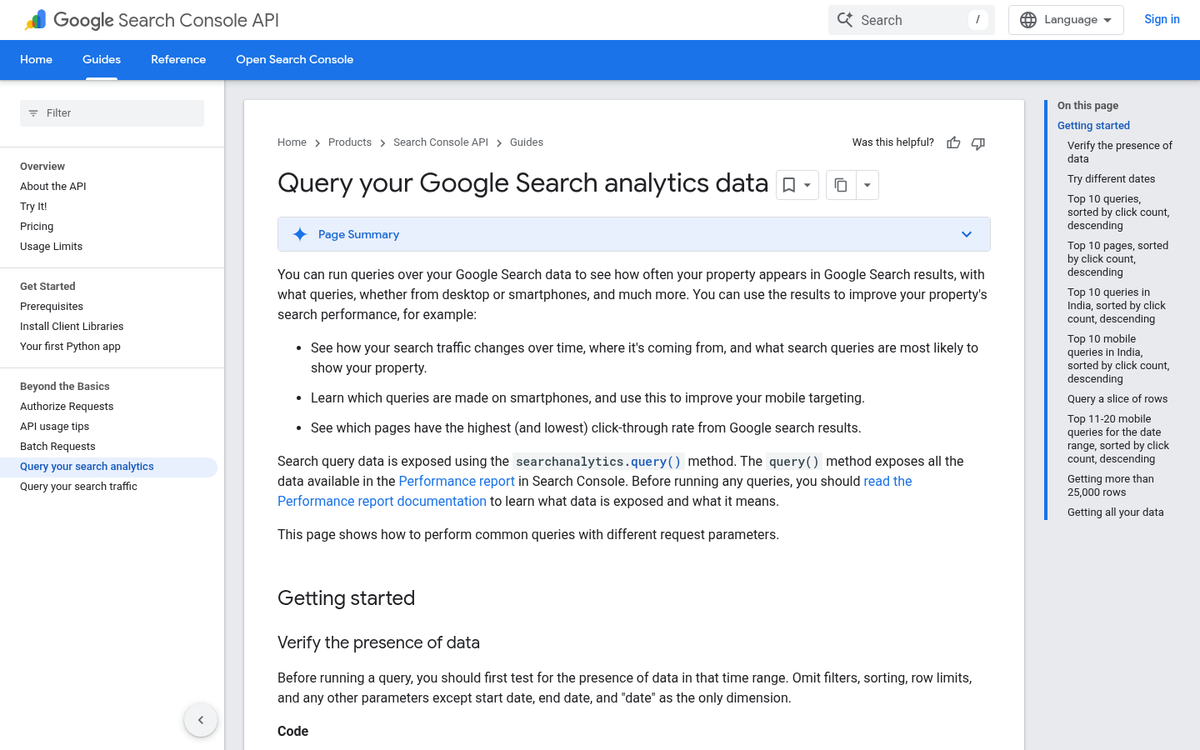
Search analytics helps you trace this. Look at the queries that lead users to a page and then compare those to the ones that lead them away or into a second search. A high exit rate after a search visit can point to a mismatch between what they expected to find and what they actually got.
Autocomplete data from search engines is another helpful source. The suggestions that appear as you type reflect patterns in how users phrase their searches. If you see variations you have not covered, that's worth addressing. Setting up article auto-posting can also help you publish content faster when you identify these gaps.

"People Also Ask" boxes are a similar signal. The questions listed there come from related searches that users made and they show you the follow-up intent that your content may have missed. If those questions connect to your topic but you don't answer them, that's a gap you can close. Adding a forum to your blog is one way to surface the questions your audience is actually asking.
| Signal | What It Tells You | What to Do |
|---|---|---|
| High exit rate after search visit | Content did not meet the user's expectation | Review the page for mismatched intent or missing answers |
| Autocomplete variations you haven't covered | Users phrase the topic differently than your content does | Update language on the page to reflect natural phrasing |
| People Also Ask questions you don't answer | Related intent exists that your content ignores | Add sections or FAQs that address those follow-up questions |
| Low impressions despite relevant content | Search engines aren't connecting your page to the query | Rework headings and copy to better reflect search language |
These tells point you toward the places where your content and your audience's language are not quite in sync.
Writing Content That Anticipates Query Variations
Good content can still fall short when it fails to cover the same topic from multiple angles. Most people ask the same question in very different ways, and your content needs to meet them at each of the entry points.
Consider a topic like renewing a passport. One person searches "how to renew my passport", another types "passport renewal process", and a third asks "can I renew my passport online". These are the same question with different words, and content that addresses only one version will miss the other two entirely.
FAQ sections are one of the most helpful tools you have here. They let you write out full questions the way a person would phrase them and answer each one. A FAQ does not repeat the same answer under slightly different headings - it responds to the angle of each question, which matters quite a bit to search engines trying to match intent.
Structured headers help too. When you break content into sections with descriptive headers, you make it easier for search engines to pull the right part of your page for different queries. A header like "What does renewing a passport cost?" works harder than a vague one like "Costs and fees" because it mirrors the natural language of a search.

Research into relevance feedback-based reformulation shows that content serving multiple intents can improve retrieval performance by as much as 50%. That is an actual reason to write with variation in mind instead of optimizing around a single phrase.
The helpful strategy is to brainstorm three or four ways your target reader might phrase their question and then work those phrasings into your content. The goal is not keyword stuffing - it's writing the way people actually talk, and there's a difference between those two things. If you blog in a language that isn't your first, this kind of natural variation can take extra effort but is still very much worth pursuing.
| Core Topic | Query Variation |
|---|---|
| Passport renewal | How do I renew my passport? / Passport renewal steps / Renew passport online / How long does passport renewal take? |
| Cancel a subscription | How to cancel my subscription / Stop automatic renewal / End my membership / Unsubscribe from billing |
| Fix a slow laptop | Why is my laptop slow? / Speed up my computer / Laptop running slow fix / How to make my laptop faster |
Natural language variation throughout your body text pulls this all together. When your headers, FAQs, and paragraphs each align with a slightly different way of asking the same question, your page can become legitimately helpful across a wider number of searches. Tools like plugins that auto-share your posts can then help that well-structured content reach more readers once it's published.
Structured Data's Role in Reducing Reformulation Friction
Schema markup is one of the most helpful tools a website owner has to help AI and search engines connect content to the right query on the first try. When your content is tagged correctly, engines don't have to guess what your page is about - the labels do that work for them.
Think of schema as a translation layer. A user may think a question five different ways, and structured data helps your content stay relevant across all five versions without you having to write five separate pages.

FAQ schema is a good place to start because it maps directly to question-based queries. If a user reformulates their search from a broad phrase to a question, a page with FAQ schema already tells the engine that this content answers questions in that format. How-To schema works in a similar way for process-driven searches; users move from "what is X" to "how do I do X" as they narrow down what they want. Tagging your steps with How-To schema makes it much easier for engines to surface your content at the right stage of that process.
Speakable schema is worth learning about too, especially as voice search grows - it tells engines which parts of your content are a good choice to be read aloud, and that lines up well with the shorter and conversational queries users use when they speak instead of type.
| Schema Type | Query Reformulation Scenario It Helps Resolve |
|---|---|
| FAQ Schema | User moves from a broad keyword to a direct question format |
| How-To Schema | User shifts from "what is" to "how do I" as intent gets more specific |
| Speakable Schema | User switches to a voice query with a shorter and more conversational phrasing |
| Product Schema | User reformulates with price, feature, or comparison language |
You don't need to do this yourself. A developer can add schema markup to your existing pages without changing how anything looks to visitors. The visible content is the same - you're just adding structured signals underneath that help engines do a better job of matching your pages to what users are actually looking for.
Make Your Content the Answer, No Matter How They Ask
The most helpful next step is straightforward: audit your existing content through the lens of reformulation. Look at the queries bringing users to your pages, find where they drop off or rephrase, and treat those gaps as editorial opportunities instead of technical failures. Structured data, semantic relationships, and content that addresses a topic from multiple angles all help AI engines map different phrasings back to your pages with confidence.
The sites that earn steady visibility in answer engines are not the ones with the most content - they are the ones whose content meets users wherever the question begins, however it evolves, and in whatever words it finally arrives. Build for that reader, and the algorithm will follow. If you rely on social signals as part of your strategy, it is also worth understanding how changing a blog URL can affect your share counts when you restructure content.
FAQs
What is query reformulation in AI search?
Query reformulation is when a user rephrases their search query to get better results, or when an AI engine interprets the underlying intent behind a query rather than matching it literally.
How does query reformulation affect my website's visibility?
If your content only targets exact keywords, it may be overlooked when AI engines reformulate queries based on intent. Content structured around topic depth and natural language performs better across query variations.
How often do users reformulate their search queries?
Research shows that 46-52% of users modify their queries during a search session. For technical searches, that figure rises to 76%, meaning most users rephrase before finding a satisfying answer.
How does schema markup help with query reformulation?
Schema markup labels your content so search engines don't have to guess its purpose. FAQ, How-To, and Speakable schema each help engines match your pages to different query formats and reformulations.
How should I write content to cover query variations?
Brainstorm multiple ways your audience might phrase the same question, then incorporate those variations naturally into headers, FAQs, and body text. Avoid keyword stuffing - the goal is natural, intent-covering language.