




This process sits at the absolute core of how tools like ChatGPT, Perplexity, and AI-powered search engines decide what content to use when generating answers. When a user asks a question and an AI responds with a confident, sourced reply, IR is what happened silently. The system retrieved information it deemed credible, relevant, and well-structured enough to trust.
For website owners and content managers, IR is no longer optional. The way you structure your pages, write your headings, and present your information directly influences whether an answer engine picks you up or skips past you.
This entry breaks down what IR actually means in an AEO context, why it matters for your content strategy, and what helpful steps you can take to make your site more retrievable by the AI systems your audience is increasingly turning to for answers.
Quick Answer
Information retrieval (IR) is the process of obtaining relevant information from a collection of resources, typically documents or databases, in response to a query. It underpins search engines, library catalogs, and recommendation systems. Key techniques include indexing, ranking algorithms (like TF-IDF and BM25), and semantic search using vector embeddings. Modern IR systems use machine learning and natural language processing to improve relevance. Performance is measured using metrics such as precision, recall, and F1 score.
What Information Retrieval Actually Means in Plain Terms
Information retrieval is the process of finding relevant information from a large collection of data in response to a query; that's the textbook version. But in practice it's every time you type a question into a search bar and get a list of results back. The system has to have figured out what you mean and then pull the most relevant content from everything it has access to.
It's worth knowing that this field has been around for a long time. Vannevar Bush wrote about the concept in 1945, imagining a machine that could store and retrieve personal records and communications. Emanuel Goldberg had already patented a machine for searching microfilm records back in 1931, which shows that the problem of finding stored information has been a genuine challenge for almost a century.
The work that shaped modern information retrieval came from Gerard Salton at Cornell University in the 1960s. He developed foundational models for how computers could rank documents based on how well they matched a query. A lot of the logic that underlies search engines traces back to his research.
This matters to you as a website owner because your content is part of the large collections that retrieval systems sort through. When someone searches for something you cover, an information retrieval system decides if your page is a match. Understanding how to grow your website's reach can help more of your pages get noticed.
The way that choice gets made is more structured than it looks - it uses signals like how frequently a term appears, how that term relates to the rest of the document, and how the document connects to others. These signals work together to produce a relevance score.
The term "query" here just means whatever someone types or asks - maybe a short keyword phrase or a full question. The retrieval system has to interpret that input and compare it against its data to return something helpful. That matching process is the heart of what information retrieval does.
One more thing to keep in mind: information retrieval isn't limited to web search - it applies to email search, database lookups, and document management systems too. The next section gets into how AI-powered answer engines use these same retrieval principles in a fundamentally different way than a standard search engine does.
How AI Answer Engines Use Information Retrieval Differently Than Search
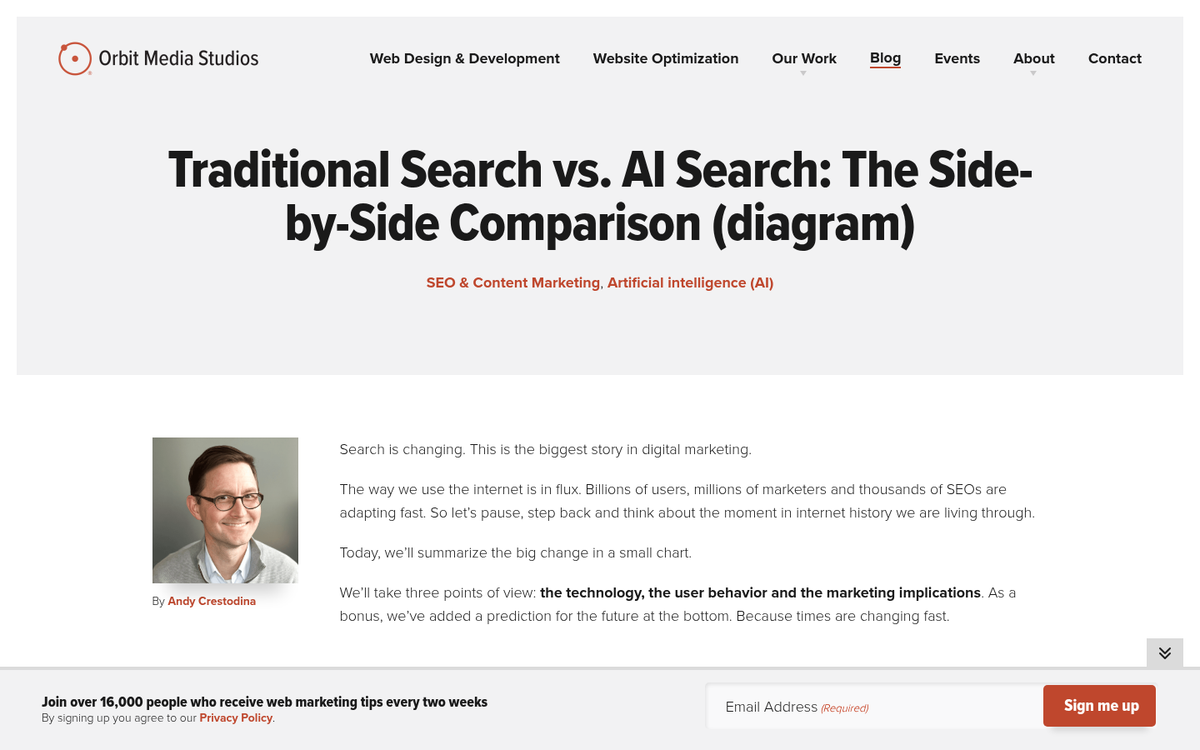
Traditional search engines match your query to pages that have similar words - it's a system built around keywords, and for a long time it worked well enough. AI answer engines do something fundamentally different - they don't find pages, they read across sources and construct a direct answer.
That distinction matters more than it looks. A keyword-based system asks "which pages contain these words?" and an AI answer engine asks "which content best answers this question?" The retrieval process behind each one is built differently to get there.
AI engines use something called semantic search, which means they interpret the meaning behind a query instead of just the words in it. A question like "what's the safest way to store passwords" doesn't need to have the word "password manager" to retrieve content about password managers.
Vector search is the technical layer that makes this work - it converts text into numerical representations and finds content that's conceptually close to the query. It's worth learning about because it changes what "relevant" means - being relevant now has more to do with what your content explains than which terms it repeats.
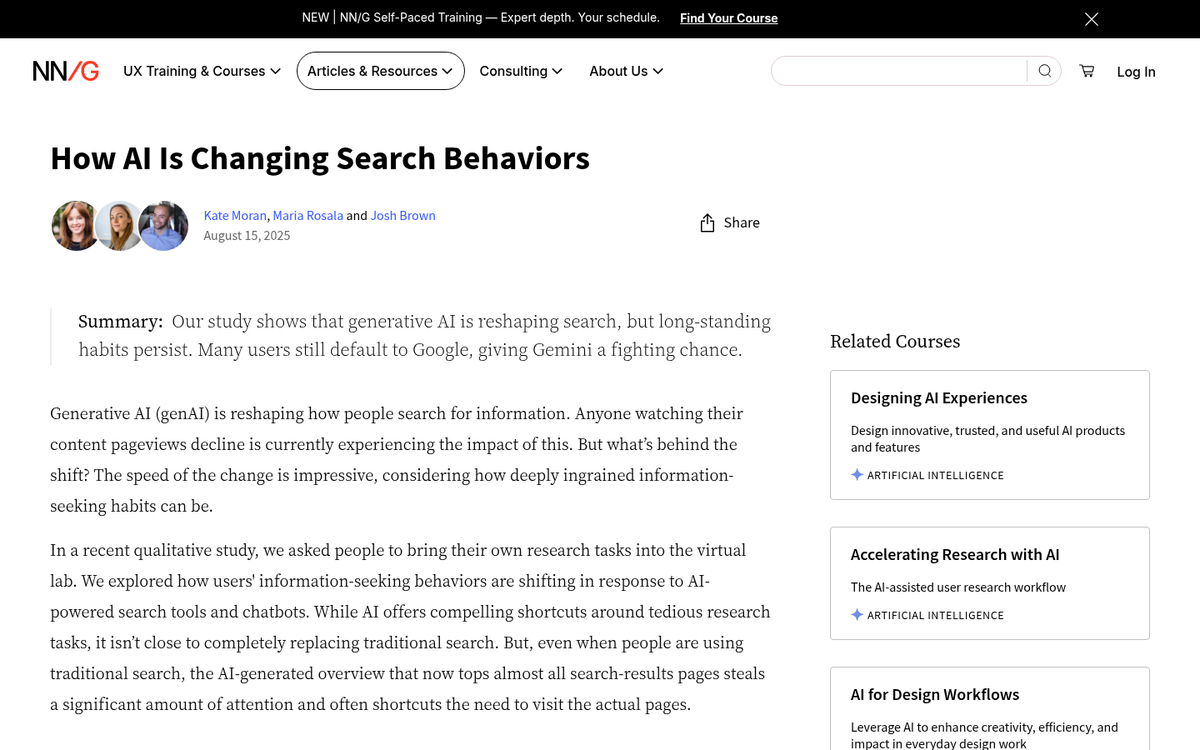
Relevance scoring also works differently here. AI systems weigh things like how directly a piece of content answers a question, how well-structured the information is, and how authoritative the source seems to be. Keyword density is far less helpful than it used to be. If you're thinking about how to get your blog content discovered, strategies like using Mix.com to promote your blog posts can help expand reach beyond traditional search.
| Factor | Traditional Search IR | AI Answer Engine IR |
|---|---|---|
| Query type | Keyword-based | Conversational and intent-based |
| Retrieval method | Keyword and link matching | Semantic and vector search |
| Output format | List of links | Direct synthesized answer |
| Ranking factor | Backlinks, keyword relevance | Answer quality, structure, authority |
Your content either gets pulled into an answer or it doesn't, and the difference between those two results can depend on how well your content communicates its meaning to a system that reads for understanding.
The Signals That Determine Whether Your Content Gets Retrieved
Your content doesn't get retrieved because it exists - it gets retrieved because a system decides it's the most relevant match for a query.
Retrieval systems look at a few core tells to rank and surface content. Semantic clarity is one of the biggest. If your writing is vague or jumps between ideas without connections, the system has a harder time placing it in the right context.
Entity recognition factors in too. AI retrieval systems are built to find things - places, organizations, concepts - and connect them to a wider knowledge base. Content that names things and uses consistent words gives the system more to work with. Think of it as giving the retrieval system anchors to hold onto.
Authority tells also matter - this gets assessed through things like how a source is cited, how thoroughly it covers a topic, and if the information lines up with what other trusted sources say.

The scale of this is worth keeping in mind. The Reuters-RCV1 benchmark, a commonly used dataset in information retrieval research, contains over 806,000 documents with an average of 222 tokens each; it's a window into how large retrieval pools actually are. Your content is one piece in a giant collection, and the system has to make fast decisions about what to surface.
That means the bar for clarity and specificity is higher than most set it. Generic content that touches on a topic without committing to an answer tends to get passed over. Content that's direct, well-organized, and tied to a defined subject area tends to perform better in retrieval. If you're trying to promote a new WordPress blog, these signals matter more than ever when competing for visibility.
Structured data also helps. When content is marked up in ways that label what things are - a product, a definition, an event - retrieval systems can process it with more confidence. It's less about gaming the system and more about speaking its language. Understanding structured data markup is part of the same puzzle. Understanding why engagement metrics sometimes fall short of expectations is part of the same puzzle.
The question to ask about any piece of content is whether a retrieval system could confidently find what it is, why it's credible, and who it's for.
Structuring Your Content So AI Can Actually Find and Use It
Knowing what signals matter is one thing. But you also need to know what to do with that information. Most of the changes are easy to make and you don't need to rebuild your whole site to see results.
Start with your headings. AI retrieval systems use heading tags like H1, H2 and H3 to know what each section of a page is about. A heading that says "Our Approach" tells a system almost nothing. But "How We Handle Same-Day Refund Requests" tells it what to expect from the text below.
A natural question-and-answer format is also worth your time. When someone asks an AI a question, it goes looking for content that directly answers that phrasing. A paragraph that opens with a question and then answers it in the next two sentences is much easier to retrieve than a dense block of text that buries the answer.
Keep language precise and literal. Flowery descriptions and vague language make it harder for retrieval systems to pin down what a piece of content is about. Say what you mean in plain terms and say it close to the top of each section. If you're also thinking about whether to remove tags on your WordPress blog, that same principle of reducing clutter applies.
The table below breaks down some of the main structural elements and what they do for your content's retrievability.
| Element | What It Does | IR Benefit |
|---|---|---|
| Descriptive headings | Labels each section with a specific topic | Helps systems index and match content to queries |
| Q&A formatting | Mirrors how people ask questions | Makes content easier to pull for direct answers |
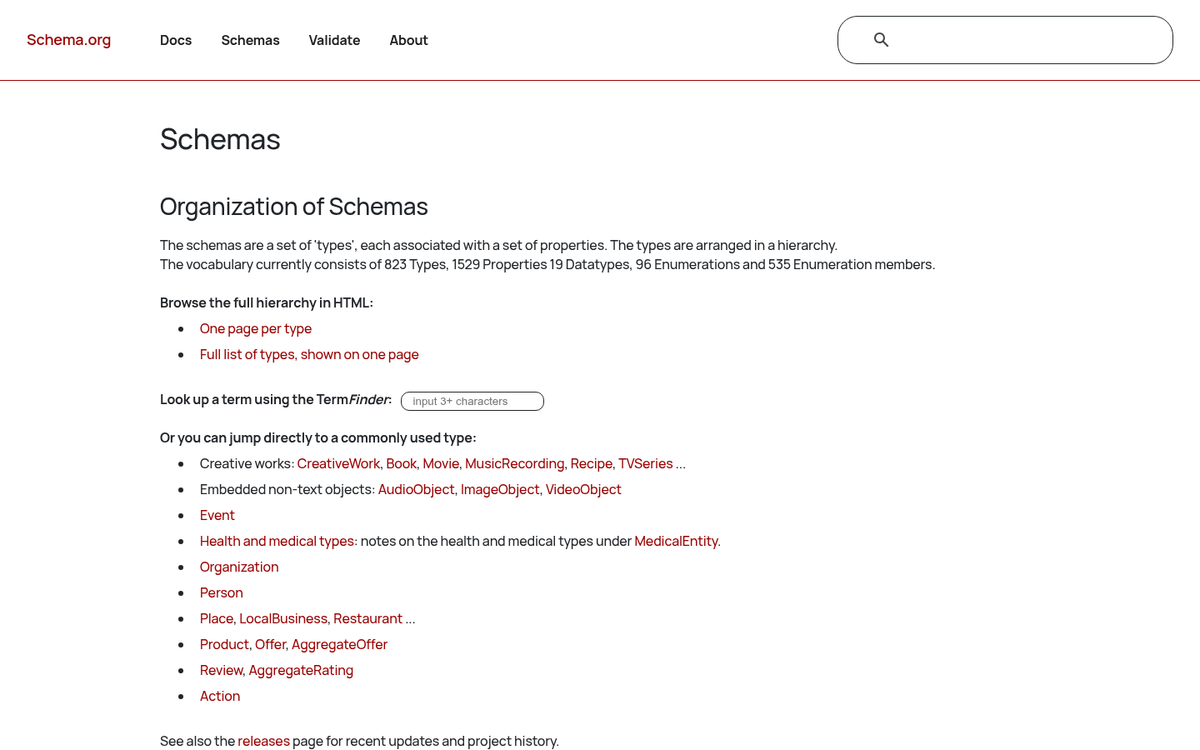
| Schema markup | Adds machine-readable context to your page | Gives retrieval systems structured data to work with |
| Short paragraphs | Breaks content into digestible chunks | Reduces ambiguity and improves passage retrieval |
| Precise language | Removes vague or decorative phrasing | Increases the chance content matches a specific query |
Schema markup deserves a mention because it goes a step further than visible content - it gives retrieval systems extra context about what page they're reading, like if it's a product page, an article, or a FAQ. Adding schema to even a handful of your most important pages can make a difference. It pairs well with other technical improvements like installing SSL on your blog to improve rankings.
Audit one page at a time instead of trying to fix everything at once. Pick your most important page, apply these principles and move to the next.
Common Mistakes That Make Content Invisible to Retrieval Systems
Even well-written pages can disappear from retrieval results because of structural and language problems that are easy to fix once you know what to look for. These aren't random technical glitches - they connect directly to how retrieval systems score and rank content.
Vague language is one of the biggest problems. A page full of phrases like "solutions for your needs" or "we help businesses grow" gives a retrieval system almost nothing to work with. These systems match content to queries by looking for actual terms, and if your language is too generic, the system won't associate your page with any question a person might ask.
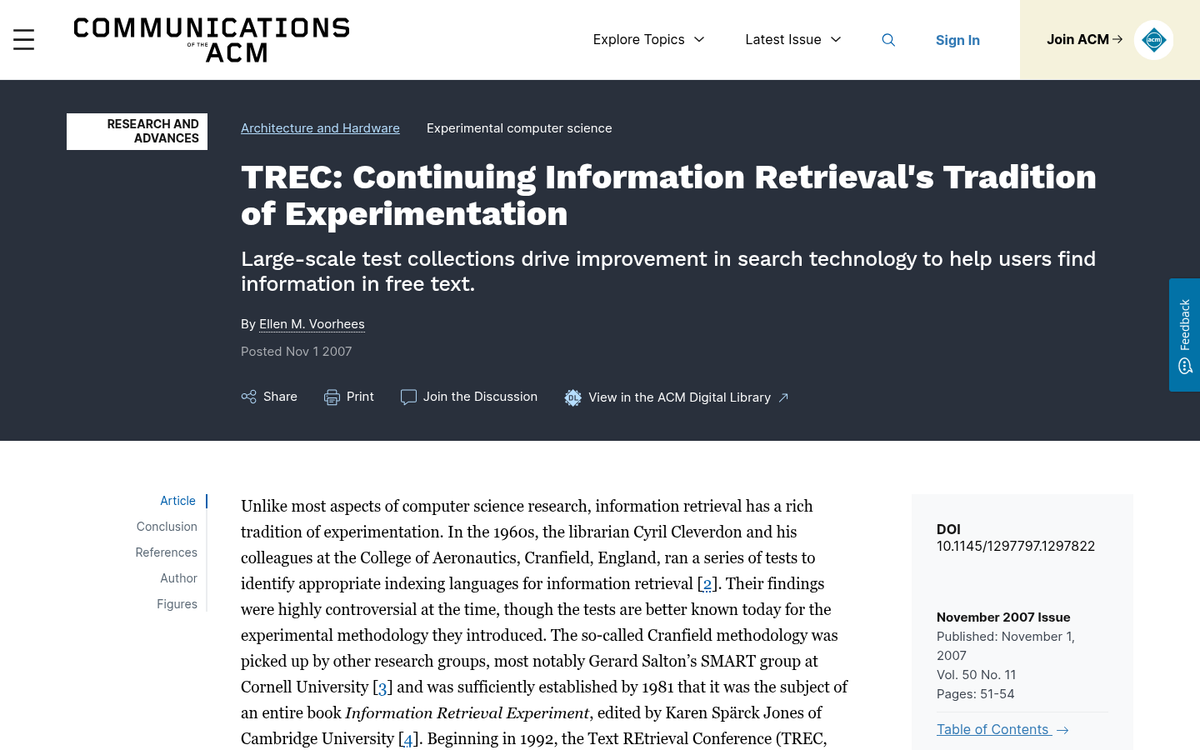
Keyword stuffing has the opposite problem but lands in the same place. Repeating the same phrase fifteen times in three paragraphs doesn't signal relevance - it signals manipulation. Modern retrieval systems are trained on evaluation frameworks that have been refining what "relevant" means since at least 1992, when the TREC benchmark program began; it's decades of data teaching systems to favor quality over repetition.
Thin content is a quieter version of the same failure. A page with two short paragraphs and no depth can't satisfy a query on its own. A helpful gut-check: if an AI had to answer a user's question using only your page, could it? If the answer is no, the page probably won't rank well for that question in any retrieval context. This is worth keeping in mind whether you're writing original content or sourcing articles from a writing service.
Missing metadata and poor page structure compound these problems. A page without a descriptive title tag, a missing header hierarchy, or no topic focus makes it harder for retrieval systems to parse what the page is actually about.
Topical authority also factors in more than page owners often underestimate. A single page on a topic carries less weight than a site that has built up a body of related, substantive content over time. Retrieval systems look at context, and a page that exists in isolation - with no supporting content around it - is harder to rank with confidence. This is one reason understanding how your internal link structure signals authority matters so much.
The mistake most worth fixing first is the language itself. Write to answer a question directly, and the other problems resolve along the way.
Make Your Content Easy to Find, Hard to Ignore
Good content strategy is not about outsmarting an algorithm - it is about removing the friction between what you mean and what a retrieval system can understand. If your existing content is buried in vague headings, dense paragraphs, or poorly defined topics, now is a time to revisit it with that lens. Small structural improvements - clearer topic sentences, tighter definitions, logical document flow - can meaningfully increase how retrievable your content can become across traditional search and AI-powered answer engines.
The sites that will stay visible as AI continues to change how people find information are the ones investing in retrieval-friendly content. Whether you are starting a blog from scratch or refining an established one, structuring your content for clarity is one of the most important steps you can take toward long-term discoverability.
FAQs
What is information retrieval in simple terms?
Information retrieval is the process of finding relevant content from a large data collection in response to a query. It's what happens every time you search for something and receive results back.
How do AI answer engines retrieve information differently than search?
Traditional search matches keywords to pages, while AI answer engines use semantic and vector search to understand meaning and construct direct answers rather than returning a list of links.
What signals help AI systems retrieve your content?
Key signals include semantic clarity, named entity recognition, topical authority, and structured data markup. Content that is direct, well-organized, and clearly defined performs better in AI retrieval systems.
How should you structure content for better AI retrievability?
Use descriptive headings, question-and-answer formatting, short paragraphs, precise language, and schema markup. These elements help retrieval systems identify what your content covers and match it to relevant queries.
What common mistakes make content invisible to retrieval systems?
Vague language, keyword stuffing, thin content, missing metadata, and poor heading structure all reduce retrievability. Writing content that directly answers a specific question is the most effective fix.