Over the past few months, we've compiled 50 effective techniques that can improve your SEO, and that you can implement for free.
But first, some fundamentals: keyword research. SEO no longer relies on specific uses of exact keywords or keyword density, but keywords remain essential for guiding the general direction of your content. With 96.55% of all content receiving zero traffic from Google (Ahrefs), getting your topic targeting right from the start matters more than ever. Take your time to learn some keyword research skills so you can build a solid list of topics to cover throughout your content marketing.
Let's get into some of the more advanced optimization techniques.
Key Takeaways
- 96.55% of content gets zero Google traffic, making keyword research and precise topic targeting essential from the start.
- Content should exceed 1,000 words minimum, be published consistently, and avoid duplication, thin writing, or plagiarism.
- Technical fixes like compressing images, minifying code, enabling compression, and using a CDN directly improve rankings through site speed.
- Schema markup increases click-through rates by 40%, and optimising for AI Overviews is now as important as featured snippets.
- SEO requires ongoing audits every six months minimum, as algorithm updates and AI search changes constantly shift the landscape.
Content Strategies
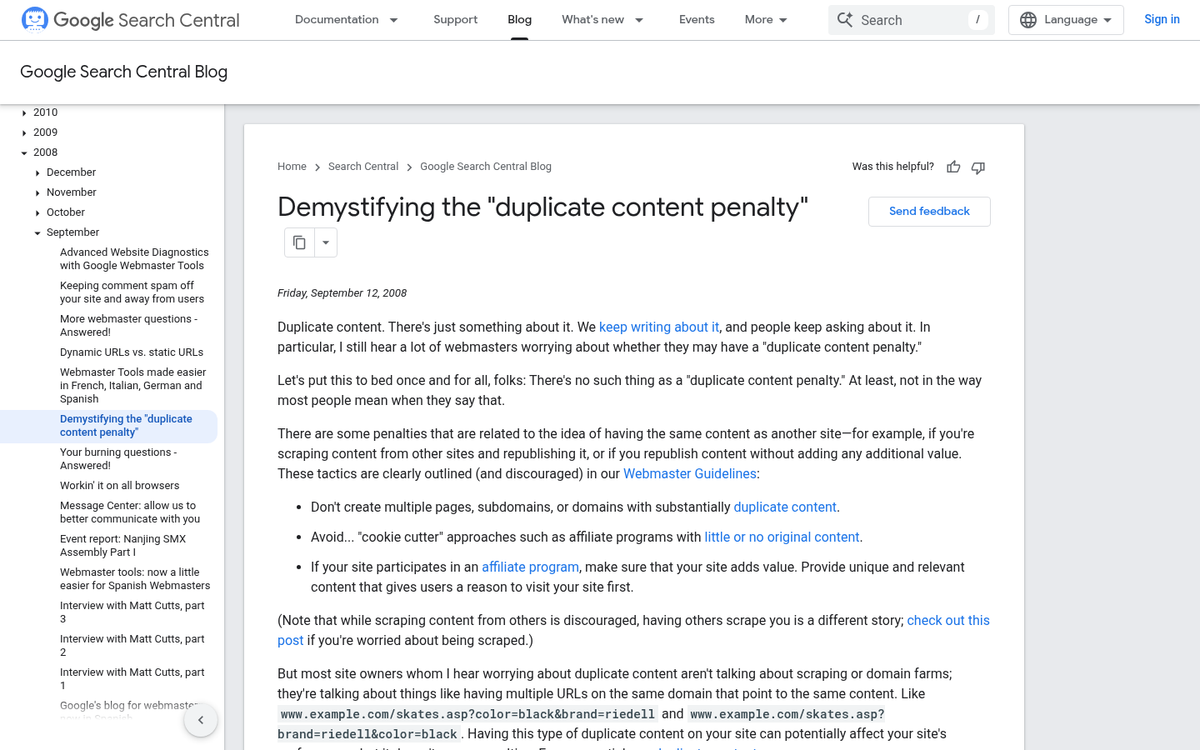
Remove duplicate content. Duplicate content is heavily penalized by Google. It doesn't even have to be an exact duplicate; even something as minor as two FAQs on the same topic with roughly equivalent advice can count. Audit your content to find any cases of duplication - as well as duplication from other sites - and remove or dramatically change those posts.
Fix bad content. Content that plagiarizes, content that is used for thin affiliate posts, content that has broken code in it; anything less than your best should be fixed up or removed. You can fix up content pretty easily by replacing it with better content on the same topic. Don't worry about saving vestiges of the old content; it's not worth the trouble.
Expand thin content. Anything less than 1,000 words is probably not worth keeping published. Many marketers recommend at least 1,800 words, and some consider the ideal length to be over 3,000. The point is, you should write long, valuable content instead of a lot of smaller posts. Quality still wins, but depth signals authority to Google in 2026.
Create and publish content regularly. A regular content schedule will help your online presence immensely. It helps people become recurring visitors and it makes sure you always have something fresh for Google. Don't worry about volume; consistency is key. Even one well-researched post per week beats three rushed ones.
Add structured data markup. Schema markup has become one of the most impactful free SEO techniques available. Pages with structured data have a 40% higher click-through rate than pages without it (Schema App). Adding schema to your articles, FAQs, reviews, and products can dramatically improve your visibility in search results through rich snippets and AI-powered search features.
Create infographics. Whenever you have the chance to create alternative types of content, do so. A good long blog post can be condensed into an infographic, which you can pay someone to make for you, or use tools like Canva to create yourself quickly and for free.
Create explainer videos. Like the above, a good blog post can be converted into video content. With YouTube being the second largest search engine in the world, video content has only grown in importance since this post was first written. You can also make an explainer video about your core service to use in landing pages and other elements of your marketing.
Create slide decks. Turning a blog post into a series of bullet points allows you to throw them into a presentation deck, which you can publish to LinkedIn or other platforms for another source of traffic and visibility. Note that SlideShare has diminished significantly in relevance, so focus your energy on LinkedIn's native document posts instead.
Create audio posts. Turning your blog posts into podcasts opens them up to another audience. Busy managers and entrepreneurs like to consume content during commutes or workouts. Audio posts facilitate this, and podcast consumption has continued to grow year on year.
Create industry roundups. You can gain a lot of influence in your industry by monitoring other industry blogs and creating weekly or monthly digests of the best content those blogs have posted in that given time.
Write response posts to other bloggers. When a high profile blogger publishes a piece of content that expresses an opinion, you can write one that responds to them. If you argue the opposite opinion well enough, you can get a lot of circulation.
"Steal" existing content. Don't actually steal content, obviously. Look at pages 3-10 on Google and look for good content from sites that are otherwise dead, and cover the same topic but better. Often you will be able to poach links and generally outrank the source.
Optimise for AI search and featured snippets. With Google's AI Overviews now appearing prominently in search results, and tools like ChatGPT and Perplexity sending referral traffic, it pays to structure your content in a way that's easy for AI systems to cite. Use clear headers, direct answers near the top of the page, and well-organised FAQ sections. Being cited in AI Overviews is the new featured snippet.
Give interviews through HARO alternatives. Help A Reporter Out (HARO) shut down in 2024, but the concept lives on. Platforms like Connectively, Qwoted, and Featured.com connect industry experts with journalists in the same way. Sign up and respond to relevant queries to earn name recognition and valuable backlinks.
Getting Traffic
Keep a newsletter running. A newsletter is one source of traffic you control that doesn't rely on Google, social media algorithms, or any third party to funnel it to you. It's a lot more resilient and thus always good to have. Email remains one of the highest-ROI marketing channels available.
Don't forget local SEO. If you're in a position to get local relevance, make sure to include elements like your location in some of your content and in prominent positions around your site. Claim and fully complete your Google Business Profile if you haven't already.
Participate in online communities. By joining forums, Slack communities, Discord servers, and groups on LinkedIn, you can market yourself by being a tangible presence. Make sure the groups are focused on your area of expertise and that you follow their rules. Reddit in particular has grown as a traffic source worth taking seriously.
Make heavy use of social media. People visit your site because they see links on their social profiles that look interesting. By using LinkedIn, Instagram, Threads, TikTok, and others, you have a lot of ability to draw people in to your site. Twitter (now rebranded as X) has declined in organic reach for many industries, so consider where your audience actually spends their time in 2026.
Use broken link building. Broken link building involves finding links to content that no longer exists, finding something you have to replace it, and informing the site owner about the link and the replacement. Often they will switch it and give you a free link.
Implement a guest posting strategy. Guest posting on a regular basis to a wide variety of industry sites can get you a solid volume of good backlinks, which pushes your site higher in the search results and gives you a lot of name recognition. Be selective though; quality of the host site matters far more than quantity.
Submit your site to people who publish roundups. Chances are some people in your industry already publish regular roundups. If you can find those people and submit your site to them, there's a decent chance they'll add you to their rotation and you can get links and recognition out of it.
Submit your site to content aggregators. Aggregators are sites that link to content from blogs in their network. Adding yourself to the network puts you in a rotation where you will get some traffic and low-level links. It's not a game changer, but it's one more minor boost to stack on top of everything else.
Connect with social media influencers. There are definitely people in your industry who carry influence online. When you engage with these people you can become one of the people they reference, talk to, or link to in their discussions. Micro-influencers in particular can be surprisingly effective and are often much more approachable than the big names.
Fixing Up the Site

Update post titles. Titles are meta information that Google uses to create snippets and that users use to determine whether they want to click. Research from Backlinko shows that page titles between 40-60 characters yield an 8.9% better click-through rate. Update post titles throughout your site to make them unique, compelling, and include a related keyword within that sweet spot.
Update post descriptions. Just like post titles, meta descriptions are important for snippets and for giving users context before they click. They're also one of the relics of old SEO that could be holding your site back. Revamp all of your meta descriptions and treat them like a mini advertisement for each page.
Add meta data to images. Adding meta information to images makes your site more accessible to people with disabilities and it helps Google index your images to make sure they're relevant to the post. Image file names, descriptions, and alt text are all important.
Remove broken links. Scour your site - or use a tool like Screaming Frog's free version - to look for any link that no longer works. Remove those links or replace them with links to better content. Broken links aren't hugely damaging in isolation, but a site riddled with them sends a poor quality signal to Google.
Make human readable permalinks. Changing your permalink structure away from strings of numbers and towards descriptive post titles can make a meaningful difference in click-through rates on social media and in search results. If you're changing this on an older site, make sure to implement proper 301 redirects to preserve any existing link equity.
Add more internal links. Internal links are one of the most underrated free SEO tactics available. Research from WordStream found that URLs with 40-44 internal links received four times more clicks than URLs with 0-4 internal links, though traffic declined again after 45-50. Aim for a healthy, natural internal linking structure that connects your content meaningfully.
Add internal links to suffering pages. While you add internal links, look for pages on your site that aren't doing as well as they should be, such as those sitting on page 2 or 3 of Google. Add links from your strongest pages to these underperforming ones to pass some authority their way. Bring up the lowest and the average rises.
Compress images for faster loads. When you post an image online, every visitor has to download it. You can often compress images significantly without visible quality loss, which speeds up load times considerably. Tools like Squoosh or ShortPixel make this easy.
Convert images to modern formats. WebP and AVIF image formats are now widely supported by browsers and offer significantly better compression than JPEGs or PNGs. Switching to these formats is a quick win for page speed that many sites are still missing.
Fix broken scripts. Any time you have broken code, it's doing two things. It's delaying your site loading and it's causing errors. The user might not see those errors if their browser hides them, but Google certainly does. Every bit of bad code is holding you back.
Remove outdated plugins. Plugins that haven't been updated in over a year - particularly on the WordPress platform - are security liabilities. Remove and replace them where possible. An outdated plugin is a door left unlocked.
Remove plugins you don't use. Every plugin adds code that has to load. Some run in the background only and won't have a huge impact, but it's still good practice to remove anything you're not actively using. Less clutter on your server means a leaner, faster site.
Create and submit a sitemap. A sitemap helps Google find all of your pages efficiently. You can create and submit one through Google Search Console. If you're on WordPress, most SEO plugins handle this automatically.
Vary your anchor text. Whenever you link to something, resist the urge to use generic anchors like "click here." Longer, more descriptive anchor text gives Google clearer context about the destination page and typically performs better. Vary your anchors naturally rather than repeating the same phrase every time.
Encourage comments on blog posts. When people comment, they are more likely to share the post and more likely to become customers further down the line. Encourage comments with questions throughout your post, and respond to comments when they're made. If you're evaluating options, it's worth considering whether the default WordPress comment system is best for SEO.
Switch to a better web host. This doesn't apply to everyone, but if you have a bad web host, downtime or a "bad neighbourhood" can be holding you back. Using the cheapest possible option is generally not wise when your business depends on it. Managed hosting has become increasingly affordable and is worth the upgrade.
Enable compression on server files. Enabling Gzip or Brotli compression on your server makes every file the user has to load smaller, which means your site loads faster. site speed remains a confirmed ranking factor, this is worth enabling if you haven't already.
Minify your source code. Using a minify tool will compress the CSS, JavaScript, and HTML in your pages. It doesn't look pretty in the source, but it doesn't need to. It makes the files smaller and your site faster. Most caching plugins handle this automatically.
Avoid overusing ads or affiliate links. Overuse of ads or too high a density of advertising links will get your site penalised. Google's Helpful Content system is particularly unforgiving of pages that feel like they exist primarily to monetise rather than to genuinely help the reader. If you're running paid traffic, also be aware of why your ads might have high clicks but low earnings.
Add nofollow to sketchy links. Any time you link out to a site, ask yourself: is this somewhere I'd recommend to a friend? If not, add the nofollow attribute so Google doesn't interpret it as an endorsement of that site.
Add noindex to pages you don't want visible. Any time you have a system page or internal file that isn't meant for public consumption, add a noindex tag. It's better not to have unnecessary pages at all, but hiding them from Google is the next best thing.
Add social sharing buttons. Make it easy for readers to share your content directly from the page. Keep the number of options focused on the platforms where your audience actually spends time rather than cluttering the page with every network imaginable. There are also free plugins to help you auto share your new blog posts as soon as they go live.
Ensure your site is fully mobile-optimised. Over 50% of all Google searches now come from mobile devices. If your site isn't delivering a genuinely great mobile experience, you're losing rankings and visitors. Google has used mobile-first indexing for some time now, meaning the mobile version of your site is what Google primarily evaluates. This is non-negotiable in 2026.
Speed up your site load speeds. Core Web Vitals remain a confirmed ranking factor in 2026. Use Google Search Console and PageSpeed Insights to identify specific issues dragging your scores down. Anything you can do to improve LCP, INP, and CLS is worth pursuing.
Use a CDN. A content delivery network ensures that there is always a geographically close server to deliver your content to readers, reducing load times significantly. Most CDNs also include DDoS protection. Cloudflare's free tier remains one of the best options available.
Disavow bad backlinks. Audit your backlink profile and identify links from low-quality or spammy sites. Depending on your situation, these may be dragging down your overall authority. Compile a disavow file and submit it through Google Search Console.
Check for existing penalties to fix. Log into Google Search Console and check for any manual actions applied to your site. If Google has levied a penalty, take the time to understand why, fix the underlying issue, and submit a reconsideration request. This can have a dramatic positive impact when done properly.
Finishing Touches

Audit and repeat frequently. SEO is an ongoing process, not something you do once and forget. The landscape in 2026 shifts faster than ever, with algorithm updates, AI search changes, and evolving user behaviour all requiring you to adapt. Re-audit your site every six months at a minimum to stay ahead of the curve.