





When you first learn about it, it seems like affiliate marketing should be easy. It's not really that difficult to set up a blog; all you need is a domain, some WordPress software, a few plugins, and you're good to go. It's trivial to sign up for most affiliate networks. Then all you need to do is put links on your page and rake in the cash, right? How hard can it be?
The answer, of course, is "quite hard." There's a reason there are entire blogs based on "how to succeed with affiliate marketing." You'll soon discover that there's a lot more to affiliate marketing than just slapping a blog and some links online. There's a mountain to climb, and you need to prepare yourself for the journey.
What I've done is put together the most common reasons why you aren't getting clicks on your affiliate links. Check each of them down the list and see which apply to you, and work to fix the issues you find.
Key Takeaways
- Low traffic kills affiliate revenue; you need hundreds of thousands of visitors given click-through rates averaging under 1.2%.
- Affiliate links must be contextually relevant to both your niche and the specific article, with links embedded naturally in product reviews converting best.
- Every affiliate link needs a clear call to action and a stated benefit, such as a discount or exclusive offer readers can't get elsewhere.
- Link placement matters; front-loading links near the top of content leads to lower clicks since readers want information before leaving your page.
- Chasing high commissions without matching products to your actual audience results in misaligned traffic and poor conversions regardless of volume.
Your Site Lacks Traffic

The first and most common problem with any affiliate marketing website is a lack of traffic. A lot of bloggers start off slow and try to monetize too early. I understand the desire to set a precedent; people don't like building up loyalty only to be monetized at the first chance. On the other hand, it doesn't do you much good to put links up when you only have a few dozen hits per month.
It's a matter of simple math. The average click-through rate for affiliate links sits somewhere between 0.7% and 1.2%, and of those who do click, the typical conversion rate is around 5% - though affiliate links placed within product reviews tend to perform better, averaging around 2.3% conversion. That still means you need tens or hundreds of thousands of visitors to see reliable, consistent conversions. Obviously, you can do a lot to tweak these numbers - and a lot of the subsequent headings in this article follow those tweaks - but the numbers are still the numbers. You need volume to succeed with affiliate marketing. To put it in perspective, affiliate marketing now drives roughly 16% of all ecommerce transactions in North America, generated through an estimated 5 billion clicks worldwide. The opportunity is real, but so is the competition.
Your Links are Off-Topic

Have you ever been reading a blog post and, in the middle of it, seen a sentence or a paragraph that's entirely out of place? Something that stops the entire train of thought to then pitch some pest control service or as-seen-on-TV crap? I have, and I know most people have. It's baby's first attempt at affiliate marketing, and it's the lowest form of spam.
Often one of the hallmarks of a spam blog is a bunch of unrelated, usually stolen content with some mostly unrelated affiliate links added in. The spammer doesn't care that their content isn't their own or that their site isn't good; as long as they can get even a single conversion, it works out in their favor. Always make sure your affiliate links are as close to on-topic as possible.
Your Links Lack Context
This is a small extension of the previous item, but it's a narrower focus. Consider that your links need to be relevant to your niche, but they also need to be relevant to your article itself. If your links aren't relevant to the article you're writing, who is going to want to click on them?
I generally recommend that you should build your posts around your links. Know what the product is and how you're going to recommend it, and build from there. Context is everything - affiliate links embedded naturally within product reviews consistently outperform those dropped into generic content, which is reflected in the higher conversion rates those placements tend to earn.
Your Links Lack a Call to Action
Every affiliate link should have an inherent call to action. Either that call to action should be a simple "click here to buy now", or it should be something more detailed and tuned for the specific product and the problem it addresses. A good piece of content is geared towards explaining how a product is going to solve a problem, with affiliate links to that product. Don't assume your reader will know what to do next - tell them explicitly.
You Aren't Adding Benefit
Here's a question for you: Why should your reader click your link and buy the product through you? Why wouldn't they just go to Amazon on their own time, or to a manufacturer page, or to a different storefront they trust more? What makes your offer special?
There are a lot of possible answers to this question.
- Timing. You're targeting your content to be found by people actively looking for a solution to a problem, so presenting them with the solution gives them a path of least resistance to solving their problem.
- Additional value. Your site is geared towards helping people with a given industry or job, and the product, while perhaps not beneficial to order from you, grants them access to exactly what you recommend when you give advice, and makes your advice all the more applicable.
- Discounts. Many affiliate offers allow you to present the product at a discount. Maybe clicking through your link gets them a free upgrade or a free month of service.
- Retargeting. If you're running any paid traffic alongside your affiliate content, don't overlook retargeting. Retargeting strategies have been shown to increase conversion rates by as much as 43%, making it one of the more powerful tools available to serious affiliate marketers.
You need to have some kind of benefit to bring to the table, and more importantly, you need to inform your readers what that benefit is. If you're offering a discount to anyone who buys through your link, make sure you're saying so. Make it clear that you're providing something they can't get by going elsewhere.
Your Links are Ugly

This is an issue for a small subset of users who pay attention to links. This subset is growing more and more as people grow more aware of the kinds of tricks that are used to scam them online.
Take a look at these four different Amazon links.
- https://www.amazon.com/Cuisinart-C77SS-15PK-15-Piece-Stainless-Hollow/dp/B07N44YWS7?ref_=Oct_BSellerC_289864_0&pf_rd_p=8d2c5fc2-0277-54af-b245-4c22c1c17d2c&pf_rd_s=merchandised-search-10&pf_rd_t=101&pf_rd_i=289864&pf_rd_m=ATVPDKIKX0DER&pf_rd_r=YEZMFN4M1Z9QRM2RYBP5&pf_rd_r=YEZMFN4M1Z9QRM2RYBP5&pf_rd_p=8d2c5fc2-0277-54af-b245-4c22c1c17d2c
- https://www.amazon.com/Cuisinart-C77SS-15PK-15-Piece-Stainless-Hollow/dp/B07N44YWS7
- https://www.amazon.com/Cuisinart-C77SS-15PK-15-Piece-Stainless-Hollow/dp/B07N44YWS7/ref=as_li_ss_tl?ie=UTF8&linkCode=ll1&tag=affid-20&linkId=5600768bfd26bf371ddded6f3bbfdaad&language=en_US
- https://amzn.to/2U5xa1
All four of these lead to the same product. The first one is the full link with reference information Amazon adds to the URL when you click through their pages to reach a product. The second one is the same link with all of that reference information stripped out. It looks significantly less ugly. The third one is a bare affiliate link with reference information, and the fourth is a shortlink an Amazon affiliate can generate. The fourth one is by far the cleanest, because it hides all of the reference information used for tracking. (Note: the affiliate links have had the affiliate code removed; they're for demonstration purposes and are not valid tracking links, so don't worry about clicking them.)
For something like Amazon Associates - still the most widely used affiliate program, with roughly 58% of affiliates using it as of 2024 - you can just use a shortlink. But other affiliate networks don't offer their own domain for shortlinking. This is why a lot of affiliate marketers choose to route their affiliate links through a cloaking redirect. You can also generate a cloaked shortened link for ClickBank if you use that network.
Cloaking is also a convenient centralized way to manage your affiliate links. If one product changes or you want to change a link, you can change a single central redirect a lot more easily than you can change a hundred links across a hundred internal pages. You can read more about the benefits, as well as how to do it, here.
Your Links are Front-Loaded
Putting your affiliate links up at the top of your article is a great way to get them ignored. If someone is finding your page, they're generally doing it because they have a query they searched for, and they found your article. That means they are looking for information they assume your page will provide. They don't want to click a link off the page until they're sure they got the information they wanted, or they're sure you don't have what they need.
Putting a link in the top half of your content isn't generally a good idea. You can put one in the top third, near the end of that third, to capture the people you've already convinced. Otherwise, you'll want to put links closer to the end of your content. Of course, you should do some testing with different positions for your links, so you know what captures people the best from your best posts, as well.
Your Links are In Your Navigation (Or Elsewhere)
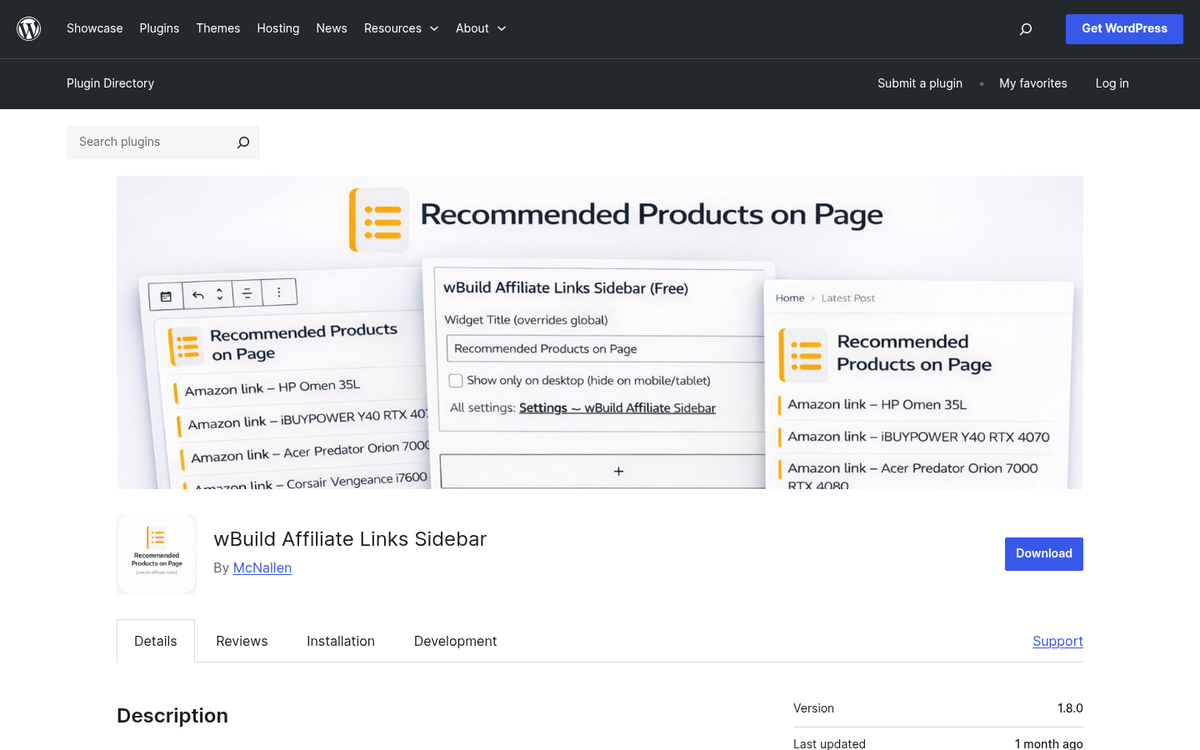
Adding your affiliate links to places that aren't in your content is a death sentence for those links. For one thing, no one is going to click a link in your navigation or sidebar that isn't extremely compelling, and an affiliate offer is very, very rarely compelling enough to click without a full blog post backing it up.
For another thing, adding such links to your navigation can be a cause for a Google penalty, or at least a demotion in your search visibility. They don't like it when you put advertising as part of your overall layout, and the omnipresence of such advertising can cause issues. It's not guaranteed - and cloaking can help hide it - but it's still not worthwhile to try, in my opinion.
Your Site Isn't Trustworthy
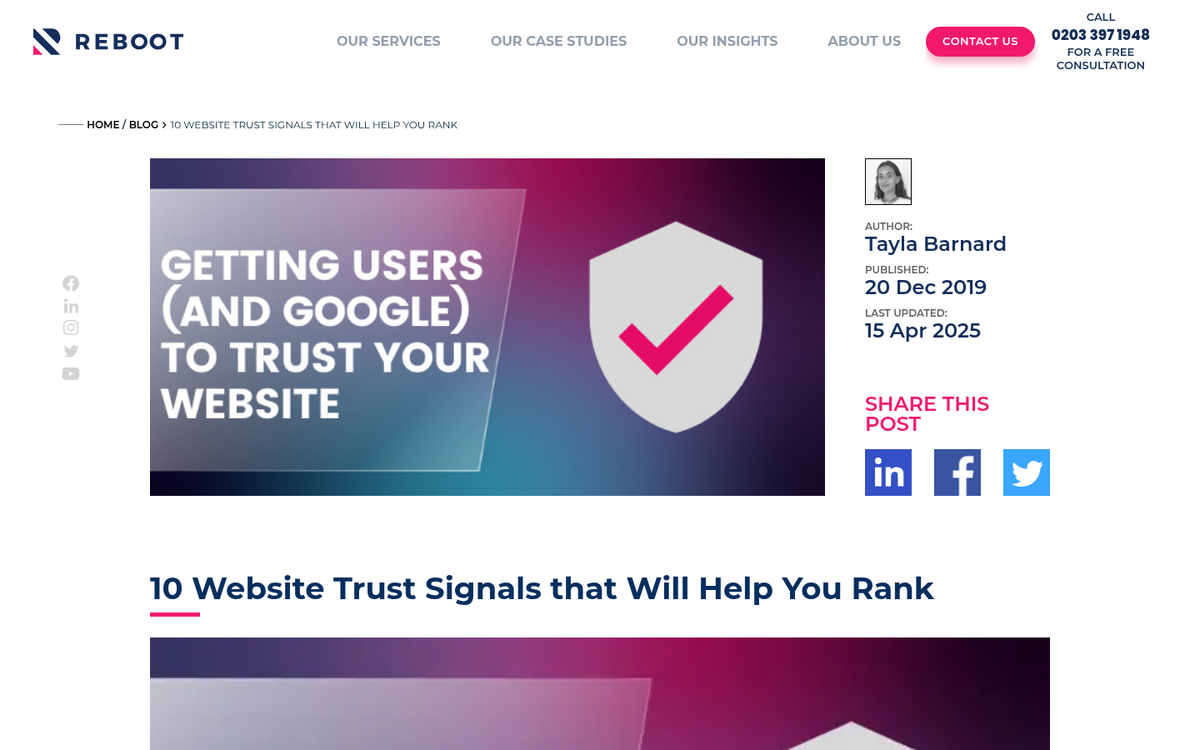
There are a lot of different signs of trust a website can portray, and you need to have at least a few of them if you want to get anyone to click through your links.
What kinds of trust signals might you try to use?
- Customer testimonials are good, though they don't necessarily help a pure affiliate site. If you sell products of your own or even offer consulting, they can be worthwhile.
- Product reviews can be very useful. Just screenshot or quote a few good reviews of the product you're trying to sell and use those as part of your marketing. As a bonus, affiliate links placed within genuine product reviews tend to convert at a higher rate than those in generic content - so building trust and driving conversions go hand in hand here.
- Social signals can be useful, though they're harder to get and less valuable than they have been in the past. Still, a lot of shares on your posts can indicate to people that what you have to say is worthwhile to many.
A lot of trust signals are more applicable to storefronts, and I go over them in greater detail in the article linked above. Some, though, can be very useful to affiliate or hybrid sites, so it's worth looking into them.
You're Clearly Just In It For The Money

Every good blog should have more than just product reviews for affiliate links. Sure, the microsite method can work, but if it works, it's on a small scale. That's why the people who go with microsite marketing tend to build dozens of sites across a niche, which could just as easily have been built into one larger authority site. The only reason they tend to not go the centralized route is so they can take advantage of the minor benefits of matching keyword domains, while maintaining the ability to simply cull any sites that underperform. It's also worth noting that Google's ongoing algorithm updates in recent years have been particularly hard on thin, product-focused microsites, making the authority site approach increasingly the smarter long-term play.
When you're running a site and every blog post you publish is nothing more than a basic overview or review of a product, with a bunch of links to affiliate products, it becomes quite clear that you're not in it to help your readers, but really just to make money. That's the wrong approach, and people can sense your lack of expertise, sincerity, and value a mile away. Many will simply decide to ignore your site in the future, and most will avoid clicking your links once they realize what's going on.
You're Reaching the Wrong Audience

Even if you have a lot of traffic, maybe that traffic is a different audience than you want it to be. I see this a lot from people who are chasing high-paying affiliate commissions rather than high-volume commissions. Sure, selling that yacht might earn you a year or two's worth of wages in a single click, but if you aren't designing your site explicitly around targeting the hyper-rich in their yacht-owning ways, you aren't going to be getting any sales. That may sound like an extreme example, but I've seen yacht-based affiliate offers and let me tell you, that's a very narrow niche.
The most popular affiliate programs - Amazon Associates, Clickbank, ShareASale - are popular precisely because they serve broad audiences with high purchase intent. But even within those networks, the affiliates who succeed are the ones who've matched the right products to the right readers, not just chased the highest commission rates. Know your audience first, then find the products that serve them.


4 responses
Thoughtful replies only - we moderate for spam, AI slop, and off-topic rants.
This is the best information I've received yet!!!! Thank you!!
Thank you so much, Nana! That really means a lot to us! 😊 We're thrilled the article resonated with you. Now comes the fun part - putting those tips into action! Even small tweaks to how you present your affiliate links can make a big difference in your click-through rates. If you have any questions as you start implementing these strategies, feel free to drop them in the comments. We'd love to hear how things go for you!
I've been searching all over the world wide web for an answer, so maybe you can help me out now;
How to arrange your coupon codes in a way, where they're only revealed upon click?
The point here is to make sure people click the link, so they get the cookie in their browser BEFORE seeing the code. Because otherwise, I'll lose a lot of people who just see the code, and go directly to the merchant's site and apply it - with no commission for me.
Any idea? 🙂
Rued
Hey Rued, great question! The simplest approach is to use a "click to reveal" button that redirects users through your affiliate link first, then displays the code on a thank-you or redirect page. Many affiliate plugins like ThirstyAffiliates or Pretty Links support this natively. If you're handy with code, a simple JavaScript solution can handle it too. Either way, the cookie gets dropped before they ever see the code. Smart thinking!