Key Takeaways
- Blogging is a subset of content marketing, like how optimizing metadata is one part of a broader SEO plan.
- Websites with blogs have 434% more indexed pages, helping search engines better match content to interested users.
- Content marketing goes beyond blogging to include buyer personas, diverse content formats, and outreach to external platforms.
- Content marketing generates over 3x more leads than outbound marketing while costing 62% less, per the article.
- A content marketing plan involves identifying target personas, solving their problems, and determining formats and publishing frequency.
I'm guilty of often referring to blogging and content marketing as interchangeable terms. I've used one when I'm talking about the other enough. There's a difference between them, so it's a topic worth talking about.
The Grand Pyramid
In a way, you can think of marketing as a sort of pyramid. At the top, at the peak, you have "marketing". Marketing as a whole encompasses all below it on the flowchart. Marketing can be divided up into terms like inbound marketing and outbound marketing. One side encompasses SEO, the other covers things like TV and radio advertising.
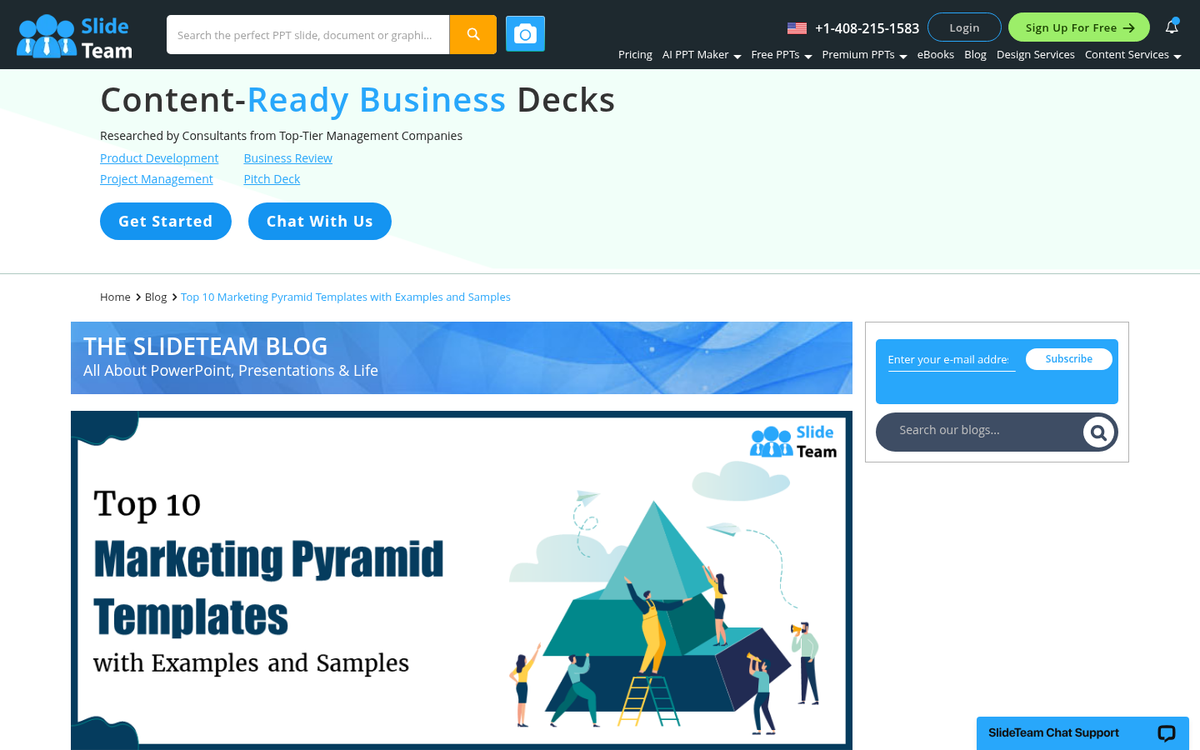
When you follow the chain down, you eventually reach Content Marketing. Content Marketing is a sub-section of marketing that deals specifically with the production and distribution of content, usually online. We don't usually think of it as "web content marketing" but that's what it means.
Blogging is further down within content marketing. Think of blogging as one part of a whole content marketing plan - it's like the way you can think of optimizing meta data as one part of an SEO plan.
All About Blogging
Blogging is all about the act of writing blog posts for your blog on your website. Blog blog blog - it's a repetitive word. Right? Blog comes from "weblog" or web log, a sort of journal concept that sprang up on the internet around the same time the internet was being created.
Blogs started off as little more than personal journals kept by people embedded in the web, the types who have always been at the front of technology and also wanted to talk about it, creating a blog where they could publish their thoughts without needing to work with a traditional publisher.
Eventually, the idea of blogging was picked up by entrepreneurs looking to promote their business ideas, and then by businesses to promote themselves. Later, blogs started recruiting multiple authors. Well, that's not quite true. As long as there have been businesses writing blogs, those blogs have had multiple authors. Often they were basically posting content as "blog admin" or as their business name, so you had no way to find who wrote which part of content.
These days, some websites have blogs written and maintained by a single person. Others are primarily maintained by one person, with sporadic extra contributions from other authors. Some have anywhere from 2-10 writing for them on a standard basis. Others, like the largest blog sites ranging from Kotaku to VentureBeat to Forbes, have hundreds of contributors ranging from one-off writers to columnists.

Simply building and maintaining a blog on your website, with no other contributions to marketing, can dramatically increase brand trust and conversions. According to Semrush, 86% of marketers use blog posts in their marketing strategies - and it's easy to see why. Websites with blogs have 434% more indexed pages than the ones without, and it gives search engines far more to work with when picking who to show your site to.
It makes sense. Right? When a company is making content for their website, a few things happen.
- Search engines find the content, and in so doing, are better able to show your website to people who will be interested in that content.
- People read the content. This allows you to build up a certain level of authority as a thought leader, or at the very least as someone who knows what they're talking about. Insight and information build trust.
- People form a more favorable opinion of the company producing the content. Putting the effort out there, showcasing valuable information, teaching users; these all allow those users to form a positive opinion and in turn makes them more likely to convert.
All of this just from publishing content on your own website! There are some rules involved here. For example, you can't just publish any sort of content you want. If you're a brand selling athletic apparel, you probably don't want to be blogging about auto repairs, about the latest astronomical discovery, or about the complications of forex trading. Think about it: if you get someone in the door thinking they'll learn how to fix their car and you try to sell them shoes, they aren't going to be happy about it.
It's also worth mentioning that depth matters. As of 2025, the average blog post length has actually been trending downward, sitting around 1,350 words - but research continues to show that long-form content generates more than 9x more leads than short-form posts. Quality and thoroughness still win out over volume.
Blogging at the most basic level is writing content you want to write on a web domain you own. You can do this for personal blogs, for business blogs, for corporate blogs, for blogs focusing on political issues, and everything else. Blogging for marketing means a bit more research and a bit more effort. But it's still all about just writing content for your own site.
All About Content Marketing
So where does blogging end and content marketing start? It's actually a complex question to answer.
Content marketing includes blogging. But it also includes other forms of related marketing that involve content.
Blogging is the act of creating content and publishing it on your site. Content marketing means more.
- Content marketing means figuring out the kinds of people you want to be reading your content.
- Content marketing means figuring out the kinds of content those people want to be reading.
- Content marketing means exploring forms of content publication beyond your own blog.
- Content marketing means reaching out to publish content in other locations.
The first point is all about buyer personas. You work to figure out the average sorts of people who make up your customer base. For our hypothetical apparel shop, you have people who are athletic or who are looking to get into athletics. But you have a number of different personas within that category. You have people who like to run or cycle, you have people who are into sports, you have people who are into martial arts, and so on. You have to distill these concepts down to personas.
The second point is about topics and can mean everything from reader polls to keyword research. When you have your personas on hand, you can then start to write content focused on those. Tools that help you create article topics and titles can make this process much easier. For example:

- Your athletic cyclist customer persona will like to read articles about simple bike maintenance, reviews for cycling tools and gear, and apparel that can help make them more comfortable while riding.
- Your athletic sports customer persona will like to read about protective gear, about local sports leagues, and about historic moments in the sport.
Different personas will like to read different types of content. But so long as that content falls under the general umbrella of "stuff your business is related to" you can get away with publishing it. Maybe your sports customers don't care about bike maintenance and your cyclists don't care about little league baseball. But as long as you cover your bases - no pun intended - you can draw different sets of customers to your store.
The third point means figuring out other forms that your content can take. There's quite a bit there in terms of web media! You can write blog posts. But you can also write white papers and press releases for distribution to publications. You can write e-books for sale or for giving away in exchange for an opt-in. You can write email newsletters for subscribers. You can write posts for social networks. You can even write scripts for audio and video content.
All of this is content marketing! Some see content marketing as stopping at basically the written word, and others will see anything intended to be informational as content - like videos, podcasts, slide decks, infographics, and webinars.
The fourth point is all about the outreach and the relationship building. When you guest blog for other websites, you build relationships with editors and fellow writers. When you send out press releases and white papers, you build relationships with marketers and reporters. When you release video content and post on social media, you build relationships with customers and possible partners.
All of this falls under the general heading of content marketing. There's a lot to be explored past your own blog.
The Benefits of Content Marketing
Blogging on its own has plenty of benefits, as I've already mentioned. You build up the visibility to search engines and the visibility to possible customers. You build up trust and a position as a thought leader. So what does content marketing bring to the table?
Content marketing kicks the above into high gear. When you spend time creating your buyer personas, you identify the types of people you'll be bringing in and how you can reach them. You learn what content performs best on the search engines and how to produce more of it. You reach the audiences you want to reach, so you can entice them to visit your website and buy your products.

The data supports this substantially. Content marketing generates over 3x as many leads as outbound marketing while costing 62% less. According to HubSpot, 16% of marketers cite blogs as the format delivering the highest ROI - outpacing paid ads and email marketing, which each came in at 14%. And with B2B marketers specifically, 73% see content marketing as the most helpful strategy for generating leads and sales. These aren't small margins; they reflect a fundamental change in how buyers make decisions.
Studies show that the customer is leading the transaction. You aren't throwing advertising at them and hoping they take you up on it; you're putting yourself out there and asking for their time and attention. You're marketing not through interruption, but through value. Your goal is not to drag the user into your orbit, but to entice them in with genuinely helpful content.
Forming a Content Marketing Plan
How can you go about putting one together?
Step 1: Learn who you're targeting. This is the step where you're creating buyer personas. A lot can go into this, and it's a large enough topic for its own post. HubSpot has buyer persona templates and tools built around a series of questions so you can build out basic, helpful personas.
Step 2: Figure out what problems the personas have that you can solve. For example, maybe your cyclists see the problem of a flat tire on the road. This gives you an answer to this in two ways: you can write a piece of content about how to change a tire depending on the rim style and other variations, and you can sell them the new tubes, the tools, and anything else they may need. There you have an engaging piece of content by looking at the problems you can solve.
Step 3: Determine what makes you unique. Why should your readers trust your advice and buy your products instead of someone else's? What is your value proposition?

Step 4: What formats are you focusing on? Your apparel shop might not benefit from press releases. But you can create videos of athletes using your products, so that sort of content works. Figure out where it can be published as well, be it social media, guest blogs, partnerships, or your own site.
Step 5: Determine the mechanics. Mechanics include things like "how often should I be writing a new piece of content for X venue?" It also includes determinations of whether to narrow or broaden your focus, if you're taking care of the SEO and other forms of marketing properly, and so on.
Once you've put together a content plan, then you can proceed with blogging as part of your total content marketing strategy.