Key Takeaways
- Meta descriptions influence clicks more than titles or URLs, yet remain widely neglected even by major marketing sites.
- Google only uses your written meta description 28% of the time, making strong opening paragraphs equally important.
- Keep descriptions under 155 characters, write for human readers first, and include your primary keyword naturally.
- CTAs should focus solely on earning the click - save newsletter signups and other actions for the page itself.
- Every page needs a unique description; duplicates signal thin content and prevent Google from distinguishing your pages.
Think back to the last time you ran a Google search. Between AI Overviews appearing at the top of the page, featured snippets, People Also Ask boxes and a handful of paid ads, you might have had to scroll quite a bit to even reach the organic results. But if you did get there, what made you choose which result to click?
- The title. Still frequently neglected - titles get cut off, stuffed with keywords, or written purely for clickbait rather than clarity.
- The URL, which tells you whether the site is one you already know and trust. Name recognition carries some weight, but it isn't everything.
- The description, which tells you what the page is actually about and why it's worth your time.
Personally, it's usually #3. Titles can be misleading - they can be clickbait, or they can be so vague they give me nothing to work with. The URL tells me if it's a site I'd stay away from. But the description is usually what seals the deal - or doesn't.
But writing a good meta description has become something of a lost art. Which is increasingly frustrating, because the stakes have never been higher. With AI Overviews and featured snippets eating up more and more of the search results page, organic clicks are harder to earn than ever. Your meta description may be one of the last tools you have to convince someone to actually click your link. Squandering it seems almost self-defeating.
What makes it even tougher is that according to Semrush research, Google uses the meta description you actually wrote only about 28% of the time. That means roughly 72% of the time, Google is pulling its own snippet from your page content instead. So you'll not only have to write a strong meta description, you also need your opening paragraphs to be strong enough to hold up as a fallback snippet when Google decides to go its own way.
I ran the title of this post as a search query and looked at what came up. Big names in marketing - Hubspot, Moz, Search Engine Land - all showing truncated descriptions, sentence fragments and in a couple of cases, snippets that are Google-generated instead of anything the author intentionally wrote. These are massive sites with giant link profiles and brand recognition. They'll rank regardless. Smaller sites don't have that luxury, which means every ingredient of your search snippet needs to pull its weight.
Keep Characters in Mind
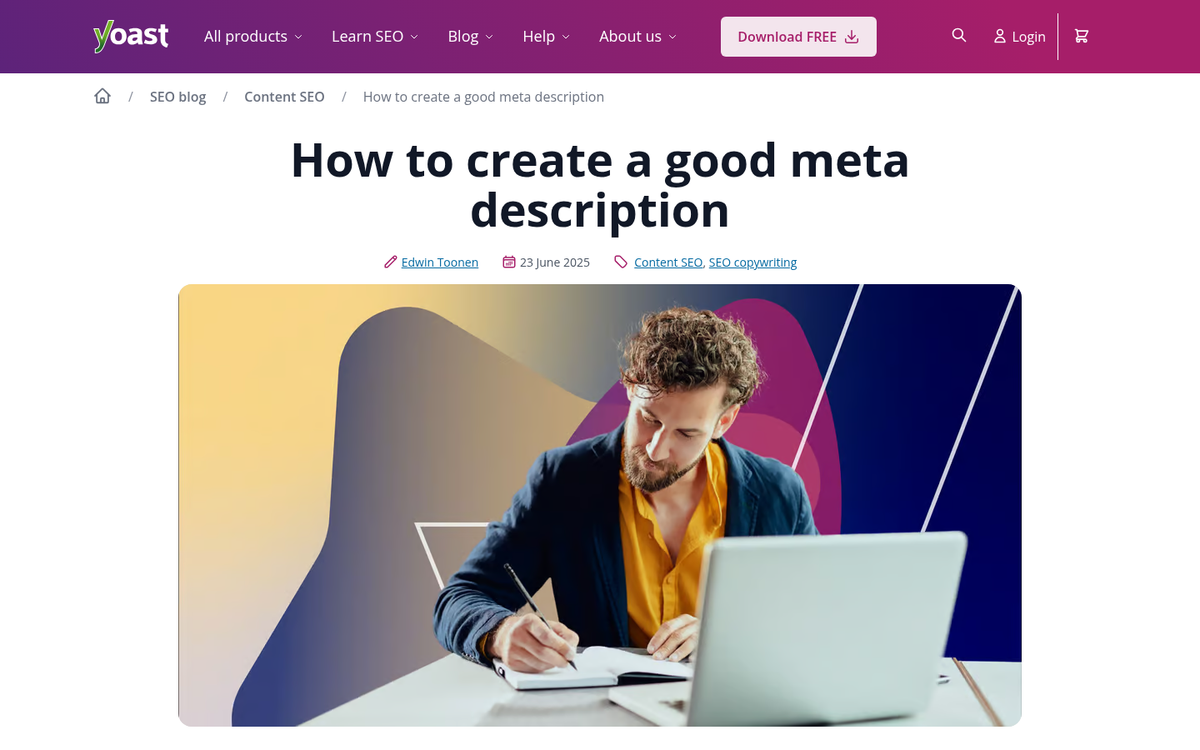
The helpful guideline, according to Yoast and usually supported by Google Search Central, is to keep your meta description under around 155 characters - it's worth knowing that Google doesn't actually measure character count - it measures pixel width, cutting snippets off at around 960 pixels. In practice, 155 characters is a reliable safe zone, though wider characters and fonts can push that lower.
Google Search Central has confirmed there's no hard character limit and snippet length can vary by device. On mobile, descriptions are usually cut shorter. On desktop, you occasionally see them run longer. The conservative strategy is to write something tight, punchy, within 150-155 characters, so it holds up across devices without cutting off at an awkward spot.
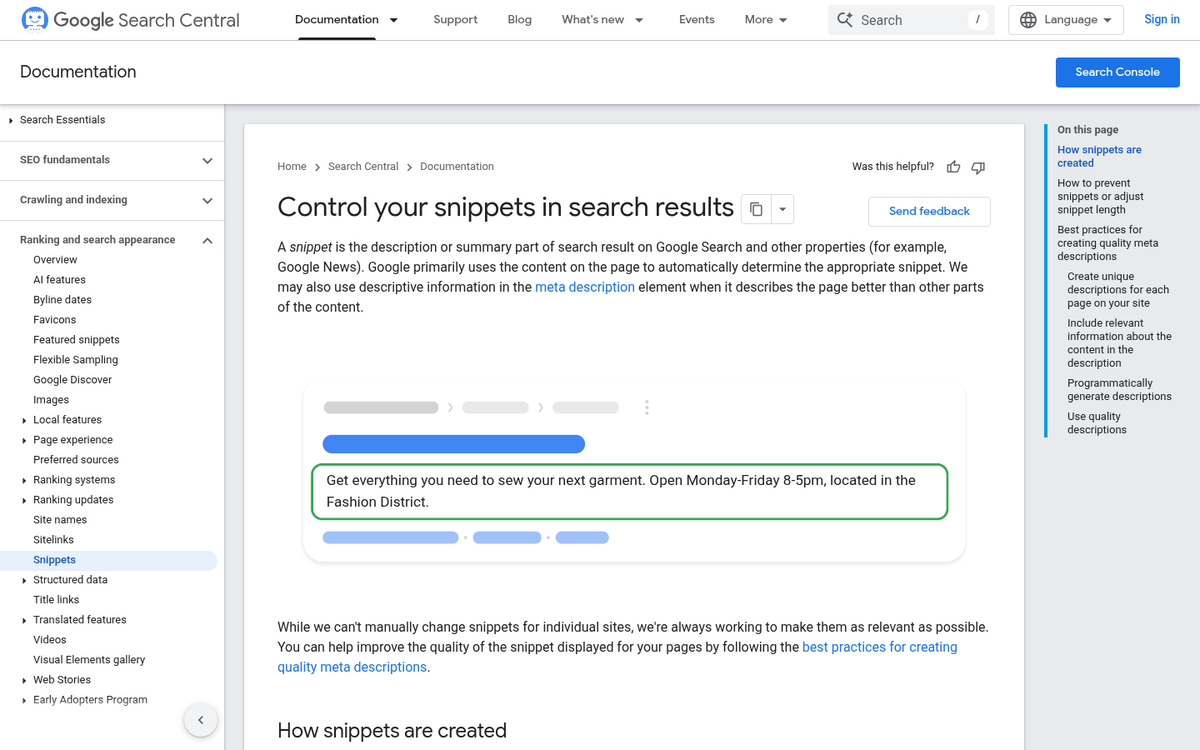
Going lean is usually better than padding things out. You don't need to force keywords into your meta description for Google's benefit - their algorithms are refined enough to know what your page is about from the content itself. What you're writing for is the human being staring at a list of results, deciding in about two seconds if your link is worth their time.
A couple of tight sentences explaining what's on the page is all you need. If your title is a question, you can use the description to expand on it or hint at related angles - but don't give the answer away right there, or there's no reason to click. If you want to write posts that rank highly on Google, every element of the page - including your meta description - needs to earn its place.
Include a Realistic Call to Action
A CTA in a meta description works pretty well. But it needs to make sense in context. When someone is sitting on a Google results page looking at a list of links, there's one action you want them to take: click yours. So frame your CTA around that.
What doesn't work is asking them to subscribe to your newsletter, follow you on social media, or book a call - all from the meta description, before they've even visited your site. Save those CTAs for the page itself. The description's only job is to earn the click. If you need inspiration for what to do once they arrive, see our guide on effective calls to action to use on your blog.
Match the Page
Your meta description needs to accurately reflect what's on the page - this matters for two reasons. First, Google's systems are good at detecting mismatches between a description and the content, and that disconnect can hurt your rankings. Second, if a user clicks through based on your description and immediately feels misled, they're bouncing. That behavior tells Google that your result wasn't a match for the query.
Also worth mentioning: your meta title and your on-page H1 don't need to be identical. But they should be related. Google already uses semantic understanding to connect related topics and synonyms, so you don't need to obsessively match exact phrasing. What you do need is coherence - a description, title and page that all feel like they belong to the same piece of content.
Include the Primary Keyword
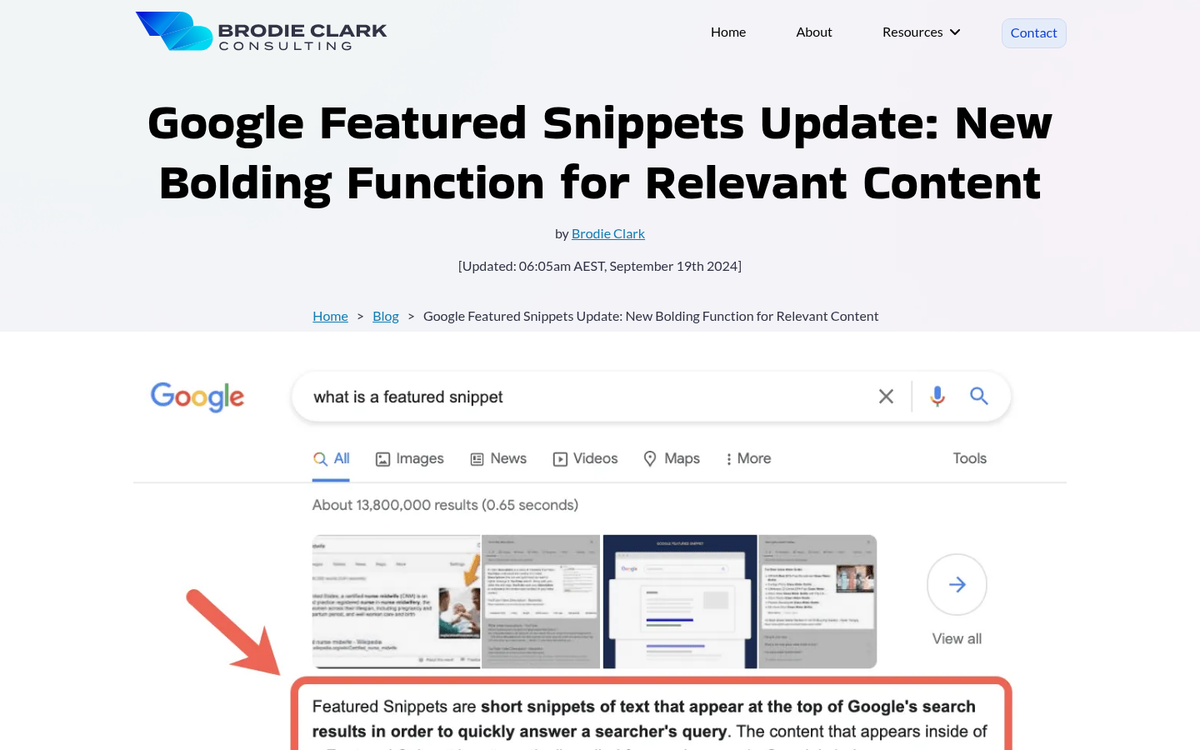
When your meta description includes the exact term a user searched for, Google usually bolds that term in the snippet - it's a small visual signal. But in a crowded results page - especially one where the top half is occupied by AI-generated content and ads - bold text can draw the eye and improve your click-through rate.
That said, don't let keyword inclusion come at the cost of readability. You have limited space and a person reading it. A description that reads naturally and happens to include the keyword will always outperform one that feels stuffed. Write for the reader first and let the keyword fit in where it makes sense.
Keep It Unique
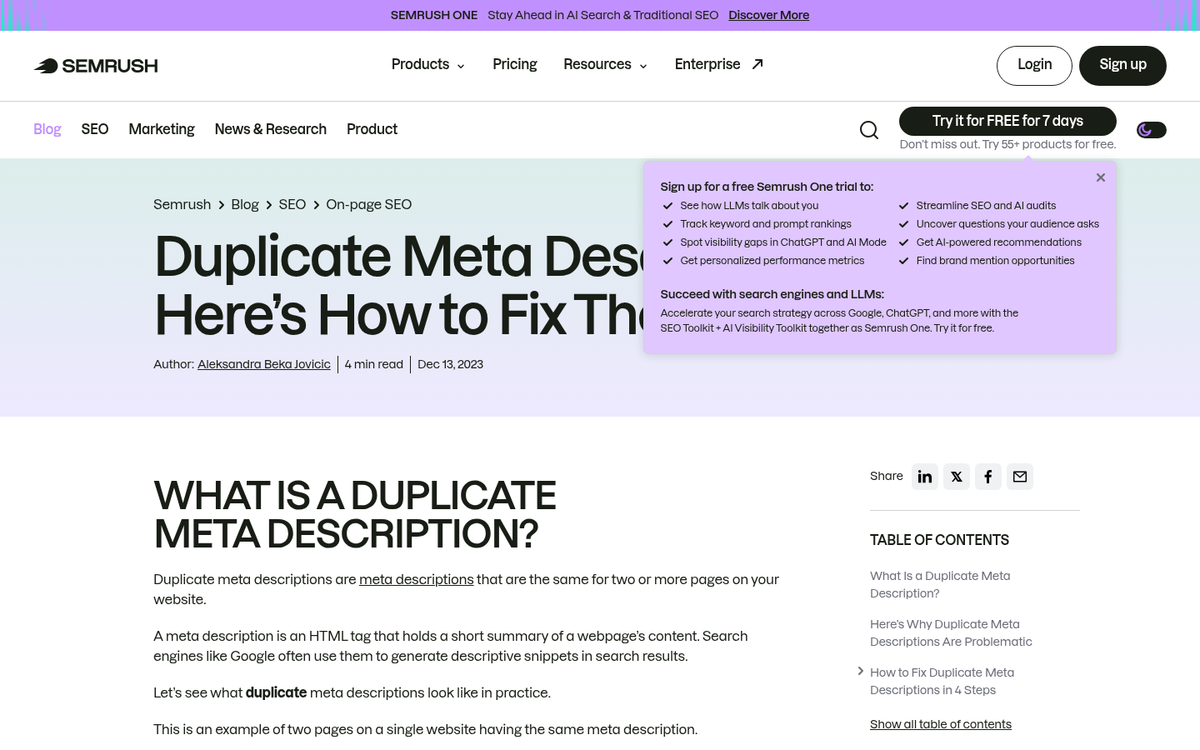
Every page on your site should have a meta description. Duplicate descriptions across multiple pages can signal to Google that the content itself could be thin or repetitive, which can suppress rankings even if the content is strong. At scale - say, an e-commerce site with hundreds of product pages - this is where templated descriptions tend to cause problems. If the descriptions are all identical or near-identical, you're not helping Google (or users) understand what makes each page distinct.
Unique descriptions don't just help with indexing - they also give you a chance to customize your pitch for each page and query. A blog post, a product page, a service landing page and an about page all serve different purposes and draw different types of searches. Your descriptions should reflect that.
And remember: even a well-written meta description is only going to be used by Google about 28% of the time. That makes your introduction and your opening paragraph just as important as the description itself. Think of them as a tag team - the description you write and the content Google might pull instead. Both need to be strong enough to earn the click on their own.