Key Takeaways
- Write authentically from personal passion and experience - AI can generate competent articles, but genuine human perspective remains irreplaceable.
- Consistency matters more than perfection; blogs publishing frequently gain subscribers over twice as fast as infrequent publishers.
- Always end posts with a benefit-driven call to action - one blogger saw 254% more subscriptions by rewording his CTA.
- Focus on a specific niche audience; general-interest content is dominated by large media outlets with far greater resources.
- Expect blogging success to take years - even expert Rand Fishkin's wife's blog took two and a half years to gain traction.
It's easy to set up a blog and start blogging. But it's very hard to break into the blogging industry. There are hundreds of thousands of blogs out there with no readership, no plan, no editorial focus; just personal blogs with whatever the author is posting at the time. There's nothing wrong with this. But it's not a way to turn blogging into any sort of career. If you want to make a living as a content marketer or blogger, then you'll have to put quite a bit more care, attention, and focus into your content.
That challenge has only intensified in 2026. With AI tools capable of generating articles in seconds, the internet is more saturated with content than ever before. The bloggers who are thriving are the ones who leaned into authenticity and depth at a time when AI-generated fluff became the norm.
On the other side, there are hundreds of prominent bloggers and marketers out there who are more than willing to share advice with newcomers. The issue is sorting through it all to find the wisdom that's actually helpful when you're just starting out.
That's what this post is all about; pulling out that value and giving it to you. I've compiled wisdom from prominent bloggers and marketers on what's working in today's community, so you can succeed as a newcomer to the blogging arena.
1. Dave Larson: Use Your Audience as Idea Generators
Dave Larson, founder of @tweetsmarter, says to "Create blog posts that answer the most interesting questions from people you engage with on social media." This is a great strategy for new bloggers who haven't yet compiled a long list of content ideas. The issue is, you need enough of an audience to generate those questions - which can take a little time when you're starting out.
However, this has a helpful fringe benefit: it helps you build a genuine community faster. When you monitor comments and questions and then turn them into content, your readers feel heard and valued. They're far more likely to keep reading, share your posts, and recommend you to others. In 2026, with AI-generated content flooding the web, this authentic reader relationship is one of the clearest ways to separate yourself.
2. Adii Pienaar: Write to Your Passions
Adii says "Write for yourself first & foremost. Ignore the fact that anyone else will read what you write; just focus on your thoughts, ideas, opinions and figure out how to put those into words."
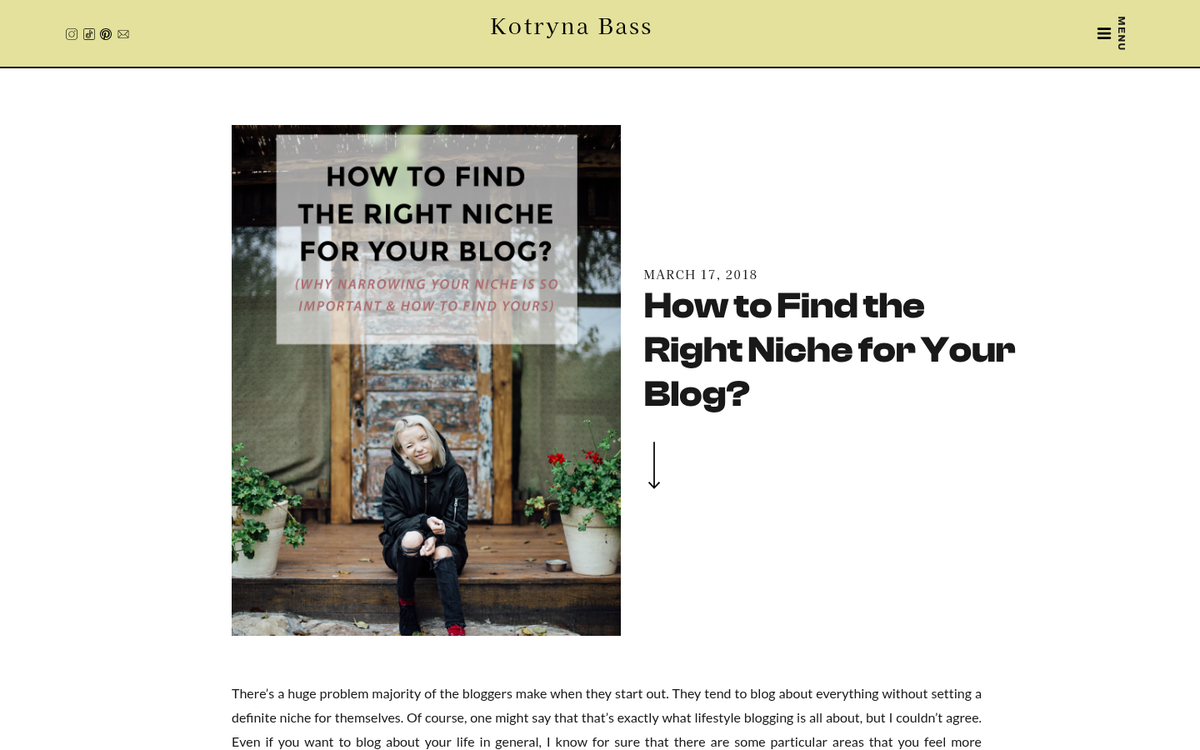
This advice has aged extremely well. In an era where AI can churn out technically competent articles on virtually any topic, the one thing it struggles to replicate is genuine personal perspective and lived experience. A blogger who cares about their subject brings nuance, opinion, and authenticity that no language model can fake convincingly over time.
The caveat still applies, of course: pick a topic with at least some general appeal. You may be passionate about a very narrow subject. But if the audience is small, the monetization potential will be too. The sweet spot is a topic you love that also has a community of people who share that interest.
3. Nate Kontny: Have a Great Call to Action
Nate's advice is to "Finish your blog post with some kind of call to action to sign up for an email list or follow you on social media." This tip is arguably more important now than when it was first given.
Research has shown just how much the wording of your CTA matters. For example, Willy Franzen found his subscription rate surged 254% higher basically by changing his call-to-action from "subscribe by email" to "get jobs by email." The lesson: make your CTA benefit-driven - not generic.
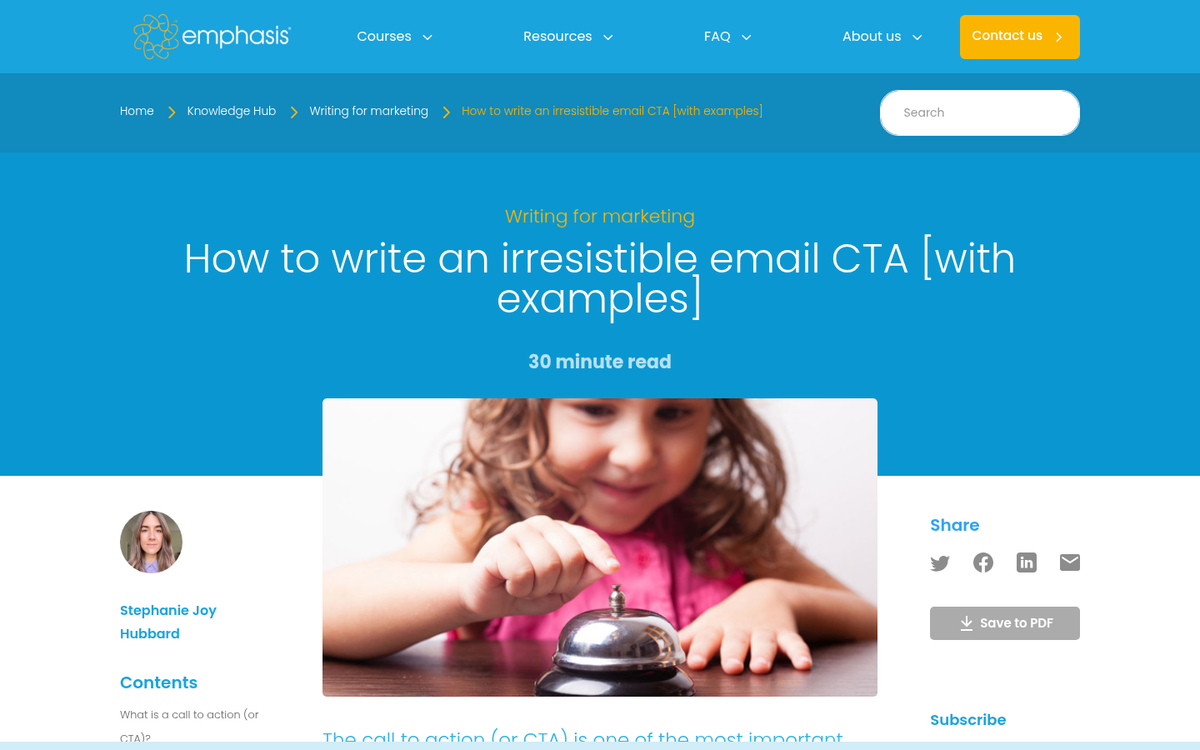
In 2026, your email list is more valuable than ever. Algorithm changes, platform instability, and the rise of AI-curated feeds have made social reach increasingly unpredictable. An email list is something you own outright. Some options for your CTA include:
- Sign up for your email newsletter - your most reliable, platform-independent audience.
- Follow you on social platforms like Instagram, LinkedIn, or wherever your audience is most active.
- Download a free resource, checklist, or guide in exchange for their email address.
- Purchase or claim a copy of your ebook or course.
Place your CTA within the body of your posts, usually near the end. Sidebars and banner ads are largely ignored. But a well-placed in-text CTA with a clear benefit can convert.
4. Neil Patel: Blog Consistently
Neil's advice is simple: "Consistency is one of the most important things that bloggers tend to forget. It's much easier to lose your traffic than it is to build it up, so make sure you consistently blog."
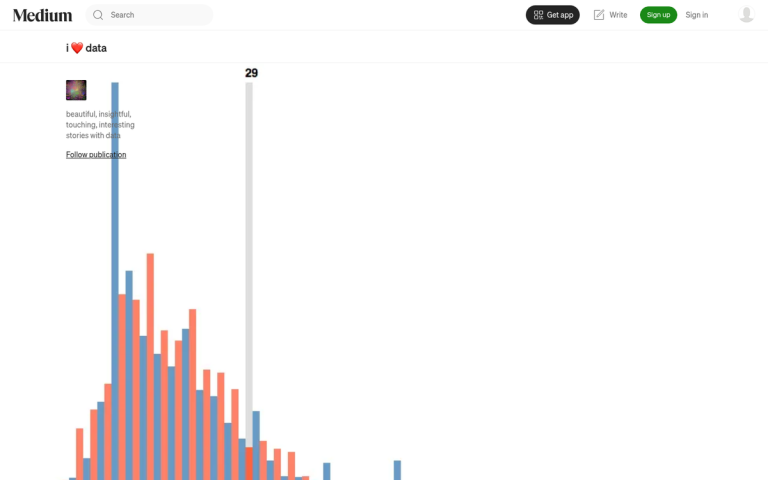
The data has proven this too. Businesses that published blog content more than once a week added subscribers over twice as fast as those publishing just once a month, over a comparable two-month span. Frequency matters - but only when quality is maintained alongside it.

Kind of like a favourite TV show. If the schedule is erratic - one week it airs Thursday night, the next it disappears entirely, then three episodes drop on a random Saturday - you eventually stop trying to keep up. Blogging works the same way. A steady schedule sets reader expectations and keeps them coming back.
You don't need to post every day. But pick a rhythm you can sustain and follow it. Tools like WordPress make it easy to schedule posts in advance, which also helps you maintain consistency during busy or low-inspiration periods. And if you ever wonder what happens to your rankings when you stop blogging, the answer may surprise you.
5. Rand Fishkin: Prepare For the Long Term
Rand Fishkin, co-founder of Moz and later SparkToro, is one of the most respected voices in SEO and online marketing. His advice: "Plan to invest in blogging for a long time before you see a return. If you can stick it out for years without results and constantly learn, iterate, and improve, you can achieve something remarkable."

This is maybe the most important piece of advice on this entire list. Despite being one of the foremost SEO authorities in the world, even Rand said that his wife's travel blog took two and a half years to reach an actual, self-sustaining traffic spike. If you're expecting quick results, blogging will disappoint you. If you can play the long game, the rewards are real.
In 2026, this patience is even more important. Google's search landscape has shifted with AI-generated overviews appearing at the top of results pages, compressing organic click-through rates. Building a loyal direct audience - through email, community, and repeat visitors - has become just as important as chasing search rankings.
6. Dave Kerpen: Write Catchy Headlines
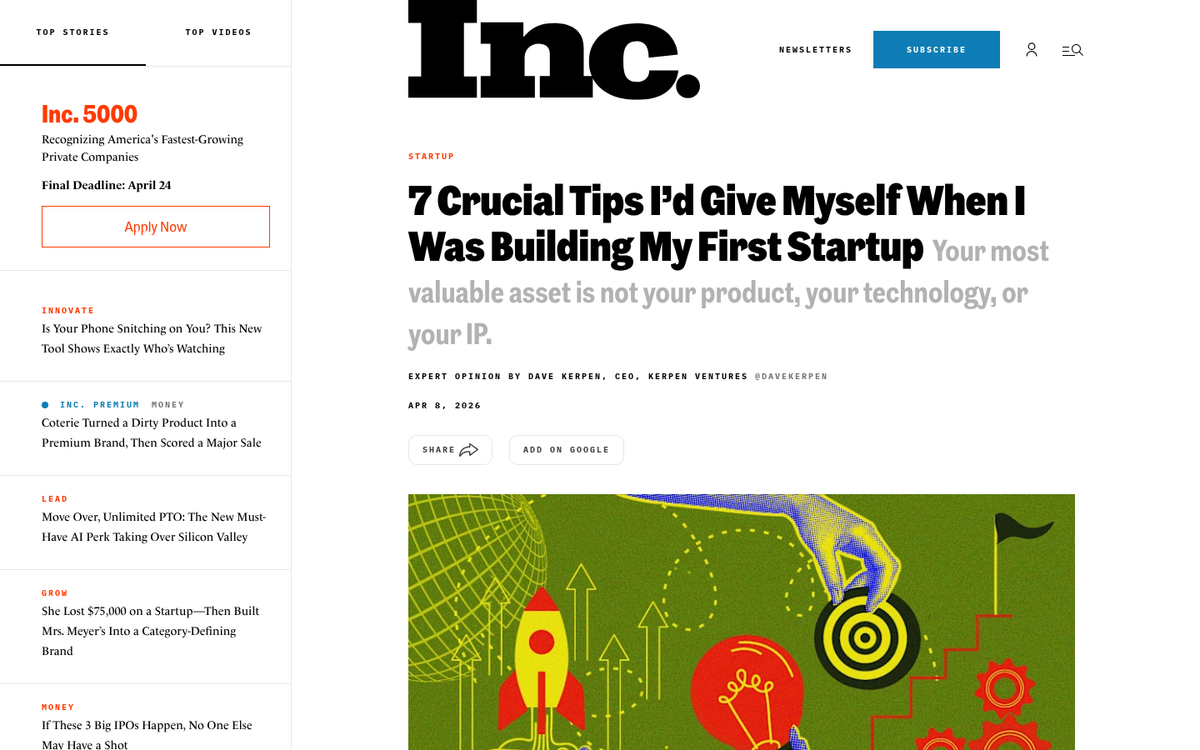
Dave says that "No matter how great your content is, it won't matter unless you have an amazing headline." Consider which of these you'd click:
- 16 Expert Tips for New Bloggers and Content Marketers
- A Study of Advice Curated from Sixteen Content Marketing Professionals
The first is specific and immediately compelling. The second is harder to parse and far easier to scroll past. Your headline is your first impression - and in a social feed or search result, it's the only impression you get.
There are a lot of schools of thought on headline writing, and you'll develop your own instincts over time. The one rule to keep in mind: be honest. Clickbait headlines may generate clicks in the short term. But they erode trust and hurt your reputation. A headline that accurately previews legitimately helpful content is always the better long-term play.
7. Derek Sivers: Short and Sweet
Derek's advice is to "Keep it in the 1-2 minutes read-time length." That usually means somewhere in the 1,000-word range.
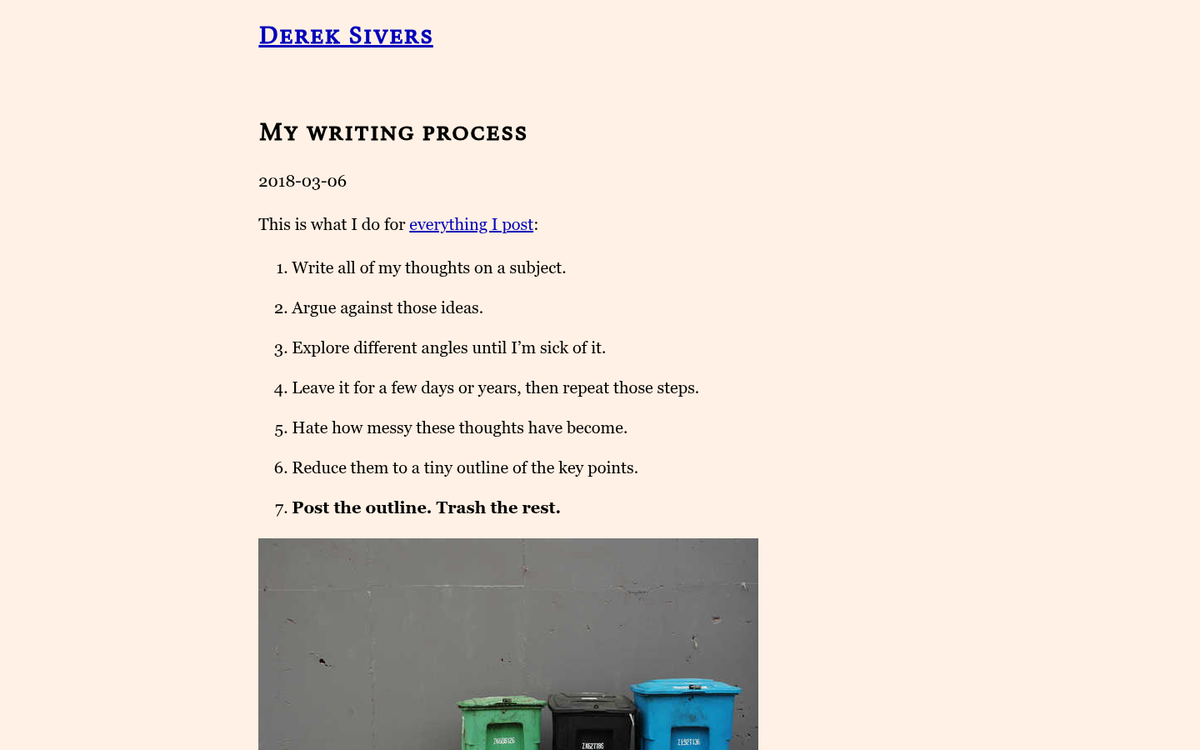
In terms of SEO, longer-form content in the 1,800-2,500 word range has historically performed well in search results, largely because depth signals authority to search engines. That said, content strategy has shifted in 2026. With AI Overviews now appearing prominently in Google search results and absorbing a share of clicks, the most valuable content is increasingly content that earns direct traffic, backlinks, and genuine engagement - regardless of length.
The practical takeaway: write as long as your topic legitimately needs. Don't pad for length, and don't cut important information for simplicity. If a post runs past 4,000-5,000 words, see if it would serve readers better as a structured guide or gated resource. If it can be said well in 800 words, say it in 800 words.
8. Gregory Ciotti: Post Content Worth Referencing
Gregory's tip is about the mindset he brings to every post. "One thing I always try to keep in mind before publishing is would anyone want to cite this for any reason?"
Earning backlinks from credible sources remains one of the most valuable things you can do for your site's authority. The best way to earn those links organically is to publish content other writers legitimately want to reference - original research, case studies, useful data, or how-to resources.
This principle has taken on new relevance in 2026. As AI tools become common research assistants, content that contains original data, first-hand expertise, or unique perspectives is far more likely to be cited - by human writers and increasingly by AI systems that pull from authoritative sources. Generic, derivative content, on the other hand, is what AI can produce on its own. Make yours worth citing.
9. Guy Kawasaki: Use Social Media
Guy's tip: "Accept the fact that social media is the best way to drive traffic to your blog."
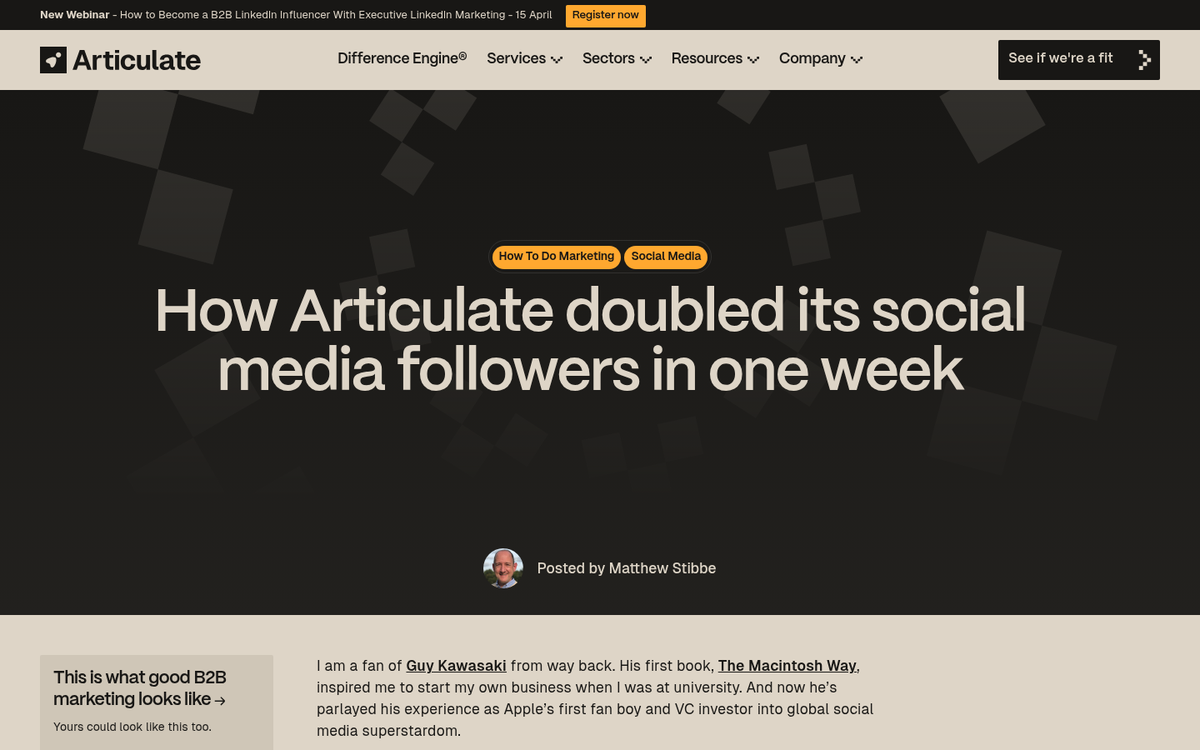
This remains largely true, though the landscape has shifted considerably. Facebook's organic reach for publishers has declined sharply over the years. Twitter (now rebranded as X) has gone through turbulence. Platforms like LinkedIn, Instagram, and YouTube have become discovery channels for written content - through short-form video or carousel posts that tease the full post.
The core principle still holds: your audience is already spending time on social platforms, and meeting them there is important. The key is recognizing which platform your audience actually uses. A B2B marketing blog will gain far more traction on LinkedIn than on TikTok. A food or lifestyle blog may grow on Instagram or Pinterest. Focus your energy on one or two platforms instead of spreading yourself thin across all of them.
10. Cindy Ratzlaff: Write for a Specific Audience
Cindy says to "Write for a specific audience. Don't write for everyone." This advice has only become more relevant over time. General-interest content is now almost entirely dominated by large media businesses with massive budgets and established authority. As an independent blogger, your competitive advantage is specificity.
A focused niche lets you build a loyal, engaged audience who sees you as the go-to resource for that particular topic - it also makes it far easier to rank in search, attract relevant backlinks, and develop monetization opportunities like sponsorships or products tailored to that audience.
11. Colin Wright: Go In With a Goal
Colin's tip: "Figure out what you want to get from the experience before you invest too much effort in it." This is foundational advice that determines almost everything else about how you should approach your blog.
Are you building a platform to establish professional credibility in your industry? Trying to grow an audience you can eventually monetize? Using the blog as a content engine to support a service or product? Or simply creating a space to develop and share your ideas? Each of these goals calls for a different content strategy, monetization approach, and definition of success. Getting clear on your goal early saves an enormous amount of wasted effort later.
12. Heather Lloyd-Martin: Plan Content in Advance
"Plan your blog content at least a couple weeks in advance." Without a backlog of ideas and drafts, you'll inevitably find yourself scrambling for topics at the worst possible times - when you're busy, uninspired, or under deadline pressure; that's when quality slips or publishing schedules fall apart entirely.

Keep a running idea list somewhere accessible - a shared Google doc, a Notion database, or whatever system you'll actually use. When inspiration strikes, capture it immediately. Do a little preliminary research on each idea to see if it's worth building. In 2026, AI writing tools can also be legitimately helpful here for brainstorming angles, generating outlines, or drafting sections - just make sure the final voice and perspective is authentically yours.
13. Follow Influential Bloggers in Your Niche
One of the best things a new blogger can do is follow influential bloggers who are already succeeding in your space. Watch what they publish, how they structure their content, how they connect with their audience, and how they promote their work. You're not copying them - you're studying what works and building your own strategy informed by their experience.
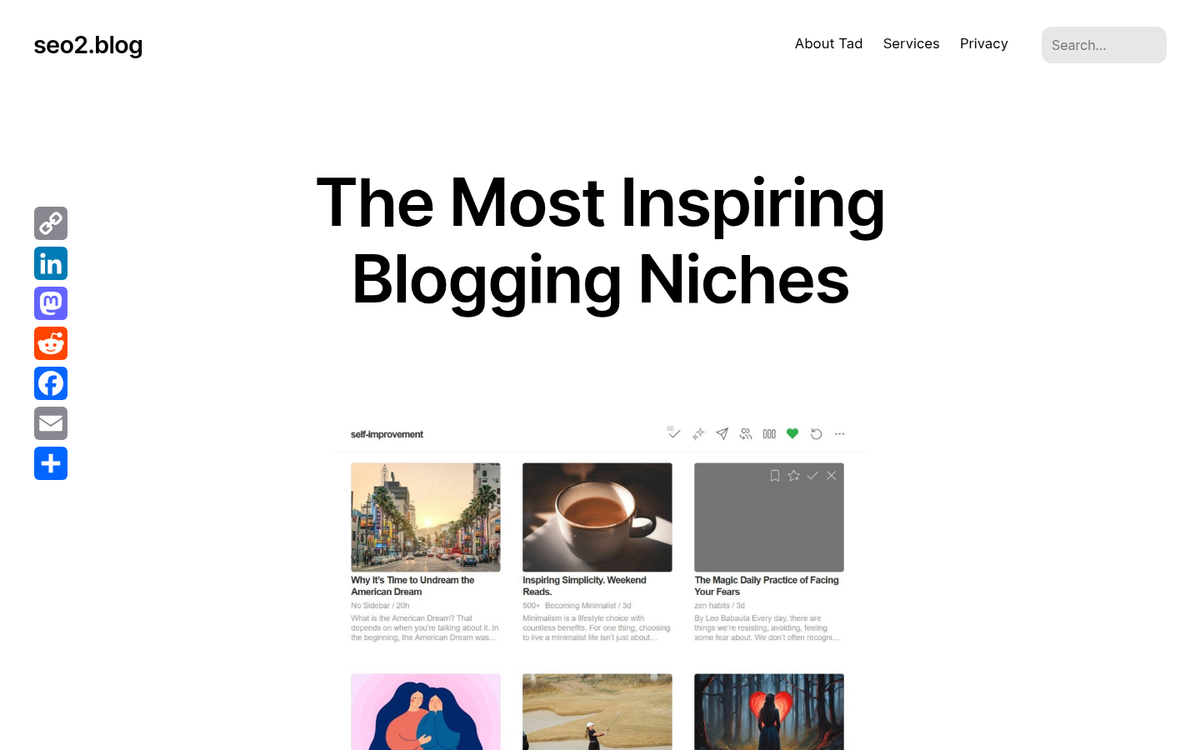
Beyond your niche, it's also worth following voices in content marketing and SEO broadly. The landscape changes quickly, and staying informed about algorithm updates, platform shifts, and audience behaviour patterns helps you make better decisions about your own blog.
14. Rich Brooks: Blog to Pain Points
Rich's advice: "Survey your current clients and try to get them to share their biggest problem or pain point with you. Find out what they struggle with, and what could make the biggest difference." Then build your content around solving those problems.

This is one of the most reliable ways to create legitimately helpful content that earns traffic, links, and reader loyalty. People search the internet because they have questions and problems. If your blog provides clear, helpful answers to questions your audience is asking, you'll build authority and trust over time - and it also gives you an almost endless supply of content ideas grounded in real demand.
15. Sarah Arrow: Focus on the Takeaway
Sarah's tip: "To create content that stands out, focus on the one thing the reader can take away and act on." Every post should leave the reader with something concrete and useful - a technique to try, a decision to make, a resource to explore.

This single-focus strategy also makes your writing cleaner and more purposeful. Rather than trying to cover everything about a large topic in one post, you drill into one angle and cover it well. The result is content that feels more useful and shareable, and more valuable to the reader than a broad overview that never goes deep enough to be helpful.
16. Ian Cleary: Do it Better
Ian's advice: "Quite often the content I write about has been written about before, but I just make sure to come up with my own angle, in my own style, and I also make sure it's much better than any other piece of content out there."
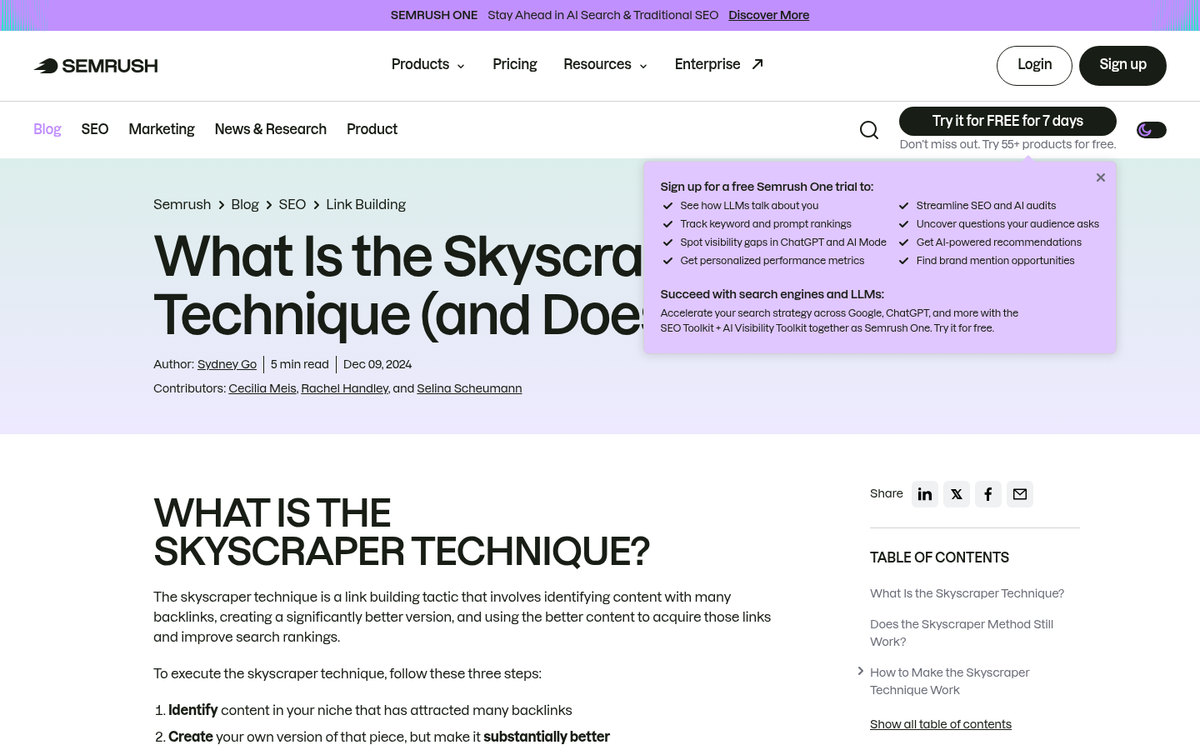
This is sometimes called the Skyscraper strategy - find what already exists on a topic, and create something definitively better. More thorough, more accurate, more up to date, more helpful. In 2026, this is more competitive and more necessary than ever. AI tools have made it trivially easy to produce mediocre content at scale. The blogs that stand out are the ones where a knowledgeable human has put in thought, experience, and effort to produce something worth reading. Aim to be that resource, every time.