





ClickMagick is a tracking app aimed at tracking clicks in real time. When you want to post a link in an ad, on social media, or in a guest post or other form of inbound marketing, you can run that link through ClickMagick first. When you do, it creates a ClickMagick tracking link for you. This link, combined with the ClickMagick tracking code you install on your website, allows you to track traffic on an individual basis.
As you might expect, this system basically uses a redirect engine to capture information about traffic before sending it on its way. Because of this, ClickMagick has a number of features that tend to hover on the gray and black hat end of the spectrum. Elements like link cloaking to hide affiliate links, link rotators to send a single ad's traffic to numerous destinations, and so on are all potentially dangerous to use. They can be used well and effectively, but some ad networks don't like it. To their credit, ClickMagick has built-in bot filtering that automatically filters out 90% or more of bots and automated clicks - a genuinely useful feature given how much junk traffic is floating around these days. They've also processed billions of clicks and conversions for over 122,000 businesses over their 11+ years in the industry, so they're not going anywhere.
In any case, ClickMagick may or may not suit your needs. Thankfully, it's far from the only link monitoring, visitor tracking, analytics suite available. Here are five others you can give a shot, and no; I'm not putting Google Analytics right up top like so many other posts do.
Key Takeaways
- ClickMagick alternatives range widely in price, from $9/month (LinkTrackr) to enterprise-level Voluum pricing.
- Most tools offer core features like link cloaking, split testing, conversion tracking, and bot/fraud filtering.
- JotURL uniquely supports retargeting pixels on external links, cookieing visitors who never reach your website.
- Improvely takes a "white hat" approach, designed for compatibility with major ad networks like Google and Facebook.
- LinkTrackr prohibits autosurf and bulk traffic sources, making it unsuitable for marketers using those channels.
1. Voluum
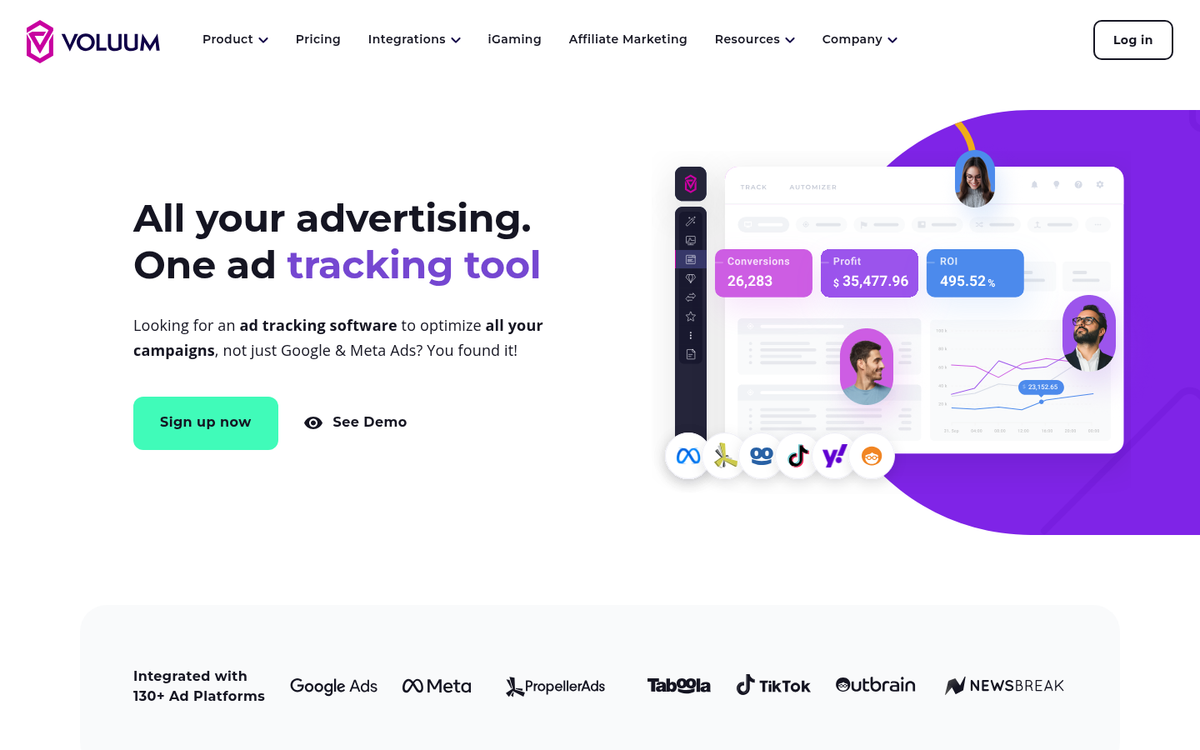
Voluum is a lot like ClickMagick, in that it's a cloud-based solution for tracking activity that passes through your links. They have a series of templates for different styles of links, so you don't have to fiddle with parameters and build links manually. Since tracking ROI is a big part of what these apps do, this one supports several different cost models, including CPC and CPA. You can manually update link costs if the traffic source doesn't support it as well. Above all, the whole thing is very fast; the redirects generally take less than 5 milliseconds, fast enough that even mobile users generally don't notice a redirect at all.
Voluum has a great API you can access to pull your data and process it locally, but they also do a bunch of analytics on their end. They track and monitor data points that range from the OS, mobile carrier, and city-level geolocation of your visitors all the way to their performance. If the default data points aren't enough, you can set up to ten custom data points to track metrics you specifically need. Their reports are well put together and display your data in an easy to read format.
Where ClickMagick allows some pretty deep usage of cloaking and link rotators, Voluum is more limited. You can implement some split testing, but it's much more limited than the full-on rotation scripts ClickMagick uses. On the other hand, Voluum has a free API for controlling it via third party scripts and extensions. If there's something you want it to do that it doesn't, you can write a script to do it. They also have AI-assisted optimization features to help you identify your best-performing traffic sources and ads automatically - more credible now than the early "machine learning" claims that were floating around a few years ago.
Voluum sits on the pricier end of the market, so it's best suited for serious media buyers and affiliate marketers running significant ad spend. Worth it? That depends on your volume and budget.
2. ClickMeter
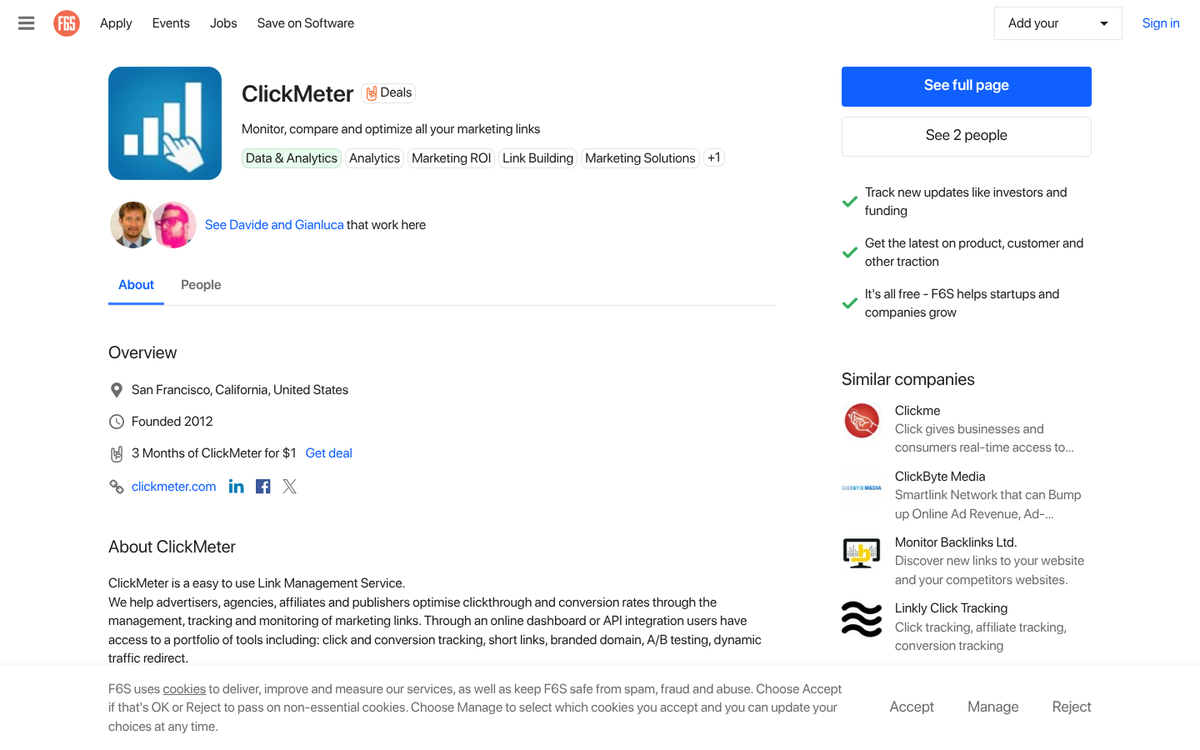
One of the top ClickMagick competitors, ClickMeter offers the same kind of click-based link tracking. With it, you can dynamically target where incoming visitors end up, if you wanted to split up traffic amongst various targeted landing pages. You can track your clicks, your views, and your conversions all with the same app. You can monitor your clicks for broken links, click fraud, high latency, and even blacklists. And, of course, you can export data or reports for sending to clients, team members, and bosses.
ClickMeter has their own API with quite a bit of good documentation. You can read all of the relevant documentation in their support center if you want.
ClickMeter interestingly lists "more than 100 incredible features" even though a lot of them are basically the same. They list targeting by country, by language, by device type, and by user type as four different features, when they're really just all targeting. Other features include:
- Redirects based on randomness, sequential lists, weights, and rotations.
- Link cloaking with URL encryption and customizable page titles.
- Tracking for timestamp, IP address, geographic location, language, browser and platform, whether or not the visitor is unique, and more.
- Conversion tracking for your entire funnel, with tracking for product IDs, conversion values, SSL, and other options.
- Integrations with various affiliate networks, UTM tracking code, Chrome and Firefox, and apps like Shopify, WordPress, Rebrandly, and more.
The app as a whole has 99.99% uptime with multiple data centers positioned globally to get fast redirects from global traffic. They're also hosted on Amazon's web services platform, to ensure those statistics.
Plans are much cheaper and more reasonable than Voluum, but also lower with their limits. The Medium plan starts at $29 per month and gets you 25,000 events, 2,500 datapoints, a year of data storage, and the basic features like affiliate marketing tools, split testing, the rotator, exports, one branded domain, and remarketing. For $99 per month you get 200K/20K events and datapoints, two years of data retention, 10 branded domains, sub-accounts, fraud protection, and branded reports. $349 per month gets you 2M/200K events/datapoints, unlimited domains, three years of retention, and dedicated support.
3. JotURL

JotURL has been quietly building out a solid feature set that makes it a compelling alternative in 2026. It goes well beyond basic link tracking and leans into branded links, deep link support, and conversion tracking in a way that suits both individual marketers and agencies. You can create smart links that redirect users differently based on device, location, or language - useful for running campaigns across different regions or audiences without juggling multiple links.
One of the standout features is their retargeting pixel support. You can append retargeting pixels from Facebook, Google, LinkedIn, and other platforms directly to your links, so anyone who clicks your link gets cookied even if they never land on your own website. That's a powerful capability if you're running paid campaigns and want to build audiences from external traffic sources.
JotURL also offers QR code generation, link-in-bio pages, and detailed analytics including click maps, device breakdowns, and referrer data. It's a well-rounded tool that manages to feel modern without being bloated.
Pricing starts at just $10 per month, which makes it one of the most accessible options on this list. Higher-tier plans unlock more tracked clicks, more custom domains, team members, and advanced features like A/B testing and API access. It's worth checking their current plan page for the latest pricing tiers, as they've continued to expand their offerings.
Overall, JotURL is a strong pick if you want something more polished and versatile than a bare-bones tracker, without jumping all the way up to Voluum pricing.
4. LinkTrackr
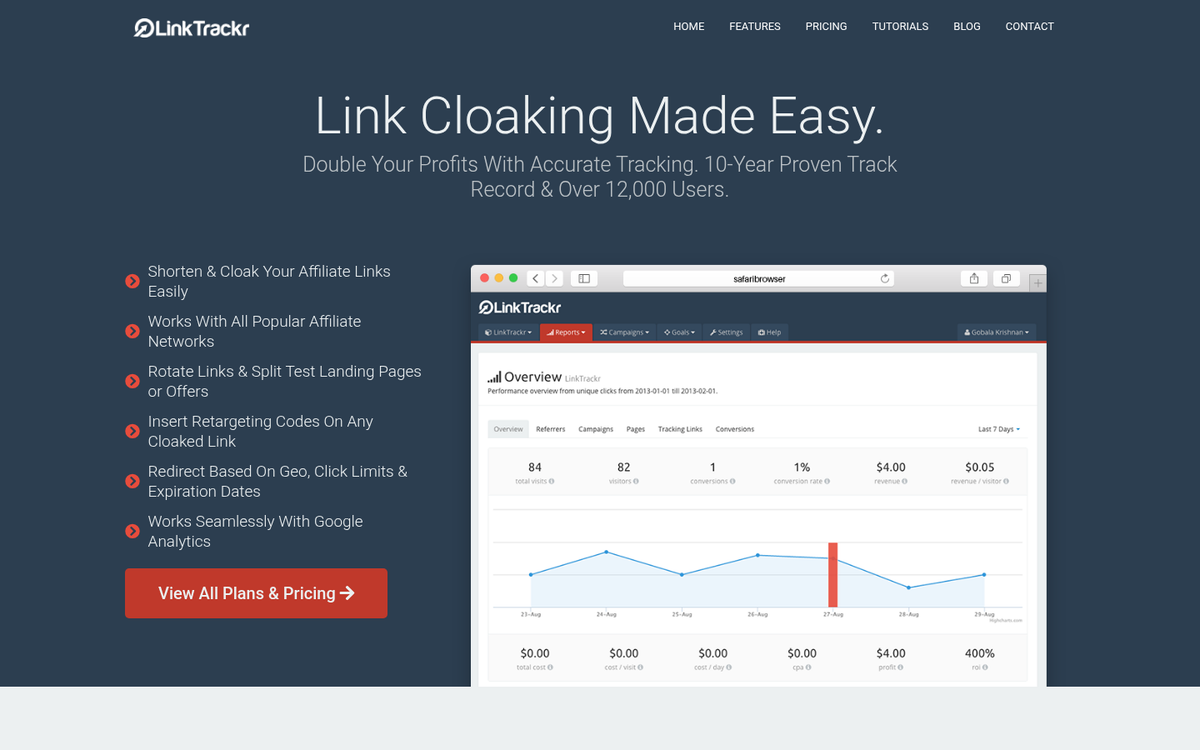
Another link tracking app, another list of features. What does this one offer you? Their foremost offering is link cloaking, in case that tells you anything. Their cloaking renders the destination page inside a full-size iframe to hide the true URL of the page, which is a step further than most go. You can choose to hide the iframe's existence, though with some ad networks and search engines, you want it to be visible so you aren't penalized for spam techniques.
They track your ads, of course, both with PPC and other advertising systems. You can centralize tracking from a variety of different sources at once, including Google Ads and Facebook ads. Conversion tracking is par for the course, and all you have to do is install a tracking pixel on your site. You can even track modern Postback tracking used by some affiliate networks rather than URL parameters or cookies.
As you might expect, they also have the usual setup with URL rotating and split testing. You can divide up traffic between URLs for split testing the same page, or send traffic to a variety of different pages, offers, or URLs depending on user characteristics.
LinkTrackr has been in the industry for over a decade now with a user base of over 12,000 users, so it's not a fly-by-night operation. They also offer a 30-day money-back guarantee, so if you don't like it after giving it a real shot, you can walk away without losing anything.
Pricing starts at $9 per month for the basic plan, which gets you 100 tracking links and a cap of 10,000 clicks per month along with link cloaking and branded domains. The $19 plan bumps you up to 500 links and 50,000 clicks, and importantly adds conversion tracking - which is essential for most of you reading this. Above that is the $39 per month plan with 1,000 links and 100K clicks per month and split testing included. The top-tier plan is $69 per month and gives you 5,000 links and half a million clicks.
One important thing to note is that LinkTrackr does not allow traffic from autosurf sites, wholesale traffic sites, banner exchanges, or bulk traffic sources. If you rely on those traffic sources, first of all, get some better sources. Secondly, you'll have to use a different tracker.
5. Improvely
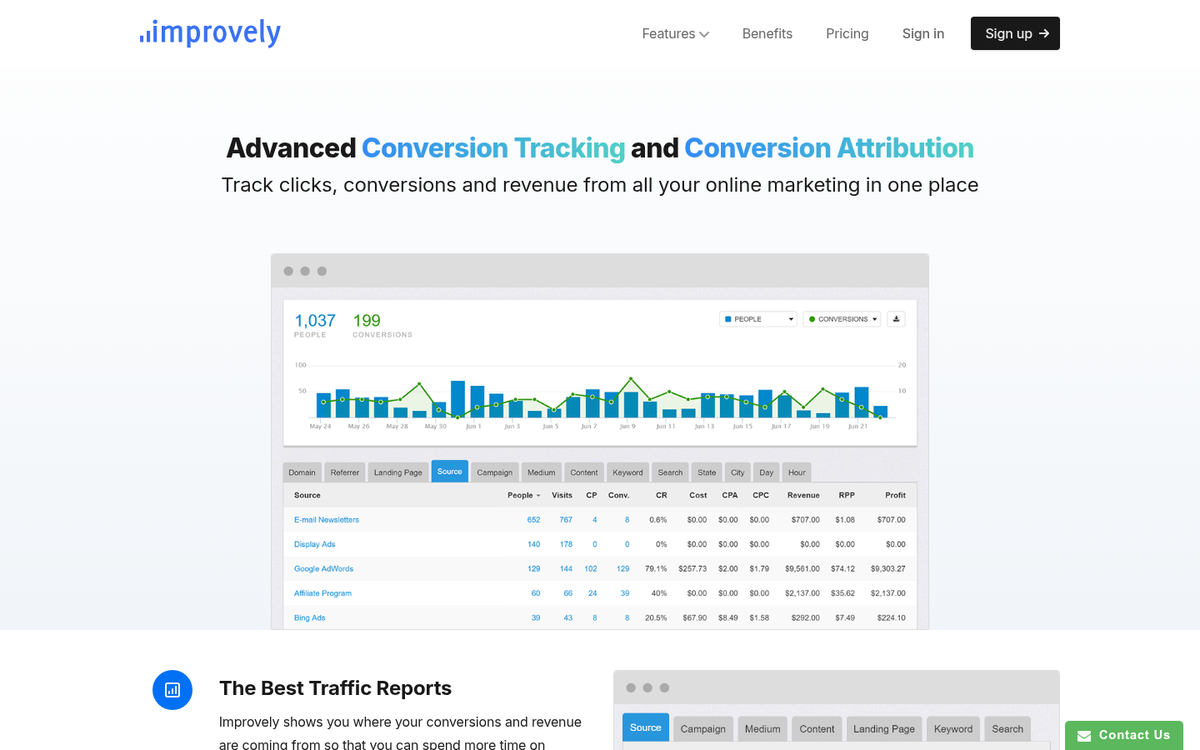
You can think of Improvely as the "white hat" version of all of the above. They're designed to work with the major networks without issues, like Google Ads, Facebook, Taboola, and AdRoll. They come with built-in fraud monitoring so you can identify and block suspicious sources of bad traffic.
One of the most interesting features of Improvely is the customer profile building. The app can recognize individual people and show you useful metrics about them, including how often they have visited, what their value to your brand has been over their lifetime, what their organic value is, and even their general location.
They have a 14-day free trial and their starting price is $29 per month. For that, you can track 10,000 visitors per month, with conversions and revenue, fraud monitoring, split testing, and affiliate marketing tools. You can add team members and bump the tracked visits up to 50,000 for $79 per month. Double the visits and add in sub-accounts and you'll end up paying $149 per month. And, of course, they have a top-tier plan with potentially unlimited tracked visits, unlimited team members, and white label reporting, all starting at $300 per month and scaling based on need.
With the various options available to you, you should never go without proper link tracking. Just make sure you're not implementing it in a way that will get you penalized by the search engines or removed from your ad networks, and you should be golden.
2 responses
Thoughtful replies only - we moderate for spam, AI slop, and off-topic rants.
Thanks a lot for this review post. Although I was expecting you to recommend one app, I still enjoyed the article.
I hate ClickMagick because of their arrogance and poor customer service, and I'm looking at the alternatives out there.
Once again, thank you for this post, it enabled me to discover two new tracking software to explore.
Hey Nicholas, glad the article was helpful! Sorry to hear about your experience with ClickMagick - poor customer service is definitely a dealbreaker for a lot of people. Exciting that you found two new options to explore! Once you've had a chance to test them out, we'd love to hear which one works best for you. Good luck with your search! 😊