Remarketing, also called Retargeting, is a form of audience creation used for PPC advertising. As the prefix re- implies, it's reaching out to target the people who have already expressed some interest in your ads. Generally, this means it's people who clicked through an ad to your landing page, but did not then carry on to make a purchase.
Remarketing in general is a very good practice. The custom audience you make through remarketing tends to have a much higher conversion rate than your normal broad-spectrum ads. In some cases, click-through rates can be as much as 10x higher than with normal ads.
Both Facebook and Google have tools that allow you to make use of remarketing to reach out to a focused audience of interested users. Together, these two platforms account for roughly 60% of all digital advertising dollars worldwide - so if you only have the budget to focus on one or the other, which do you choose?
Key Takeaways
- Remarketing audiences can achieve click-through rates up to 10x higher than standard broad-spectrum ads.
- Splitting budgets between both platforms shrinks remarketing audiences; focusing on one platform generally performs better.
- Facebook excels with granular demographic targeting, mailing list integration, and lower average CPC around $0.62.
- Google Search ads average 3.17% CTR and excel at re-engaging high-intent users actively searching again via RLSA.
- Platform choice depends on your audience: Facebook suits consumer products; Google suits high-intent, search-driven categories.
Why Not Both?
If you're familiar with the posts I write for this site, you'll know that a lot of times for my "A or B: Which is Better?" posts, I often recommend using both. Don't pick and choose between Facebook and Instagram, use both. Don't limit yourself to either Amazon or eBay, use both. So why not use both Facebook and Google for remarketing?
Remarketing is actually one area where it's better to focus on one service rather than both. That's because it relies on the broad-scale exposure of your initial ads. The more people you reach with your initial ad, the larger the subsequent remarketing audience is likely to be. If you split your budget between the two services, your remarketing audiences will be smaller, and thus less effective.
This does, of course, rely on you having a smaller budget you need to split between them. If you have a large enough budget to reach a wide audience on both platforms at the same time, by all means, use them both.
A Basic Answer
Before I go into details, I have to give you the basic, no-nonsense answer. Which should you use, between Facebook and Google, for your remarketing? Well, whichever works best!
Now, don't leave. I do actually mean something when I say that.
Remarketing is the act of targeting an audience specifically made up of people who have expressed interest in your site through previous ads or other marketing channels. Say you have an audience of 100,000 people with both your Facebook ads and your Google ads. You run ads with the same budget for the same amount of time. Facebook ads get you 1,000 clicks, while Google ads only get you 800. Facebook ads are more effective. The audience you build for retargeting is larger, so you have a higher chance of getting conversions out of that subsequent audience. Go with Facebook! If the reverse is true and you find that Google gets you better returns, go with Google.
Of course, you need to do a legitimate test here. Spend some time with both ad systems, with an adequate budget and optimizations as you go, rather than just running one basic ad and taking the results at face value.
The Benefits and Drawbacks of Facebook
Facebook has a few perks that can put it above Google when it comes to advertising and remarketing. Let's look them over, then check out what Google has to offer.
Facebook, first of all, has an incredible wealth of targeting options. Want to reach out to an audience made up of only people who like donuts? You can do that easily. Want to target only people with a college education making over $100,000 per year who like the movie Saving Private Ryan? You can do that too.
There are so many targeting options because so many people give so much information to Facebook that you would be shocked. In any context other than a social network, that much information in private hands would be considered an egregious breach of privacy. In fact, it still kind of is, though it's "okay" because the data is anonymous when it lands in the hands of businesses. You can target a very narrow audience, but you can't target specific aspects of a person that are exploitative or that narrow the audience down to one person.
Secondly, Facebook has a generally lower cost per click for most ad formats. As of 2025, Facebook's average CPC sits around $0.62, making it one of the more cost-efficient options available. The fact that you can be so precise in targeting means you can make your ads very effective for their cost, which drives that number down further. You don't have to use all of those targeting options, but ignoring them tends to inflate your costs unnecessarily. If you want to understand how CPC figures are calculated across different traffic sources, our guide to calculating cost per click walks through the process in detail.
Next, Facebook's mailing list integration is top-notch, giving you additional sources of an initial audience. You can import a mailing list and Facebook will search for profiles that use that email, giving you a ready-made audience of people you know are interested in your brand. You can even keep different mailing lists for leads and customers, and make different custom audiences out of them. Google doesn't let you do that as seamlessly, because they have no equivalent way of matching a browsing user to a specific email address across the display network.
Facebook tends to have a generally higher conversion rate than similar display ads. Someone browsing Facebook is in a social mindset, and with precise targeting you can reach exactly the kind of person most likely to be interested in what you're selling. Compare that to a broad keyword search where the intent behind the query could be informational, navigational, or commercial - you're not always catching buyers.
Facebook's unique lookalike audiences can be quite beneficial, sometimes. A lookalike audience is a special audience you can make based on an existing audience. Say, for example, you have a mailing list of people who have expressed interest in your company by downloading an ebook. You can import that mailing list into Facebook to create an audience out of all of those people who used the same email on Facebook. This is useful, but it's not a lookalike audience.
You can create a lookalike audience based on this audience. That new audience will be made up of people who are NOT on your mailing list, but who match the same general demographics and interests. If most of the people on your mailing list have the same general profession, age range, and interest in movies, Facebook will make a new audience out of people who match those criteria.
Lookalike audiences are not, however, all that useful for retargeting, at least not right away. After all, the power of retargeting is to make a custom audience out of the people who have expressed interest in your ads once already. To create a lookalike audience is simply to broaden that audience back to people who haven't expressed that interest. You can refine your demographic and interest-based targeting this way, but it's not always necessarily helpful.
Success with Facebook provides social proof that can reinforce future conversions. Many shoppers will check a brand's Facebook or Instagram presence before making a purchase decision, just to see if there's an active, credible brand behind the product.
You have some additional options with Facebook ads as well, including advertising on Instagram, Threads, and across the broader Meta Audience Network. This means more socially-focused sources of incoming traffic all managed from one platform. Facebook's reach can make it especially effective for certain audiences - see our breakdown of which ad network works best for B2C businesses for more context.
On the other hand, Facebook does have its drawbacks. One worth watching closely is ad fatigue. Facebook itself recommends keeping ad frequency below 3.0 for prospecting campaigns and below 8-10 for retargeting audiences. If you're working with a smaller retargeting pool and running ads aggressively, users will start to tune you out - or worse, actively hide your ads. Managing frequency caps is essential for keeping your remarketing campaigns healthy.
Facebook also has ongoing issues with some elements of reporting accuracy. Privacy changes - including Apple's iOS privacy updates and increasing browser-level tracking restrictions - have made pixel-based tracking less reliable than it once was. Meta has pushed its Conversions API as a server-side solution to help fill in the gaps, but it requires more technical setup to implement correctly. If you're not already set up with a tracking pixel, adding one to your website is a good starting point before diving into server-side solutions.
Secondly, Facebook advertising costs have been rising steadily year over year as competition on the platform grows. While the average CPC remains relatively low compared to Google Search, that gap has been narrowing, and you should expect costs to continue climbing.
The Benefits and Drawbacks of Google
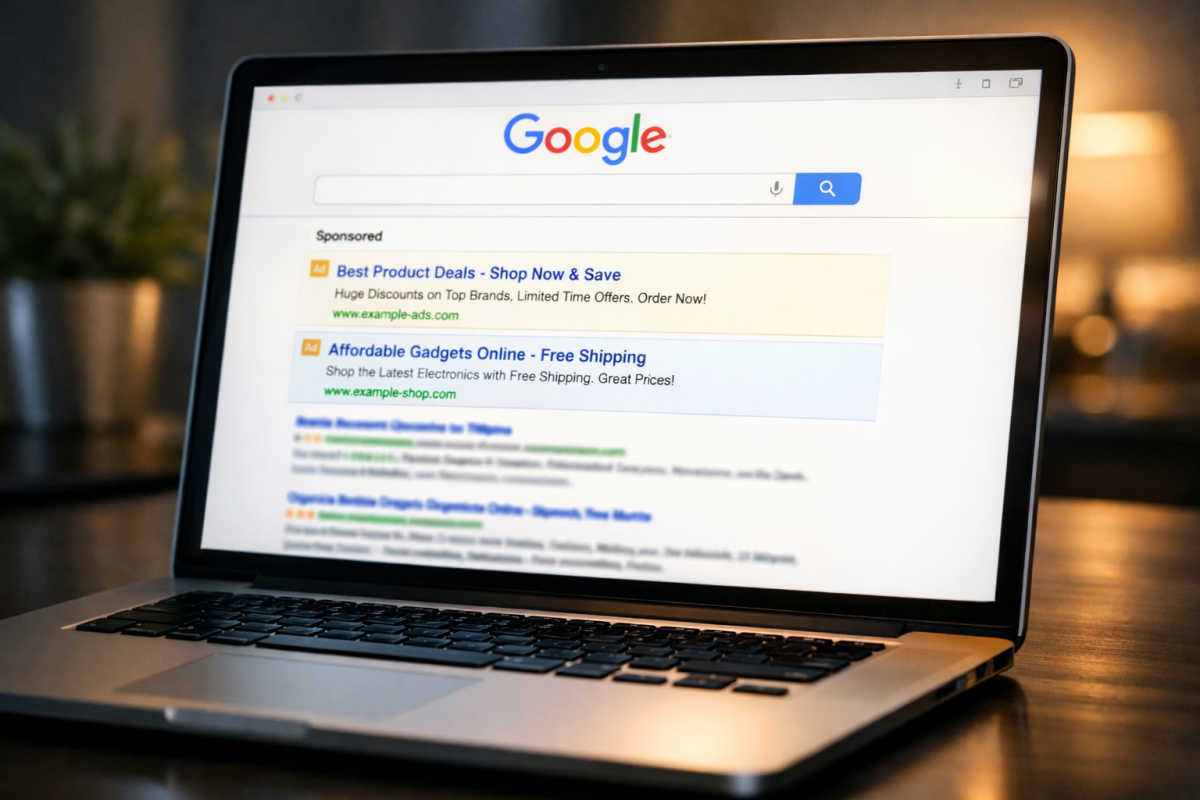
Of course, Facebook doesn't have a monopoly on beneficial elements of their remarketing program. If Google didn't have something going for it, they wouldn't be at the top of the industry.
Google ads are often more trusted than basically any other ad source in the business. Everyone knows and trusts who Google is, and by extension Google ads. Google puts a lot of work into vetting their ads to ensure there are virtually no malicious ads or scams, so they're more reasonable to click.
With Google Ads, you also have access to the positively astonishing number of sites in the Google Display Network. Google claims to reach over 90% of people on the internet through its display network, which remains one of the most powerful reach advantages in digital advertising.
It's also worth noting the click-through rate advantage that Google Search ads carry. Google Search averages a CTR of around 3.17%, compared to Facebook's average of roughly 0.9%. For high-intent, bottom-of-funnel remarketing - where you're re-engaging users who already visited a specific product page - Google Search remarketing (via RLSA, or Remarketing Lists for Search Ads) can be particularly powerful because you're catching people at the exact moment they're searching again.
On the cost side, Google Search ads carry a significantly higher average CPC of around $2.69 across industries. However, the Google Display Network is much more competitive in terms of cost, averaging around $0.63 CPC and $2-$5 CPM - making display remarketing on Google a very budget-friendly option that's directly comparable to Facebook in terms of raw cost.
Success with Google Ads tends to snowball, with a higher Quality Score leading to lower ad rates and better placement over time. As you optimize, your circulation and costs will both improve, making it a great platform for extended investment.
Google's display advertising also has a huge array of possible ad formats including responsive display ads, video ads through YouTube, Performance Max campaigns, and a wide variety of text and banner formats you simply don't get in a single social platform.
You also have the power to vet the websites showing your ads and can exclude underperforming placements in favor of better ones. This kind of granular control gives you an additional layer of optimization that complements the relatively broader audience targeting available on the display network.
On the other hand, Google Ads isn't perfect either. Search ads only get a brief window of exposure - a few seconds at most - as opposed to Facebook where a user can scroll past your ad multiple times during a single session. Banner blindness on display placements is a real phenomenon worth accounting for.
Google Ads also has a relatively steep learning curve, and the platform continues to shift more control toward automated and AI-driven campaigns like Performance Max, which can make it harder to exercise granular manual control the way experienced advertisers prefer. Getting your account flagged or suspended is still a serious risk, and recovery can be slow and frustrating.
Finally, Google Ads simply doesn't have access to the same depth of personal interest data that Facebook does. Google can work with intent signals, demographics, and browsing behavior, but it can't replicate the richness of self-reported social interest data that makes Facebook's targeting so uniquely powerful.
Sunset Decisions
So at the end of the day, which platform is the one you should use? Both of them work well enough, so it really depends on two things: your investment and your focus as a business.
As far as your business is concerned, think about where your audience actually spends their time and what headspace they're in when they encounter your ads. If you're selling consumer products to clearly defined demographic groups, Facebook's targeting depth is hard to beat. If you're in a high-intent, search-driven category - software, legal services, home improvement - Google's search remarketing through RLSA may deliver better results because you're re-engaging people at exactly the moment they're looking again.
If you're B2B, or your industry just isn't well represented on social media, Google is typically the stronger default choice. If your audience is highly visual and socially engaged, Meta's ecosystem gives you more creative flexibility and richer targeting.
Either way, money talks. Both forms of remarketing get better the longer you do them and the more data you accumulate. Eventually, with enough investment and iteration, you can find real success with both.