




This isn't a fringe trend you can afford to monitor from a distance. Google's AI Overviews now reach 1.5 billion users every month and AI chatbots like ChatGPT and Perplexity saw 80.92% year-over-year traffic growth as more people try these tools as their first stop for answers. The search box has become a conversation window, and the websites that show up inside those AI-generated answers are the ones built to participate in that conversation.
For website owners and managers, this change has a direct impact on visibility. If your content is written to satisfy keyword density instead of to legitimately answer questions the way a knowledgeable person would, AI engines are far less likely to pull from it. Conversational search is the behavior; Answer Engine Optimization (AEO) is how you adapt your content strategy to meet it.
What follows breaks down what conversational search means in practice, why it matters for your site's performance in AI-driven results, and the concrete steps you can take to make your content the answer engines actually serve up.
Quick Answer
Conversational search is an AI-driven search approach that allows users to interact with a search engine using natural language dialogue, asking follow-up questions and refining results in a back-and-forth conversation. Unlike traditional keyword-based search, it understands context, intent, and nuance across multiple turns. Examples include Google's Search Generative Experience, Bing Chat, and ChatGPT. It aims to deliver more precise, relevant answers by interpreting conversational context rather than isolated queries, making search feel more intuitive and human-like.
How Conversational Search Differs From Traditional Keyword Search
Traditional search was built around short, clipped phrases. Someone looking for a late-night pizza place would type "best pizza NYC" and sort through the results themselves. The search engine matched those words to pages, and the user did the rest of the work.
Conversational search flips that.
The difference in length alone is telling. Text-based searches average around 3 to 4 words. But voice queries average 29 words; it's a fundamentally different input, full of context, and that changes what an answer looks like.
That context is the key change. A keyword string tells a search engine what topic someone is interested in. A full question tells it the intent behind the search, the constraints involved, and sometimes even the urgency. "Open late" and "near me" are doing a lot of work in that pizza example - and a traditional keyword model would probably miss them entirely.

Exact-match keywords used to be the foundation of how search engines ranked and returned results. The closer a page matched the search terms word-for-word, the better it ranked. That worked well enough when searches were short. Tools like Long Tail Pro were built around finding those exact phrases worth targeting.
But full natural-language questions don't work that way. No webpage will have the exact phrase "What's the best pizza place near me that's open late on a Saturday?" - and a search engine that only looks for exact matches would be useless. Reading intent means connecting what someone typed to what they actually need.
This also changes what it means to rank well in search results. A page stuffed with keywords may have performed well in the old model. But conversational search rewards pages that answer questions in a clear and readable way. That has real implications for anyone writing for an audience in a language that isn't their first.
That's a bigger job than it sounds, and it's one that falls to the AI systems running under the hood - which is what the next section gets into.
The Role of AI Engines in Answering Conversational Queries
AI engines read a question, work out what the person actually needs, and pull together a direct answer from sources across the web.
Google's AI Overviews is worth mentioning here - it now reaches 1.5 billion users every month, which means a giant portion of searches never make it past the first response. The user gets their answer right there on the results page and moves on.
Voice assistants work in a similar way. When someone asks their phone or speaker a question, the assistant reads out a single answer - not a list of ten blue links. About 40.7% of the spoken answers come directly from featured snippets, so the content that earns that position gets heard by users.
What these tools have in common is that they are built to understand language the way people actually use it. They are able to manage follow-up questions, pick up on context from earlier in a conversation, and have figured out what something means even when the phrasing is not well formed.

To do that well, they need source material that is clearly written. These systems are not scanning pages for keyword density or looking for the post that mentions a phrase the most times. They are looking for content that directly answers a question in plain, readable language.
That is a change in what it takes to be helpful to these tools. A page stuffed with repeated phrases is not likely to be picked up as an honest answer. A page that explains something well, in a logical order, with easy language, is more likely to get pulled into a response. It also pays to scan your posts for spelling errors before publishing, since poorly written content is less likely to be trusted as a source.
It also helps to know that AI engines draw on structured information. Clear headings, well-organised paragraphs, and content that addresses one question at a time all make it easier for these systems to read and use a page.
Perplexity takes this even further by citing its sources visibly, so users can see where an answer came from.
What Conversational Search Means for Your Website's Visibility
If your website was built around short, high-volume keywords, it might not perform as well in conversational search. AI engines don't match keywords to pages - they look for content that actually answers a question well. A page stuffed with phrases like "best running shoes 2024" is less helpful to an AI than a page that explains what makes a running shoe right for people with wide feet or knee problems.
That's worth taking seriously as a website owner. The content that gets cited in AI-generated answers tends to be direct, well-organised and structured around questions asked. Pages that are dense blocks of promotional copy are easy to skip over - even if they rank on a traditional results page.
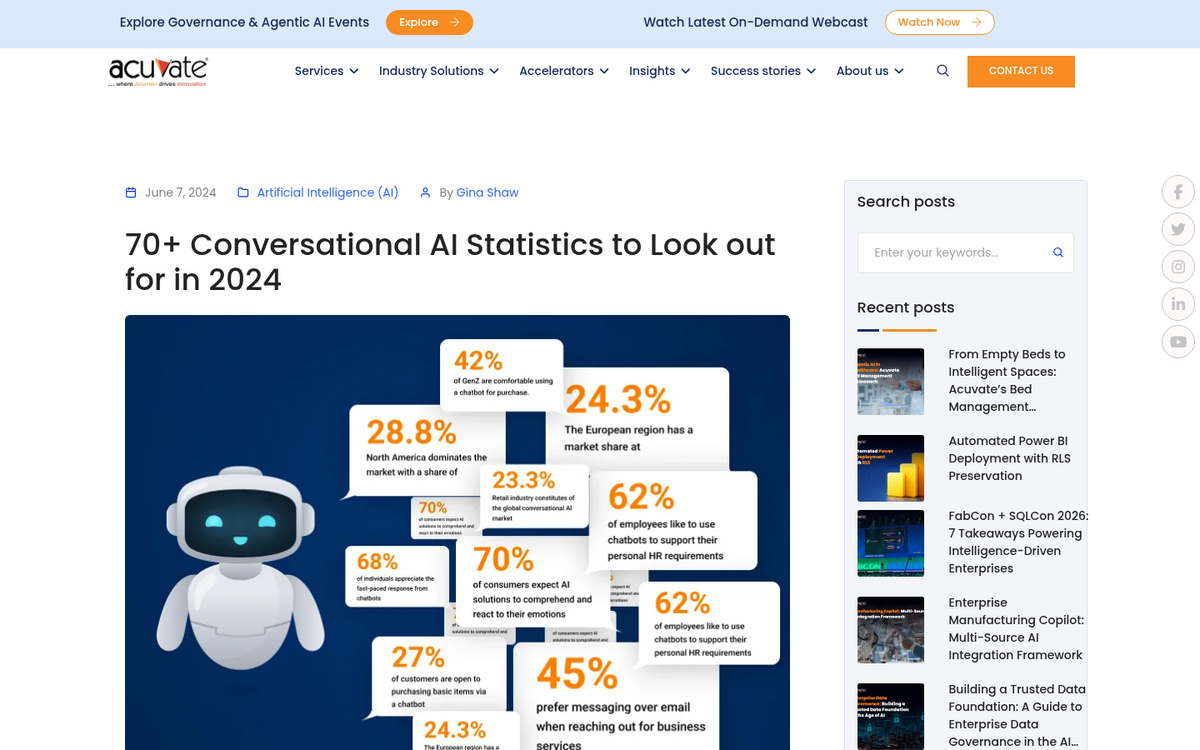
Younger users are also changing the shape of search queries. Gen Z tends to type full sentences instead of fragments, with the average query length coming in at around 5.83 words. A search like "why do my knees hurt when I run downhill" is very different from "knee pain running" and calls for very different content to answer it well.
In practical terms, question-and-answer formatting, descriptive headings and paragraph-level answers all make a page more likely to be surfaced. An AI engine scanning your content wants to find the answer fast. Short, focused answers under headings make that much easier.
Pages that use conversational language, address questions and give direct answers have a clear benefit. The difference between a page that answers questions and one that just contains relevant words is becoming more visible in the results. If you rely on articles from Textbroker or similar writing services, it's worth checking whether that content is structured to answer questions directly.
There's also a trust dimension here. When an AI engine pulls from your content to answer a user's question, it's basically vouching for your page. To earn that, your content needs to be accurate, readable and structured in a way that makes the answer easy to extract. Vague or overly broad content gets passed over in favour of something more precise.
The good news is that the content properties AI engines respond to are the same ones human readers like too. Clear headings, focused paragraphs and direct answers to questions serve everyone well - and the next section gets into how to build that structure into your pages.
Structuring Content to Match How People Actually Ask Questions
The most helpful place to start is with your headings. A heading like "Dog Training Tips" tells a search engine what your page is about. But a heading like "How Do I Stop My Dog From Pulling on the Leash?" matches what someone might say out loud or type into a search bar. That small difference makes it much easier for AI engines to pull your content as a direct answer.
After a question-based heading, lead with a short and direct answer - one or two sentences that get straight to the point. Then follow that with your fuller explanation - this structure works because AI systems like to extract the clearest, most self-contained answer they can find, and a clean opening sentence gives them that.
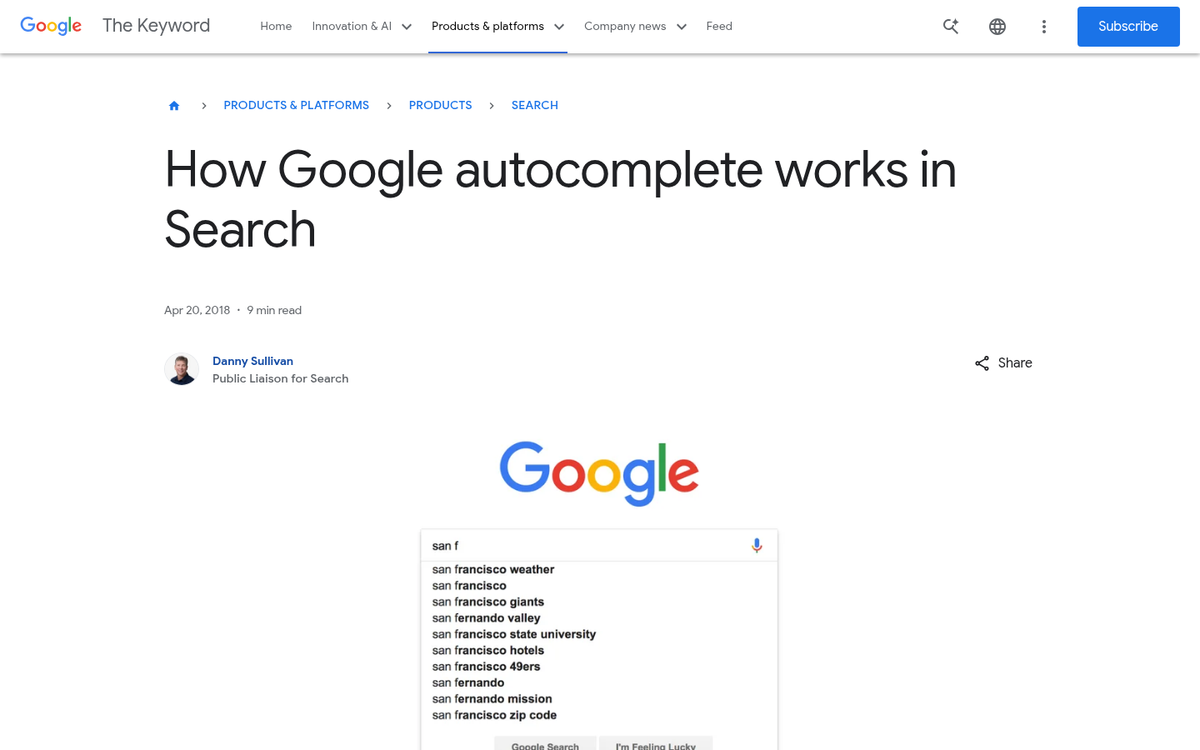
Each question should align with something your audience would actually ask - not something you'd see in a product brochure. It helps to remember the questions your customers send by email, the things they ask in reviews, or the phrases that come up in search suggestions when you type your topic into Google.
The table below shows how traditional keyword-focused content compares to a more conversational structure across a few helpful dimensions. You can also use the AEO Readiness Checklist to see how well your existing pages measure up.
| Dimension | Keyword-Focused Structure | Conversational / AEO-Friendly Structure |
|---|---|---|
| Heading format | Topic-based noun phrases (e.g. "Home Insurance Costs") | Full questions (e.g. "How Much Does Home Insurance Cost?") |
| Opening paragraph | Background or context-setting introduction | Direct one or two sentence answer up front |
| Answer style | Information woven into general paragraphs | Distinct answer followed by supporting detail |
| Query match | Matches typed keyword fragments | Matches full spoken or written questions |
A good place to start is to choose your most-visited pages and look at whether the headings and opening paragraphs would make sense as a spoken answer to a question.
Voice search in particular rewards plain, direct language because the answer gets read aloud. Short sentences without qualifiers tend to be more helpful than dense, clause-heavy writing. If you're working on improving how Google represents your site, cleaner structure helps there too.
Schema Markup and Signals That Support Conversational Relevance
Good content structure gets you halfway there. The other half is helping search engines and AI tools actually understand what your content is about - it's where schema markup comes in.
Schema markup is a small piece of code you add to a page to label what the content means- it doesn't change what visitors see- it just tells search engines things like "this section is a question and answer" or "these are the steps in a process." Think of it as attaching a description to your content that machines can read at a glance.
Two of the most helpful types for conversational search are FAQPage schema and HowTo schema. FAQPage schema tags question-and-answer content so AI engines can pull it as a direct response to a user's query. HowTo schema does the same for instructions and works for any content that walks through a process.
There's also a lesser-known type called Speakable schema that's worth learning about- it was built to flag content for voice search use. When you mark a section as Speakable, you're telling voice assistants that this part of the page is a good choice to be read aloud as an answer- it's a small addition but a meaningful one as voice-based queries continue to grow.
You don't need to be a developer to get started with this. Tools like Google's Structured Data Markup Helper let you tag content visually without writing code manually. Many content management systems also have plugins that manage the technical side.
The most important step is to audit your existing pages and look for gaps. A page that already has a strong FAQ section but no FAQPage schema is a missed signal. AI engines may still find it helpful, but the schema makes that usefulness much easier to confirm.
It also helps to think of this as a trust signal. Search engines and AI tools are trying to match a user's conversational question to the most reliable answer they can find. Schema markup is one way to raise your hand and say "this content is structured, labeled, and ready to use." That matters more as search becomes less about keywords and more about intent.
If you've been rethinking how you write content, this is the next logical move - it makes sure that the work you put in is visible to the tools picking what gets surfaced.
Making Your Site a Source, Not Just a Page
This reframe is worth holding onto as you make content and structure decisions going forward. Every FAQ you write, every process you explain step by step, every question you address head-on is a small investment in becoming a source an AI engine uses. None of these changes need an overhaul - but they do compound. A handful of well-structured, legitimately helpful pages built with this mindset will outperform a large site optimized purely for keyword density.
Conversational search is not a trend to wait out - it's the direction the entire answer economy is moving, and understanding that logic is the foundation behind every AEO choice that follows. Look at your existing content and ask one honest question: does this actually answer something a person would ask? If the answer is no, that's your next step. For those managing a blog across platforms, learning how to grow a successful blog on Medium offers a useful lens for thinking about audience-first content.
FAQs
What is conversational search?
Conversational search is when users ask full, natural-language questions instead of typing short keyword fragments. AI engines like Google's AI Overviews interpret the intent behind these questions and return direct answers rather than a list of links.
How does conversational search affect my website's visibility?
If your content is built around keyword density rather than genuinely answering questions, AI engines are less likely to cite it. Pages that are clearly written, well-structured, and directly answer questions are more likely to appear in AI-generated responses.
What is Answer Engine Optimization (AEO)?
AEO is the content strategy of adapting your pages to be picked up by AI-driven answer engines. It focuses on writing clear, question-based content that AI tools can easily extract and serve as a direct response to a user's query.
How should I structure content for conversational search?
Use full question-based headings, lead each section with a short direct answer, then follow with supporting detail. This structure makes it easy for AI engines to extract a clean, self-contained answer from your page.
What is schema markup and why does it matter?
Schema markup is code added to your page that labels content for search engines. FAQPage and HowTo schema help AI tools identify and use your content as a direct answer, making your pages more likely to be cited in AI-generated responses.