




This matters to you as a website owner because AI-powered answer engines like ChatGPT, Perplexity, and Google's AI Overviews don't find and surface content the way a traditional search crawler does. Many of these systems use hybrid search under the hood to find the most relevant, honest information before generating a response. If your content isn't structured well for both retrieval modes, it may get passed over entirely - even if it's a great choice on the web.
The sparse side of hybrid search (think classic BM25-style keyword matching) is great at catching exact terms, product names, technical jargon, and phrases. The dense side uses vector embeddings to understand meaning, intent, and context - so it can find that "how do I fix a slow site" and "website performance optimization" are asking about the same thing. Together they compensate for each other's weaknesses and surface higher-quality results.
For Answer Engine Optimization, understanding how hybrid search works gives you a concrete benefit - it changes the question from "am I ranking for this keyword?" to "does my content clearly express meaning in a way that both machines and humans understand?" That's a different game - and the sites that get cited by AI engines are increasingly the ones playing it well.
Quick Answer
Hybrid search combines multiple search techniques-typically keyword-based (BM25/TF-IDF) and vector/semantic search-to retrieve more relevant results. Keyword search excels at exact term matching, while semantic search captures meaning and context. By merging both approaches, often using Reciprocal Rank Fusion (RRF) or weighted scoring, hybrid search overcomes the weaknesses of each method individually. It is commonly used in RAG pipelines and enterprise search systems to improve retrieval accuracy across diverse query types.
How Hybrid Search Actually Works Under the Hood
At its core, hybrid search runs two separate retrieval processes at the same time and then combines the results - each process has a different job, and together they cover more ground than either one could alone.
The first process is called sparse retrieval. The most well-known version of this is BM25, a ranking algorithm that looks for exact keyword matches between your query and a document - it counts how frequently a term appears and weighs that against how rare the term is across all documents. Think of it as a very fast, very literal word-matching system - if you search for "magnesium deficiency," it finds documents that have those words.
The second process is dense retrieval, which works differently. Instead of matching words, it converts text into numerical vectors - long lists of numbers that represent meaning. Two sentences can use different words and still have similar vectors if they mean the same thing. This is what lets a search engine connect "low magnesium symptoms" with a post about mineral absorption, even if the exact phrase never appears.
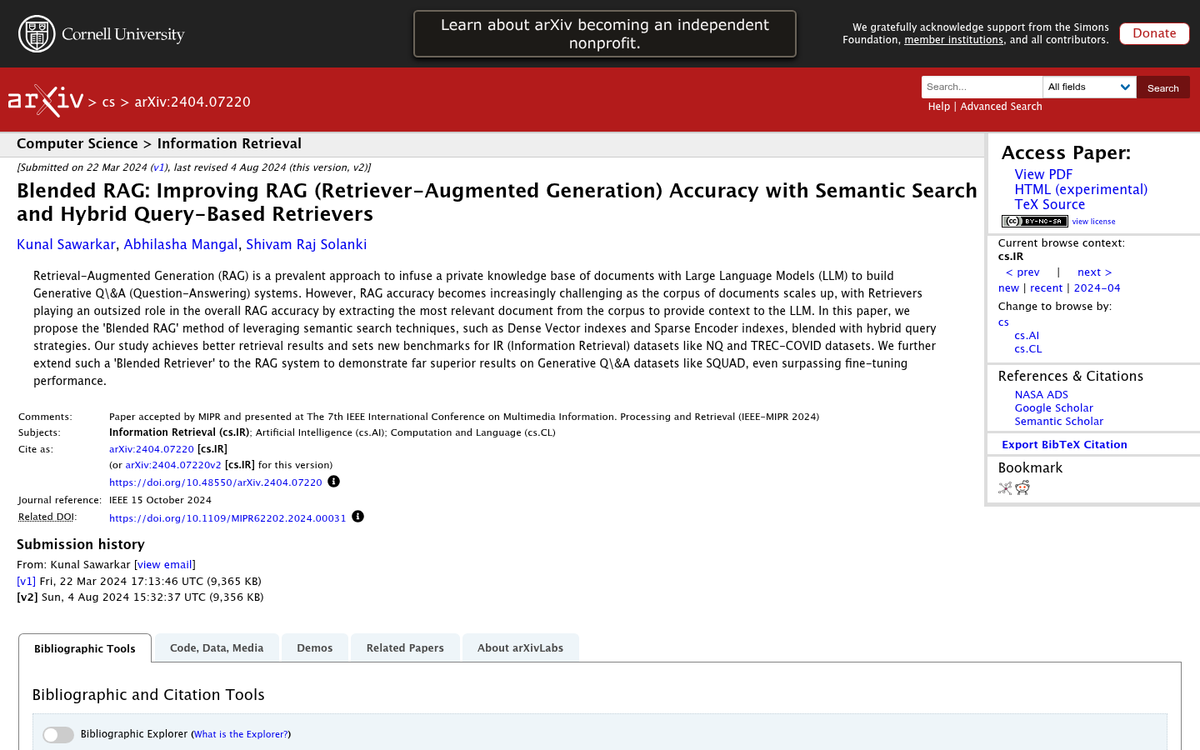
Both processes run in parallel against the same query, and each one returns its own ranked list of results. The system then needs to choose how to merge those two lists into one.
That merging step is where Reciprocal Rank Fusion, or RRF, comes in. RRF takes the position of each result across both lists and assigns a score based on rank instead of raw relevance scores. A document that ranks highly in both lists gets a strong combined score, but one that only performs well in one list scores lower. The final output is a new ranked list that draws on the strengths of both retrieval methods.
The reason this matters is that neither strategy is perfect on its own. Sparse retrieval can miss results that are relevant but use different vocabulary. Dense retrieval can sometimes surface loosely related content when a more precise answer exists. Running them together gives the system the accuracy of keyword matching and the flexibility of semantic search in a single pass. If you manage a blog and want to understand how search visibility works, it helps to know how to see who has liked and shared your blog post to gauge which content is actually reaching readers.
Different implementations tune the balance between the two differently. Some weight the dense results more heavily for open-ended questions and use sparse retrieval for technical or factual queries. The exact weighting can depend on the platform and the use case.
Why Hybrid Search Changes How AI Engines Choose Answers
AI-powered answer engines don't browse the web the way you might picture. Tools like Perplexity, Google AI Overviews, and ChatGPT with browsing use retrieval systems to pull content before they generate a response. Those retrieval systems run on keyword and semantic signals, which means the quality of what gets surfaced depends on satisfying both at once.
This is where things get consequential for anyone creating content. If a retrieval system can't match your page on a keyword level, it might not find you at all. If it finds you but can't interpret the meaning behind your content, it may pass you over for something more semantically coherent.
The research has proven this in a concrete way. A 2024 study published on arXiv, titled Blended RAG, tested a retrieval strategy that combined keyword and semantic search to feed content into AI-generated answers. It had an Exact Match score of 42.63 on the Natural Questions dataset - a 35% improvement over prior benchmarks. That's not a small margin, and it shows how much retrieval accuracy improves when signal types work together.
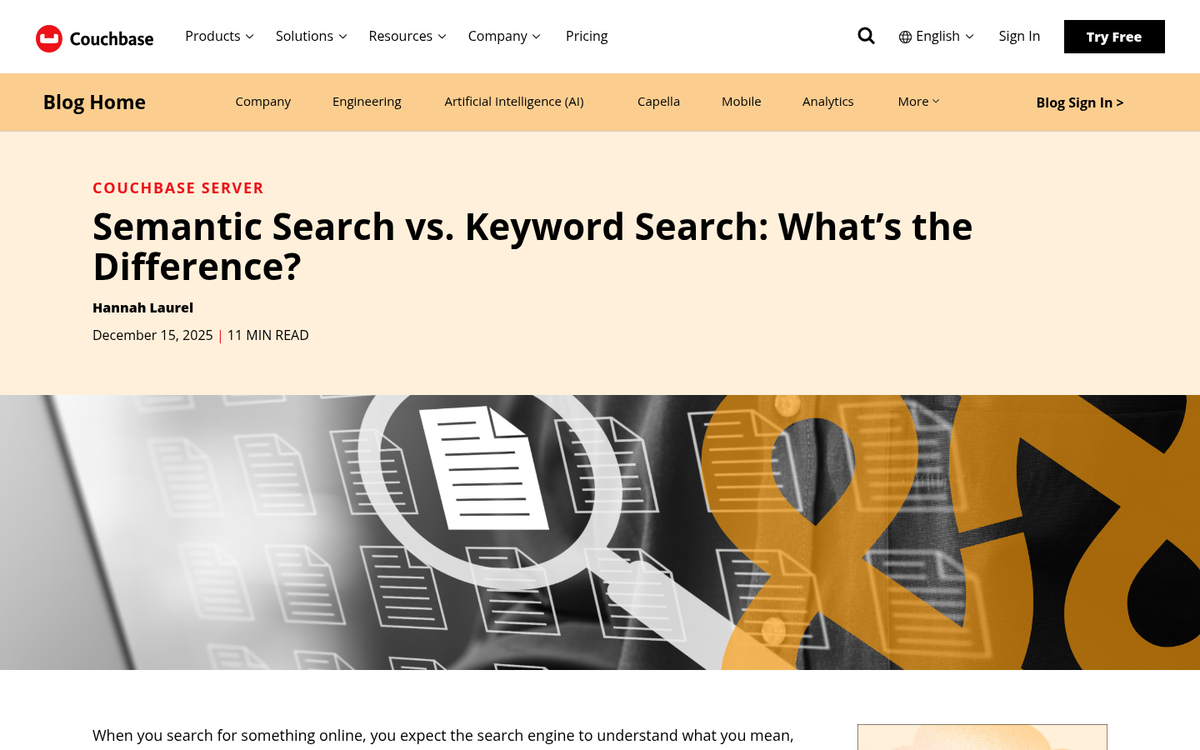
RAG stands for Retrieval-Augmented Generation, which is the core process these AI tools use to pull external content before writing an answer. The "blended" part is what matters here - it means the system doesn't rely on one type of signal alone to choose what's worth retrieving.
For your content to get pulled into an AI-generated answer, it needs to be retrievable on both fronts. A page that ranks well for a keyword but reads like a loose collection of sentences might not pass the semantic threshold. A page with rich, well-connected ideas but no keyword alignment might not get retrieved at all. One way to strengthen both signals is to properly combine older posts into deeper, more comprehensive resources rather than leaving related ideas scattered across separate pages.
This is also why generic optimization advice starts to fall short. Writing for keywords alone made sense when traditional search engines were the only audience. Now the retrieval layer powering AI answers uses a more layered evaluation, and content that only checks one box is easier to overlook.
Those are different questions, and the difference between them is where content falls through.
Keyword Signals vs. Semantic Signals - What Your Content Needs to Satisfy Both
Most website owners spend their time on one type of optimization without realizing it. They add keywords to headings, adjust title tags, and make sure phrases appear in the right density. That work matters. But it only speaks to half of what a hybrid retrieval system actually checks.
Sparse retrieval - the keyword side - looks for literal matches. It wants to see your exact phrase in the text, in a header, in metadata. Dense retrieval - the semantic side - works differently. It reads for meaning, context, and how ideas connect to each other across the whole page.
The table below breaks down what each system looks for so you can check your content against both.

| Signal Type | Sparse / Keyword Retrieval | Dense / Semantic Retrieval |
|---|---|---|
| Text matching | Exact phrase or term match | Conceptual similarity and intent |
| Page structure | Header tags (H1, H2, H3) | Logical flow and topical depth |
| Relationships | Co-occurrence of keywords | Entity relationships and context |
| Coverage | Term frequency across the page | Breadth of subtopics addressed |
A page can score well on keyword signals and still get passed over if the semantic layer finds the content shallow. The reverse is also true - rich, well-written content that skips the exact phrase a user typed can still miss the sparse match.
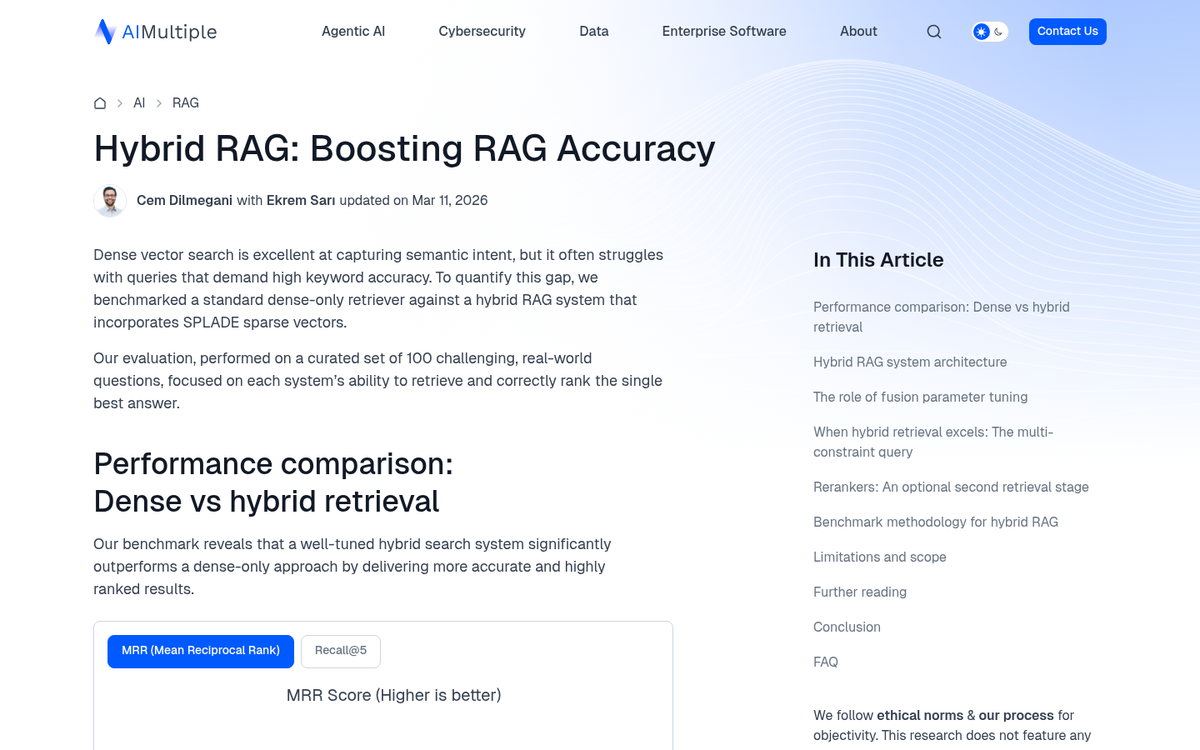
Both layers legitimately need attention. An AIMultiple benchmark found that hybrid systems improved Mean Reciprocal Rank by +18.5% and Recall@5 by +7.2% compared to dense-only systems. That gap exists because neither strategy alone retrieves the full range of relevant content.
Your content needs to name things and also explain them in depth. Use the terms users search for, and then build the surrounding context that shows an AI engine your page actually understands the topic. If you use WordPress, scanning your posts for spelling errors is a simple step that keeps both signal types clean.
Your content is writing for two readers at once. One is scanning for words. The other is reading to know what your page is about.
Hallucinations, Accuracy, and Why Retrieval Quality Protects Your Brand
AI doesn't copy your content verbatim - it interprets, compresses, and reconstructs. If your content is thin or loosely structured, that reconstruction can go sideways - and the wrong answer gets attached to your brand name.
A user who gets a bad answer from an AI-generated response doesn't usually blame the AI. They trace it back to the source, or they lose confidence in the whole result. In either case, your credibility takes a hit.
There's research to point to here. A 2024 study by Xu et al. tested a hybrid retrieval strategy called Dual-Pathway KG-RAG on biomedical question-and-answer tasks and found an 18% reduction in hallucinations compared to single-path retrieval methods; it's an actual drop, and it came from combining structured knowledge graph retrieval with semantic retrieval - not from rewriting the underlying content. But from retrieving it more accurately.
The lesson for website owners is direct. Content that's well-structured and semantically rich gives retrieval systems more to work with. When a system can map your content to an idea, it's less likely to fill in gaps with invented facts. Gaps in your content are where hallucinations like to start.

"Semantically rich" has a concrete meaning in practice - it means your content says what it means in full sentences, uses related terms naturally, and doesn't leave big conceptual holes between ideas. A page that defines a term, explains the context, and addresses the most obvious follow-up questions gives a retrieval system a much cleaner signal to work from.
Structured content factors into this as well. Clear headings, steady terminology, and logical flow all make it easier for a retrieval system to know where one idea ends and another begins. When content is fragmented or vague, the system has to guess - it's where accuracy breaks down. If you're promoting a new WordPress blog, getting this structure right from the start makes a real difference.
The connection between retrieval quality and brand protection is worth taking seriously. If AI tools are going to represent your content to users, the accuracy of that representation depends heavily on how retrievable and interpretable your content is. You have more control over that than it might feel like you do.
How to Audit Your Site's Content for Hybrid Retrieval Readiness
A quick audit gives you an honest look at whether your pages work for sparse and semantic retrieval - and most sites have a problem with one or the other.
The two most common failure modes are easy to find. Some sites are so stuffed with repeated keywords that semantic engines have a hard time extracting meaning from the noise. Others are written so conversationally and loosely that sparse retrieval systems can't find a signal at all.
Let's talk about what to check on your most important pages.
- Keyword clarity. Are your target terms present and written out in full? Synonyms or shorthand won't carry the load on their own.
- Semantic depth. Does the page answer related questions a reader might have? Does it mention relevant entities like brands, locations, or people that give context to the topic?
- Natural language. Read the content aloud. If it sounds robotic or repetitive, semantic models will likely struggle to extract coherent meaning from it.
- Page structure. Are there descriptive headers that break up the content logically? A flat wall of text is hard for any retrieval system to parse.
- Schema and FAQs. Is structured data in place? FAQ sections in particular help retrieval systems match your content to question-style queries. You can use an AEO readiness checklist to make sure nothing is overlooked.
You don't need a tool to start this process. Open your top ten pages and read them as if you've never seen the topic before. Ask yourself if you could walk away with an answer after reading just that page.
Watch for pages that rank well in traditional search but don't get pulled into AI-generated answers. That gap is a reliable sign that the content has keyword strength but doesn't have enough semantic richness that dense retrieval systems look for.
The opposite is worth checking too. Pages that feel well-written but get little organic traffic may be semantically strong and sparse-weak - they use natural language well but don't signal their core topic enough for keyword-based systems to rank them.
Document what you find in an easy spreadsheet with columns for keyword clarity, semantic depth, structure, and schema. You don't need a score - just a note on what's missing. That list can become your starting point for the next section.
Structural and On-Page Tactics That Feed Both Retrieval Systems
Hybrid retrieval setups use two retrieval systems that have different preferences, so your content needs to serve both at once. Sparse retrieval responds well to direct, keyword-present answers placed near the top of a section. Dense retrieval prefers natural language variation and topically rich content that builds meaning across sentences.
Put your clearest, most direct answer in the first one or two sentences of any section - this gives sparse retrieval something to latch onto immediately and cuts back on the work the system has to find relevance. Less parsing work matters more than you might expect - AIMultiple benchmarking found that hybrid systems add roughly 201ms per query, a 24.5% increase in latency compared to single-strategy retrieval. Content that's easy to parse helps close that gap.
After your direct answer, build out the surrounding paragraph with natural language variation. Use synonyms and related terms to phrase the same idea - this feeds dense retrieval and helps your content get pulled for semantically related queries that don't use your exact wording.
Build Topical Clusters Around Core Questions
A single well-written page only goes so far. To build topical depth, create clusters of pages that each cover an angle of your main subject and link back to a central hub - this structure lets dense retrieval follow actual connections between pages and builds the contextual weight that helps your content rank for wider query patterns. If you've changed a blog URL while restructuring your content clusters, make sure your internal links are updated to preserve that authority flow.
Each cluster page should still lead with a direct answer at the top. Depth and directness work together here - you can do both in the same piece.
Use FAQ Schema to Give AI a Discrete Handle
FAQ schema is one of the most helpful tools you have for hybrid retrieval - it wraps common questions and answers in structured markup that AI systems can read as self-contained units, making it much easier for retrieval tools to extract a clean answer without having to interpret a wall of prose. If you're running WordPress, reviewing whether your tag pages add value is worth doing before you invest heavily in schema markup.
Keep each FAQ answer focused on one idea and write it as a complete thought. A two-sentence answer that stands alone is far more helpful to a retrieval system than a paragraph that drifts across multiple points.
| Tactic | Helps Sparse Retrieval | Helps Dense Retrieval |
|---|---|---|
| Direct answer at top of section | Yes | Somewhat |
| Natural language variation | No | Yes |
| Topical cluster structure | Somewhat | Yes |
| FAQ schema markup | Yes | Yes |
Making Your Content a Source AI Actually Wants to Cite
Optimizing for search and AI visibility without addressing both leaves visibility on the table. Here is where to start this week:
- Audit your content for semantic gaps. Pick your three most important pages and ask whether they thoroughly cover the topic - not just the target keyword. Add context, define related concepts, and answer follow-up questions a curious reader might have.
- Sharpen your exact-match signals. Review title tags, headers, and opening paragraphs. Make sure the specific phrases your audience uses appear clearly and naturally - AI retrieval systems still anchor on precise language when matching factual queries.
- Structure answers explicitly. Write in direct, quotable sentences. If your content answers a question, say so plainly before elaborating. Hybrid retrieval favors passages that are self-contained and easy to extract.
None of this is going to need a full site overhaul. Start with the content you already have, tighten it up with signal types in mind, and build from there. The sites that show up in AI answers are not necessarily the biggest - they are the ones that made it easy for the retrieval layer to find them, trust them, and use them.
FAQs
What is hybrid search?
Hybrid search combines two retrieval methods - sparse keyword matching and dense semantic search - to find the most relevant content. Running both simultaneously helps AI systems surface better results than either method could achieve alone.
How does hybrid search affect AI-generated answers?
AI tools like ChatGPT and Perplexity use hybrid retrieval to find content before generating responses. If your content doesn't satisfy both keyword and semantic signals, it may be skipped entirely, even if it's high quality.
What is the difference between sparse and dense retrieval?
Sparse retrieval matches exact keywords, while dense retrieval uses vector embeddings to understand meaning and intent. Together, they compensate for each other's weaknesses and improve overall retrieval accuracy.
How can I optimize content for hybrid retrieval?
Use your target keywords clearly in headers and opening sentences, then build surrounding context with natural language variation. Adding FAQ schema and organizing content into topical clusters also strengthens both retrieval signals.
Does hybrid search help reduce AI hallucinations?
Yes. Research found hybrid retrieval reduced hallucinations by 18% compared to single-path methods. Well-structured, semantically rich content gives retrieval systems cleaner signals, leaving less room for AI to fill gaps with invented facts.