




For website owners focused on Answer Engine Optimization, this distinction matters more than ever. AI-powered answer engines like ChatGPT, Gemini, and Perplexity are trained to read, interpret, and surface unstructured content. That means the way you write your paragraphs, frame your explanations, and put together your prose directly influences whether an AI pulls from your site - or someone else's.
The good news is that unstructured data isn't a liability. When handled intentionally, it can become one of your strongest assets for AEO. This post will talk about what unstructured data actually looks like on a common website, why AI systems use it the way they do, and what helpful steps you can take to make your content more legible - and citable - to the AI tools your audience is already using.
Quick Answer
Unstructured data is information that lacks a predefined format or organization, making it difficult to store and analyze in traditional databases. Examples include text documents, emails, social media posts, images, audio, and video files. Unlike structured data, which fits neatly into rows and columns, unstructured data requires specialized tools like natural language processing (NLP) or machine learning to extract meaning. It accounts for roughly 80-90% of all data generated today and is increasingly valuable for business intelligence, sentiment analysis, and AI applications.
How Unstructured Data Differs From Structured and Semi-Structured Data
Data broadly falls into three categories, and where something sits in that lineup determines how easy it is for a machine to read and use. Structured data is the most rigid of the three - it lives in rows and columns - think spreadsheets, SQL databases, or anything you could sort and filter without much effort.
Semi-structured data sits in the middle. Formats like JSON and XML have some built-in organization, like tags or key-value pairs. But they don't have the strict layout of a relational database. A machine can parse them, but it needs to know the format first.
Unstructured data has none of that built-in order. A Word document, a podcast episode, a customer review, or a photo doesn't have labels that tell a machine what each part means. The information is there - it just isn't arranged in a way that's easy to extract automatically.

| Type | Format | Examples | Machine Readability |
|---|---|---|---|
| Structured | Fixed rows and columns | Spreadsheets, SQL databases, CRM records | High - easy to query and process |
| Semi-structured | Flexible but labeled | JSON, XML, email headers, HTML | Medium - readable with the right parser |
| Unstructured | No fixed format | Documents, images, audio, video, social posts | Low - needs interpretation, not just parsing |
The distinction matters because the tools built to manage structured data don't translate well to unstructured content. A database query can pull a phone number from a column in seconds. Getting that same phone number from a scanned PDF or a voice recording is a much harder problem.
That gap in difficulty is what makes unstructured data a separate challenge for AI systems - and why the way those systems manage it deserves a look. Understanding how content is organized also matters in publishing contexts, such as when you're automatically injecting ads into WordPress posts based on content structure.
Why AI and Answer Engines Struggle to Read Unstructured Data
Machines are good at reading data when it comes with labels. A spreadsheet tells a system what each value means because the column headers do that work. Unstructured data doesn't have those labels, so an AI has to figure out the meaning from context alone.
That's harder than it sounds. A paragraph of text doesn't tell a machine which part is the main point and which part is a supporting detail. There's no built-in hierarchy to follow and no field names to anchor the meaning. The AI has to interpret it, and interpretation leaves room for error.
Answer engines like Google's AI Overviews or Perplexity work by pulling information from web content and presenting it as a direct answer. To do that well, they need to know what a page is actually saying. When content doesn't have enough structure or context, those systems have less confidence in what they're reading and are less likely to pull from it.
This is worth taking seriously because unstructured data is growing fast. IDC found that unstructured data is expanding at a 61% compound annual growth rate. That means the gap between how much unstructured content exists and how well we can manage or index it keeps getting wider.
For website owners, this creates a visibility problem. If an AI system can't extract a confident answer from your content, it's unlikely to cite your page as a source. A competitor with cleaner, better-organized content has a real advantage even if your underlying knowledge is stronger. This is part of why engagement metrics don't always reflect how well your content actually performs in search.
The core problem is that unstructured data puts the interpretive work on the machine. Structured data does some of that work in advance, giving information a shape that systems can follow. Unstructured content is rich and flexible for human readers but gives machines very little to hold onto.
That difference between human readability and machine readability is where websites lose ground with AI-driven search tools. Understanding how to structure content for discoverability has never mattered more than it does now.
The Types of Unstructured Data Your Website Likely Already Has
Most website owners are sitting on more unstructured data than they realise - it's neither interesting nor unusual - it's the things that make up the bulk of most sites.
Blog posts are one of the most common examples. They're full of helpful information. But that content lives in long blocks of free-form text with no steady structure for an AI to latch onto. The same goes for product descriptions, landing page copy and FAQ sections that weren't built with machine readability in mind.
Customer reviews are another big one. They're written in natural language, they can vary in length, and they don't have a predictable format. An AI trying to extract an answer from a wall of user-generated opinions has to work quite a bit harder than it would with a clean data table.
Then there's images and videos. A photo of a product tells a human quite a bit at a look. But without supporting metadata or a text description, it tells an AI almost nothing. Videos are similar - the spoken content inside them is largely invisible to crawlers unless you've added transcripts or captions.
PDFs are worth a mention too. Many businesses upload brochures, guides and spec sheets as PDFs without thinking twice about whether that content is readable by search or AI systems. A lot of the time, it isn't.

Chat logs and support transcripts round out the list. These files are filled with customer language and genuine questions, which makes them mighty helpful for AEO. But in their raw form, they're just walls of unstructured dialogue.
To put a number on how widespread this is: a 2024 report from Komprise found that nearly half of businesses store more than 5 petabytes of unstructured data - it's a staggering volume, and it's growing.
It's worth doing a quick audit of your own site. Think about every file type and content format you publish - there's a chance more of it's unstructured than you'd expect. If your site runs on WordPress, revisiting your older blog posts is a good place to start.
How Poor Unstructured Data Quality Hurts Your AEO Performance
Poor unstructured data quality actively works against you when AI systems try to pull answers from the web.
AI engines that generate direct answers need to extract clean, readable information from a page. If your content is buried in walls of text, hidden inside unsearchable PDFs, or scattered across inconsistent page structures, those systems will pass over it. They won't have a hard time interpreting your content - they'll just move on to something cleaner.
The scale of this problem at a wider level is hard to ignore. The US economy loses an estimated $3.1 trillion every year from poor data quality. That number comes from problems at every level. But the website level is where it starts for businesses. Content that AI can't read is content that doesn't give you visibility.

There's also a security angle worth learning about. Research from Varonis found that 21% of all data has no protection at all.
Every part of content on your site is either helping AI or it's creating noise. Duplicate pages, vague headings, long unbroken paragraphs, and outdated information all make it harder for AI to find your content as a reliable source. For example, a popup on your blog posts can disrupt the experience AI crawlers and users both rely on.
AEO performance is tied directly to how confidently an AI system can extract an answer from your content. If your FAQ section is formatted inconsistently or your product descriptions contradict each other across pages, that confidence drops fast. Even decisions like using an infinite scroll plugin can affect how well your content gets indexed and read.
A lot of sites have information trapped inside formats or structures that AI can't work with well. The content exists - it's just not accessible in the way AI-generated answers need it to be. The honest question is whether your site's disorganization is getting in the way of AI finding and using what you've published.
Structuring Unstructured Data So AI Can Actually Use It
The goal here is simple: give AI a clean signal to pull from when it forms an answer. Right now, content is technically published but practically invisible to answer engines because there's no structure to guide interpretation.
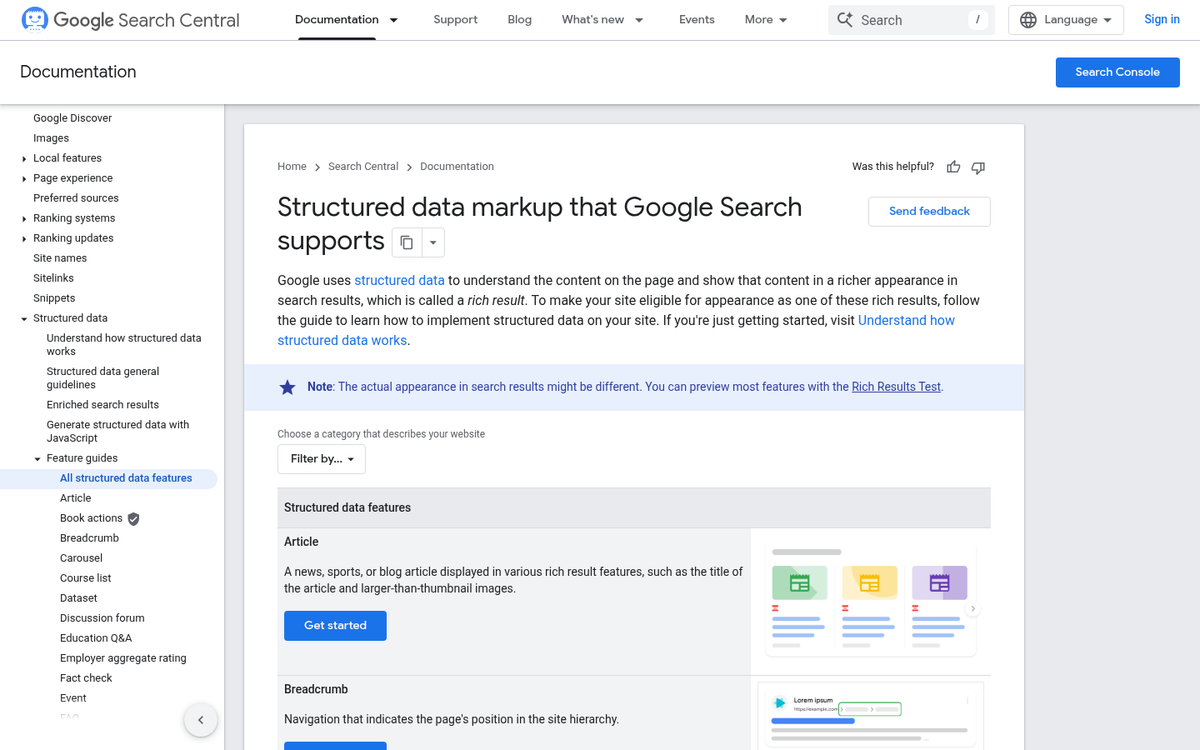
Schema markup is one of the most direct ways to fix this. Adding schema to your pages tells search engines and AI systems what a piece of content is - a product, a FAQ, a how-to guide, a review - it removes guessing and makes your content far more likely to get picked up as a direct answer.
Images are another area worth attention. AI can't read a photo, so descriptive alt text is the only way to communicate what an image contains. Write alt text like you're describing the image to a person who can't see it - be specific and keep it short.
Videos and audio content have the same problem at a bigger scale. A transcript turns spoken content into readable, indexable text that AI can process. Even a rough transcript is more helpful than none at all.
Adding metadata - a title, subject, author, and language tag - gives AI the context it needs to interpret and use the content inside PDFs that might otherwise be ignored.
For long-form written content, headings do the work. A well-structured post with descriptive H2s and H3s is much easier for AI to scan and extract answers from than a wall of text with no hierarchy. If you're working in WordPress, knowing how to customize your blog's presentation can also help signal content hierarchy more clearly to both readers and AI systems.
| Content Type | Recommended Structuring Method |
|---|---|
| Web pages | Add schema markup relevant to the content type |
| Images | Write specific, descriptive alt text |
| Videos and audio | Publish a text transcript alongside the content |
| PDFs | Tag with metadata including title, language, and subject |
| Long-form articles | Use descriptive headings to create a clear content hierarchy |
None of these changes are tough on their own. The value comes from doing them across your content library.
Prioritizing Which Unstructured Data to Optimize First
Not all unstructured data is worth the same effort to fix. IDC research found that 40% of tech spend goes toward unstructured data management, so this is a resource question as much as a technical one.
The smartest place to start is with content that already gets traffic. If a page or document is pulling in visitors but isn't structured well enough for AI to read and use, that's a quick win with payoff. You're not building from scratch - you're making something that already works, to be more helpful.
Next, look at what your audience is actively looking for. Content that answers questions is the most likely to get picked up by AI-powered search tools, so it deserves to move up the priority list. Think about FAQs, how-to guides, and product explanations that sit in PDFs or buried web pages.
Then see what's closest to being AI-readable with minimal effort. Some content needs cleaner headings or a bit of restructuring to become usable. One approach worth considering is combining old posts into new, more comprehensive resources rather than updating each one individually.
A helpful way to approach it is to sort your content into three buckets.
| Bucket | What it includes | Why it matters |
|---|---|---|
| Quick wins | High-traffic content that needs light restructuring | Fast results with low effort |
| High intent | Content answering active search questions | Strong AI discoverability potential |
| Longer investment | Dense or outdated content needing a full rework | Worth doing, but plan for it properly |
A small, focused start beats trying to fix everything at once, and each piece of content you optimize builds on the last, and those small steps compound into something more helpful over time.
Make Your Content Legible Before AI Moves On Without You
The shift toward Answer Engine Optimization is not a new spin on keywords - it's a fundamental change in how machines evaluate expertise. Clarity wins. Structure wins. Content that directly and cleanly answers a question wins. If your pages are dense walls of text with no schema, no hierarchy and no logical flow - even the best-written content risks being passed over entirely.
The best place to start is small. Pick one content type this week - a FAQ page, a blog post, a product description - and ask yourself: Could an AI read this and extract a confident answer? If the answer is no, that's your starting point. Audit it, restructure it and mark it up. You don't need to overhaul everything at once. Progress on one page is still progress and every piece of content you clarify brings you one step closer to being the source that answer engines recommend.
FAQs
What is unstructured data on a website?
Unstructured data includes blog posts, images, videos, PDFs, and customer reviews - content without a fixed format that machines cannot easily parse without interpretation.
Why do AI answer engines struggle with unstructured content?
AI systems need labeled, organized information to extract confident answers. Unstructured content has no built-in hierarchy, forcing AI to interpret meaning from context alone, which increases the chance of errors or being skipped.
How does poor unstructured data hurt AEO performance?
If your content is buried in walls of text or unsearchable PDFs, AI answer engines will skip it in favor of cleaner, better-organized sources - even if your underlying knowledge is stronger.
What is the best way to structure unstructured content?
Use schema markup, descriptive alt text for images, transcripts for video and audio, metadata for PDFs, and clear heading hierarchies for long-form articles to make content machine-readable.
Where should I start optimizing unstructured data first?
Start with high-traffic content that already draws visitors but lacks AI-readable structure. FAQ pages, how-to guides, and product descriptions are high-priority targets for quick, impactful improvements.