Key Takeaways
- Targeting multiple micro-influencers instead of one macro-influencer often delivers equal reach with stronger engagement and lower cost.
- Bulk outreach still requires personalization; sending generic mass emails risks being marked as spam and damaging influencer relationships.
- AI tools now automate discovery, email drafting, and follow-up sequencing, saving marketers 8-15 hours weekly on outreach tasks.
- Engagement rate matters more than follower count; a small, highly engaged audience typically converts better than a large passive one.
- Long-term influencer partnerships are more cost-effective; 71% of influencers offer discounts for ongoing collaborations over one-off campaigns.
Who needs to be popular to get their posts seen by a huge audience? The answer is: not you. You can be a small business with an audience of 10,000 on Facebook and you can reach millions if you play your cards right; it's what influencer outreach is all about. This blog might not have a massive readership, but you can bet that people will see this post if someone like Neil Patel shares it.
Of course, the chances of Neil Patel sharing this particular blog post are pretty slim. He might share one or two from this blog. But unless we have a more mutually helpful relationship going on, my content is going to need to be exceptional to get him to share. He's a majorly popular influencer in the niche; of course he's going to have limited brainspace - and limited social feed space - to use for this.
That's why what you need is bulk influencer outreach. You don't target the Neil Patels of your industry. You target anyone and everyone with a blog or social presence in your industry, anyone who could be interested in reading your content. Maybe you can't get the attention of the one guy with an audience of 6,000,000 people, and that's fine. According to Grin's 2025 Influencer Marketing Report, 67% of successful campaigns used micro-influencers - not the big names at all. If you can get the attention of 12, each with an audience of 500,000, you reach the same number as one macro-influencer, usually with stronger engagement and trust. You start off with 12 shares instead of 1, which makes the bigger names far more likely to take notice too.
The math works out financially as well. Instead of paying one macro-influencer $10,000 for a single mention, you can work with 20 nano-influencers at around $250 each for a total of $5,000 - and frequently see better results. Businesses earn an average of $5.78 for every dollar spent on influencer marketing, so your budget allocation right from the start matters enormously.
Bulk influencer outreach is tough to get right. The problem you might have is determining which posts should be shown to which influencers. You basically can't make a list and treat it like a content digest mailing list. If you're telling influencers every time a piece of your content goes live, you're not performing influencer outreach. You're spamming their inboxes with unwanted content that doesn't have an unsubscribe link. That can get you in trouble according to the CAN-SPAM Act, which regulates what sort of email messages you can send out.
Think of it this way. Frequently sending messages to influencers isn't necessarily going to win their attention, and if it does, it's just as likely to be negative attention. Despite the name "bulk outreach," it's very much a matter of quality over quantity.
The process of influencer outreach is fairly straightforward.
- Identify a relevant influencer.
- Identify contact information and key topics for that influencer.
- When you publish a blog post, check to see if it meets the criteria for something that influencer might be interested in.
- If so, create a message to send to that influencer that notifies them of the publication of the content.
- Monitor the response you get from that influencer.
Different influencers will respond differently to different pieces of content. Many will ignore emails and messages entirely. Some will send polite but formulaic replies: "Thanks for bringing this to my attention, I'll definitely check it out." Some will respond more favorably and in detail. Some will respond in a negative way, asking you not to message them again, though this is rare. Some will share your post without having responded to you.
Whatever their response, you want to note it down. Determine if they're receptive to your outreach, if they're resistant to it, or if they ignore it entirely. In every case, make sure that you've sent them an interesting post, because you won't be contacting that influencer again immediately; it's what I mean by staying away from spam, and that's why you'll have to build a bulk list of influencers.
You can see why that process can be tough and time-consuming at any volume. You have to find influencers, harvest information about them, and choose which blog posts should be shared with which influencers - it's a bit of an initial investment and data tracking on a regular basis. That said, AI-powered outreach tools have changed this dramatically - more on that shortly.
What tools and options do we have, for free or for a minimal fee, that smooth along this process? Let's get started.
Identifying Influencers
To an extent, you'll know and be aware of influencers in your industry. If nothing else, you'll know the sites where they reside. Nobody in web marketing or SEO can get away with not learning about Ahrefs, HubSpot, Moz, Search Engine Journal, Search Engine Land, and other sites. When you look a little closer, you'll see authors who write for a few of these sites. These will be your highest tier of influencers, the big names that show up everywhere.
That's the easy part. The hard part is recognizing the sites and authors who aren't quite at that level. They're less prominent and less popular. But they're simultaneously less buried under unsolicited messages and less likely to ignore your messages. There might even be some influencers you aren't aware of, because they're only influential on a platform you don't actively use - LinkedIn, TikTok, or a niche subreddit community.
So, what tools can we use to find and codify these influencers?
- Traackr - This tool is specifically designed to help you discover influencers and build relationships with them. It also has tracking tools to help you pin down exactly how much a link or mention from a specific influencer is helping, in a tangible way. Pricing is enterprise-level and requires a custom quote, so it's best suited to brands with a serious budget. If that's you, it's one of the best options available. If not, read on.
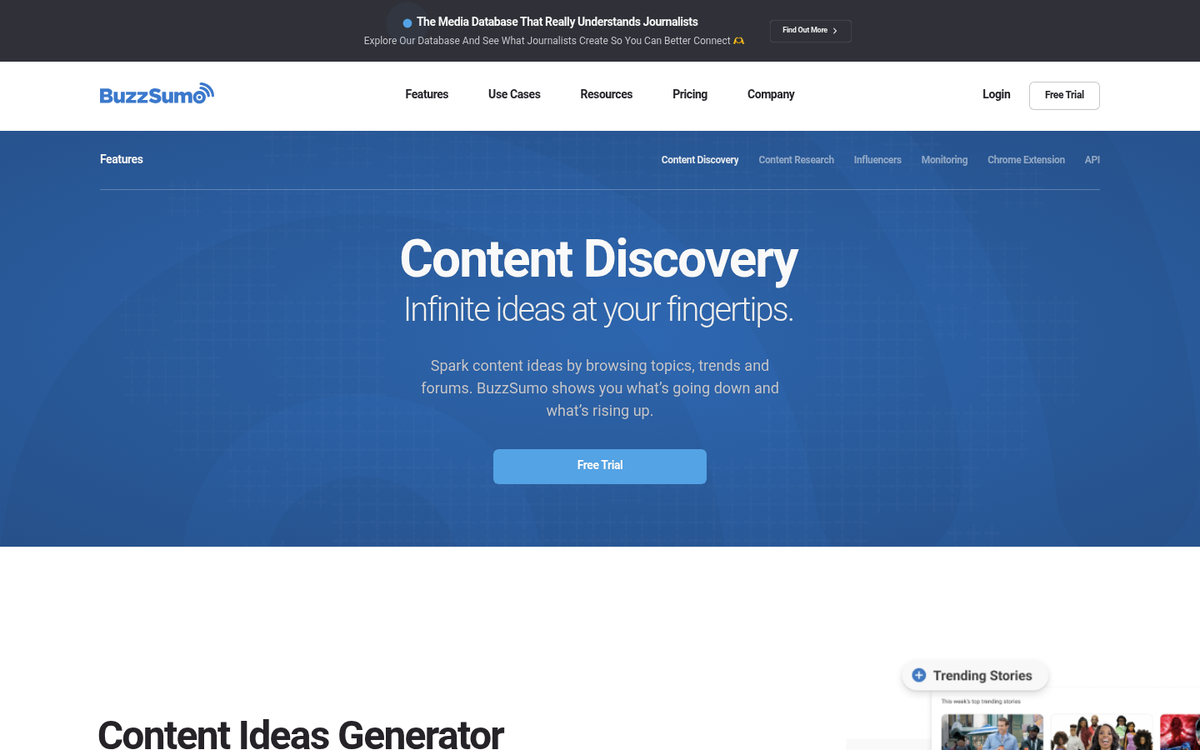
- BuzzSumo - Still one of the most reliable tools in the space. You plug in keywords and it surfaces high-profile content, influencers, trends, and key domains in your niche. The free tier gives you a taste, but the Pro plan (currently around $199/month) is where the real influencer data lives. Worth it for a month or two of intensive research.
- Modash - A strong option for finding micro and nano influencers across Instagram, TikTok, and YouTube. It lets you filter by audience size, engagement rate, location, and niche. Plans start at around $299/month, but the search capabilities are genuinely impressive for bulk discovery.
- Heepsy - A more budget-friendly influencer discovery tool with plans starting around $69/month. Good for smaller businesses who need a solid database without enterprise pricing.
- TikTok Creator Marketplace - Completely free to access if you have a TikTok Business account. With TikTok's cost-per-engagement sitting at just $0.27 according to Aspire's 2024 State of Influencer Marketing report, it's one of the most cost-efficient platforms for outreach right now and should not be overlooked.
- LinkedIn Search + Sales Navigator - Often underused for influencer discovery, but incredibly powerful for B2B outreach. If your audience is other businesses or professionals, LinkedIn influencers frequently outperform Instagram or YouTube counterparts in terms of conversion quality.
Using these tools - especially BuzzSumo and Modash - can get you a picture of who the influencers are in your niche, at every tier from nano to mega.
Here's a trick. All of these plans with monthly fees? You don't need more than one or two months, depending on how much you can accomplish in a short time frame. If you're operating on a tight budget, you're going to be keeping track of data on your own, likely in a spreadsheet; it's fine. As always, it's a choice between spending money and spending time. Buy one of these products for a month or two, harvest the data you need, then cancel. If you're efficient about it, you can get most of what you need within the first few weeks.
One other source of information you can use is looking at the other blogs and accounts followed by the people who already follow you. Send out a poll in your newsletter or on social media and ask for suggestions - your existing fans will happily point you toward the content creators they trust most.
How AI Has Changed the Outreach Process
This section wouldn't have existed a few years ago. But it needs to. AI has fundamentally changed how bulk influencer outreach works - and if you're still doing everything manually, you're leaving time and money on the table.
AI-powered tools can now manage influencer discovery, personalized email drafting, follow-up sequencing, and response tracking with minimal manual input. According to recent data, this automation saves marketers 8 to 15 hours per week that would otherwise be spent on repetitive outreach tasks. For a small business or solo marketer trying to run bulk outreach on a budget, that's significant.

Let's talk about what AI is currently being used for in outreach workflows:
- Discovery and scoring - AI tools can analyze engagement rates, audience authenticity, content relevance, and historical performance to score influencers automatically. Tools like Modash and Traackr have built this into their platforms.
- Personalized email generation - Instead of writing individual emails from scratch, AI can pull in data about each influencer (their recent posts, audience size, content style) and generate a personalized outreach message in seconds. Tools like Clay, Instantly, and even custom GPT workflows are being used for this.
- Follow-up sequencing - AI-driven email tools can automatically schedule and send follow-ups based on whether an influencer opened, clicked, or replied, without you lifting a finger.
- Performance tracking - Once an influencer does engage with your content, AI tools can track downstream traffic, conversions, and engagement to help you calculate ROI per influencer relationship.
You don't need a big budget to take advantage of this. Tools like Instantly and Apollo give you AI-assisted outreach starting at pretty modest price points, and pairing them with a ChatGPT or Claude subscription for message drafting can dramatically accelerate your workflow without a massive spend.
The caveat? AI-generated outreach that isn't reviewed and personalized still reads as AI-generated outreach. Influencers receive cold messages, and a robotic, templated email - even a well-written one - will get ignored. Use AI to manage the structure and the research. But make sure a human touch is present in the final message.
Harvesting Contact Information
Unfortunately, there's no magic shortcut for pulling in accurate contact information for your influencers. You'll need to take your list of names and fill in the relevant facts - email address, website contact form or tip line, and which DM platform they prefer. Most influencers list a business email in their social bios specifically for brand partnerships, so start there.
Another important point of information to write down is an estimation of the reach and engagement these influencers generate. What sort of traffic do their blogs get? What are their average social engagement rates? Do their followers actually interact, or is the audience largely passive? Engagement rate matters far more than raw follower count - an influencer with 20,000 very engaged followers in your niche will usually outperform one with 500,000 disengaged followers.
An influencer with a small reach is still an influencer, and that's also the case if their audience is quite interested in your brand but unaware that you exist. These can be more helpful than some of the bigger names, because the traffic is more targeted - it won't have the same volume, but it will be more likely to convert into readers, leads, or customers.
It is at this point that you'll have some decisions to make. One of these choices is what you might offer as an incentive or as compensation for influencer shares. The good news here is that longer-term partnerships tend to be cheaper than one-off campaigns. According to the Sprout Social 2024 Influencer Marketing Report, 71% of influencers offer discounts for longer-term partnerships, and another 25% would consider doing so. If you're planning ongoing outreach, lead with the relationship instead of a one-time transaction - it's better for both sides.
Beyond monetary compensation, you can offer social shares and links in exchange, product access, giveaway sponsorship, affiliate commissions, or co-created content opportunities. The key is to match what you offer with what actually matters to that influencer. Some want money. Some want product. Some just want great content their audience will love.
You will also need to choose how to message each influencer. Save your true bulk simultaneous outreach for the content you're trying to push - a new product launch, a high-profile piece of research, an infographic, or a big resource like an e-book. You don't want to burn any individual relationship through over-messaging, which is why building a large list of influencers matters.
Contacting Influencers
I'm not going to give you a form letter or a mass email blast to copy and paste. That way lies spam, and spam gets you blocked, reported, and ignored. Instead, here are the principles that make outreach messages actually work in 2026.
Creating an outreach message needs to be a personalized experience, because it should reflect your existing relationship with the influencer, how their audience overlaps with your content, what you're asking of them, and your brand voice. Generic messages get deleted. Messages that reference a piece of their content, acknowledge their audience, and explain why this particular post would legitimately interest their readers - those get replies.

There are ways to reach an influencer other than email. Using the same platform they're most active on, start to connect with and communicate with them before your outreach. Reply to posts, start conversations, leave legitimately helpful comments. Your goal is for them to recognize your name when you send them a message. Cold outreach from an unknown entity is a much harder sell than a message from a person who already feels familiar.
Scale the effort you put into relationship-building relative to the influencer's value to your campaign. Put more time into the top-tier targets, and use AI tools so you can manage the outreach workflow for the wider list - that's where combining human relationship skills with AI efficiency pays off. For a broader look at tips that actually build traffic, it's worth reviewing what works beyond influencer outreach alone.
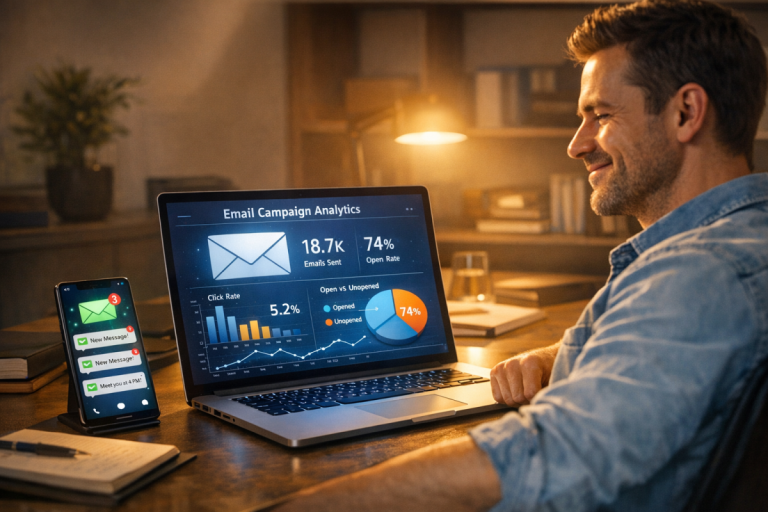
For handling your outreach at volume, you can use a purpose-built tool. Platforms like Instantly, Apollo, or a well-configured HubSpot sequence will give you far more control, visibility, and deliverability than sending messages from a personal inbox ever will. Track open rates, response rates, and follow-up timing so you can refine your strategy over time. Once you've published and reached out, knowing how to email bloggers after you publish can help you close the loop effectively.
Additional Outreach Tips
These are tips that help you along the way, but which aren't categorized elsewhere - or are important enough to call out on their own.
- Remember that just because someone is an influencer to you doesn't mean you're not an influencer to them. An influencer relationship can be two-way, and the best partnerships are built on genuine mutual value.
- Remember that time is valuable - AI tools exist precisely to help you reclaim it. Automate the repetitive parts of your outreach and use the time you save on actual relationship building.
- Make sure you provide the influencer with everything they might need to share your post - links, images, short captions they can use, key stats, even a short video if relevant. Make it effortless for them to say yes.
- When an influencer promotes your content, do your part. Reshare, comment, and amplify their mention across your own channels to give it additional traction and show them you're a real partner, not just someone who disappears after the mention goes live.
- Think about platform fit. In 2026,