Key Takeaways
- AI tools like ChatGPT and Google AI Overviews summarize content directly, reducing organic click-through even for well-ranked posts.
- Email newsletters dramatically outperform social media for driving traffic; one email generated 15,278 visitors versus 2,153 from three social posts combined.
- Repurposing blog content into videos, infographics, and podcasts extends reach across multiple platforms with minimal additional effort.
- Original research and data studies remain one of the most reliable ways to earn natural inbound links in 2026.
- Updating outdated content significantly boosts traffic; Backlinko saw a 25.71% increase, equal to over 410,000 additional visitors annually.
I'm tired of the same old analogy about Field of Dreams. Everyone references the "if you build it they will come" line and then tells you it's not true. Right, we get it - but that analogy is pushing 37 years old now, and the community has changed so dramatically that we need a new conversation - it's that AI tools like ChatGPT, Perplexity, and Google's AI Overviews are actively summarizing content and handing answers directly to users, meaning even well-ranked blog posts are seeing less organic click-through than ever before.
Still, the core truth stands: blogs need promotion, exposure, and circulation. If you don't give them fuel, they can't light up. The difference now is that the fuel has changed. The channels have shifted, the algorithms have evolved, and the strategies that worked in 2016 may actively hurt you.
What you need is a current, comprehensive set of blog promotion strategies. Places to share, methods to use, tools to run; it's what I'm compiling here - as thoroughly as I can, so you have plenty of options.
Most of these are general enough that they will apply to any blog. But some won't work for you; it's okay! You don't need to put every one of them to use. Just do as many of them as you can without spamming, wearing yourself out, or over-saturating your market.
Without further ado, here are our favorite and most helpful blog post promotion tips to increase your traffic:
Producing Great Content
These tips are all about the foundation of your blog: your content. If you don't have great content, you can't bring in traffic and you can't get readers to stick around.
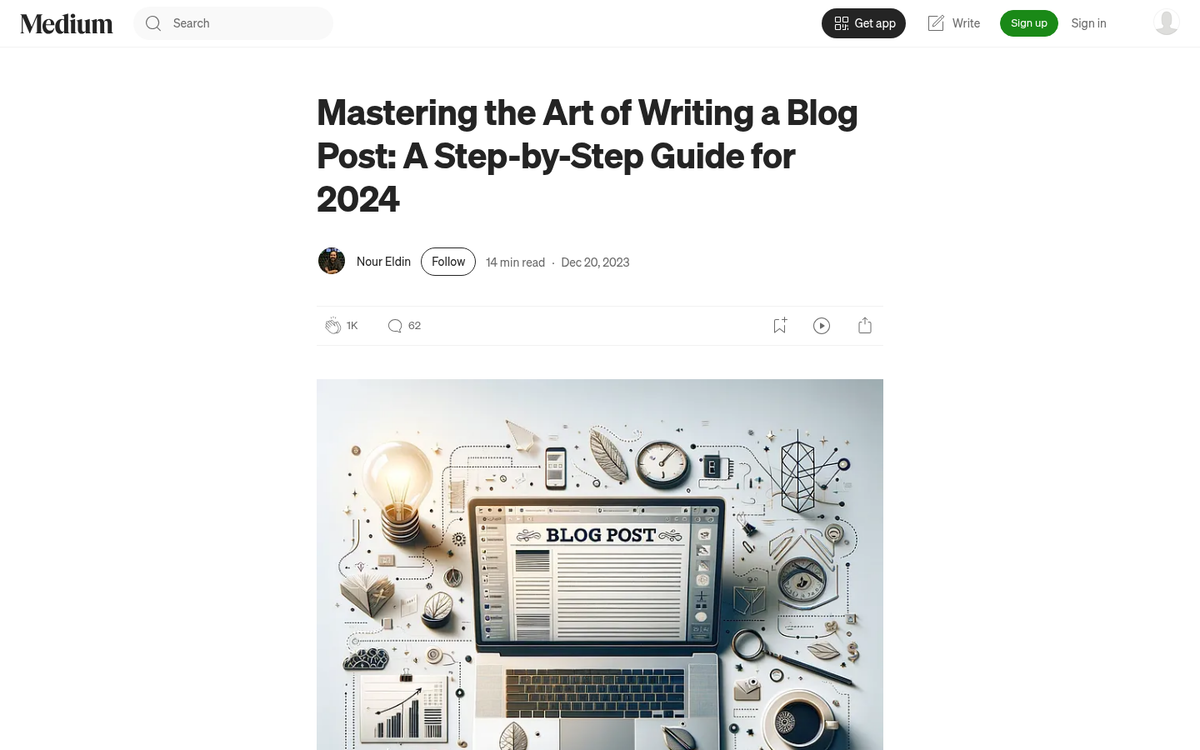
Great content can turn $10 of ad spend into loyal, staying readers - poor content can burn through $1,000 a day and leave you no better off. It matters even more in the AI era - low-effort content gets scraped, summarized, and discarded. But legitimately authoritative content gets cited, linked, and revisited.
- Figure out what your niche is missing and fill in the gaps. A lot of niches won't have many visible gaps, so you might have to do some digging. It doesn't matter if they're not all hits; the few people you please will be worth it.
- Find content that is out of date or old and update it. This includes your old content if your site is older, and content from other sites that hasn't been updated. Supplant old resources with newer, better ones. Backlinko famously updated every post on their site and saw a 25.71% traffic boost - equal to over 410,000 more visitors per year.
- Find thin content and steal traffic with better versions. Adopt the "anything you can do I can do better" attitude and figure out where people are ranking with mediocre content. That's an opportunity for greatness.
- Write list posts. Lengthy list posts give you a lot of space to cram in a lot of information, and you can use them to cover a variety of topics at once. Then you can use that list as a resource later.
- Use specific terms, don't rely on generic appeal. Targeting 1,000 users with something they barely care about is nowhere near as good as targeting 100 users with something they really want. You can break up a general post into more specific posts to cover those 1,000 people and more.
- Avoid clickbait to avoid annoyance. Clickbait has always been the domain of thin spammers and low-quality aggregators. In 2026, Google's Helpful Content standards and AI-powered ranking systems are better than ever at detecting and demoting it. Don't go there.
- Explore a negative perspective. Being contrarian is a good thought exercise, even if you do logically arrive at the generally accepted conclusion. You can also take a negative outlook and explore the dark side or downside to various trends.
- Write lengthy and valuable tutorials. If you know how to do something others might have trouble doing, write a tutorial. Detailed, experience-backed how-to content continues to rank well and, importantly, gets cited by AI tools as a source.
- Publish content on a regular schedule. The more content you have and publish, the more opportunities you have to earn a high ranking, pull in traffic, and go viral on social media.
- Optimize for AI search and answer engines. Tools like Perplexity, ChatGPT Search, and Google AI Overviews now pull from blog content directly. Structure your posts with clear headings, concise definitions, and direct answers near the top to increase the chances your content gets cited or featured - this is the core of answer engine optimization.
- Keep your own content as high above Google's minimum thresholds as possible. Google continues to raise the bar with core updates targeting low-quality and unhelpful content. Learn how deleting bad blog post content can increase traffic - and there's always a next one.
Boosting Engagement
Once you have a firm baseline, you'll have to capture your readers and get them to take action to benefit you.
Social shares, comments on posts and on social media, email registrations, referrals - they're the core way you can spread your sphere of influence. In 2026, engagement signals also feed into how AI recommendation engines surface your content, so they matter more than ever.
- Make the first comment on your best posts.
- Seed conversations with genuine questions, not fake engagement - platforms and readers are sharper than ever at spotting inauthenticity.
- Ask questions in your post and in your social shares.
- Offer numerous ways to go from one piece of content to the next.
- Write content as a response to other posts.
Sharing Your Content
The places you put your content after you've written it give you access to millions upon millions of readers, most of whom will never see your posts otherwise.
Even so, everyone who sees a post through a social network who wouldn't have visited your site normally is a helpful bit of exposure. One important note on email: data shows it dramatically outperforms social media for driving traffic. In one well-documented example, three social posts across Twitter, Facebook, and LinkedIn brought in 2,153 total visitors combined. But a single email newsletter to the same audience generated 15,278 visitors that same day. Build your list.
- Post on Facebook. Facebook remains one of the largest social platforms in the world. Organic reach for pages has declined significantly, but paid targeting is highly refined and Facebook Groups continue to drive meaningful engagement.
- Post on X (formerly Twitter). X has gone through significant changes since Elon Musk's acquisition, including the introduction of paid verification tiers and algorithm shifts that favor engagement. It remains a useful platform for short-form engagement, trend spotting, and sharing links - but your mileage may vary depending on your niche.
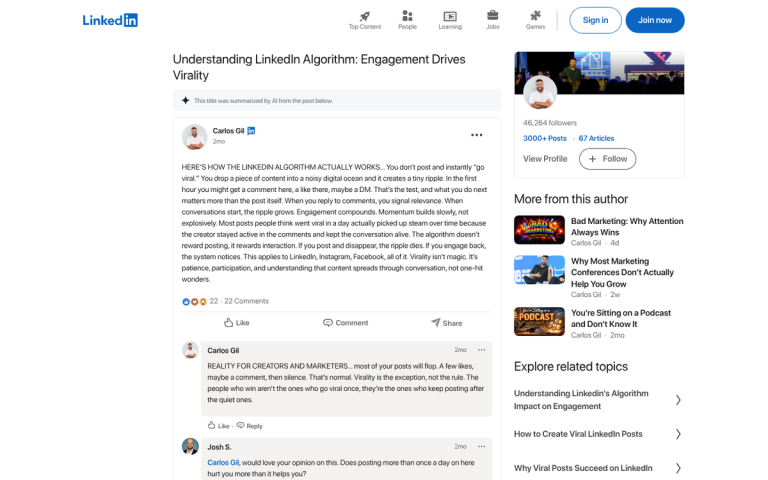
- Post on LinkedIn. LinkedIn has grown substantially as a content platform beyond just B2B. Long-form posts and newsletters native to LinkedIn now reach large audiences, and the platform's algorithm has been notably generous with organic reach compared to other networks. Learn more about how to promote your blog posts on LinkedIn effectively.
- Post on Threads. Meta's text-based social platform launched in 2023 and has grown into a legitimate content distribution channel, particularly for brands already active on Instagram. Worth testing if your audience skews that way.
- Send to your email list. If you're not building your email list, you're leaving your most valuable traffic source on the table. A mailing list is one of the very few sources of traffic you own outright - independent of Google's algorithm, social platform policy changes, or AI search disruption.
- Post a link on Reddit. Reddit is difficult to use for marketing because the communities hate being marketed to, so you need to participate as an organic user. As their guidelines make clear: it's okay to be a redditor with a website; it's not okay to be a website trying to use Reddit. That said, Reddit content is now heavily featured in Google search results, making a presence there more valuable than ever.
- Post on Instagram. Instagram loves visual content and can drive significant engagement, particularly through Reels. Direct traffic referrals are limited due to link restrictions, but brand awareness and audience building are strong use cases.
- Post on Pinterest. Pinterest remains excellent for infographics, step-by-step visual content, and image-based representations of your posts. It functions more like a search engine than a social network, meaning content has a long shelf life.
- Post on TikTok. Short-form video content on TikTok can drive enormous traffic spikes when content goes viral. If your blog has a visual or demonstrable angle, a TikTok presence is worth building. TikTok's regulatory status in certain markets has been in flux - stay aware of your audience's geography.
- Post on YouTube. YouTube is the second largest search engine in the world. Video content that supports or expands on your blog posts can drive both YouTube traffic and blog referrals, and YouTube Shorts gives you an additional short-form discovery channel.
- Run paid ads on relevant platforms. Paid advertising is very much worth your time and money, so long as you do it right. Test each platform with a small budget before committing. Meta Ads and Google Ads remain the most mature options, but LinkedIn Ads, Reddit Ads, and even Pinterest Ads can deliver strong ROI depending on your niche. If you're working with limited resources, see our guide to running a content marketing campaign on a budget.
Repurposing Your Content
Producing great content is hard, as is maintaining a consistent presence across a number of sites. By taking your existing content and repurposing it in other formats, you can reach other audiences with minimal effort. In 2026, AI tools make this faster than ever - but make sure that the repurposed output still reflects your genuine voice and expertise.
- Turn blog posts into infographics. By distilling your content down to its base points, you can make it highly shareable on Pinterest, LinkedIn, and across dozens of infographic aggregator sites.
- Turn blog posts into short-form videos. YouTube Shorts, Instagram Reels, and TikTok have made short video the dominant content format of the mid-2020s. A single blog post can fuel a week's worth of short clips.
- Turn blog posts into long-form YouTube videos. Your blog post is essentially already a script. Expand it, record it, and publish it. YouTube's search traffic alone can be worth the effort.
- Turn blog posts into podcasts. Podcasts give you access to Spotify, Apple Podcasts, and a long list of other aggregators. Your blog post is a ready-made episode outline.
- Turn blog posts into slide decks. SlideShare (now part of Scribd) still gets traffic, and slide content works well on LinkedIn natively too. Distill your post into a clean visual outline and publish it in both places.
- Expand posts into ebooks or lead magnets. Your best posts can probably be expanded quite a bit. Expand on statistics, flesh out your lists, and turn them into downloadable assets. Use them to grow your email list or sell them directly.
- Use AI tools to assist with repurposing - not to replace your voice. Tools like Claude, ChatGPT, and Jasper can help you quickly adapt a blog post into a newsletter, social captions, or a video script. Just make sure the final output is edited to sound like you and contains your actual expertise.
- Compile data about posts and write a meta-analysis. Everyone likes a good case study. If you have good, relevant data, people will cite it for months or years. Bonus points if you repeat the study annually - you become an industry institution.
- Create roundup posts for your content and industry content. Sharing curated content from others in addition to your own is good social media practice - bring that same energy to your blog. People appreciate the mention and you benefit from the credibility.
- Turn list posts into tables of contents for many other posts. A post like this one could easily have a link in every bullet point, leading to a dedicated post on that specific topic. It's an evergreen internal linking strategy.
Producing Content on Other Sites
You don't have to limit your production to sites you own or social networks.
You'll find ways to contribute to other sites, earning links and a reputation as a thought leader in your industry. Remember that the average guest post drives only around 50 blog visitors on its own - the value is in brand exposure, relationship building, and the backlink itself.
- Get into guest posting on industry hubs. Guest posting purely for SEO is a bad idea, but guest posting to build a brand and contribute to respected publications is still valuable. Offer your genuine expertise as a writer to sites that accept contributions.
- Participate in LinkedIn and Facebook Groups. Closed groups can be excellent communities for link sharing and establishing authority - especially LinkedIn Groups, which have seen a resurgence in professional niches. Learn more about how to promote your posts in groups and aggregators.
- Contribute to niche newsletters and Substack publications. Substack has grown enormously and many large newsletter publishers actively accept guest contributions or cross-promotions. Getting featured in a relevant newsletter can drive high-quality, engaged traffic.
- Answer questions on Quora and Reddit. Both platforms surface heavily in Google search results. A well-crafted answer with a relevant link back to your blog can continue driving traffic for years.
- Post on industry-relevant web forums and Discord communities. Traditional forums have largely been replaced by Discord servers and niche Slack communities. Find where your audience congregates and become a genuinely helpful presence there.
Building Links
Links remain the main pillar of how SEO works - they're still the foundation of how Google determines authority and value.
By building links to your content, you increase the value of your site more or less permanently. Remember that Google processes over 40,000 search queries every second, and the sites earning clicks at scale are usually those with strong link profiles and genuine authority signals.
- Make use of broken link building. Find existing links that lead to missing content, content that has moved, or content that is out of date. Message the webmaster with your version of the content and let them know their existing link is broken. It's one of the cleanest white hat link building tactics available.
- Link to yourself with relevant, value-adding comments. There's a fine line between comment spam and white hat link building in comments. The test: is the comment genuinely adding to the conversation, and is the link actually relevant to what the reader might want next?
- Publish content with reputable syndicators. Syndicating content carries risk - it can help the publisher more than you - but strategic syndication on high-authority platforms with canonical tags pointing back to your original can earn you both traffic and SEO credit.
- Link to influencers and let them know. Whenever you cite or link to someone notable, shoot them a quick message. Many will share it. Don't do it so frequently it becomes spam.
- Earn links through original data and research. One of the most reliable ways to attract natural inbound links in 2026 is to publish original research, surveys, or data studies. Other writers need statistics to cite - be the source. You can also explore services that help you get more links to your blog posts if you want to accelerate the process.
Attitude Adjustments

Even if you have great content and do everything right, you can still drive readers away with a bad attitude. Remember that you're part of a community; be charitable and practice the values you want others to return. This is especially true now that AI tools surface brand sentiment and online reputation signals in ways that can change how your content is seen and recommended.
- Always be willing to help out others and offer free advice. The only people who jealously guard their secrets are those operating in zero-sum mindsets. Generosity builds authority faster than almost anything else.
- Take the time to contribute something of value in comments. People always appreciate a substantive comment - something more than just "great post." Learn how comments can improve your blog post rankings and traffic. Bring