If you've heard the term but aren't entirely sure what it means, you're not alone. There's also a fair amount of uncertainty baked into the name itself, which Google has since acknowledged wasn't the most accurate description of what the feature actually does. That distinction matters more than it might seem, and that's also the case if you're trying to build a content strategy around how search actually works.
What passage ranking does is give Google the ability to surface a section of a page in response to a query - even when the rest of the page isn't especially relevant to that query. For anyone focused on Answer Engine Optimization, that's worth paying close attention to - it changes how you think about page structure, content depth, and the way individual passages compete for visibility independently of the wider page they live on.
This article breaks down what passage ranking actually is, why the naming uncertainty matters, and how it can sharpen your AEO strategy in a practical way.
Key Takeaways
- Passage Ranking lets Google surface individual page sections for queries, even when the full page isn't broadly relevant.
- Google still indexes whole pages; only the ranking mechanism changed, making individual passage quality more important.
- Passage Ranking affects roughly 7% of search queries, representing significant daily visibility opportunities for well-structured content.
- AEO and Passage Ranking reward identical content qualities-specific, self-contained answers-delivering visibility across both traditional and AI search.
- Over 60% of queries now generate AI-powered answers, making passage-level clarity a structural priority, not just an SEO detail.
What Passage Ranking Actually Is (And Why Google Named It Wrong)
Google announced this feature in late 2020 and rolled it out in 2021 - it created uncertainty straight away, partly because of what Google called it.
The term "Passage Indexing" stuck in the SEO world. But Google's own Martin Splitt later clarified that the name was misleading. The more accurate term is "Passage Ranking" and the difference between those two words matters more than it seems.
Google is not indexing individual passages as separate pieces of content - it still crawls and indexes your page as a whole, the same way it always has. What changed is how Google ranks content - it can now pull a passage from within a page and treat it as a relevant answer to a search query - even if the rest of the page is about something wider.

Consider a long blog post that covers ten different points. One paragraph near the bottom could be a precise, well-written answer to a very specific question. Before Passage Ranking, that paragraph's value was tied to how well the whole page ranked for that query. Google can now find that passage on its own and surface it for searches where it fits - without the full page needing to be the best match.
This is a real change for pages that cover a lot of ground. A page about home maintenance tips might rank for a narrow query like "how to fix a dripping tap" just because one passage addresses it well. The page does not need to be entirely about taps.
It is worth being precise about what this does and does not change. Your page still needs to be indexed to benefit from Passage Ranking. Google is not creating a separate index of fragments - it's using its understanding of language to review sections of a page independently when picking how to rank them for particular queries.
The reason this distinction matters for your strategy is straightforward. If you think Google only indexes passages, you might start writing disconnected chunks of content with no page-level structure. That would be the wrong strategy. The goal is still to build well-structured pages - but now, the quality of individual sections carries more weight in how those pages perform across a number of searches.
How Google Identifies and Surfaces Relevant Passages
Google uses natural language processing to read and review person passages within a page, almost like it's breaking your content into smaller units and asking "does this part answer the query on its own?" The wider space of your page doesn't need to match well - a single well-written passage can rank independently if it directly addresses what was searched for.
This matters more than you might know. Google has said that passage indexing can affect around 7% of widespread search queries, which is a large number to think about given the scale of searches happening every day; it's a lot of opportunities for a focused passage to surface - or to get passed over.
A few things work together to determine which passage Google picks. Clarity is a big one - Google's models respond well to language that directly addresses a question without buildup or hedging. Structure also factors in, because passages that are formatted to stand alone are easier for Google to review in isolation. And relevance is the obvious factor: the passage needs to be about the thing the user is actually asking.
Proximity matters too. If your answer is buried three paragraphs into a long section, surrounded by loosely related context, Google might not connect it to the query as strongly - this doesn't mean every answer needs to be at the top of your page. But it does mean the answer itself should be tight and self-contained wherever it appears.
One thing to watch for is dense, wall-of-text paragraphs. When information gets packed into a long block without much structure, it can become harder for readers and Google to extract the point. A passage that meanders before landing on an answer is less likely to get pulled and surfaced.
Google is trying to serve users fast, helpful answers. A passage that gets to the point - without relying on the surrounding content to set it up - gives Google what it needs for that. Pages where each section can stand on its own tend to fare better under this system - not because of any trick, but because the content is easier to review and use. If you're wondering how long it takes for content to rank, the quality and clarity of individual passages can play a meaningful role in that timeline.
Where AEO Fits Into the Passage Ranking Picture
The properties Google looks for when it pulls a passage to answer a query are almost identical to what AI answer engines look for when they generate a response. Specific, self-contained, well-structured answers are what both systems reward.
AEO is built around that exact idea. Instead of writing pages that are broadly relevant to a topic, AEO pushes you to write content that directly answers a question in a way that can stand on its own. That is what passage ranking was designed to surface.
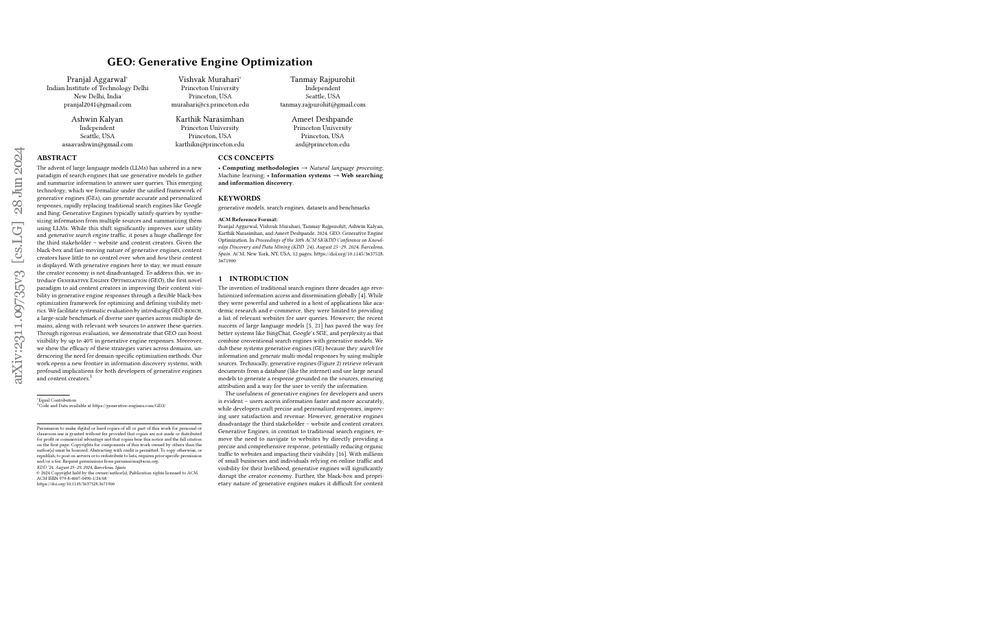
A Princeton study on Generative Engine Optimization found that AEO techniques can increase AI visibility by as much as 40% compared to traditional SEO alone. That is not a small gap, and it reflects how much these newer systems - passage ranking and AI answer engines - have moved away from broad relevance signals toward precise, extractable answers.

The table below breaks down where AEO and standard SEO goals diverge in practice.
| Priority Area | Traditional SEO | AEO |
|---|---|---|
| Content structure | Organized for topic coverage | Organized around specific questions |
| Answer format | Comprehensive, long-form | Concise, self-contained responses |
| Keyword focus | Head terms and broad phrases | Conversational and question-based queries |
| Success metric | Rankings and organic traffic | Citation and extraction in AI responses |
| Page goal | Keep users on the page | Give users the answer immediately |
The overlap between passage ranking and AEO is not accidental. Both reflect a wider change in how search systems interpret and use content. Google's passage indexing capability was an early signal that granular answer quality was going to matter more than page authority.
For anyone already working on AEO, that means your work carries double weight. A passage written to be cited by an AI is also a passage that Google can pull independently to answer a search query. You are not optimizing for two separate goals - you are doing the same work and getting two channels of return from it. Learn more about what makes a citation-ready content block to make the most of that approach.
The AI Answer Engine Shift That Makes This Urgent
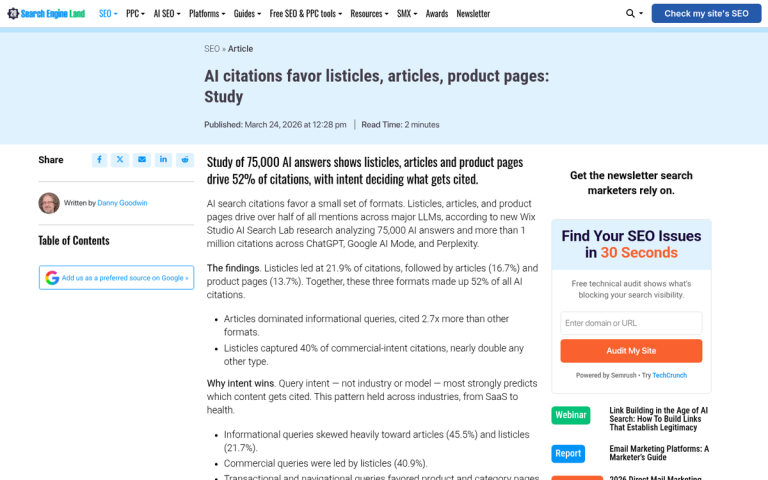
Here is something worth sitting with for a bit. According to BrightEdge data from March 2025, more than 60% of search queries now generate an AI-powered answer. That is not a fringe use case anymore - it's the default experience for searching online.
ChatGPT referral traffic grew 123% between September 2024 and February 2025. People are going to AI engines first, and in some cases never clicking through to a website at all. That changes what it means to be "findable" in a basic way.
Those AI-generated answers come from passages. AI engines pull well-contained pieces of text from pages that answer a question directly and confidently. A page that buries its best information inside long paragraphs, or that never quite commits to an answer, is easy to pass over. There are plenty of other pages that do answer the question cleanly and those are the ones that get cited.
That is what makes passage indexing feel less like a technical SEO detail and more like a structural priority. When Google can index and rank an individual passage independently of the rest of a page, it's basically doing what AI answer engines do - pulling the most helpful fragment and surfacing it. These two mechanisms reinforce each other.
Pages that are not written with passage-level clarity lose ground on two fronts at once. They are less likely to rank as a featured passage in traditional search and less likely to be pulled into an AI-generated answer. That is a cost and it compounds over time as AI-powered results take up more of the search experience.
The good news is that this is a solvable problem - it does not take a full site rebuild or a content strategy overhaul to make progress. What it does take is a look at how individual sections of a page are written - how self-contained they are, how directly they address a question and how easy they are for an engine to extract without losing context. That is what the next section gets into.
Structural and Content Changes That Help Your Passages Get Picked
The changes you'll have to make are concrete. Most of them come down to how you structure your content so individual sections can stand on their own, without relying on the paragraphs around them for context.
Start with your subheadings. A strong subheading tells the reader and the algorithm what the passage below it covers. Think of each subheaded section as a self-contained answer to a question someone might actually ask. If you stripped away everything else on the page, that section should still make sense.
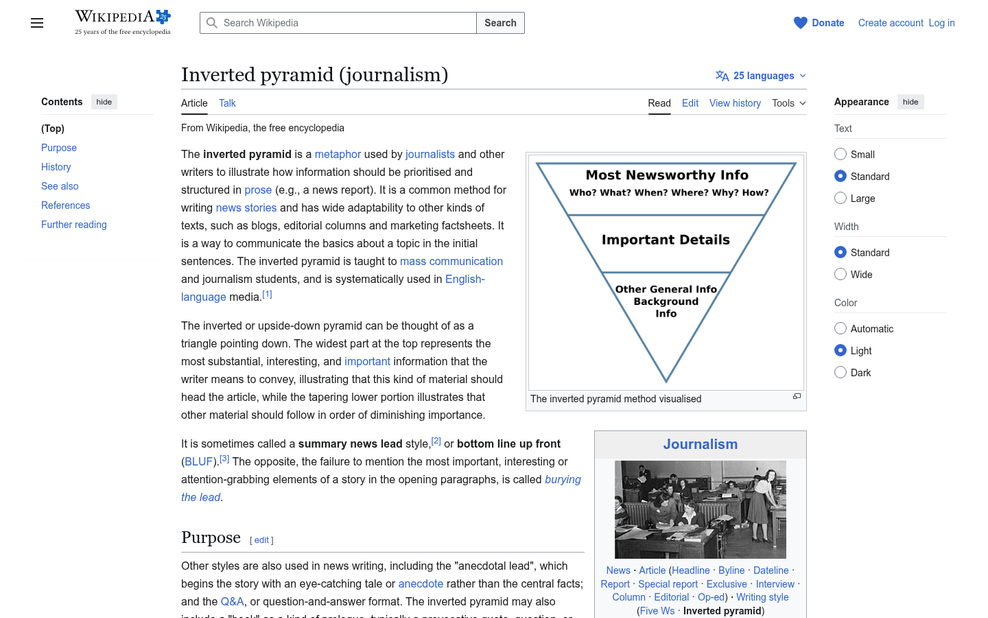
Your opening sentences matter more than you might expect. Lead with the answer, then add context and explanation after. This is sometimes called the inverted pyramid structure, and it makes your content much easier for AI systems to extract a clean, helpful response from. A passage that buries its point in the third sentence is a passage that gets skipped.
Statistics and source citations add credibility signals that help passage indexing work in your favor. HubSpot reported a 1,850% increase in qualified leads from their own AEO strategy, and beta customers using their AI-optimized content saw 20% more traffic from AI-driven sources. That result does not come from vague, keyword-heavy content.

On that note, keyword stuffing actively works against you here. Content that feels robotic or repetitive is harder to read and less likely to get pulled as a featured passage. Write for the person first, and trust that structure will do the rest.
Here is a helpful checklist to work through when you audit or create content for passage indexing:
- Use descriptive subheadings that frame each section as an answer to a question
- Put the most important sentence first in each paragraph
- Keep paragraphs tight - aim for two to four sentences
- Add real statistics or citations where they strengthen your point
- Make sure each section can be read in isolation and still make sense
- Read your content out loud to catch anything that sounds unnatural or forced
None of that means you'll have to rebuild your entire content library at once. Pick your highest-traffic pages and run them through this checklist first. Small structural edits to existing content can move the needle faster than a rebuild from scratch. If you're not sure how much content you actually need to produce, it's worth thinking through before you scale up.
Passage by Passage - Building a Smarter AEO Foundation
Before overhauling your entire content library, start small. Pick one or two existing pages and run them through the structural checks covered above. Ask if each passage gives you a self-contained answer. Look for sections that bury the point or depend too heavily on surrounding context to make sense.
The term "passage indexing" never caught on. But the principle behind it is only becoming more relevant. As AI-driven search continues to grow, the pages that stay visible will not necessarily be the longest or the most heavily optimized - they will be the ones built around content that a search engine, or an AI, can trust to answer a question well. That is a standard worth building toward.