Key Takeaways
- Only 21% of bloggers report strong results in 2025, down from 30% five years ago, reflecting blogging's increasing difficulty.
- Over 55% of marketing experts say gaining first traction takes 3-9 months, with meaningful results often requiring well over a year.
- New domains start with zero authority, and Google can take up to 6 months to index and rank new content.
- AI Overviews and zero-click search make organic traffic less reliable, making email lists and multi-channel promotion increasingly essential.
- Most blogs fail because unrealistic expectations lead to discouragement and neglect before the blog has had time to gain traction.
It might seem odd coming from a site dedicated to helping people blog. But something worth tackling is how tough it is to be a blogger in 2026. The internet is old, as far as technology goes. There are over eight billion people in the world, most of them online, and there's well over a billion websites competing for their attention. Many of those sites are parked domains or otherwise inactive - but what are those?
Tombstones.
Nearly every parked domain is one bought with ambition and let expire. Every abandoned blog is the marker of a blogger who thought they'd cut it and couldn't. The internet is littered with failure, and that was before AI entered the picture and made things dramatically more difficult.
Blogging is Hard - And It's Getting Harder
There's no graceful way to say it. Blogging is not an easy job. There's a reason there's a thriving industry of ghostwriters and freelance writers in the world. Running a blog and a blogging business has always been hard. But 2026 has introduced a new layer of difficulty that didn't exist even three or four years ago: AI-generated content at scale.
With tools like ChatGPT, Claude, and Gemini, anyone can produce hundreds of blog posts in a day. The internet is being flooded with AI-generated content at a pace no human writer could ever match. Google has responded by doubling down on what it calls "helpful content" - rewarding demonstrable expertise, first-hand experience, and genuine authority while deprioritizing thin, generic content regardless of how it was produced. According to Orbit Media's 2025 research, only 21% of bloggers now report strong results from their blogging work, down from 30% just five years ago, with 60% reporting only "some results." That trend is moving in the wrong direction.
Even reading this puts you ahead of the curve. Most bloggers have no idea how to write for the web, how search engines work, or why anyone should choose their blog over the thousands of others covering the same topic. They don't think about their audience because they're not writing for one.
The reality is that virtually no one cares by default. In a world drowning in content - human and AI-generated alike - blogs need something genuine to succeed. Think about it: how many blogs do you actually read? Most people can count them on one hand. The rest of the time, we land on blog posts because we searched for something and happened to find a helpful result. Getting to be that result is harder than ever.
Most Bloggers Don't Start with a Firm Purpose in Mind
Most bloggers have nothing more than the belief that their ideas are interesting and that people should want to read them. They don't know why they're blogging, who their audience is, or what they're trying to accomplish. Successful bloggers define a purpose and aim every choice toward it.
A lot of it will depend on creating the right mindset and foundation from day one. Bloggers need realistic expectations. But it's hard to have those when content out there makes blogging sound effortless. According to Siege Media's 2025 research, over 55% of marketing experts say it takes between 3 and 9 months just to gain first traction on a new blog, and meaningful traction usually takes well over a year.
The lack of realistic expectations is one of the biggest contributors to blog failure. People launch expecting to see actual traffic within a month or two. They want visitors, comments, social shares, and maybe some AdSense revenue pretty quickly. They don't account for just how long it takes to build an audience in a competitive environment - let alone one now saturated with AI-generated content competing for the same keywords.
New Domains Don't Have Much SEO Weight
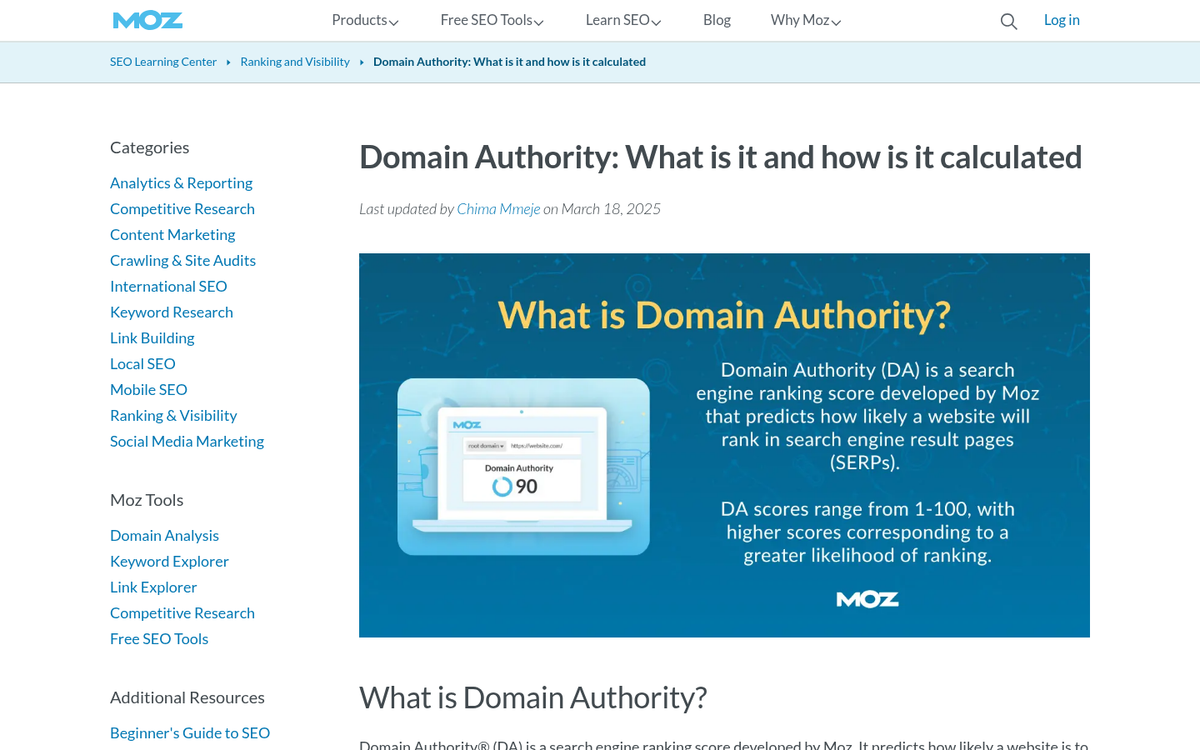
Another factor in how long it takes to succeed is how Google treats new domains. Domain age and authority remain real ranking signals. A brand new blog, no matter how good the content, is starting from zero - it hasn't earned the trust and link equity that older, established sites have built up over years. Even if your content is legitimately better than what ranks on page one, you might still lose to older sites simply because of the accumulated authority gap.
This is compounded by Google's indexing timeline - it can take anywhere from 4 days to 6 months for Google to index new content, and even once indexed, ranking calculations take extra time. For a brand new site to establish itself takes steady, consistent effort over months. There are tricks you can use to improve the indexing of your blog posts, but even with those, ranking a new company blog requires patience and persistence.
It Can Take a While to Find Your Footing with Content
Content is a tough beast, and the calculus around it has shifted. More content isn't always better - but some volume is still necessary. Databox survey data shows that reaching just 1,000 sessions per month took most respondents between 4 and 6 months. But reaching 10,000 sessions per month took the majority more than 10 months. HubSpot's benchmarks have shown that businesses publishing more than 16 posts per month drive roughly 5 times more traffic than those publishing 4 or fewer - though raw quantity without quality is increasingly penalized by Google.

The trap new bloggers fall into is focusing too much on publishing and nothing on promotion. Posting post after post only works if people find those articles. If no one finds them, no one reads them. If no one reads them, no one shares or links to them. You need to invest as much effort - if not more - into promoting your content as you do creating it.
In 2026, that promotion increasingly means building a presence across social media, email newsletters, YouTube, podcasts, or other channels that drive direct traffic instead of relying only on Google. With AI Overviews now appearing at the top of search results and answering queries without requiring a click, organic search traffic has become less reliable as a sole traffic source than it once was.
It Takes a While for Users to Develop a Habit of Returning
How many times do you have to visit a website before you remember it? You might land on it two or three times before you know it's somewhere you've been before. A few more visits associate the name with a topic. Several more and you think of it as an authority worth bookmarking or following.

Building that habit in readers takes time and consistency. The trigger-and-reward cycle - the reason people return to some sites and not others - doesn't develop overnight. Very few of any blog's visitors are going to be loyal, returning readers early on. Most, as mentioned, arrive via search and leave. Converting those one-time visitors into regular readers is one of the hardest challenges in blogging, and it's become harder in an era where AI tools can answer questions directly without sending users to a blog at all.
This is why email list building has become more important than ever. An email subscriber is a reader you own a relationship with - one that doesn't depend on Google's algorithm or a social media platform's reach. Bloggers who neglect list-building in favor of chasing search rankings alone are increasingly vulnerable.
It Takes a Decent Amount of Content to Start Ranking
Do any Google search and you'll see a staggering number of results - millions, sometimes hundreds of millions. Of those results, only a handful appear on the first page, and only one holds the top spot. The rest, no matter how good some of them could be, are functionally invisible. There's a reason almost no one goes to page two of Google.
Earning a place on page one requires more than writing - it requires topical authority, covering a subject comprehensively enough that Google recognizes your site as a genuine expert in that space. It requires backlinks from credible sources. It requires technical SEO fundamentals. And increasingly, it requires demonstrating first-hand experience and expertise that AI-generated content simply can't replicate. That last point is actually one of the few genuine advantages human bloggers still hold in 2026 - and it's worth leaning into heavily.
There Is Already Stiff Competition for Your Niche
Think of starting a new blog like writing a book and quietly shelving it in the Library of Congress. Who will find it among the millions of others? This metaphor has always been apt. But in 2026, the library is being expanded by AI at a rate that's legitimately unprecedented. For every niche you can think of, there are established sites with years of authority, thousands of backlinks, and mountains of indexed content - plus a growing flood of AI-generated content targeting the same keywords.

Competition is fierce, and it's largely passive. A large site that published content five years ago may still outrank your brand-new post simply by virtue of its accumulated domain authority. Your only path through this is finding underserved angles within a niche, demonstrating genuine expertise and real-world experience, and building an audience through channels beyond SEO alone.
It's Very Easy to Neglect a Site When Returns Aren't Immediate
Most bloggers enter with unrealistic expectations, and when those expectations aren't met quickly, motivation evaporates. Many bloggers become discouraged and give up well before they've given their blog a chance. Others pivot to shortcuts - keyword stuffing, buying links, or flooding their site with low-quality AI-generated content - and eventually face algorithmic penalties for it.

The lack of early returns triggers a loss of motivation, which triggers neglect, which guarantees failure - it's a cycle that claims most blogs that are ever started. The ones that survive are the ones run by people who understood from the beginning that blogging is a long game - measured in years, not weeks - and who treated it accordingly.
That's not a comfortable truth. But it's an honest one. And if you're still reading this, you're already in a better position than most.