Have you ever heard the phrase "keep your friends close, but your enemies closer?" The mentality behind it is pretty simple; you can trust your friends, so you only need to pay them moderate attention. You can't trust your enemies, so you need to watch them like a hawk.
The idea carries forward in the world of business. Learning what you can about how your competitors operate will help you get an edge over them when push comes to shove. In SEO, particularly, you want a great deal of competitive knowledge. What are they doing, is it working, and can you do it better? Here are ten things you can learn, and tools to find out.
Key Takeaways
- Google Alerts and social monitoring tools like Brand24 help track competitor mentions, keyword activity, and engagement patterns across the web.
- Ahrefs reveals competitor backlink profiles; top-ranking pages average 3.8x more backlinks than pages ranking positions 2-10.
- Semrush exposes competitor organic and paid keywords; average top-ranking pages rank for nearly 1,000 additional organic keywords beyond their primary target.
- Ahrefs Content Gap tool identifies keywords competitors rank for that you don't, helping prioritize content creation with genuine depth.
- SpyFu uncovers competitors' PPC history and ad copy, while SpyOnWeb maps hidden domain relationships through shared IPs or analytics codes.
1. Media and Keyword Mentions - Google Alerts

Google Alerts is a surprisingly robust tool that has one simple purpose; leverage the vast and immediate power of the immense search index toward your own personal gain. Specifically, you can use it to alert you whenever specific keywords, brand names or people are mentioned in a newly indexed webpage.
Set up a few daily reports using Google Alerts. You can tell Google to notify you when your competitors are mentioned on other blogs or in the news. You can find out when a keyword relevant to your niche is mentioned, in the context of new developments or announcements. You can find out when your brand is mentioned, to compare frequency and quality of those mentions.
2. Twitter/X Usage - Brand24 or Mention

Twitter - now rebranded as X - is still all about quick, casual communication. If your competitors are active on the platform, monitoring them manually by checking their profile regularly is inefficient and easy to miss. Since competitors won't hand over their analytics, tools like Brand24 or Mention are the next best thing.
Find out which posts from your competitors generate the most engagement - replies, reposts, and likes. Figure out how you can adapt those content strategies for your own social media presence. These tools go beyond X and monitor competitor mentions across the broader web, giving you a fuller picture than any single platform alone.
3. Trend Monitoring - Exploding Topics or Google Trends
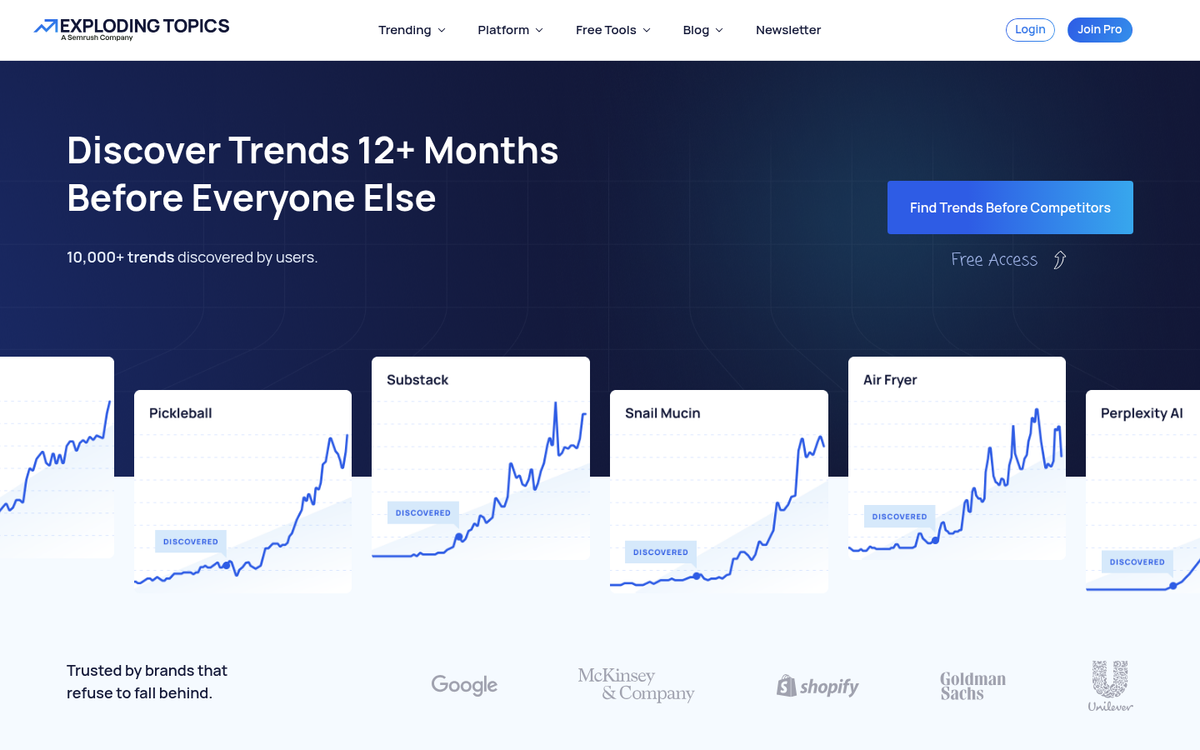
Staying ahead of trends in your industry used to require expensive research. Tools like Exploding Topics and Google Trends surface rising topics before they hit mainstream awareness - giving you a window into where your competitors may be heading next, or where they're falling behind.
These tools are potent for understanding your own content direction, but they're equally valuable for competitive analysis. If a competitor is leaning into a trend early, you'll want to know about it before it starts pulling traffic away from you.
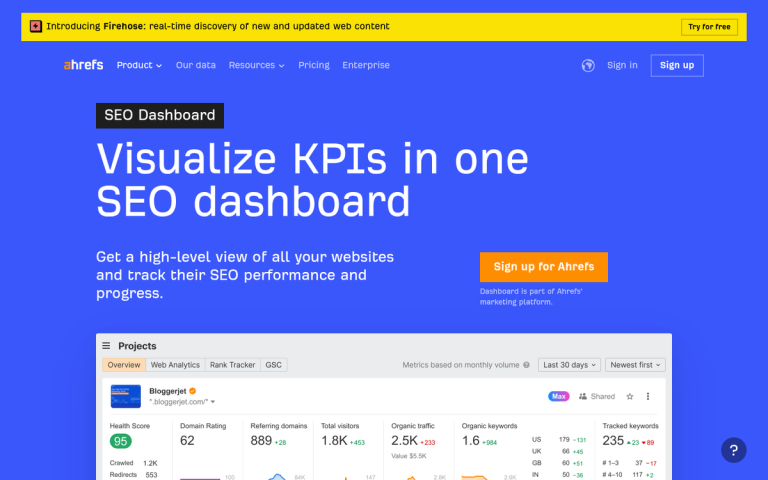
4. Backlink Monitoring - Ahrefs
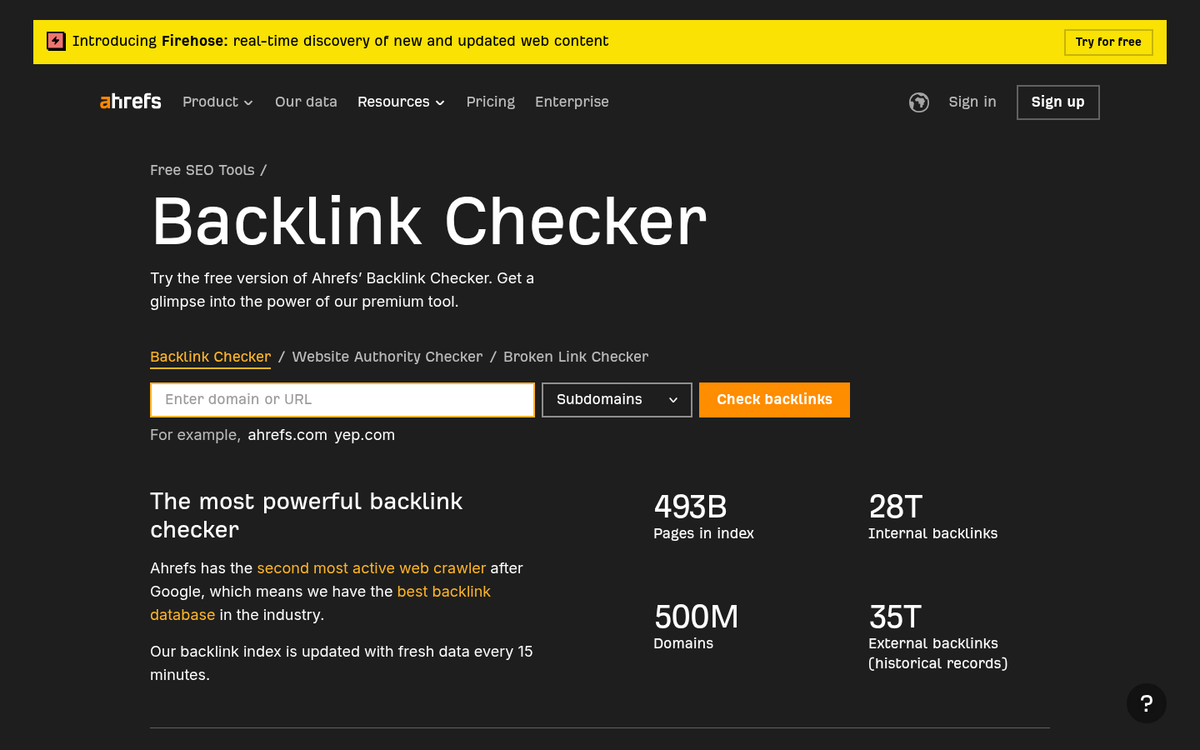
Backlinks remain one of the most important ranking factors in SEO. Research shows that 66% of pages have zero backlinks, while top-ranking pages average 3.8x more backlinks than pages ranking in positions 2-10. That gap is significant, and understanding where your competitors are earning their links is critical.
Ahrefs is one of the most comprehensive backlink analysis tools available. You can pull a full backlink profile for any competitor - seeing where their links come from, the authority of those linking domains, and how recently those links were acquired. Every link source you can identify and potentially replicate is a competitive advantage waiting to be claimed. If you want to go further, learn how to increase your links by snooping on competitors or explore the top sites to help you build high quality backlinks.
5. Detailed Keyword Monitoring - Semrush
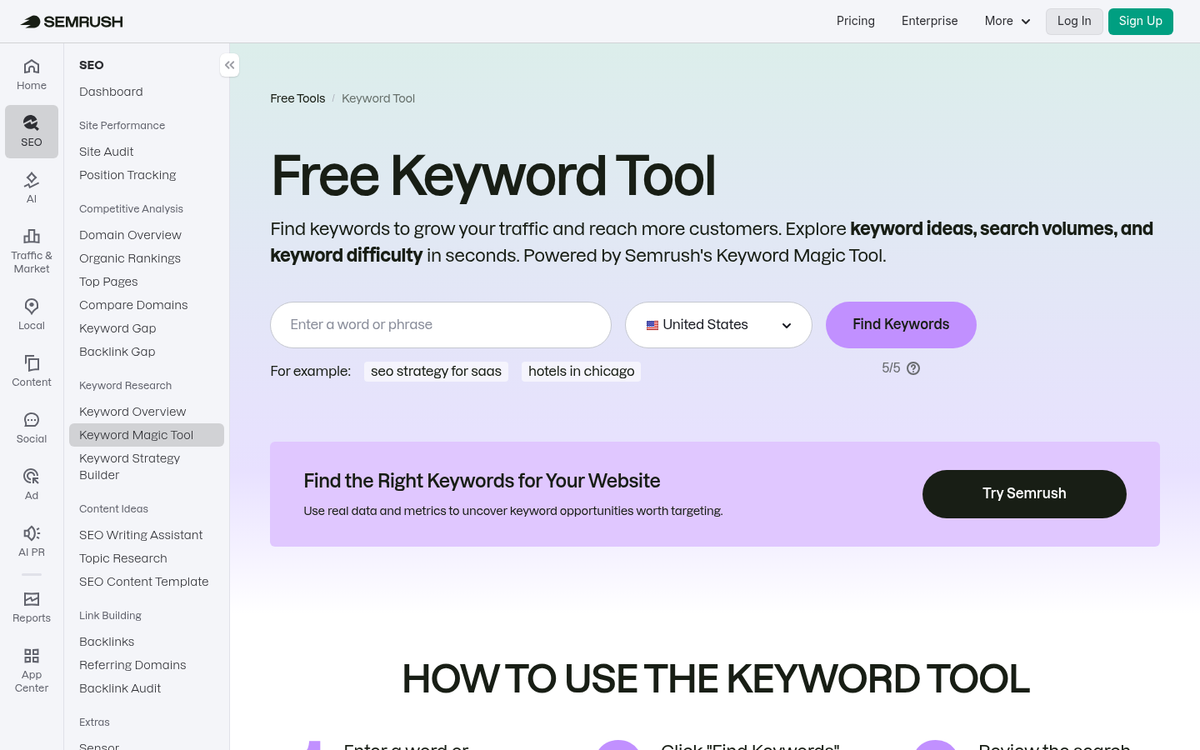
Semrush allows you to plug in any URL and get a detailed breakdown of keyword data. You can see the organic keywords driving traffic to a competitor's site, the paid keywords they're bidding on, estimated traffic volumes, and keyword difficulty scores. Ahrefs data also shows that the average top-ranking page ranks for nearly 1,000 other organic keywords - meaning there's almost always more keyword opportunity hiding beneath the surface than you'd expect.
Plug in your competitors and learn exactly what terms they're targeting. Identify gaps where you could compete, and find keywords they're ranking for that you've overlooked entirely.
6. Competitor Discovery - SimilarWeb
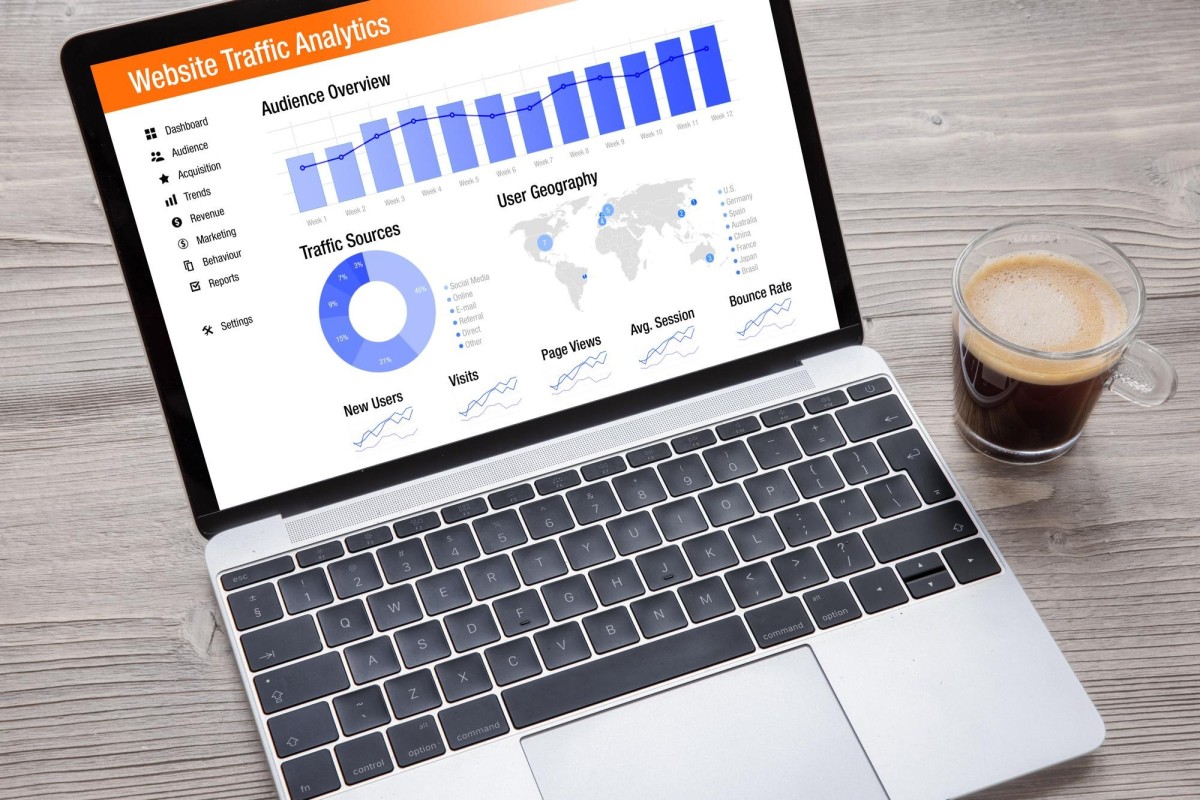
You probably think you have a solid grasp on your competitive landscape. But in many niches - particularly narrow ones - a small site can balloon in traffic almost overnight. It can come as a surprise to find a competitor you didn't know existed, at least not until they're already cutting into your traffic.
SimilarWeb helps you identify those emerging threats by showing you sites with overlapping audiences and traffic profiles. It's one of the most reliable ways to surface competitors you're not currently watching. If you want to dig deeper, see how SimilarWeb compares to Alexa for estimating traffic more precisely, or learn how to find and dissect your website's traffic sources for a fuller picture.
7. Content Gap Analysis - Ahrefs Content Gap Tool
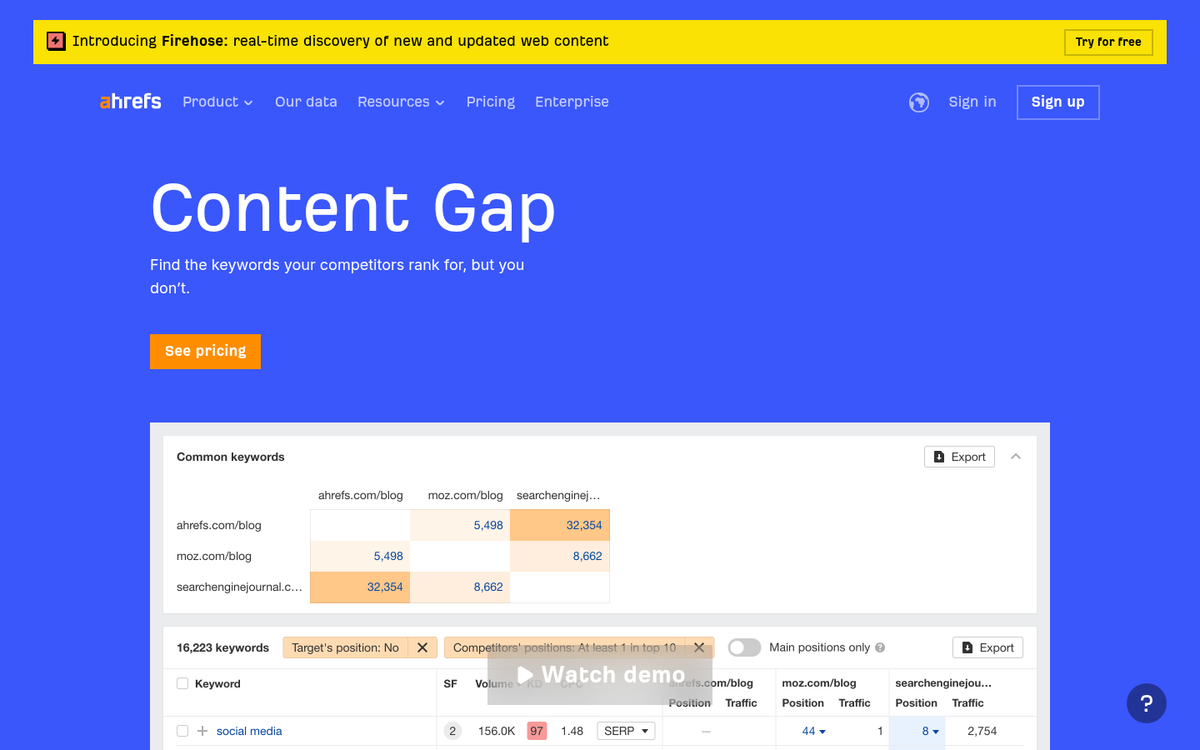
Knowing what keywords your competitors rank for that you don't is one of the highest-leverage moves in SEO. The Ahrefs Content Gap tool lets you plug in multiple competitor URLs and instantly surface keyword opportunities they're capturing that your site is missing entirely.
Keep in mind that content depth matters here. The average first-page result is 1,447 words, and businesses that blog strategically are 13x more likely to see a positive ROI. Identifying content gaps is only half the equation - you need to fill them with content that's genuinely more thorough and useful than what's already ranking.
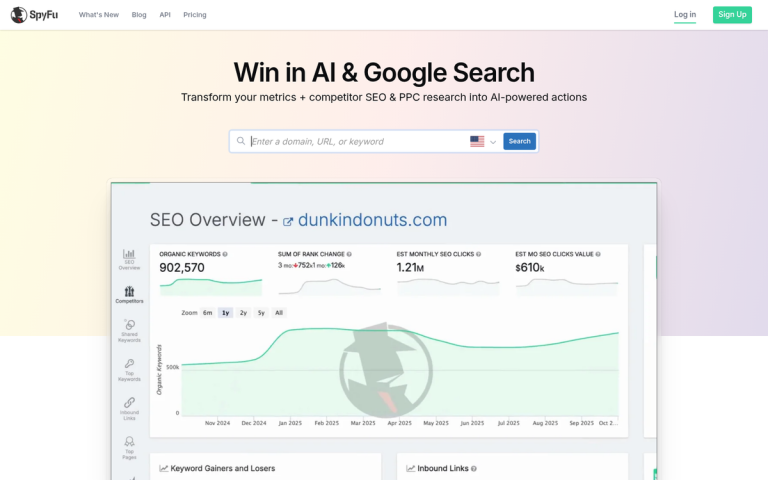
8. PPC Ad Monitoring - SpyFu
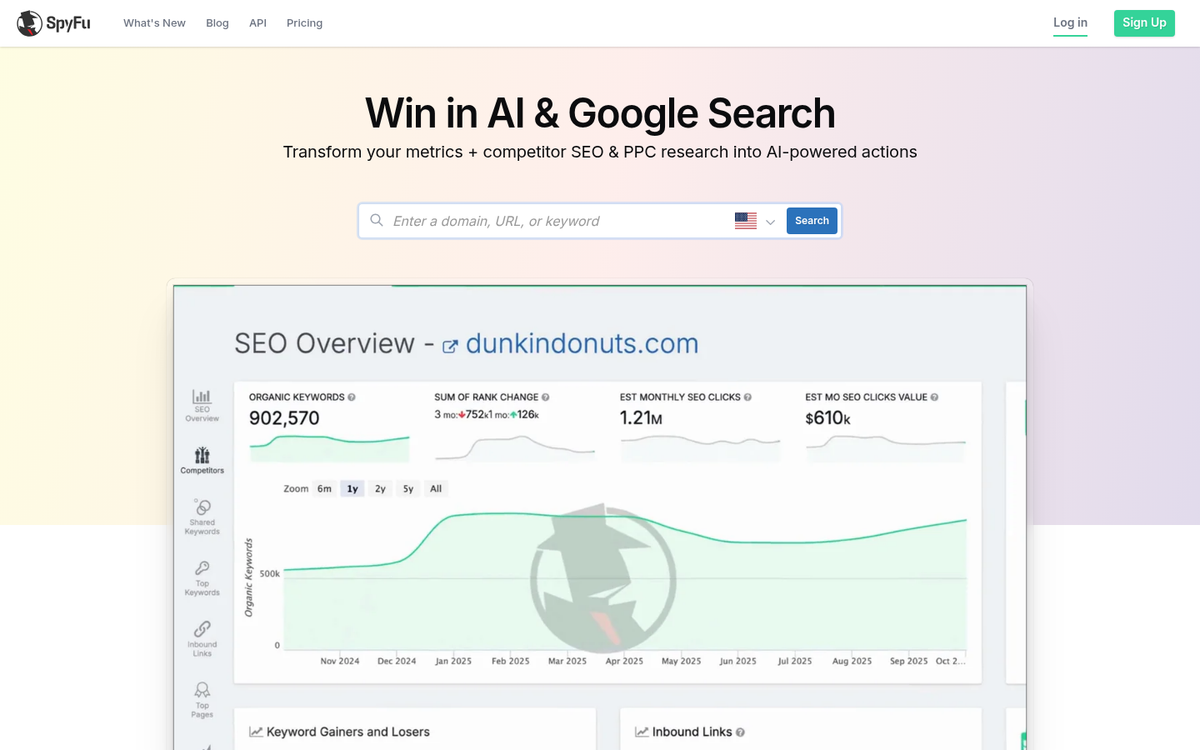
Are your competitors running Google Ads? What ad copy are they using, and which keywords are they bidding on? SpyFu gives you a detailed look at your competitors' paid search history, including the keywords they've bid on over time, estimated monthly spend, and the actual ad copy they've tested.
This can help you identify the paid strategies your competitors are investing in, uncover gaps in their approach, and find opportunities in keywords they may have abandoned - which is often a signal that those terms didn't convert well for them. You might also want to explore the best competitive analysis tools for PPC ads to complement what SpyFu offers, or check out Google negative keywords to add to your campaign to refine your own targeting based on what you discover.
9. General Property Ownership - SpyOnWeb
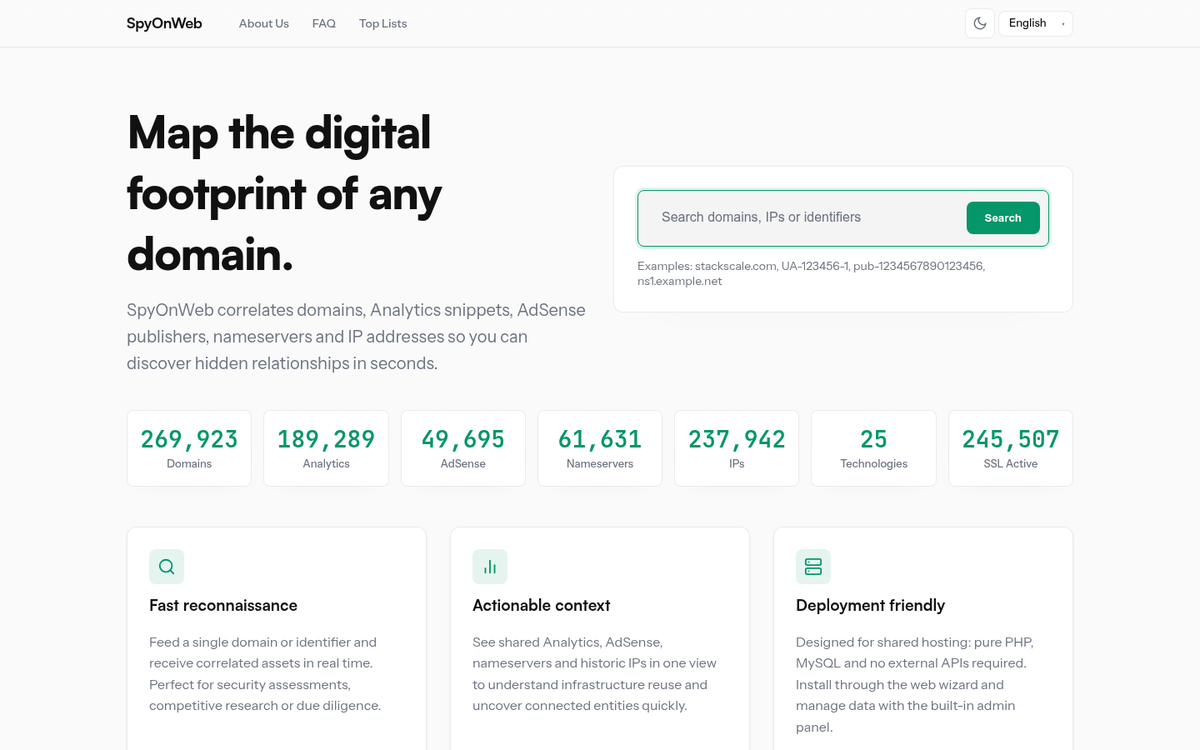
Ever wonder if some of the sites linking to your competitors are actually owned by the same company? Ever curious whether they operate additional web properties under a different brand? SpyOnWeb lets you look up what other domains share the same IP address or analytics tracking code as any site you plug in. It's a straightforward way to map out the broader digital footprint of any competitor and spot relationships between sites that aren't immediately obvious.
10. Overall Site Performance - Semrush Site Audit or Ahrefs Site Audit

Getting an objective, high-level read on how your site stacks up against a competitor's is more sophisticated than ever. Both Semrush and Ahrefs offer site audit tools that evaluate technical SEO health, on-page optimization, backlink strength, and content performance - all factors that influence rankings.
Run the audit on your own site, then benchmark what you find against what you know about your competitors' keyword footprint and backlink profile. It won't give you their internal analytics, but it gives you more than enough to identify where you're ahead, where you're behind, and where the biggest opportunities for improvement lie.