Key Takeaways
- Email traffic converts at 19.3%, the highest of any tracked source, making list-building one of the most valuable long-term investments.
- Finding where your ideal audience already gathers-forums, subreddits, social platforms-is the foundation of cheap, convertible traffic.
- Authentic participation in communities outperforms overt promotion; being a genuine member first makes marketing efforts far more effective.
- Quality content consistently outperforms quantity; one deeply researched post outperforms ten generic ones in competitive niches.
- With paid channels, start with low budgets, test rigorously, track real engagement signals, and scale only what demonstrably converts.
Getting Traffic That Actually Converts in 2026
It's one thing to get traffic to your site, and it's quite another to get traffic that will actually convert. Without that singular, all-important action, traffic is completely worthless to you. It's like having a retail store where a million people cycle through every day, but none of them make a purchase. All they're doing is crowding your store, trampling your employees, and potentially stealing.
The goal here is to get traffic from sources that are as close to free as possible, or that are free entirely. However, the more important goal is to make sure all of that traffic has the potential to convert. If you're just hauling in any old visitor, it's not doing you any good. You aren't earning money when you buy 10,000 hits from a bot on Fiverr.
The best source of traffic is a source where your ideal users hang out. If Nike wants to sell athletic shoes, they're going to market them in gyms and fitness stores, on athletics forums, and through sponsoring marathons. They aren't going to market them in the deli section of the supermarket, at a chocolate festival, or on the Weather Channel. It's all about knowing your audience, knowing where they hang out, and reaching out to them there.
Before we dive in, it's worth grounding everything in real numbers. According to Unbounce data, email traffic converts at an impressive 19.3%, while paid search converts at around 10.9%. Google Ads campaigns across all industries averaged a 7.52% conversion rate in 2025. Meanwhile, Facebook and Instagram ads typically convert at just 1-2% for cold traffic. These numbers matter because they should directly influence where you put your time and budget. Also worth noting: despite mobile devices accounting for over 60% of web traffic, desktop users still convert at 5.06% compared to mobile's 2.49%, according to WordStream. That gap has enormous implications for how you build your landing pages.
What I'm going to do is list a bunch of different sources, how you can use those sources, and the potential drawbacks of those sources. It's up to you to determine if your particular audience can be found there, and how to tap into them.
Web Forums and Online Communities

Believe it or not, web forums and niche online communities can still be a great choice for traffic in 2026, but only if you're in the right relevant niches. The landscape has shifted considerably over the past few years, with many legacy forums either dying off or being absorbed into broader platforms, but the core principle remains the same: find where your people gather and become one of them.
Reddit, Discord, and niche-specific communities are where most of this action happens now. Legacy forums like XDA-Developers still exist and still serve active developer communities. Bodybuilding.com still has its forum community for fitness enthusiasts. However, many of the old-school bulletin-board-style forums have migrated their conversations to Discord servers, Facebook Groups, or subreddits. Before you invest time in a specific forum, check whether it's still actively maintained and whether the community is genuinely engaged or just a graveyard of old posts.
The thing is, most forums and communities don't have advertising systems in place, or if they do, banner blindness has rendered them largely invisible to long-time members. To make full use of a community, you need to become a genuine member of that community. You need to learn their rules and their temperaments. You need to become one of them, and then begin to provide your blog posts in context of discussions, your products as something that can actually help.
The idea is to be a member of the community first, and a marketer second. You're not there to advertise, you're there to participate in a way that genuinely benefits others and, as a byproduct, benefits you. If you're also wondering whether forum links can still help your site's rankings, it's worth understanding how participation and SEO can work hand in hand alongside your traffic efforts.

Reddit remains one of the most powerful and most misunderstood traffic sources available. It's like a forum made up of thousands of forums, each covering its own topic. Pretty much anything imaginable has a subreddit, and the platform has only grown more influential since Google began surfacing Reddit threads prominently in search results. In many niches, a well-performing Reddit post now doubles as organic SEO visibility.
Reddit's culture still strongly favors authentic participation over blatant promotion. It's not okay to be a marketer trying to use Reddit. The idea is exactly what works in any community: find your people, participate meaningfully, and only drop your own content when it's genuinely valuable to the conversation. This kind of direct engagement builds credibility, and it benefits you with highly engaged users who feel like they know you.
One significant development worth noting is Reddit's expansion of its paid advertising platform. Reddit Ads have become considerably more sophisticated, with improved audience targeting options that let you reach users by subreddit interest, keyword, and behavior. If you want to test Reddit as a paid channel, the barrier to entry is lower than it used to be, and the targeting is more precise. That said, Reddit's user base is still notoriously ad-resistant, so creative that feels native to the platform will dramatically outperform anything that looks like a polished corporate ad.
The number one thing you need to do with Reddit is find subreddits that fit your audience. You should also find a couple that match your own personal interests, so you have more than just marketing under your belt on the site. An organic profile is much better than an obviously try-hard profile.
Email Marketing
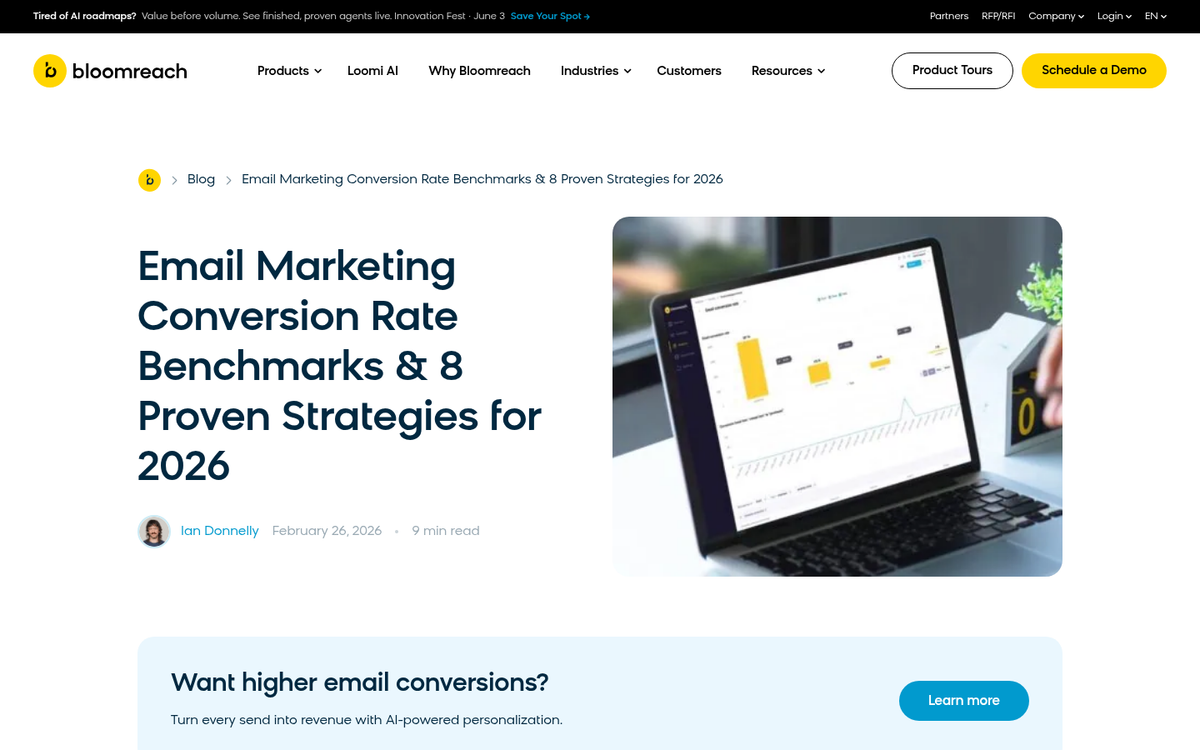
If there's one channel that consistently gets underestimated and consistently overdelivers, it's email. As mentioned above, Unbounce data puts email traffic conversion at 19.3% - higher than any other traffic source tracked. A B2B Magazine report found that 59% of B2B marketers consider email their most effective revenue-generating channel. These aren't flukes. Email works because you're reaching people who already opted in to hear from you, which means intent and familiarity are already established.
Building an email list takes time, but the compounding returns are real. Every subscriber you earn is an asset that belongs to you, unlike a social media following that lives on someone else's platform and can be taken away overnight by an algorithm change or a policy update. Focus on building your list through genuine value: lead magnets, gated content, free tools, or a newsletter worth subscribing to.
Once you have a list, treat it with respect. Send content that's relevant, helpful, and worth opening. Segment your list so you're not blasting the same message to everyone regardless of where they are in the buying journey. The brands winning at email in 2026 are the ones treating it as a relationship channel, not a broadcast channel.
Guest Blogging

Guest posting is still a viable strategy in 2026, though the landscape has changed. Google has gotten significantly better at identifying manipulative link schemes, which means the days of spinning out low-quality guest posts purely for link juice are largely over. What still works extremely well is genuine, high-quality contributions to authoritative publications in your space.
Guest posting should be used for three reasons.
- To obtain backlinks that signal authority to search engines.
- To broaden the exposure of your name and your brand name.
- To showcase your expertise and product in context.
People convert more when they recognize the brand in question. If they see your name and your content everywhere in their industry, trust is built passively over time. That's why guest posting, even when the link is nofollowed, still has brand-building value that's hard to measure but very real.
The first thing you need to do is locate blogs and publications that serve an audience you're trying to reach. Research their content, their tone, and their editorial standards. Then reach out with a thoughtful pitch - not a templated spam email, but something that demonstrates you've actually read their publication and have something specific and valuable to offer their readers. A quality placement on one well-respected site is worth far more than ten mediocre placements on sites nobody reads.
Native Blogging and SEO Content

Native blogging - publishing content on your own site - is still the foundation of long-term organic traffic, but the rules of the game have shifted considerably in recent years. Google's algorithm updates since 2023 have aggressively deprioritized thin, generic content in favor of content that demonstrates genuine expertise, authoritativeness, and trustworthiness. The days of cranking out two mediocre blog posts a week and watching traffic roll in are largely over.
Quality has completely overtaken quantity as the primary variable in content success. A single deeply researched, genuinely helpful piece of content will outperform ten generic posts in almost every competitive niche. This doesn't mean you should post infrequently - consistency still matters - but it means every piece you publish needs to actually earn its place.
You need to know what your audience is trying to accomplish, what problems they face, and what role you can play in solving those problems. You need to create content that targets the specific questions and keywords your audience is searching for, and you need to provide answers that are more complete and more useful than what's currently ranking. First Page Sage, which benchmarks conversion rates across multiple traffic sources using data from 150+ client accounts, consistently finds that well-targeted organic search traffic produces strong conversion rates precisely because intent is built into the search itself.
You won't convert everyone you satisfy this way, but you will build awareness and you will convert some of them. The more naturally you can involve your product or service as part of the solution, the better your results will be. If you're relying on AI to produce blog posts at scale, it's worth understanding how to maintain quality, and if you're budgeting for content creation, knowing how much you should be spending on blog content can help you allocate resources more effectively. It's also worth considering whether a site with very little content can rank well at all before committing to a lean publishing strategy.
Social Media Sources

Social media in 2026 looks meaningfully different from even a few years ago. The platforms that matter most have shifted, organic reach on legacy platforms has declined further, and short-form video has become the dominant content format across almost every channel.
Facebook still has the largest user base and the most sophisticated paid advertising infrastructure available to small and mid-sized businesses. Its audience targeting remains exceptional. However, organic reach on Facebook business pages has declined to the point where it's essentially a paid channel now unless you're running a highly active group. Facebook Groups remain one of the last places where organic community engagement is possible at scale on the platform.
Instagram continues to be a strong platform for visual brands. Reels have become the primary growth driver on the platform, and brands that aren't producing short-form video are leaving significant organic reach on the table.
TikTok deserves serious consideration if your audience skews younger or if your content has entertainment value. Despite ongoing regulatory uncertainty in certain markets, TikTok remains one of the few platforms where organic content can still reach massive audiences without a paid budget. If you haven't experimented with it for your business, 2026 is the year to at least test it.
YouTube has quietly become one of the most valuable long-term traffic sources available, particularly since YouTube content surfaces prominently in Google search results. Long-form tutorials, product walkthroughs, and educational content can drive consistent, high-intent traffic for years after the initial upload. The barrier to entry is higher than other platforms, but so is the durability of the results. If you're looking to build a presence there, there are proven strategies to grow your YouTube channel worth exploring.
LinkedIn is non-negotiable for B2B businesses. Organic reach on LinkedIn remains stronger than most other major platforms, and the professional context of the platform means that content which demonstrates genuine expertise converts at a higher rate than equivalent content on more casual platforms. If you're also running paid campaigns alongside your organic efforts, reviewing the top media buying platforms for businesses can help you scale more efficiently.
Paid Search and Google Ads

Paid advertising is not cheap, and that's worth stating plainly. But it is measurable, scalable, and when done correctly, profitable. Google Ads campaigns across all industries averaged a 7.52% conversion rate in 2025, which is a meaningful number if your margins support the cost per click in your niche.
The key to success with paid ads remains starting with low budgets and doing a lot of testing. Identify where you can get solid conversion volume with manageable cost per acquisition. Test your ad copy rigorously. Optimize your landing pages - this is often where the biggest conversion gains are hiding. Then scale what works.
One thing that has changed substantially is how much Google's automated bidding and AI-driven campaign types have taken over. Smart Bidding and Performance Max campaigns have become the defaults Google pushes, and for many advertisers they produce solid results. However, they also reduce transparency and control, which means you need to be more vigilant about monitoring what your campaigns are actually doing with your budget. Manual oversight still matters even when automation is doing the heavy lifting.
Programmatic and Third-Party Ad Networks
Purchasing traffic through third-party networks is still a viable strategy for the right use cases, but it requires serious diligence. Popunder traffic through networks like RichAds, for example, runs at around $3.50 CPM for US traffic and $2-$2.50 CPM for major European markets as of early 2026. Those are low entry costs, but the conversion rates from this type of traffic are correspondingly lower, and quality varies enormously by network and by offer type.
If you're exploring third-party traffic sources, the same principles apply that have always applied: research the network thoroughly, start small, and track everything on a dedicated landing page. Make sure you're seeing real engagement signals - time on page, scroll depth, return visits - not just raw visit numbers. Bot traffic has become more sophisticated, and surface-level metrics can be deceiving.
As with any source of traffic, you need to monitor what it does for your bottom line. It doesn't really matter where traffic comes from if it doesn't convert. If it converts, you need to know exactly where it came from and how to get more of it. The fundamental discipline of scaling up what works and cutting what doesn't is timeless, regardless of which platforms and channels dominate the current landscape.