





When it comes right down to it, affiliate marketing is pretty simple. You use your platform - a blog, a YouTube channel, whatever - to represent the virtues of a product you believe in, or at least can express that you believe in. When you refer sales to the people who actually sell the product, and they confirm that you referred the sale, they pay you a cut for your successful advertising.
What happens, though, when part of that breaks down? What happens when you do all the work, you refer the sales, and you don't get paid? It's a breakdown of the trust necessary for such a relationship, it burns you in your advertising, and in some circumstances it can even be the difference between paying bills or going into the red.
The problem is more widespread than most people realize. Affiliate marketing fraud alone is estimated to cost advertisers more than $1.5 billion per year, and around 30% of programs are impacted by cookie-stuffing. Meanwhile, legitimate affiliates are often the ones left holding the bag when payments don't arrive.
Key Takeaways
- Unpaid affiliates should first send a professional email presenting facts and numbers before escalating or threatening legal action.
- Common reasons for non-payment include honest mistakes, system glitches, overly strict filtering, business failure, or deliberate affiliate fraud.
- If emails go unanswered, social media complaints can prompt faster responses, as brands fear reputational damage in regulated environments.
- Pursuing unpaid commissions is only worthwhile for larger amounts; small disputes may cost more in time than the actual recovery.
- For significant unpaid amounts, contacting affiliate networks or consulting a lawyer are legitimate options with real legal infrastructure available.
Reasons Why You Might Not Get Paid
There are a lot of different reasons why you might not get paid by your affiliate. Some of them are legitimate, but some of them are sketchy and a few are downright scams.
The first reason is an honest mistake. Sometimes records get misplaced or an email is missed, and a payment doesn't go out when it should. This is especially common with smaller affiliate programs managing everything by hand, rather than using a third-party system to track and validate purchases. This is why you should generally give an affiliate the benefit of the doubt before you go all-in threatening legal action or something else - you could ruin an otherwise good relationship over what turned out to be a minor accounting hiccup.
The second reason is a glitch in the system. Slightly more common than the above, sometimes software bugs out, emails don't deliver, tracking pixels fail to fire, or a payment fails and goes unnoticed. It's an honest mistake that can usually be corrected quickly, so long as the right people are notified. Whether or not this becomes a recurring issue depends on how often it happens and how easily it gets resolved.
The third reason has to do with verification of sales. You're probably tracking the traffic you send along and the sales you can confirm that you referred, either through the affiliate's dashboard or through your own analytics. If your numbers and theirs don't match up, you might be working from different criteria for what counts as a valid conversion.
A classic example of this is Amazon's Associates program. Amazon has been known to flag purchases made by people in your immediate circle - family buying holiday gifts through your links, for instance - as not qualifying for commission. Rather than banning the affiliate outright, Amazon typically just removes those specific transactions from your earnings. Other networks are far less forgiving and will terminate your account entirely.
The fourth reason is that you're exploiting the system. If you've been sending in purchases that aren't valid, inflating click traffic, making purchases through your own links, or coaching buyers to purchase and then return items, those sales will be flagged and you won't be paid. Any form of exploitation will result in you not getting paid sooner or later, and in those cases, the account removal is warranted. These kinds of scams make it harder on everyone and give affiliate marketing a bad name across the board.
The fifth reason is that the affiliate is overly aggressive with filtering. Every affiliate program has some form of purchase validation to weed out fraudulent clicks, chargebacks, or transactions made with stolen cards. Sometimes the engine used to validate sales is tuned too strictly and ends up flagging legitimate traffic as well.
In some cases, shady affiliates do this intentionally. If they owe commissions on 100 sales but can quietly disqualify 5 of them, they've saved themselves 5% with almost no risk of pushback. It's a low enough number that most affiliates won't bother fighting it. Whether or not you choose to challenge it depends on your relationship with the program and how much the missing amount is worth to you.
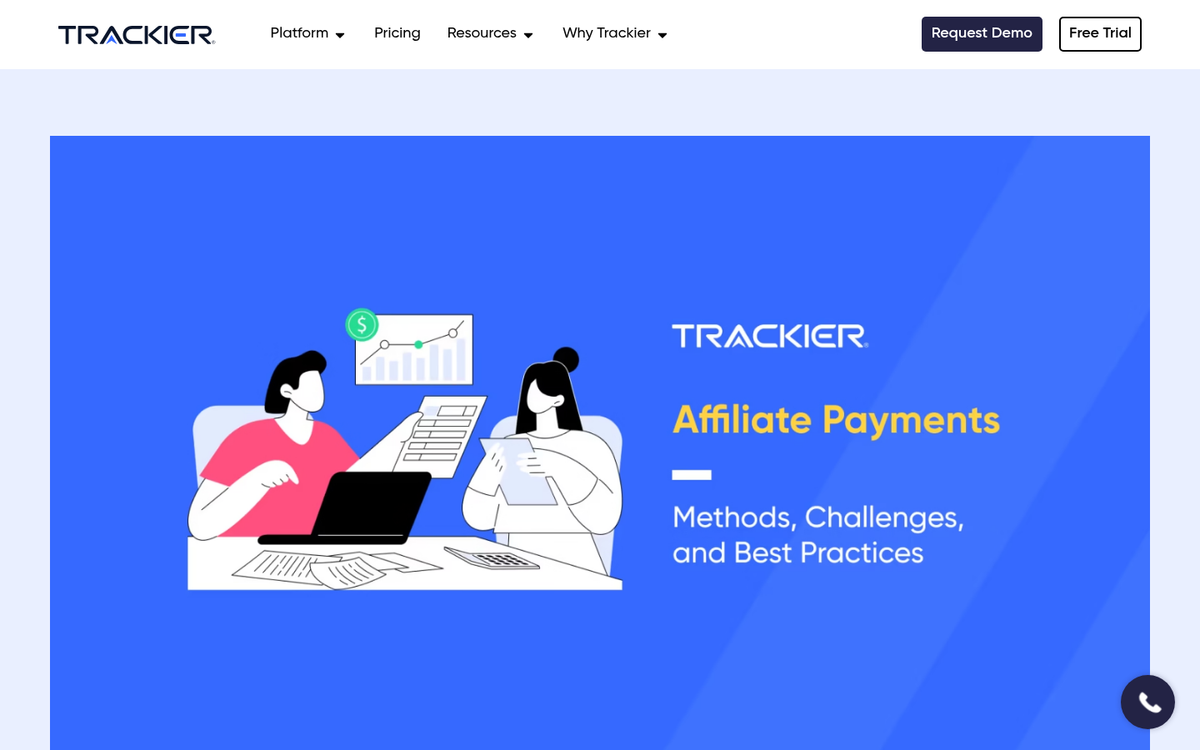
It's also worth knowing that more than 80% of affiliate programs use a Cost Per Sale model, and the most common payment terms are NET-30, with minimum payout thresholds typically sitting between $50 and $100. That threshold alone can reduce payment volume by up to 40% in larger programs, according to data from Trackier. So in some cases, you haven't been scammed - you just haven't crossed the threshold yet, or your commissions are sitting in a holding period you weren't fully aware of when you signed up.
The sixth reason is that the affiliate has folded entirely. If your payments have cut off completely, it's possible that the business you're advertising has simply gone under. Businesses fold all the time - that's nothing unusual - but it's a particularly bad situation when the one you're relying on for a meaningful portion of your income disappears overnight with no warning.
The final reason is that the affiliate cuts off over-performing affiliates to save money. It's a shady move, but it happens. A business will sometimes quietly drop their best-performing affiliates because they've realized they can't sustain the payout rates they originally offered. This tends to be the end stage for high-paying affiliate programs that were never financially viable to begin with. It's a business that deserves to fail - it just takes longer to get there than it should.
So how should you deal with an affiliate that has stopped paying you? Here are the steps you can take.
Step 1: Send an Email

The very first thing you should do when you find yourself not getting paid is to send an email to the affiliate who is supposed to be paying you. Look back through previous correspondence for contact details, or find their support or partner contact page on their website.
What do you say in the email? Avoid laying blame or accusing anyone of scamming you right out of the gate. You don't want to start off on the wrong foot, no matter how frustrated you are. Keep it professional - present the facts, show your numbers, and ask for clarification on the payment status.
Ideally, the affiliate will have a dedicated partner support line and your issue will get resolved quickly. It might turn out that some of your traffic was flagged, in which case you can decide whether to argue your case or accept the explanation. Either way, you should receive your payment or at least a clear reason why you won't be paid for certain referred sales.
If it's been a couple of weeks and you haven't heard back, move on to the next step.
Step 2: Follow Up Contact
You have a choice to make here. How much money is actually being withheld? If you referred 10 sales and only got paid for 8 of them, you can continue while you work through this. If you referred 10 sales and have received nothing at all, I would strongly consider removing your affiliate links temporarily until this is resolved. There's no reason to keep sending traffic and revenue their way when they're not holding up their end of the deal.
Either way, it's time to escalate. Send another email, and follow up every few days if you don't hear back. You don't want this dragging on for months - the longer it goes unresolved, the less likely you are to ever see that money, and the more of your own time you'll have burned trying to recover it.
Step 3: Investigate Other Contact Methods
If emails are going unanswered, look for other ways to reach them. Calling their office directly can sometimes shake things loose. Social media is another powerful tool - many businesses are acutely sensitive to public-facing complaints, and a well-placed post on X (formerly Twitter) or LinkedIn can get a response far faster than a support ticket ever would.
In 2026, with so many affiliate programs operating in heavily regulated spaces, brands are also more cautious than ever about reputational damage. The FTC can seek civil penalties of up to $50,120 per violation for deceptive affiliate advertising practices, and regulators have shown they're willing to go after both brands and individual promoters. That regulatory environment means most legitimate businesses have strong incentives to keep their affiliate relationships clean and dispute-free.
Use that leverage carefully, but know it exists.
Step 4: Determine if Further Action is Worthwhile

At this point, you need to honestly assess whether it's worth continuing to fight, or whether it's time to cut your losses and move on.
If you run a general blog or a broad niche site, switching affiliates is usually straightforward. If I'm writing about outdoor gear, I can find affiliate programs from dozens of competing retailers. Dropping one that isn't paying me is a simple business decision.
On the other hand, if you've built a tightly focused niche site around a specific product or brand, your options are more limited. Pivoting the entire site's focus just to find a paying affiliate isn't always realistic in the short term.
If you're only missing a small number of commissions but the program is otherwise paying reliably, it may not be worth the fight. Escalating aggressively with some programs can result in your account being flagged or removed entirely, which would cost you more than the disputed commissions.
If all of your commissions have dried up, the affiliate has likely already made the decision to drop you - they just didn't bother telling you, hoping to keep collecting your referral traffic for as long as possible before you noticed.
If the missing amount is only a few hundred dollars, it's probably not worth the time and stress to pursue beyond a few follow-up emails. Any amount of lost income is frustrating, but the hours you'll spend fighting for it have a cost too.
If you're missing thousands or tens of thousands of dollars in commissions - which is entirely realistic in competitive niches or during peak buying seasons - that's a different story. At that level, it's absolutely worth taking more serious action.
Step 5: Contact the Third Parties Involved

Assuming you're not just walking away, your next step is to bring in any relevant third parties. If the program runs through an affiliate network like CJ Affiliate, ShareASale, Awin, or Impact, contact the network directly. Networks have real leverage over the brands using their platforms, and they have a vested interest in keeping their affiliate relationships credible.
If the program is run directly by the business - which is increasingly common with platforms like AffiliateWP or similar self-hosted solutions - your options are narrower, but you can still try contacting the platform provider. They may be able to apply some pressure or at least verify that the tracking data supports your claim.
Step 6: Talk to a Lawyer
If all else fails, you can always talk to a lawyer. Depending on what's in your affiliate agreement, the documentation you have proving referred sales, and the amount of money involved, you may have a legitimate legal claim.
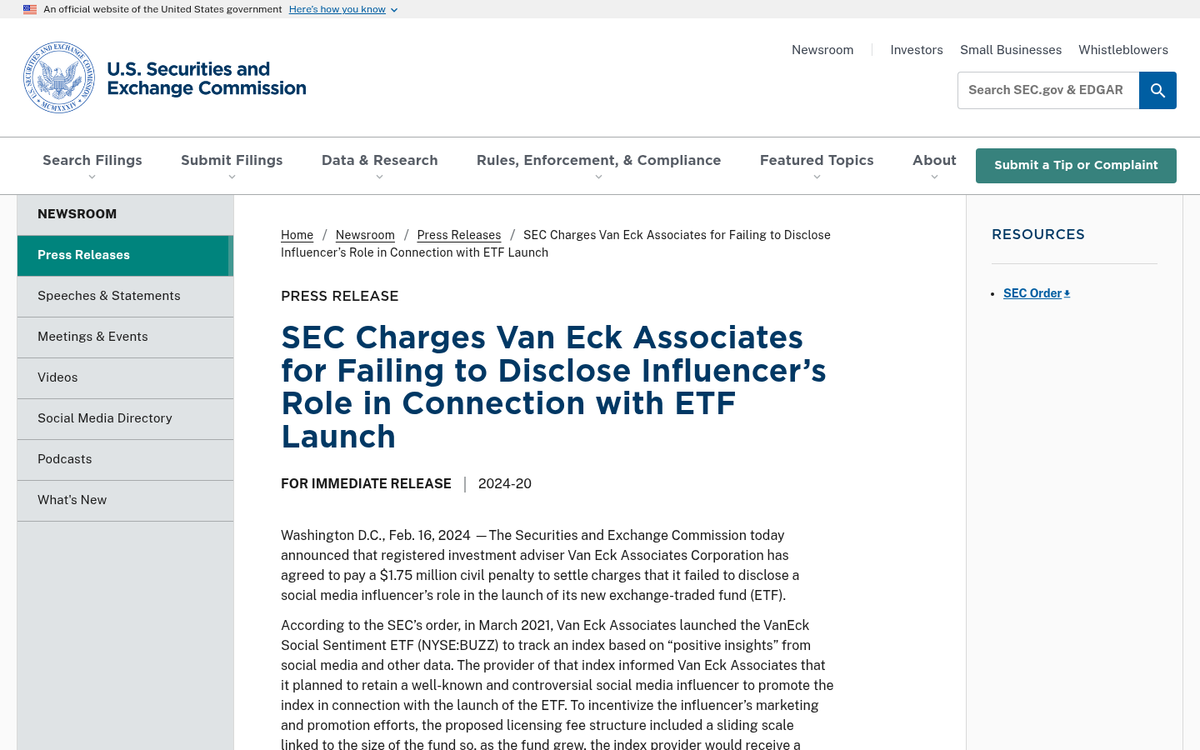
Suing is always a significant decision, and I'm not in a position to give you legal advice. But it's worth knowing that this space is increasingly regulated. The SEC fined Kim Kardashian $1.26 million for promoting a crypto asset without disclosing her $250,000 payment, and in 2024 fined investment firm Van Eck $1.75 million for failing to disclose payments made to a social media influencer. Regulators are paying close attention to undisclosed financial relationships in the influencer and affiliate space - which means there's more legal infrastructure around these disputes than there used to be. If you're involved in crypto affiliate programs, this is especially relevant to keep in mind.
If the amount is significant, a free consultation with a lawyer who handles contract or business disputes is worth your time. They can at least tell you whether you have a case and what it might cost to pursue it.



3 responses
Thoughtful replies only - we moderate for spam, AI slop, and off-topic rants.
I've been with Set tv for 4 months. I have brought them in almost 200k in revenue, over 9000 customers and 55 sub affiliates. I am earning 10k a month and they have stopped paying me. They wanted me to give them my adwords login info and I refused. They owe me over $3000 right now and wont pay me. they have blocked me and will not answer my calls or texts. I guess I'll be hiring an attorney.
I'm running into a problem with VPN affiliates and their minimum payment thresholds. Many will not pay out until you accrue at least $50 and sometimes $100 or more in commissions. Problem is, I've sold my VPN site and just want to close the accounts and get paid whatever I've accrued, even if it's less than the minimum amount. Are they legally obligated to pay these or not?
In more general terms, are affiliates LEGALLY obligated to pay any and all commissions to their affiliates?
Great question, Oliver! Unfortunately, this is a gray area. Most affiliate agreements include clauses stating that minimum thresholds must be met before payout, which you technically agreed to when signing up. That said, it's absolutely worth contacting each program directly, explaining your situation, and requesting an exception. Many companies will accommodate a one-time manual payout rather than lose goodwill. If they refuse, your legal options are limited unless their terms explicitly guarantee payment regardless of thresholds.