Key Takeaways
- Quora's audience skews highly educated and high-income, making it valuable for authority-building beyond typical social platforms.
- Focus answers within your genuine areas of expertise; scattered, unfocused profiles build less trust and credibility over time.
- Target questions with 1,000+ views but weak existing answers - strong replacements can generate compounding organic traffic for years.
- Support answers with data, images, and relevant links; answer as an individual, not a brand, for greater credibility.
- Track results using UTM parameters and analytics to identify which questions and answer styles consistently drive the most traffic.
Using Quora to Drive Traffic in 2026
Quora has evolved well beyond its early days as a simple Q&A platform. With over 400 million unique visitors per month and an average session duration of nearly 8 and a half minutes, it's one of the most engaged audiences on the internet. October 2025 alone saw over 442 million visits. That's not a niche community anymore - that's a serious content platform.
What makes Quora particularly valuable isn't just the volume of traffic, though. It's the quality of the audience. A 2018 Nielsen study found that Quora users are 37% more likely to be in management than the general adult population. 65% hold a college degree, and 28% hold a graduate degree. Adults with household incomes over $100K spend twice as much time on Quora as they do on LinkedIn. Think about that for a second. You have a highly educated, high-income, decision-making audience sitting on a platform that most marketers are still sleeping on.
And unlike social platforms where organic reach has been systematically gutted, organic search drives about 81.74% of Quora's traffic. That means a well-written answer from two years ago can still be pulling in readers today. It compounds in a way that a tweet or an Instagram post simply doesn't.
We consider Quora one of the best available options for growth hacking, and that's even more true in 2026. The platform has matured, the audience has grown, and the opportunity for genuine authority-building is as strong as ever. You just need to implement your Quora strategy the right way.
Learn Your Strengths
The first thing you need to learn about using Quora successfully is that the best answers are invariably written from a position of informational authority. You need to be the kind of person people believe and trust. You can't just be someone stepping in and giving a copy-paste version of Wikipedia's entry on a subject. The people who use Quora tend to be intelligent, curious people - remember, we're talking about an audience that skews heavily toward college-educated professionals. Assume they've already done their homework.
This means you need to take some time to be introspective and understand your actual knowledge and experience. You might be passionate about a subject, but passion alone doesn't make you an authority. If you'd just be promoting speculation rather than genuine insight, you're not going to hold up long on a platform like this. Generally, your areas of strength are going to come from your business, your personal experience, your professional history, and your hobbies. Just because you follow a subject closely doesn't mean you have the standing to speak about it with authority.
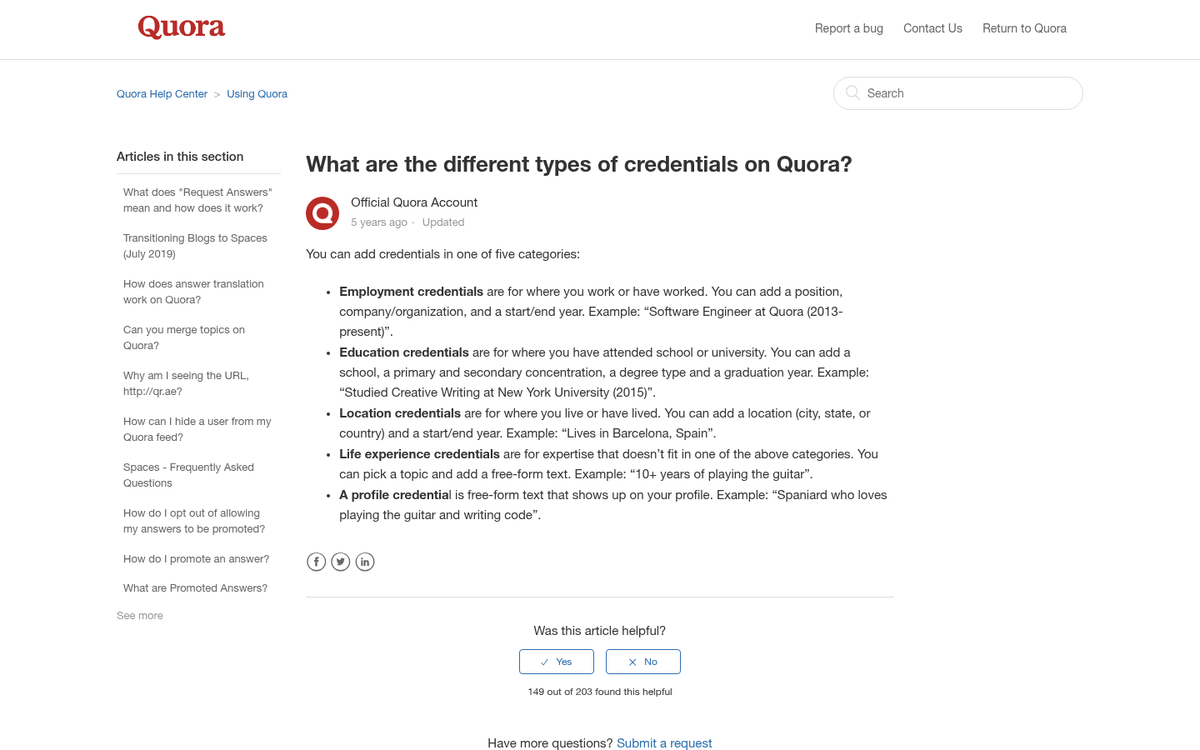
The areas you're strong in are going to be the primary areas in which you'll be answering questions. You want to focus your answers in a relatively narrow band, so that people don't click your profile and see a completely scattered set of topics. The more focused and consistent your presence, the more trust you'll build over time. If possible, have some form of verifiable credential or background detail that supports your expertise - Quora lets you add credentials to individual topics, and you should use that feature. If you're also exploring how much money you can earn from Quora each month, understanding where your authority lies is a critical first step.
Seek Out Questions in Your Strength Areas

Once you know your areas of expertise, you can start to look for questions in those areas. This is going to be your primary focus. You'll spend a reasonable amount of time searching Quora for those opportunities.
Think of Quora as a form of off-site content marketing. You're creating content, and you have a unique opportunity on the web these days; you don't have to write thousands of words for every piece of content. Some questions can be answered perfectly well with 500-1,000 words, which on a blog would come across as thin content. On Quora, a tight, well-structured 600-word answer can outperform a rambling 2,000-word one.
The best part is that you can provide supplemental depth using your website as a resource. If someone asks a question, answer it directly on Quora, but include a link to a blog post where you go into greater detail. This gives you more authority on the platform while also creating a traffic generation opportunity.
You can't link to your blog in every single post, and you can't get away with posting promotional links when they're unrelated to the content. If you have a resource that genuinely helps solve the problem being asked about, link it. If it's only tangentially related, leave it out. Quora's audience is sharp enough to spot a sales pitch dressed up as an answer, and it will cost you credibility.
Seek Out New Questions

When you're looking for questions to answer, there are a few different angles you can take. When you register for Quora, you select topics relevant to your expertise - everything from specific industries to geographic regions to technical disciplines. You can add to these at any time. Quora will surface questions from these topics in your feed, but don't rely solely on that.
What you want to do is actively search for topics using the search bar. When you see the word "Topic" next to a result, that's a category hub. Click into it and you can sort questions by newest, which gives you the opportunity to get in early on questions before they already have ten polished answers competing for the top spot.
As of 2026, Quora also allows registered users to post up to 50 answers per day, which is generous. You obviously don't need to hit that ceiling - quality over quantity always wins here - but it does mean there's no artificial bottleneck on how active you can be on Q&A sites like Quora.
Seek Out Questions with Strong View Counts and Weak Answers
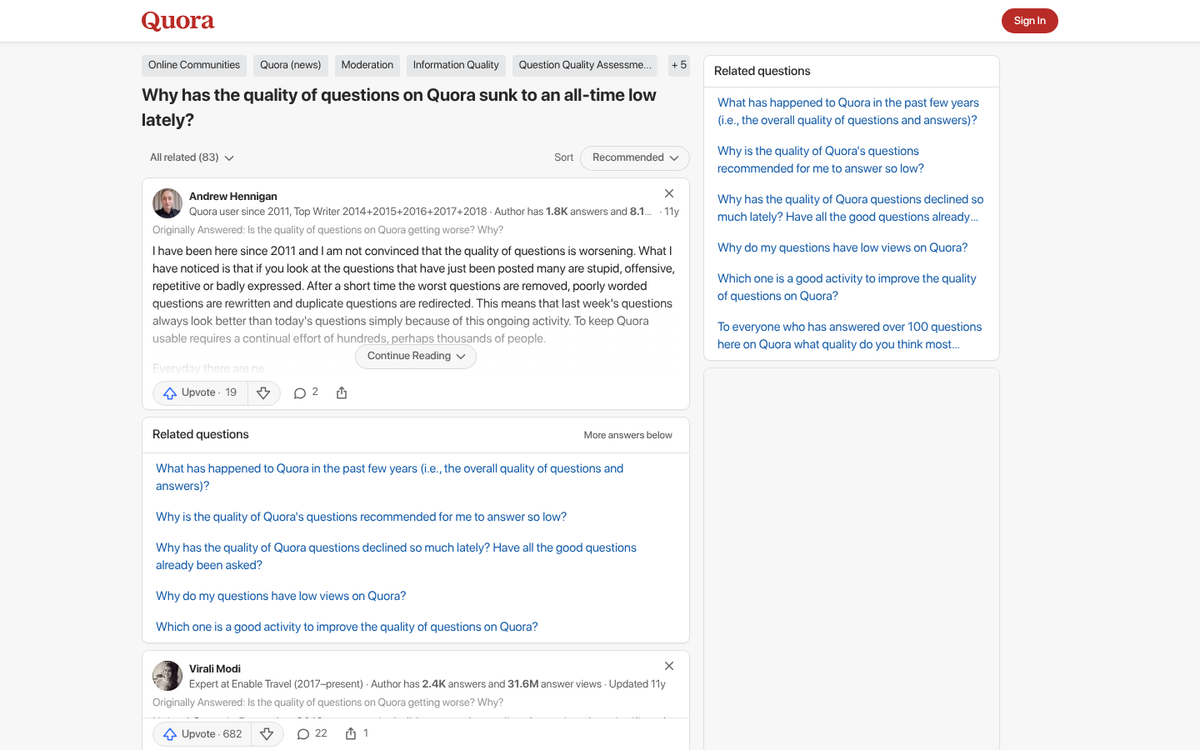
One of the most reliable strategies on Quora is finding questions that already have significant traction but mediocre answers sitting at the top. Look for questions with 1,000 or more views where the existing answers are short, vague, or poorly supported. These are your best opportunities.
The goal is straightforward: produce an answer that is longer, more detailed, better sourced, and more genuinely useful than whatever is currently sitting in the top spot. You'll have a bit of an uphill struggle to overtake it in votes, but once you do, that position tends to be sticky - especially when organic search is responsible for the lion's share of Quora's incoming traffic.
Given that most of Quora's traffic comes through Google, a high-quality answer on a well-trafficked question can continue generating clicks for months or even years. That's a compounding return on a one-time investment of your time. If you want to go deeper on maximizing that visibility, it's worth understanding how Google surfaces content and what signals matter most for sustained organic reach.
Answer Direct Questions
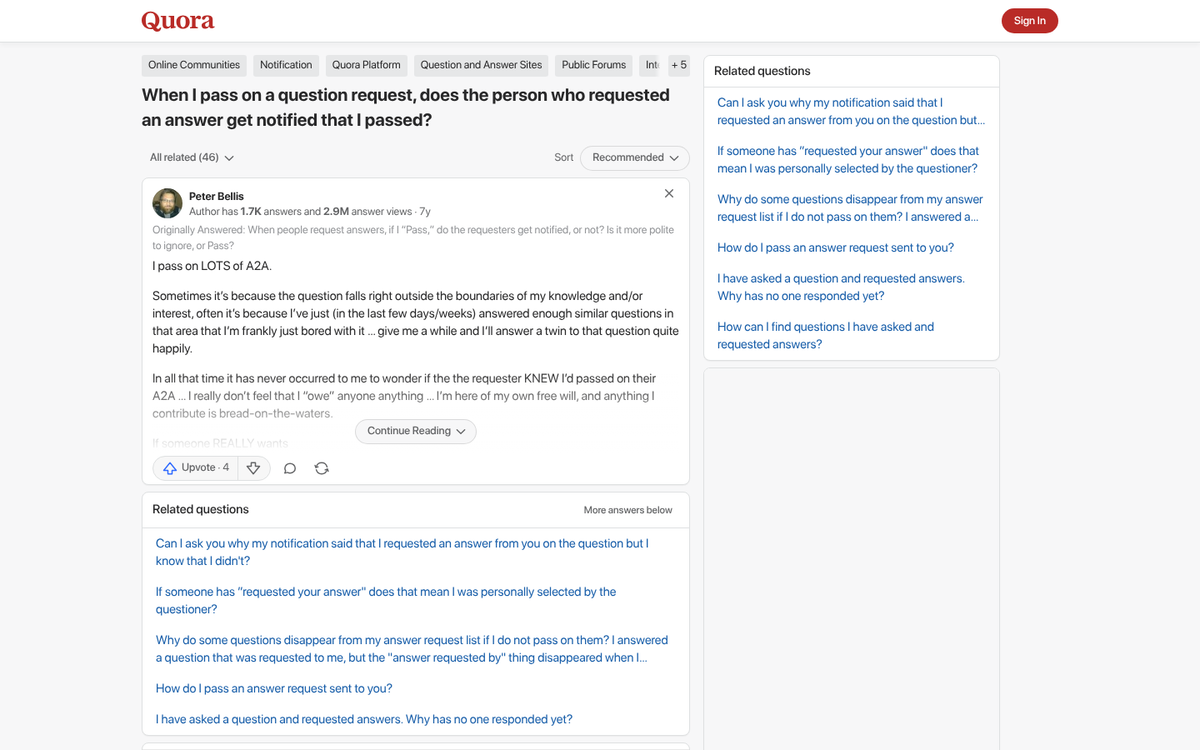
This opportunity typically doesn't appear until you've built some reputation on the platform. Once you've demonstrated consistent expertise and activity, other users will start sending you direct requests to answer specific questions. These show up as notifications and in your sidebar.
Direct requests can be excellent opportunities because the person asking already has some awareness of who you are and trusts your perspective. On the flip side, these questions are sometimes niche enough that your answer won't get much broader visibility. Use your judgment - if the question feels like it could have broad appeal even if it came to you directly, invest the time. If it's hyper-specific to one person's situation, a shorter answer is fine.
Answer With Details, Data, Images, and Links
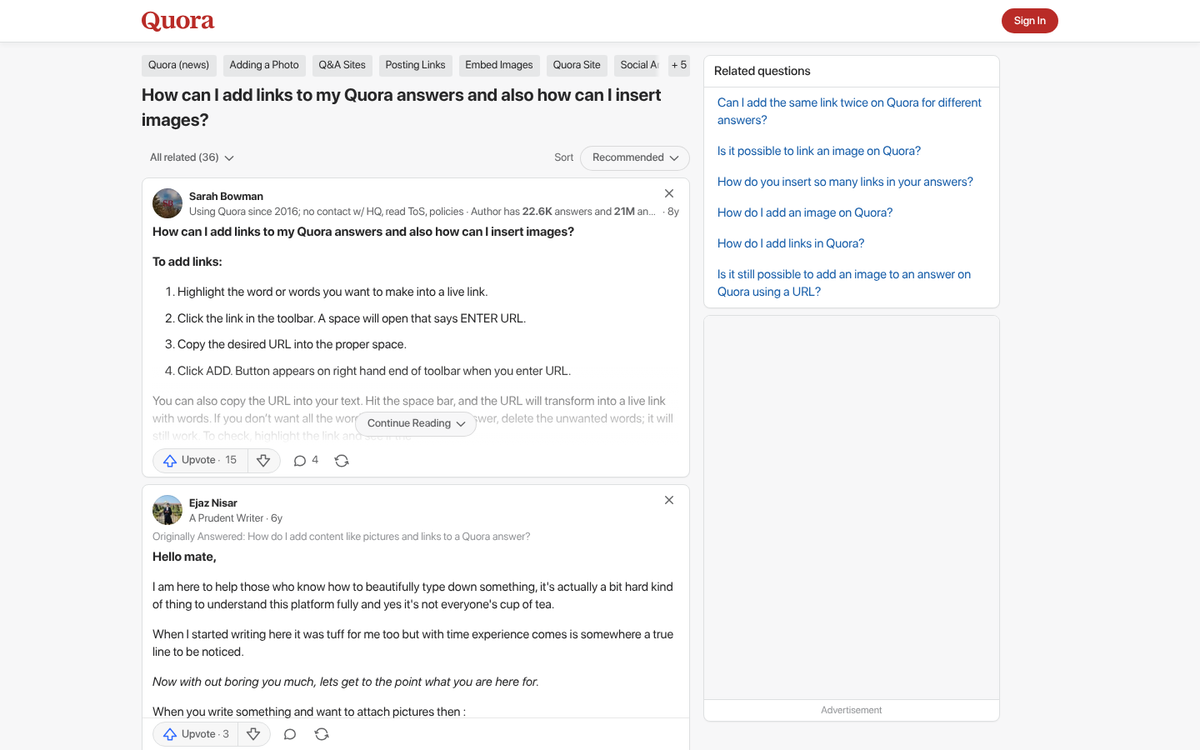
When you're putting together an answer, structure matters. At the top level, actually answer the question - don't bury the lead. Give the reader a clear, usable takeaway in the first few sentences, then use the rest of your answer to support and expand on it.
Back your answer up with data wherever possible. Case studies, statistics, personal results, or referenced research all work well. Data signals authority, and it gives you a natural opportunity to link to your site or another credible source without it feeling forced.
Include images when you can - a lot of people still don't bother, which means images make your answers visually stand out in a feed. images make your answers visually stand out in a feed. Try to place them further down in your answer rather than at the very top, since the opening paragraph is what shows in previews and you don't want an image overriding your text there.
Finally, include links where they're genuinely justified. A link to a detailed resource - whether on your own site or elsewhere - adds value. A link that exists purely to drive traffic with no relevance to the answer will cost you more than it gains.
Answer As Yourself, Not Your Brand
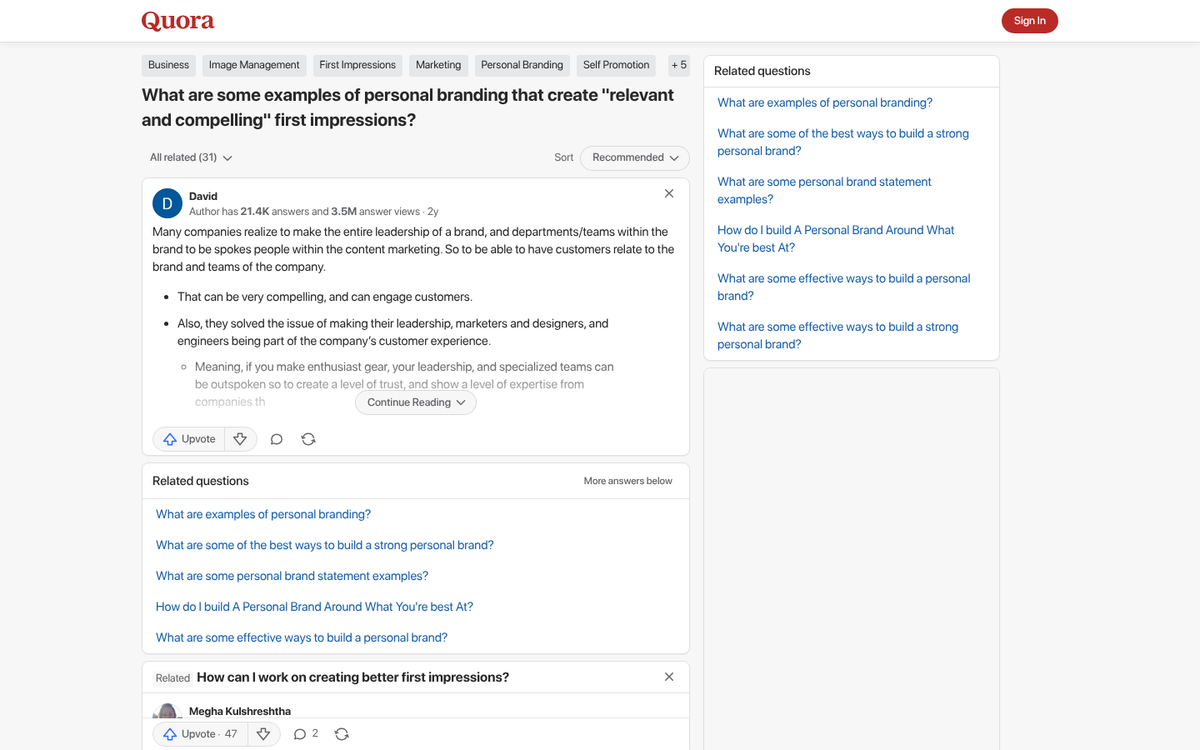
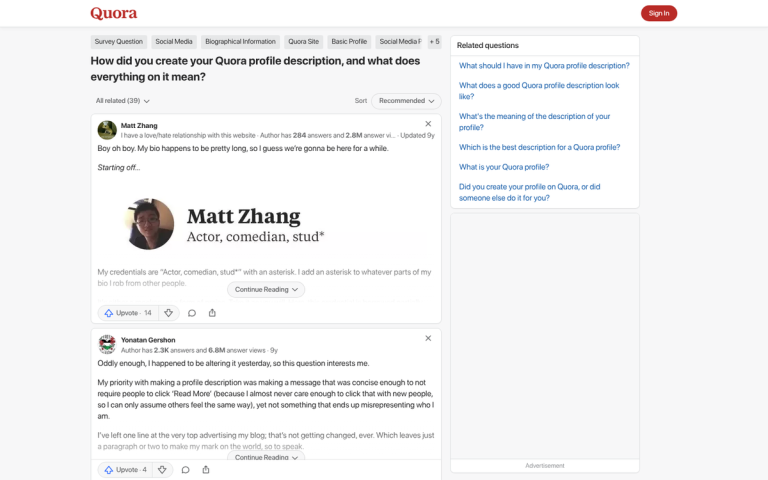
When you're answering questions on Quora, answer as a person, not as a brand account. Individual voices carry more credibility on this platform. The good news is that every answer displays a one-line description next to your name - use that to establish context. Something like "Sarah Chen, Head of Growth at [Company]" does the work of connecting your personal credibility to your brand without making your answers feel like press releases.
Your name is also a link that takes people to your profile, where they can follow you, browse your answer history, and get a fuller picture of your expertise. Keep that profile clean, complete, and consistent with the topics you're focused on.
Keep Answers Narrow
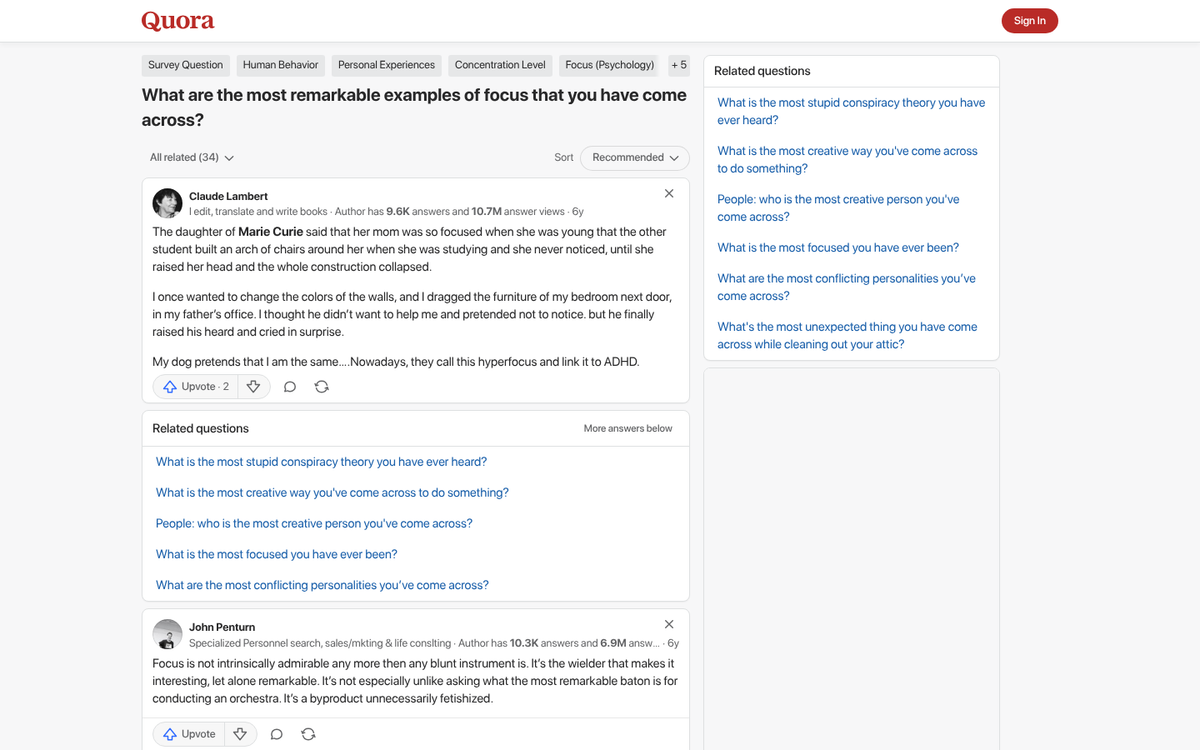
When you're answering questions, stay on topic. Resist the urge to expand into adjacent areas unless the question genuinely requires it. If someone asks a specific question, answer that specific question. If there's a broader resource that covers the wider landscape, write that blog post and link to it - don't try to cram everything into a single Quora answer. Tight, focused answers tend to perform better and are easier for readers to act on.
Analyze Successful Traffic Generators

Once you're active on Quora, you'll want to set up proper tracking to understand what's actually working. At minimum, use Google Analytics or whatever analytics platform you're currently running. In GA4, you can find Quora traffic under Traffic Acquisition - it typically shows up under referral or social depending on your configuration.
For answers that you're actively linking to specific pages, use UTM parameters so you can track exactly which answers are driving traffic, and what those visitors are doing once they arrive. Over time, you'll start to see patterns - certain topics, question formats, or answer styles that consistently outperform others. Double down on those.
The goal is to move from just posting answers to running a repeatable process: find the right questions, produce strong answers, track the results, and refine based on what the data tells you.
Ask Questions Outside Your Specialty

Remember that Quora is a two-way platform. Asking questions - not just answering them - can actually strengthen your presence. It signals that you're genuinely engaged with the community rather than just mining it for traffic.
Ask questions that you're actually curious about, even outside your core industry. And occasionally, ask strategic questions within your niche - something like "What's the biggest mistake you made when scaling your content team?" - that you can then mine for insights, quotes, and data points to use in a future blog post or report. It's a lightweight form of original research that also gets your name in front of people who might not have found you through your answers alone.