





Some people will tell you that buying traffic is perfectly safe, even when you're running Google Ads. Some people will tell you that they personally have been banned for buying traffic. Some people have never tried it, but are afraid of suffering the consequences if they are caught buying traffic and Google decides to block their accounts.
Where is the truth? Where is the line drawn? Can you buy traffic, or does Google block anyone they catch doing so?
Key Takeaways
- Google permits buying traffic as long as it's legitimate and real, not fake or bot-generated.
- Google explicitly prohibits "services designed to artificially inflate ad or website traffic," with violations risking immediate account termination.
- Warning signs of bad traffic include unusually low costs, untraceable sources, sudden traffic spikes, and providers refusing transparency.
- If bad traffic is discovered, immediately deactivate the source and report it using Google's Invalid Clicks Contact Form.
- Widespread fraudulent traffic damages the entire ad ecosystem, eroding advertiser trust and degrading network quality for everyone.
Word From Google, Direct
Google doesn't care if you buy traffic - with one critical caveat: it must be good, legitimate, real traffic. As Google states directly in their policy, as long as your traffic is legitimate, they don't care where it came from. The problem arises when you're buying fake traffic - traffic that does nothing but artificially inflate your views and earn you pennies in ad revenue without any genuine user engagement.
It's worth noting that Google's own program terms (Section 3 - Prohibited Uses) explicitly state that users "shall not, and shall not authorize any party to: generate automated, fraudulent or otherwise invalid impressions or clicks." Violation of these policies "may result in immediate termination of this Agreement or your account without notice." Additionally, Google Ads policy lists "services designed to artificially inflate ad or website traffic" as a prohibited form of dishonest behavior. So while buying traffic itself isn't banned, buying the wrong kind absolutely is - and the consequences are severe.
Google provides a traffic provider checklist, which you can use to determine whether the traffic you're buying is valuable or fake. Here's a breakdown of the key points.
What you need to know: where the traffic is coming from and what kind of traffic it is. In general, if your traffic is coming from legitimate paid ads or well-known ad networks, it's more likely to be acceptable. If you're contracting someone through a notorious low-cost gig marketplace, they're probably not sending you targeted, legitimate traffic.
- Where are your ads being displayed? Make sure you recognize the locations. If the source of your traffic is a site that looks like spam or a site that has been removed from Google's index, avoid buying that traffic.
- If the provider of the traffic is not going to tell you where your traffic is coming from, avoid that provider. This typically happens when the traffic is coming from a direct link from a bot, and not from a URL referral.
- Ask to see your ad live and in real time. If the provider cannot or will not show you, revoke your contract. The traffic is likely coming from a spam site or a bot.
- How much does the traffic cost you? If the cost is significantly cheaper than running a comparable ad through a reputable platform like Google or Meta, you need to question how the provider is able to deliver traffic so cheaply. An unusually low price with no clear explanation is a strong warning sign of illegitimate traffic.
- Ask the provider who else purchases traffic from them. If they are unable or unwilling to share even a partial client list, take it as a sign to walk away. You don't want your business associated with a provider that refuses to share any verifiable public information.
- If the provider shares a client list and you recognize known spam sites, thin affiliate sites, or low-quality content farms, leave immediately. The traffic they refer is almost certainly poor in quality and potentially harmful to your account standing.
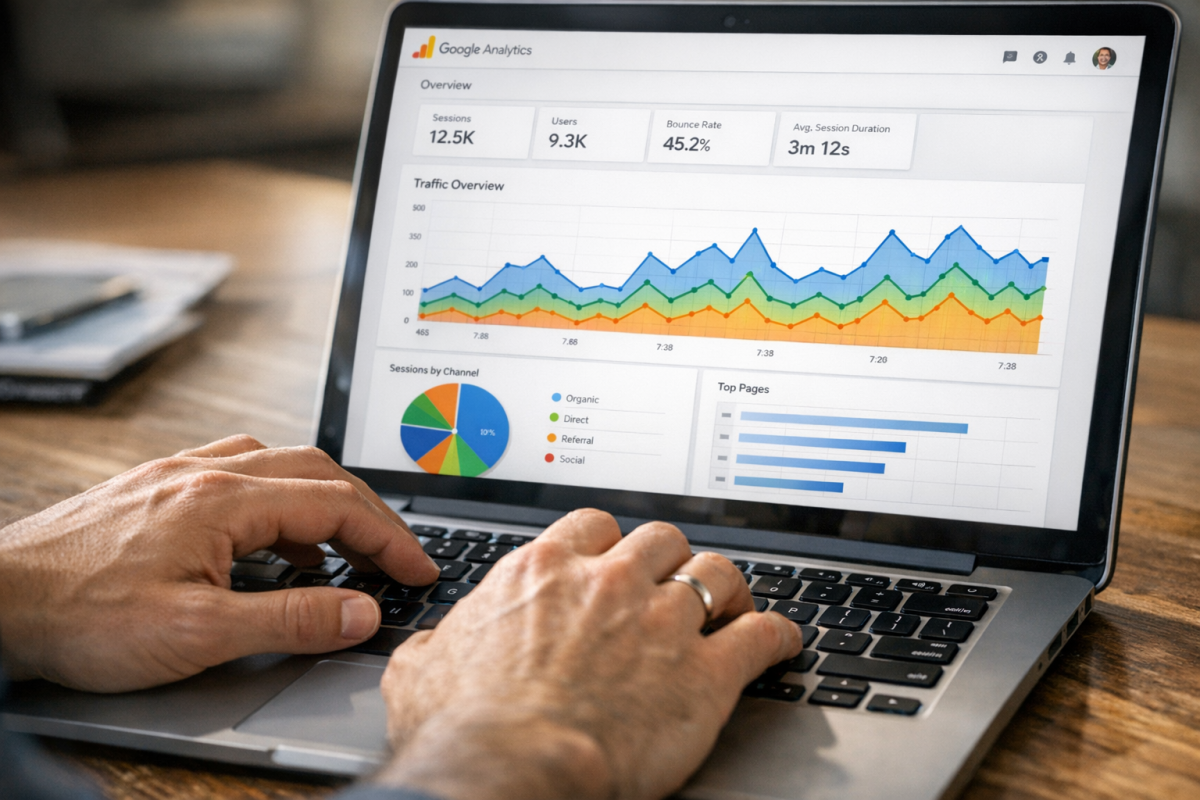
Remember: any good source of traffic is going to be traceable and subject to analytics. By using Google Analytics 4, you can see where your traffic is coming from and identify anomalies. Implementing filters to block bot and spam traffic will help you minimize the traffic issues that can form grounds for removal from Google Ads.
When you're tracking the traffic you purchase, pay close attention to referral URLs. You don't want to find spam sites in that list. Also watch for unusual traffic patterns - if traffic comes in large, sudden bursts all at once, it may not be legitimate. Real users tend to spread out their browsing throughout the day, with natural peaks and dips. Sharp, all-or-nothing spikes are a classic indicator of bots being switched on and off.
Dealing With Bad Traffic

So what do you do if you're running Google Ads and you discover that the traffic you paid for is not legitimate? The last thing you need is to find out too late and lose access to your account entirely.
The first thing you will want to do is deactivate the traffic source immediately. If you're running an ad through a link exchange or third-party network, pull that ad. If you can't disable the ad, redirect the landing page to a page that doesn't exist or one that doesn't have Google Ads active. If none of those options are available, remove Google Ads from the targeted page entirely.
The second thing you will want to do is report the activity to Google. You can use the Invalid Clicks Contact Form to report click fraud. Keep in mind this works whether or not you bought the traffic - sometimes competitors will deliberately attempt to flood your Google Ads-enabled site with fraudulent traffic in an effort to get you removed from the program.
Be aware that submitting a report to Google does not automatically absolve you of responsibility. If the fraudulent traffic continues reaching your Google Ads placements and you haven't taken meaningful steps to stop it, Google may still suspend or terminate your account. It's also worth noting that Google's program terms make it clear that customers are equally responsible - users "will not, and will not authorize any third party to, generate automated, fraudulent or otherwise invalid impressions, inquiries, clicks or conversions." The difference between impressions and clicks matters here, as both can be manipulated by bad actors.
Unfortunately, you may need to operate without Google Ads temporarily while the bad traffic runs its course or is fully blocked. Once you've addressed the source and can demonstrate clean traffic, you'll be in a much stronger position to reinstate your account or ads.
Why Does Google Take False Traffic So Seriously?

When a bot visits your site and clicks an ad, what does that really hurt? On the surface it seems like a minor issue - Google reverses the transaction, refunds the advertiser, and everyone moves on. But the reality is far more damaging to the ecosystem as a whole.
For one thing, Google loses trust in you as a publisher or advertiser. You've demonstrated an inability - or unwillingness - to control where your traffic is coming from, which raises red flags across your entire account history.
At a broader level, advertisers lose confidence in Google itself. Google has built an enormous reputation on delivering quality, measurable results. When fraudulent traffic slips through - traffic that advertisers have no ability to convert or capitalize on - those advertisers begin to question whether Google is worth the investment. Some take their budgets to competing platforms. Google actively works to combat this because the financial and reputational stakes are significant.
When invalid traffic becomes widespread, the entire ad network degrades. Quality advertisers leave, CPMs and CPCs drop because the network can no longer justify higher rates, and the only participants left are low-quality operators gaming the system. It creates a deeply negative cycle that's difficult to reverse. This is precisely why Google enforces its invalid traffic policies so aggressively - and why the consequences for violations, up to and including immediate account termination without notice, are as serious as they are.


2 responses
Thoughtful replies only - we moderate for spam, AI slop, and off-topic rants.
Good to know. Is all types of traffic buying against Adwords Though? Or just low quality fake traffic. I wonder how strict Google is with this
Most of the time buying traffic isn't wise when you're running Google Adsense (I'm assuming you mean't Adsense instead of Adwords). However, your mileage may vary; some of our clients use our services, for example, with no issue. Hope this helps!