





A lot of different factors go into the calculation for determining your Google Ads CPC. It's no surprise that we marketers struggle to keep up with what is and isn't relevant. It's even worse when you consider that every company offering an ads platform will only specify a portion of what goes into their calculations.
It's fine, really. If Google told you every single detail about how their algorithm works, or even just published the algorithm publicly, you can bet there would be loopholes to exploit within days. With the calculations kept secret, at least there's some incentive to act in the best interests of your viewers, and not just the search engines.
Key Takeaways
- Google's Quality Score, influenced heavily by mobile landing page experience, directly impacts your CPC costs.
- Achieving a Quality Score of 8-10 can reduce CPC by up to 50%; each point improvement yields roughly 10% savings.
- 53% of mobile users abandon sites taking over 3 seconds to load, hurting Quality Score and raising ad costs.
- With 60-70% of web traffic coming from mobile, poor mobile performance significantly damages overall campaign CPC.
- Simply having a mobile site isn't enough; page speed, Core Web Vitals, and clear CTAs are the real performance drivers.
Calculating CPC

Google will happily tell you what goes into their calculation for CPC. First, though, you have to remember that it's an auction system. The same keywords, the same ads, the same targeting, everything identical in two different situations where the only change is the day of the year can result in dramatically different CPCs. Why? Competition. If you set a bid cap of $1 and no one bids against you, you'll get your ads basically free. If your $1 bid is out-bid by people willing to bid $2, you'll max out your bid and only get low-tier placement.
CPC can range from a few cents all the way up to prices in the $50-100 range. The former are low volume, low competition keywords. The latter are extremely high value, high competition keywords. Given that some high-end retailers can spend millions per month on advertising, it should come as no surprise that the niches they want to dominate will be dominated.
On top of all of this, Google will adjust prices depending on your Quality Score. This alone is huge, because a wide array of factors go into the calculation of quality score.
Cascading Influence

In a sense, nearly everything goes into your CPC. The total cost of your ads is your CPC calculated with your quality score. Your CPC is calculated based on an array of factors that include elements like your past performance, your choice of keywords, and the relevance of your landing page.
Your quality score, meanwhile, is calculated by a bunch of additional factors. Your landing page quality and usability, your ad copy relevance to your landing page, your click-through rate, your account performance; it's all part of an ongoing quality score calculation.
Then you have to consider the factors that influence those factors. The usability of your website is influenced by your design, your color choices, your layout, how well your scripts work, your load times, the geographic location of your servers, and on and on.
Where do we draw the line? Thankfully, at least for the purposes of this particular article, it doesn't really matter.
Mobile Compatibility in 2026

At this point in 2026, mobile compatibility isn't a suggestion, a recommendation, or even a best practice. It's a baseline requirement. Mobile-first indexing has been Google's default for all sites for years now, meaning Google crawls and indexes the mobile version of your site first and foremost. If your mobile experience is poor or nonexistent, your entire search presence suffers - not just your mobile rankings.
Responsive design remains Google's recommended approach, and for good reason. It adapts fluidly to any screen size, meaning no user gets left behind regardless of their device. With mobile accounting for 60-70% of all web traffic in most niches, there's simply no justification for deprioritizing it.
Google's own research has long shown that 53% of mobile users abandon a site that takes longer than 3 seconds to load. That's not just a usability problem - it's a direct Quality Score problem, and a direct CPC problem. Pages that load in under 3 seconds with clear calls to action consistently achieve "Above Average" landing page experience scores. Pages that don't pay the price in both rankings and ad costs.
Mobile in Google Ads
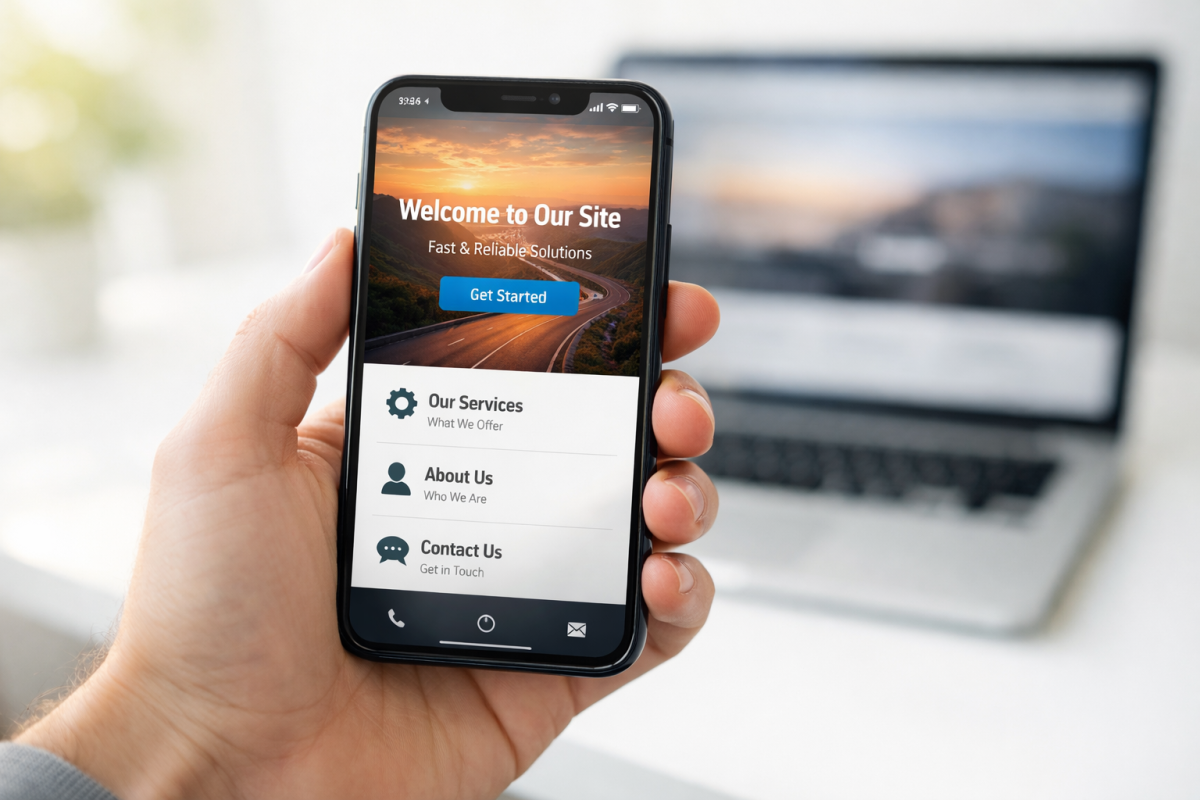
If you're still running Google Ads without a properly optimized mobile experience, you are almost certainly paying more per click than you need to. Here's why that matters in concrete terms.
Landing page experience makes up roughly one-third of your Quality Score. A page that loads slowly on mobile, has poor usability, or forces users to pinch and zoom will receive a low landing page experience score. That low score drags down your overall Quality Score, and a lower Quality Score means Google charges you more per click to achieve the same ad placement.
The numbers are significant. Achieving a Quality Score of 8-10, which requires a strong mobile landing page experience among other factors, can reduce your CPC by up to 50% compared to a low Quality Score. Each single point improvement in Quality Score typically yields around a 10% reduction in CPC. Pages loading in under 3 seconds alone have been shown to produce Quality Scores approximately 25% better than slower pages.
When 60-70% of your clicks are potentially coming from mobile devices, even modest improvements to mobile landing page experience can have an outsized effect on your average CPC across the entire campaign.
I've seen this firsthand. After implementing a proper responsive design on one of my own sites - no other changes made - my Quality Score climbed, the landing page experience rating improved from "Below Average" to "Above Average," and my CPCs dropped noticeably. Is that a controlled scientific study? No. But the mechanism is well documented by Google itself, and the math behind Quality Score and CPC is not ambiguous.
Mobile Page Speed Is the Real Lever
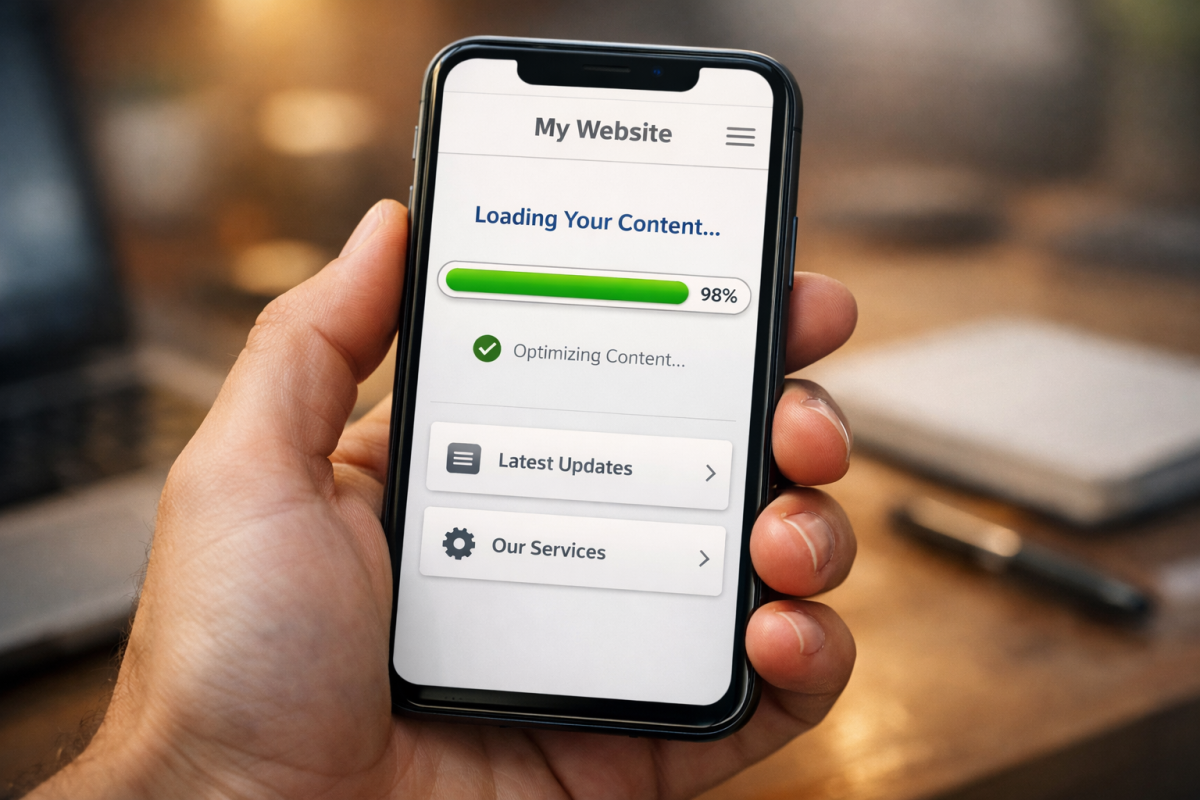
In 2026, simply having a mobile site is no longer enough to move the needle. What actually matters is how well that mobile site performs. A slow, bloated responsive design can be just as damaging to your Quality Score as having no mobile site at all.
The specific factors that influence your landing page experience score - and by extension your CPC - include:
- Page load speed on mobile: Under 3 seconds is the target. Under 2 seconds is better.
- Core Web Vitals: Google's metrics for loading performance, interactivity, and visual stability all factor into page experience signals.
- Relevance of the landing page to the ad: The page content needs to match what the ad promised.
- Ease of navigation and clarity of CTA: Mobile users especially need a clear, frictionless path to conversion.
- Absence of intrusive interstitials: Pop-ups that block content on mobile are a known negative signal.
If you invest in a responsive design but don't address page speed, you may see little to no improvement in Quality Score. Run your landing pages through Google's PageSpeed Insights and take the recommendations seriously. The improvements you make there translate directly to lower CPCs.
Should You Prioritize Mobile Optimization?

At this stage, the question isn't really whether to have a mobile site. That ship sailed years ago. The question is whether your mobile experience is good enough to be helping your Quality Score rather than hurting it.
If your landing page experience is rated "Below Average" in Google Ads, fixing your mobile performance is one of the highest-leverage changes you can make. A 10-25% CPC reduction from landing page improvements alone, compounding with other Quality Score factors that improve as a result of better user engagement, can produce meaningful budget savings over time.
That said, mobile optimization shouldn't be pursued solely for the CPC benefit. Consider the full picture: the majority of your potential customers are on mobile devices, your organic rankings depend on your mobile experience, and your competitors who have invested in fast, clean mobile experiences are getting better ad placement at lower costs than you. Every month you delay is a month you're subsidizing their advantage.
There are other levers for lowering CPC - negative keywords, tighter audience targeting, improved ad copy, bid strategy adjustments - and they all matter. But a strong mobile landing page experience is one of the few improvements that simultaneously benefits your paid ads, your organic rankings, and your actual conversion rate all at once. It's hard to find a higher return on investment elsewhere in your marketing stack.

2 responses
Thoughtful replies only - we moderate for spam, AI slop, and off-topic rants.
Interesting, I've never considered a mobile site actually saving me money. Currently getting a quality score of 3-7 for most of my keywords so if a mobile site will help me achieve a higher score I think I'm going to pull the trigger on a redesign. Do you have any recommendations on how I can redesign my site? Developers to hire? Thanks James!
We've had a lot of luck with Freelancer.com and Upwork.com. Redesigning a site with mobile can be a simple task or a very complex task, depending on how many unique pages need redesigning. For small sites it shouldn't cost you much. Relevance is super important for quality score, but if you're getting a 3-7 score with a non-mobile site than I'd imagine making your site mobile friendly would bump those scores up by 1-3 points each (which is what we've seen in our tests). Make sure you check the Recommendations tab as well for any other suggestions Google has to improve your performance.