Key Takeaways
- Google officially confirmed social signals like shares, likes, and follows are NOT direct ranking factors, per John Mueller in 2015-2016.
- Social media links on Facebook, X, and LinkedIn are mostly nofollow, meaning they pass no PageRank or traditional link authority.
- Studies show correlation between social shares and higher rankings, but quality content earns both simultaneously - shares don't cause rankings.
- Social media helps indirectly by amplifying content discovery, which increases chances of earning real backlinks that do influence rankings.
- A consistent brand presence across social platforms may contribute indirectly to how Google evaluates brand legitimacy and trustworthiness.
It's clear that social media is beneficial to a business. You get quite a bit out of it. You get advertising, you get engagement, you get customer satisfaction. You get paid marketing so cheap it's practically free, if you want it to be, and it scales well with money.
One thing that you might or might not get is a benefit to your website. Or, a direct search engine benefit. Social tells can benefit your website in indirect ways; more shares means more see it, which means more click through to it, which means you have more traffic and the benefits that means.
The only question is: how much does Google actually care? Does Google monitor your traffic as a ranking factor? Do they tally up your shares on Facebook, on YouTube, on X (formerly Twitter), or on any other network? Are some networks better than others?
December of 2010
Danny Sullivan of Search Engine Land wrote a piece published December 1, 2010, titled "What Social Signals Do Google & Bing Really Count?" In it, he looked into what was known of the search algorithms at the time and what social tells mattered.
The first thing to come up was something called Google Social Search. In 2010, it was a big part of Google's vision for the future. Social Search was a carrying out of Google search that factored in your connections on social networks, specifically Google+ and Twitter - this was back when Google had a direct line to Twitter's firehose of data, before that access was cut off and left Google scrambling.
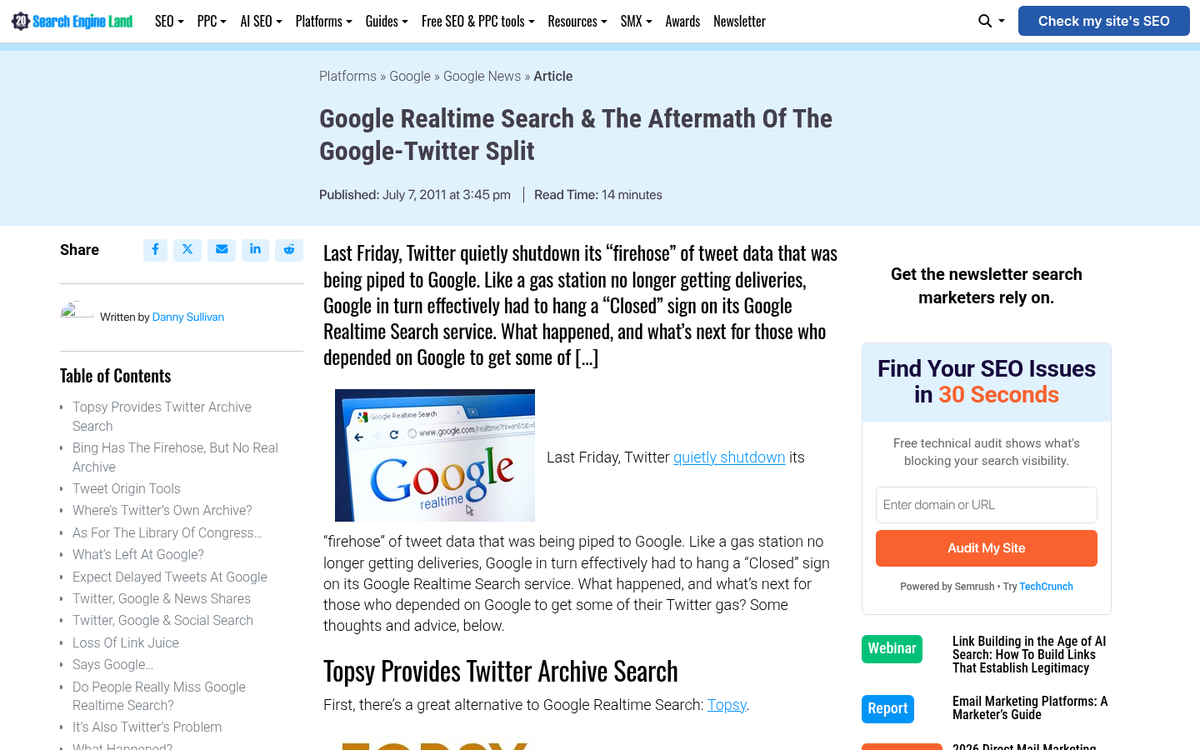
Another factor in search back then was Twitter authority, because of the close relationship between Twitter and the search engines - this was part of the foundation of social search and Google's realtime search experiment, both of which have since been discontinued. For realtime search, links from Twitter in particular were followed, which did pass some authority and counted toward ranking at the time.
The love story didn't last long. In 2011, Google's work with Twitter for the firehose and realtime search data was severed - this had a dramatic effect on realtime search and Google's integration of social tells in organic results, and Google never quite recovered that level of social integration.
November 2012
In November of 2012, Jayson DeMers published a post titled "Your Guide to Social Signals for SEO" to Moz's community forums. His conclusion was that social tells did in fact affect organic search results, in a direct and indirect way. Direct effect was attributed to Facebook likes, Twitter followers, shares, tweets mentioning your brand or linking to your site, and Google+ circles. He also added positive reviews to the indirect results list.
He made a few predictions about where things were headed:
- Social signals are becoming the new "link" in terms of importance.
- Links won't completely disappear, but social signals will surpass them in value.
- The world is becoming more social by the day, with more brands using social networks for marketing and communication.
- People tend to trust recommendations from friends over anonymous recommendations.
- Brands with strong social presences tend to inspire more loyalty, more referrals, and more sales.
In hindsight, his predictions were only partially right. The world did become dramatically more social, and brand presence on social media has never mattered more commercially. However, the idea that social tells would directly surpass links as a ranking factor never came to pass, as we now know with certainty.
2014 to 2016: Google Starts Setting the Record Straight
In early 2014, Matt Cutts addressed the subject directly, stating that "Facebook and Twitter pages are treated like any other pages in our web index." This was usually interpreted as confirmation that social tells mattered, at least indirectly. A link posted on Twitter or Facebook was still a link - even if those links were increasingly marked as nofollow.
However, the picture became much clearer over the following two years. In 2015, Google's John Mueller stated plainly that social tells don't directly help organic rankings. In 2016, he reinforced this position: "No, I'd use links to social media as a way to add value to users, not in the hope that they improve rankings." He also addressed engagement metrics directly: "Sorry, we don't use likes as a ranking factor."
This was clarification. While social media activity could still drive traffic, earn backlinks from those who found content through social platforms, and give you brand visibility, Google was drawing a firm line: shares, likes, and follows were not being counted as direct ranking tells.
What the Data Actually Shows
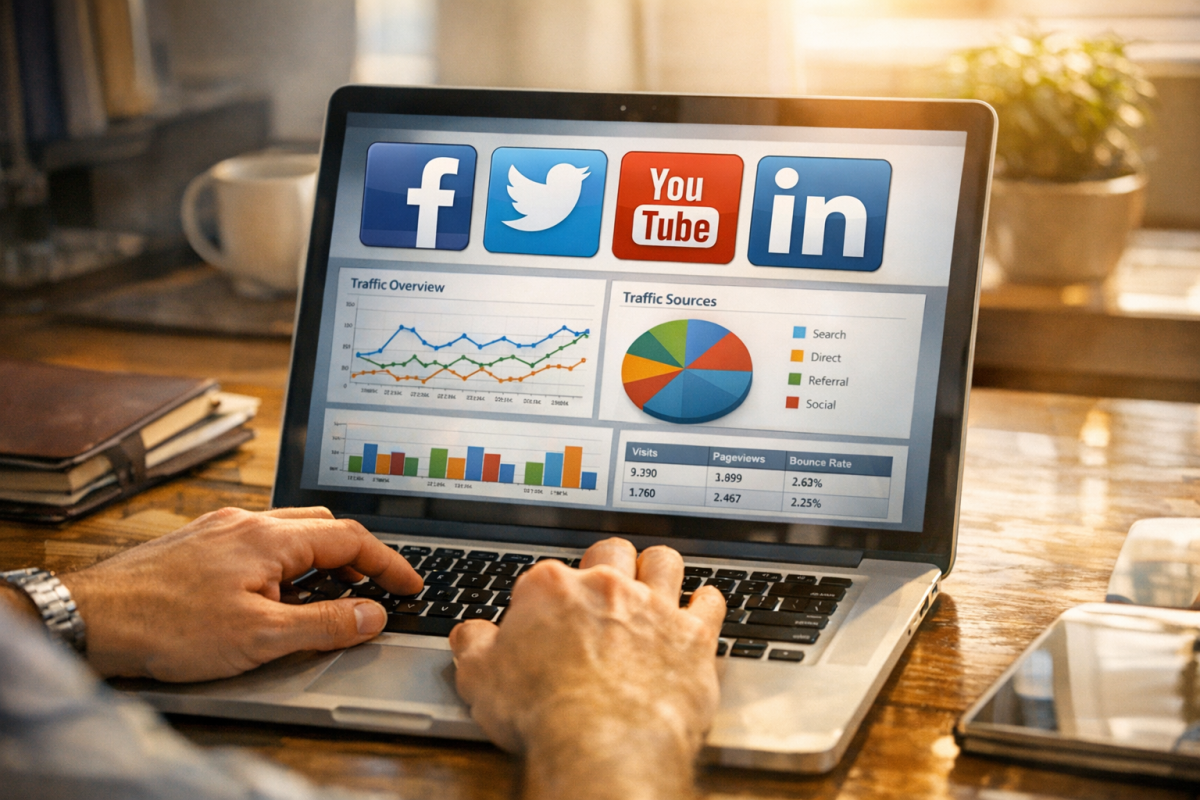
Despite Google's official stance, researchers have continued to find interesting correlations between social activity and search performance. CognitiveSEO released a study looking at over 23 million social media shares and found a strong correlation between high rankings and a strong social media presence. Similarly, Hootsuite tested SEO results for articles with and without social media promotion and found that articles receiving the most social shares saw an average of 22% more organic search traffic.
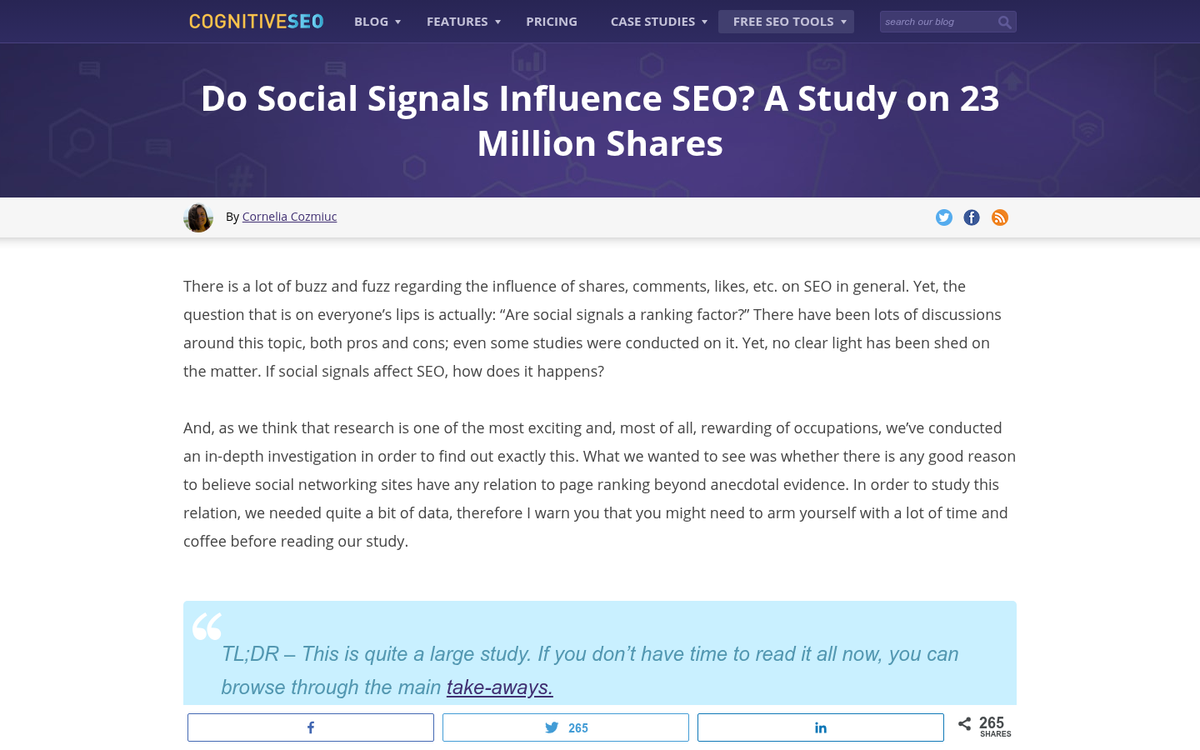
The key word here is correlation. Content that ranks well tends to also be shared widely. But that doesn't mean the shares caused the rankings - it's far more likely that quality content earns organic links and social shares simultaneously, and it's those organic links and engagement tells like click-through rate and time on page, that drive rankings upward. Social media furthers the discovery process, which as you might expect furthers the earning of backlinks; it's the mechanism at play.
It's also worth mentioning that Google does not count social media links as traditional backlinks. The vast majority of links shared on places like Facebook, X, LinkedIn, and Instagram are marked as nofollow, which means they don't pass PageRank or traditional link authority to your site. If you're wondering whether you should nofollow external links in your blog posts, it's a topic worth understanding in more detail.
The Modern Outlook in 2026
As of 2026, Google's position remains steady with what Mueller stated back in 2015 and 2016: social tells are not a direct ranking factor. What has changed is the wider landscape. Platforms like TikTok, YouTube, and Instagram have become discovery engines in their own right, in some cases rivaling Google Search for certain types of queries, and that's especially true with younger audiences.
Google has also become considerably better at brand authority and entity recognition. A brand with a strong, steady presence across multiple social platforms signals legitimacy and trustworthiness, which may contribute indirectly to how Google evaluates that brand's website - even if the social posts themselves carry no direct ranking weight.
Think of social media as the amplifier - not the signal. What makes a blog suddenly become popular often comes down to that very combination of social reach and organic search working together.
Boosting Social Signals for Fun and Profit
So if social tells are helpful indirectly and give you the conditions that improve rankings, how can you get more out of social media without paying directly for advertising?

- Post a link every time you publish a new article. You can't always rely on your readers to share your posts; you need to get the ball rolling yourself. A post with one share is more likely to attract further sharing than one with none. If you have employees, co-authors, or personal accounts available, use them too.
- Connect with influencers in your industry and try to get them to share your content. Being associated with established voices in your niche lends credibility, and a single share from the right account can generate more traffic and real backlinks than months of organic effort.
- Join niche communities such as public Facebook groups, LinkedIn groups, Reddit communities, and forums relevant to your industry. Public communities are indexed and can contribute to discoverability.
- Use relevant hashtags strategically on platforms where they still carry weight, such as Instagram, LinkedIn, and X. Always make sure you're using them appropriately and contextually.
- Repromote your best content over time, particularly on platforms like X where posts have a short shelf life. Posting at different times over the course of several days increases your reach significantly.
- Resurrect evergreen content when it becomes newly relevant. A well-written post from two years ago can perform just as well as something freshly published if it's shared at the right moment.
- Include share buttons and calls to action within your content. Make it effortless for readers who arrive via organic search or email to share what they've just read.
- Only maintain the social accounts you can actually support. A neglected profile does more harm than good. Focus your energy on the platforms where your audience actually lives, rather than spreading yourself thin across every network.
- Engage with comments and replies to extend the lifespan of your posts. Active conversations signal relevance to platform algorithms and keep your content visible longer.
- Curate content from others to make your profile more valuable to follow. If you only ever post your own content, you give people limited reasons to follow you. Mixing in genuinely useful content from other sources builds loyalty and broadens your reach.
Keep up your social presence, share your posts as often as possible, and focus on building a genuine audience instead of chasing vanity metrics. Social media will not directly improve your rankings. But it creates the conditions in which ranking improvements can happen.