





Key Takeaways
- Avoid black-hat tactics like bulk links, link exchanges, and site-wide links - Google will eventually devalue or penalize them.
- Don't obsess over nofollow links; they still drive traffic and brand visibility, and an all-dofollow profile looks unnatural.
- Content repurposing - turning one blog post into slides, podcasts, and videos - multiplies your link-building opportunities across platforms.
- Original data assets like surveys, case studies, and infographics attract passive backlinks long after publication.
- Relationship-based tactics - influencer interviews, roundups, and blog comments - build links while establishing niche authority.
Time is money. When it comes to building a blog, or adding a blog for your business, you have to strike the right balance. Some have a large enough profit margin to invest in services to help them grow and manage their blog. Others have to do it themselves.
When you're looking for free sources of backlinks for a site, it usually means you have a surplus of time and a dearth of money. When you can't afford to pay for it yourself - or just pay for the results directly, as with PPC advertising - you have to spend your time.
I've tried to find a balance here between strategies that are helpful and strategies that are time consuming. Obviously, you want to maximize the return on your investment. If one action takes half an hour and gets you a link, versus another that takes three days and gets you a similar link, it's clear which one you should go for.
The problem, of course, is that the best links don't come cheap. A high quality link from a high quality site will take quite a bit of time and effort to get. Of course, the value of the link is higher as well, so there's a bit of a balance you'll have to weigh.
Link Sources to Avoid
There are a number of ways you can get links, and many of them fall into the gray or black hat territories - it means they can get you a link. But the strategy employed is either fraudulent, illegal, immoral, or just in violation of the terms of service of some site or another. Primarily, these techniques mean violating the search best practices that Google maintains, which as you might expect means the danger of that link is sky-high. In other words, you can get the link. But it's very likely that at some point Google will decide the link is spam and will remove the value the link may have had.
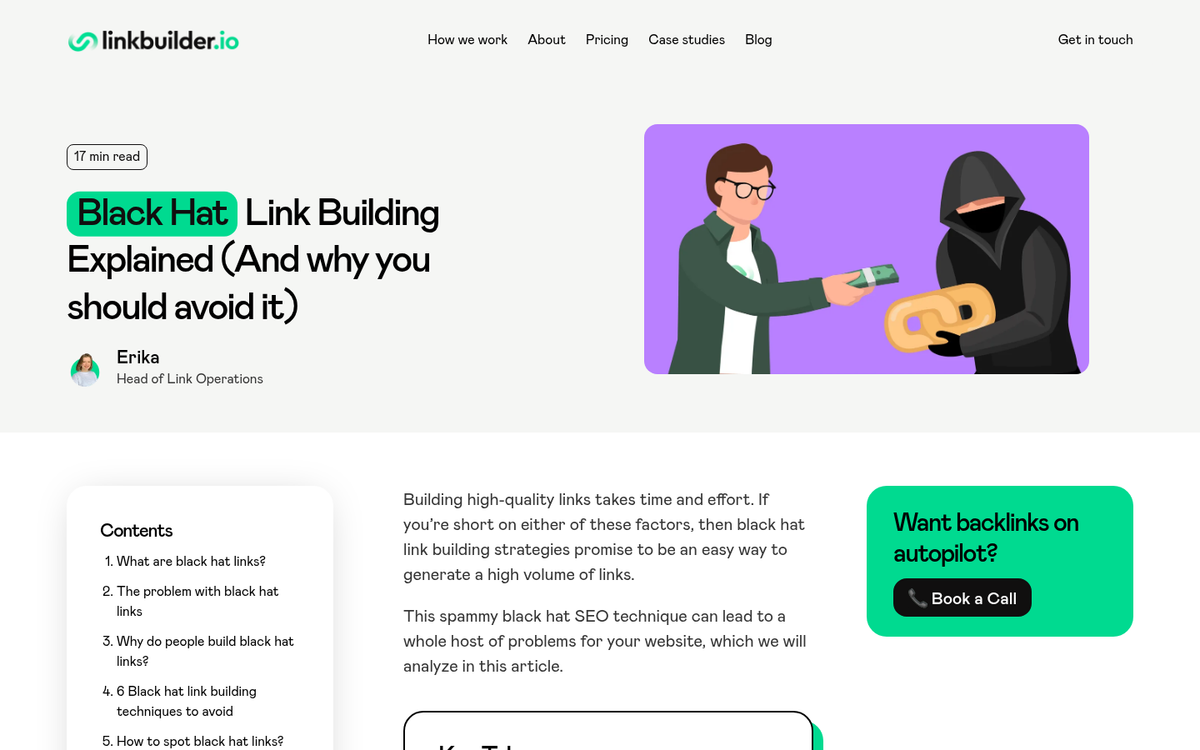
Here are some sources you might come across in articles like this. But they are traps for the naive or uninitiated.
- Site-wide links. If a site puts you in a sidebar or footer displayed on every page, that link isn't going to be worth much or anything.
- Bulk links. If you're going to a site like Fiverr and buying 100 links for $10, you're getting a bunch of links on a bunch of WordPress sites the seller set up for that purpose, not real sites.
- Link exchanges. Any time you're asked to enroll in a program where you publish a link in exchange for a link in return, it's an unnatural link building scheme that Google will eventually discover and punish.
You get the idea; links should be natural votes of value from one site to another - not something you pay for or something you trade.
A Note on NoFollow
A lot of the sources of links I'm writing about will get you nofollowed links at least some of the time. There's nothing wrong with a nofollowed link! Yes, the nofollow attribute means that Google doesn't count the link as a link. As far as the index is concerned, it doesn't count. However, there are still other benefits of the link, like your brand mention, the traffic from users who can follow the link, the possible conversions you get out of it, and the rest.

Besides, if you work to ONLY get followed links, your backlink profile will look unnatural. It's not as if the links don't exist out there to Google; they just don't count. Google can still see if you're sculpting your link profile only to impress their robots. My recommendation is to basically not worry about the followed status of the links you're building. Learn more about using nofollow on your blog posts.
Let's get on with the strategies.
1. Broken Link Building
Broken link building is the process of taking advantage of the fact that websites move and die. You search your industry for websites that have resource pages full of links.
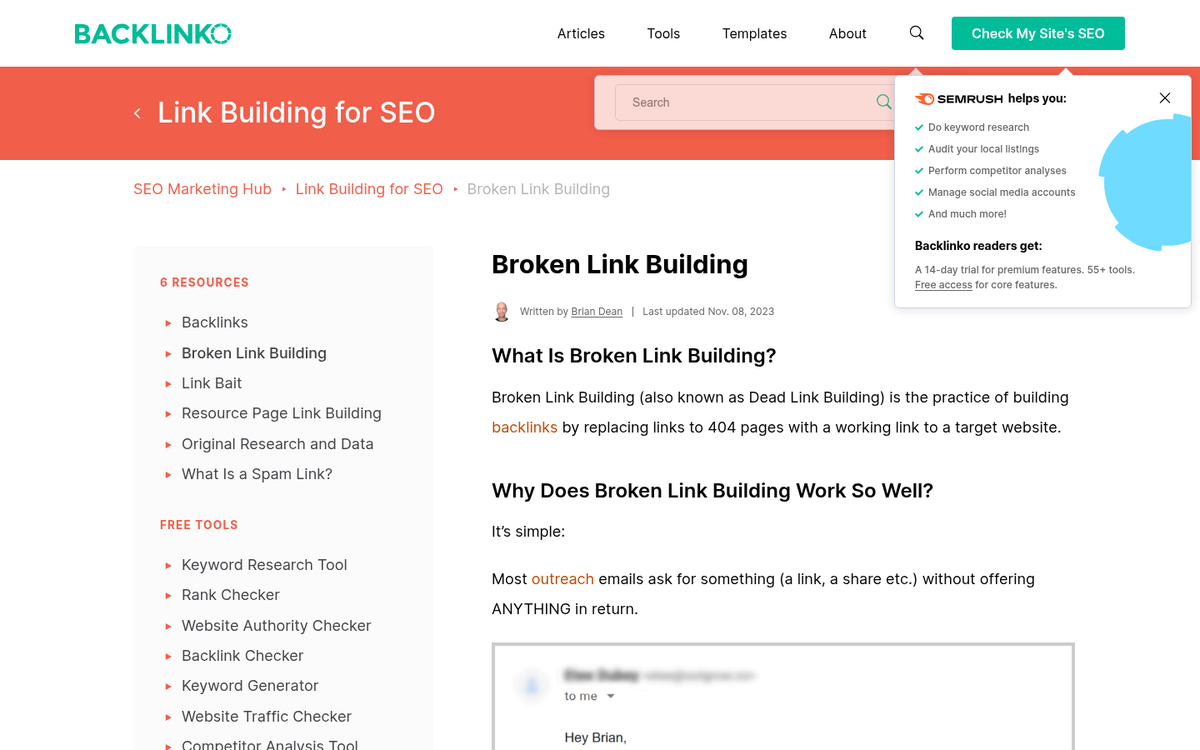
Look through those links for pages that no longer exist. Use the internet archive to see what was on the page, then create your own version of that content. Once it's published, you can reach out to any site that linked to the old post - and now has a broken link - to inform them of it. "Hey, I see you're linking to Page X on Your Page Here. The link is broken, but I have a good resource on the same topic on My Page, if you want to swap it out."
2. Insightful Blog Comments
Set up an RSS reader for the top blogs in your niche and pay attention whenever they publish content. Read the content that you find most interesting and most relevant to your own business.
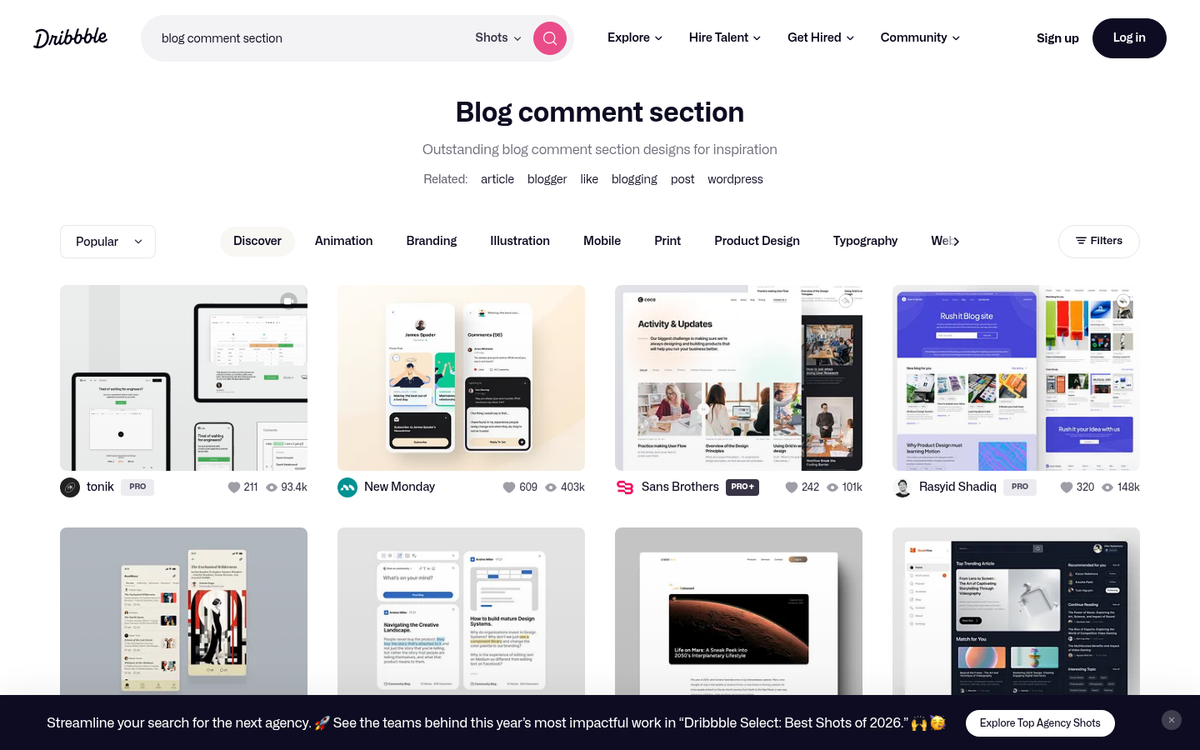
Your goal here is to find opportunities to comment on blog posts. Blog comment spam is a big problem so you'll have to make sure your comments are helpful and valuable to readers. Add value, expand on a topic, ask a question, just give them utility.
The sooner you do this after a post is published, the higher on the page your comment is and the more prominent your name will be - this gives greater visibility to any links you include and attracts the attention of the creator for a conversation.
3. Discussion Group Contributions

Discussion groups on Facebook, LinkedIn, and Reddit aren't always great sources of high-authority followed links. But don't dismiss them outright. They can still drive traffic and brand awareness. Moreover, active participation in niche communities gives you organic link opportunities - Jakub Rudnik of Scribe reportedly built backlinks from 173 linking domains in just the first two months of actively contributing to online communities. Showing up and adding genuine value is what makes the difference.
4. Authority Answers on Quora
Quora is a question and answer site that tends to go two ways. Half of the site is interesting questions that are answered by industry insiders; things like "tell me about this aspect of working for Google" or "teach me about link building techniques you've used successfully." The other half of the site is humor scenarios and fiction prompts; basically just an excuse for creative writers to put a few hundred words on paper to start their day.

Your goal is to take part in the first half. Set up a profile and fill out the information relating to who you are and why you're an authority in your niche. Then go out and start looking for questions specifically in your niche. Answer them with as much detail as possible - basically write blog posts - and link to more reading on your site. Don't make it a sales pitch, keep it as informational as possible. Quora answers, especially good ones, show up prominently in Google search results, and having your answer on top gets you visibility.
5. Link To and Notify Influencers
Influencer marketing is a form of social engagement. You find the people who matter in your niche, you try to connect with them, and you benefit when they mention you or share your content.

One pretty easy strategy for doing this is basically to appeal to their ego as an authority. Write a piece of content on your site and make sure to link in context to a relevant piece of content the influencer has published. Once the content is published, take to social media and let them know you linked to them. You can DM them, or you can publicly tag them in a message, it's up to you.
6. Modify Content for Other Platforms
One piece of content does not have to remain one piece of content. You'd be surprised what you can do with it, actually.
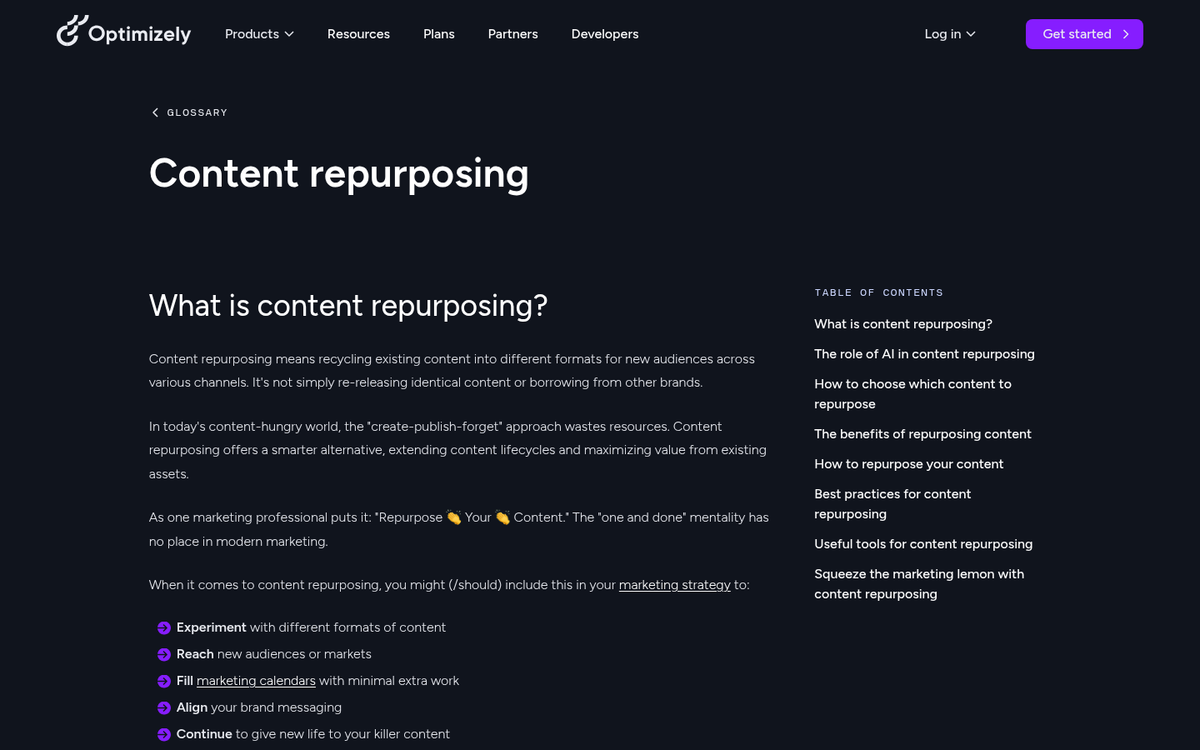
Start with a single mid-length, solid quality blog post.
- Distill the post down to bullet points and create a slideshow. You can publish this on SlideShare.
- Record a vocal reading of the blog post. You can publish this as a podcast on whatever your favorite podcasting distribution platform is.
- Take the podcast and create an animation to go along with it. This can be your slide deck or a more animated film, or even just a video of you going over the points. Publish the video on YouTube and other video platforms.
Now you have one piece of content turned into four pieces of content, published on five or more different sites. Add in shares and reposts of your content and you can see where the links add up.
7. Create Interesting Infographics
Another thing you can do with content is take that outline and your data and convert it into an infographic. You can also go into graphic creation from scratch and harvest data on a particular topic. The main thing you need is something that's interesting and presents data in a way that can be visualized. Tutorials can work, data comparisons can work, analysis can work, and patterns can work; you just need to design your graphic with attention to the narrative.
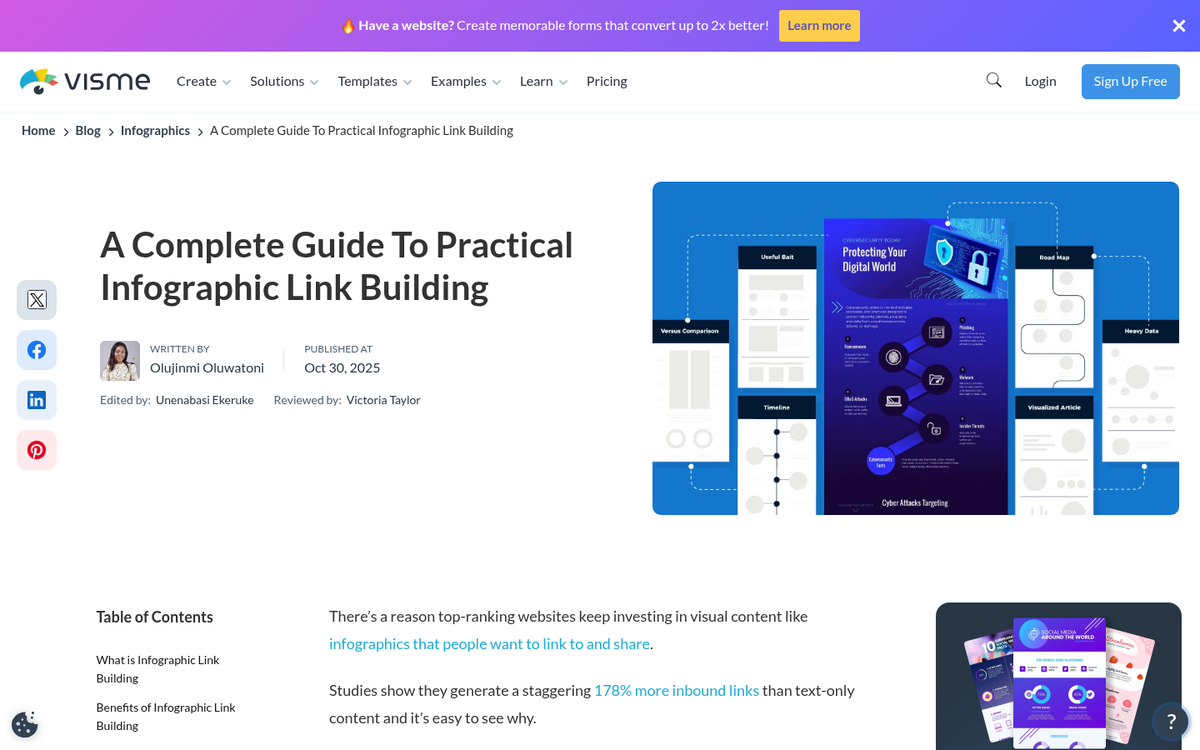
The data supports this: infographics are three times more likely to engage an audience than plain text content, and a single well-designed infographic can accumulate hundreds of links over time. A famous example is The Daily Routines of Famous Creative People, which has attracted over 656 links from other websites. Infographics are great link bait once they're created. You can circulate them around in your industry, earning links each time. You can also turn one into a "guestographic," which means you share the graphic with blogs and offer to write an accompanying blog post to go with it for that site. Free value for the site, free value for you.
8. Start an Industry Roundup Series
That influencer marketing thing? You can do that on a small, scheduled basis every week or every month if you want. Make a top five or top ten list of the best blog posts you've seen in the month and publish that list with links and reviews of the posts like clockwork. You link out to them, all of whom appreciate the value of a link. Over time, some of them will start linking back to you when they write posts and find things that you've written about the topic before. You earn links, establish yourself as an authority based on your opinions and curation, and you build relationships with bloggers who like your work.
9. Message Influencers for Interviews
Interviews are another great way to get some influencer marketing going. They also establish you as an authority. Nobody would answer you if you weren't worth answering. Right? And of course you're worth answering because all these others have answered in the past - it builds upon itself.

There are two styles of interview you can go with. The single full interview is a longer talk with a single influencer. You come up with a series of questions to ask them and basically have a conversation that you transcribe later.
The other style is the single question interview. Come up with one question, something like "What's your most effective way of marketing using podcasts?" Then send that question out to a list of 100 influencers, with the expectation that maybe a third of them will respond, and you then build your post based around those replies. You link out to them in the bio for each of them, and some of them will link back.
10. Create Flagship Resources

Writing something truly comprehensive can earn links. There's not much more to it than that. Right? Just create something exceptional, something that everyone wants to link to because it's the foremost resource on the topic available. Remember that blog posts containing 1,000 or more words earn more backlinks than short-form content, so depth matters. If you can't figure out what to cover, just look for topics you've wanted to research but haven't found a resource for. When done right, the results can be great - one well-researched, data-driven post earned 65 backlinks including a mention from the New York Times.
11. Contribute to or Sponsor Events

Many events have websites of their own. When you contribute to an event or sponsor it financially, they will usually give you a link on the site as part of a list of contributors - it might not be a great link. But hey - not every link can be the best.
12. Dig Deep with a Case Study
People love data. Well, marketers love data. People generally have a pretty poor understanding of numbers and what they mean.
Case studies work because you can take data and draw conclusions from it. Some will use it as a resource and will link to it as a source. Others will present their own data as a counter-argument, or as a supplement to make your argument stronger. A case study can be repeated every year to show change and patterns. If you're looking for inspiration, check out these expert tips for new bloggers and content marketers to help you get started.
13. Run a Broad Industry Survey
Industry surveys can be a source of links for years to come. Choose a subject and do your best to create worthwhile questions. Send out the survey to as many businesses and professionals in your industry as you can, then tally up the results and publish the data once the replies come back. The resulting source of data can be used as the foundation for literally hundreds or thousands of blog posts in the coming year or two, so it can be majorly worthwhile. According to Shopify research, 40.7% of SEO pros say content marketing - which includes original data and surveys - gives the strongest passive link-building results.
14. Write Testimonials for Trusted Services

Think about the products and services your business uses from day to day, week to week, and month to month. For the ones you're most satisfied with or find most helpful, visit their website. Do they have user testimonials in prominent positions when they're trying to sell their product? If so, reach out to them and ask how you can submit one. They'll be more than happy to have another testimonial to help them sell, and you'll have a link and a reference.
15. Submit Resources for EDU Websites
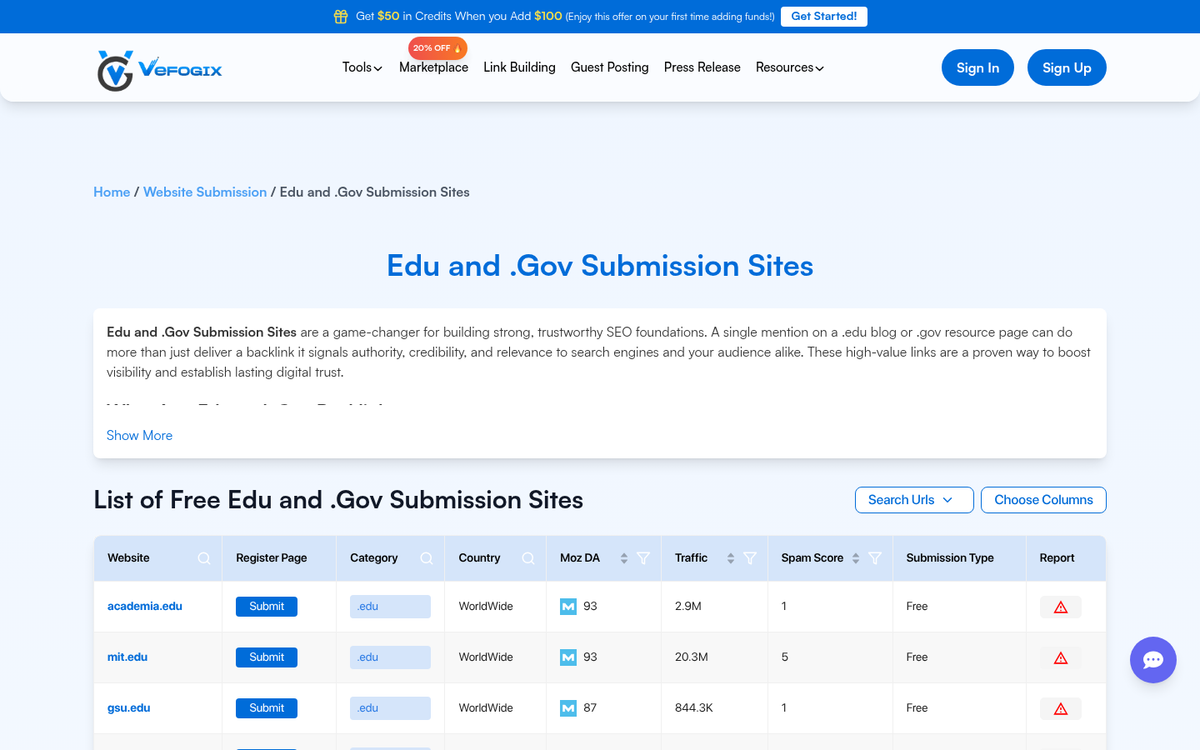
EDU pages aren't inherently more helpful than other websites. But since .edu domain is restricted, the quality of the sites on those domains tends to be higher and so more trustworthy. Your goal is to create a resource that a school can use and reach out to submit it to whoever manages their website. If you're lucky, they will link to your resource because it can be legitimately helpful to their students, and it gives you a great, high quality link.
1 response
Thoughtful replies only - we moderate for spam, AI slop, and off-topic rants.
All of the points are really helpful. But, I want to know, is it necessary to create backlinks for every blog post?