




Unlike traditional search engines, Perplexity doesn't just surface your content - it synthesizes it. When someone asks a question, Perplexity pulls from across the web, interprets the most relevant sources, and gives you a composed response. If your site gets cited, you get visibility in a way that bypasses the traditional click-through entirely. If it doesn't, you're invisible to a growing segment of your audience.
For website owners and managers, Perplexity AI isn't optional anymore - it's a core part of modern Answer Engine Optimization (AEO). The way you structure your content, set up authority, and signal credibility can directly affect whether Perplexity treats your site as a trusted source worth referencing.
This entry breaks down what Perplexity AI is, how it works, and - most importantly - what you can do to make your content more likely to be cited, surfaced, and trusted by it.
Quick Answer
Perplexity AI is an AI-powered search engine and answer engine that provides direct, cited responses to queries in real time. Unlike traditional search engines that return a list of links, Perplexity generates conversational answers while citing its sources. It uses large language models combined with web search to deliver up-to-date information. Founded in 2022, it has gained popularity as an alternative to Google, offering a more conversational, summarized approach to finding information online.
How Perplexity AI Retrieves and Surfaces Information
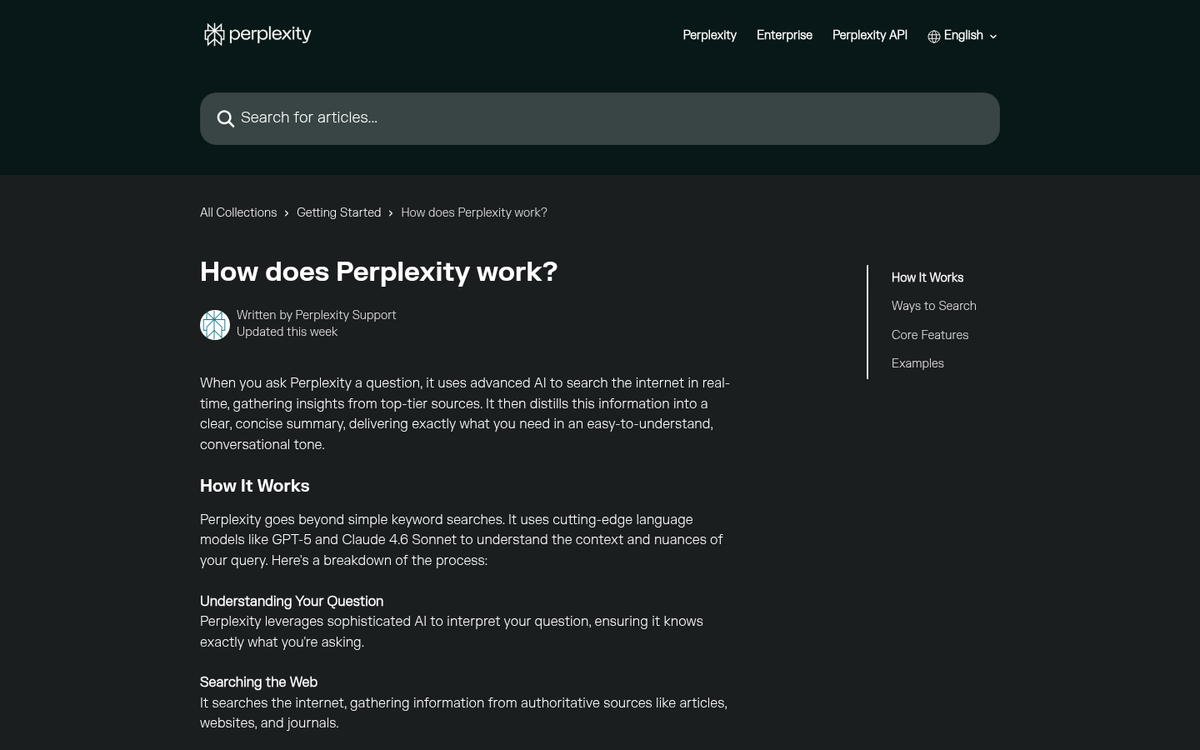
Unlike a traditional language model that was trained on a fixed dataset and left to answer from memory, Perplexity actively crawls the web in real time and pulls from live sources to build its answers on the fly. That makes it much closer to a search engine than a chatbot - even though it talks to you like one.
When Perplexity receives a question, it retrieves relevant pages, reads them, and then writes a synthesized response based on what it found. The sources it pulled from appear as numbered citations directly inside the answer - one of the biggest differences between Perplexity and tools like ChatGPT is that you see where the information came from, and so can anyone reading it.
Those citations are more than they look. A citation is a direct link back to the source page. If your website gets cited, users can click through to it from inside the answer itself; it's a form of referral traffic that didn't exist before this tool came along.
As for which sources Perplexity prefers, the signals aren't transparent. But there are patterns worth knowing about - it pulls from pages that answer questions in a direct and structured way, and it gravitates toward sources that have topical authority. Fresh content also seems to get a lift, which makes sense given that Perplexity is built to surface up-to-date information instead of evergreen content alone.
Readability also seems to play a role. Pages that are easy to parse - with well-organized headings, short paragraphs, and direct answers near the top - seem to get selected more than dense or hard-to-scan content. The more helpful framing is that the system can extract information from some pages more easily than others. If you want to scan your WordPress posts for errors that might hurt readability, that's a good place to start.
It's also worth noting that Perplexity uses its own crawler, called PerplexityBot, alongside data from other sources like Bing. So a page doesn't need to rank number one on Google to get picked up. That opens the door for smaller or more niche sites to get cited if their content is well-structured and relevant to what was asked. Submitting your site to free high-PR directory sites can also help build the kind of authority that gets you noticed.
What It Means for Your Website's Visibility
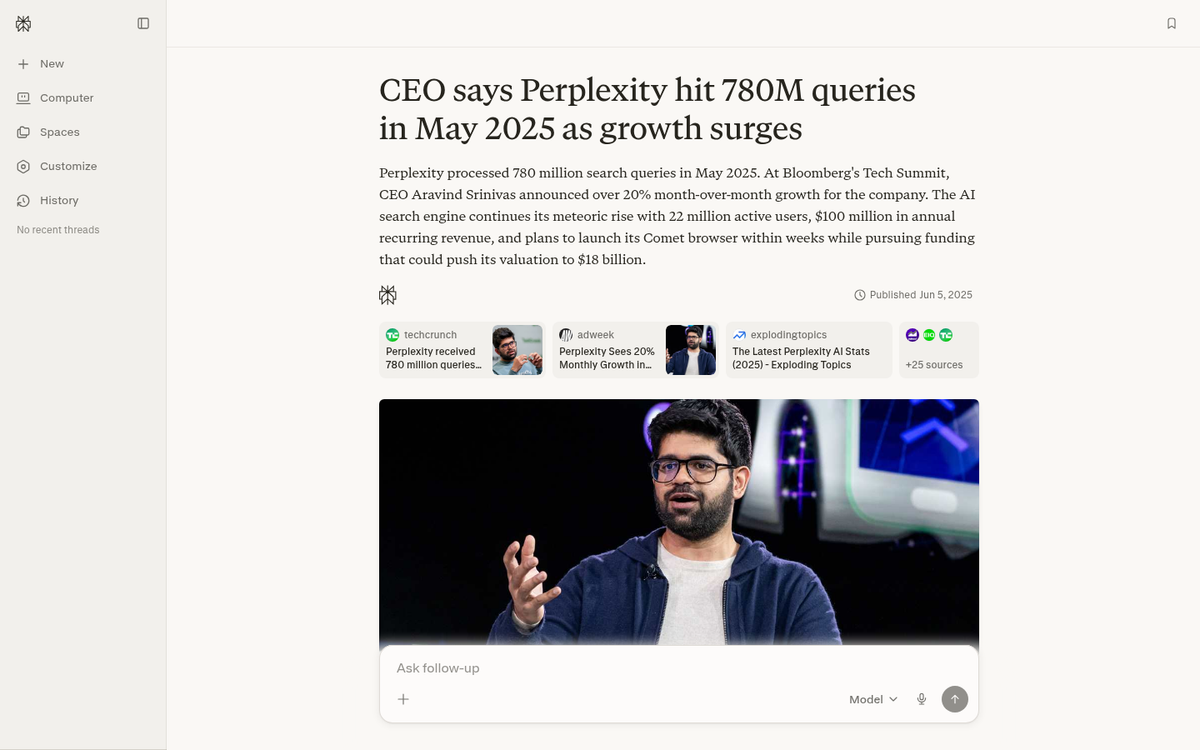
Perplexity handled around 780 million queries in May 2025 alone. That number matters because every one of those searches returned an answer without sending the user to a search results page. If your site wasn't cited in those answers, you weren't part of the conversation at all.
Most site owners still measure visibility through Google rankings and organic traffic. That made sense for a long time. But it leaves a gap. A growing number of users are getting answers from AI tools instead of clicking through search results, and those users may never see your site unless it gets pulled into a generated response.
The gap is easy to miss because your Google traffic might look stable. Perplexity doesn't show up in your referral data the way a traditional search engine does, so the lost exposure can go unnoticed for months.
This matters most for informational content. Product pages, how-to guides, explainers, comparison articles - these are the types of content Perplexity draws from to build its answers. If you produce that content and Perplexity isn't citing you, someone else in your space is getting that visibility instead.
Being cited also does something beyond pure exposure. When Perplexity links to your site as a source, it tells the reader that your content was credible enough to use. That implicit endorsement carries weight, and that's especially true with users who are in research mode and likely to follow through.
The helpful question for any site owner is what it takes to become a source that Perplexity selects. Installing SSL on your blog is one technical step that can signal credibility to both AI tools and traditional search engines.
Signals Perplexity Uses to Select Cited Sources
Perplexity doesn't pull from sources at random - it looks for pages that give direct, factual answers and backs them up with enough context to be honest. The signals it responds to are very like what Google's E-E-A-T framework rewards - things like demonstrated expertise, authorship and content that's grounded in experience.
Topical authority matters quite a bit here. A page that goes deep on one subject tends to get picked over a page that skims across. If your site covers a topic with substance and accuracy, Perplexity is more likely to treat it as a reliable reference.
Structured content also plays a big part. Pages that use headers, short paragraphs and well-organized information are easier for Perplexity to scan and extract answers from. Write for a person who needs to find one answer fast - because that's basically what Perplexity is doing on behalf of its users.
Factual claims need to be precise and verifiable. Vague or hedged statements are harder to cite. But precise facts - numbers, dates, named sources - give Perplexity something concrete to work with.
| Trait | Favored | Ignored | Why It Matters |
|---|---|---|---|
| Content depth | Thorough coverage of a focused topic | Broad overviews with little substance | Perplexity looks for authoritative answers, not summaries |
| Factual clarity | Specific claims with named sources or data | General statements and unsupported opinions | Concrete facts are easier to extract and cite accurately |
| Page structure | Headers, short paragraphs, logical flow | Dense blocks of text with no clear hierarchy | Well-structured pages are easier to parse for direct answers |
| Trust signals | Author credentials, outbound links to credible sources | Anonymous content with no references | These signals help Perplexity assess whether a source is reliable |
These tells align closely with Answer Engine Optimization principles. AEO is built around the idea that content should answer questions directly and be easy for AI systems to interpret. Perplexity is basically a search engine built on that same logic.
Authorship and site credibility feed into this too. Pages with named authors who have verifiable backgrounds carry more weight than anonymous posts. A site with a track record of accurate, well-sourced content builds the trust that makes Perplexity more likely to return to it.
On-Page and Technical Steps to Get Your Content Cited
Once you know what Perplexity looks for in a source, the next step is to make your pages easy for it to read, trust, and pull from. A lot of it will depend on on-page habits that are already within your control.
The most direct thing you can do is write in a question-and-answer format. Put the question in a header, then answer it in the first one or two sentences below. Perplexity was built to return answers to questions, so pages that are already structured that way are much easier to cite.
Structure and Schema
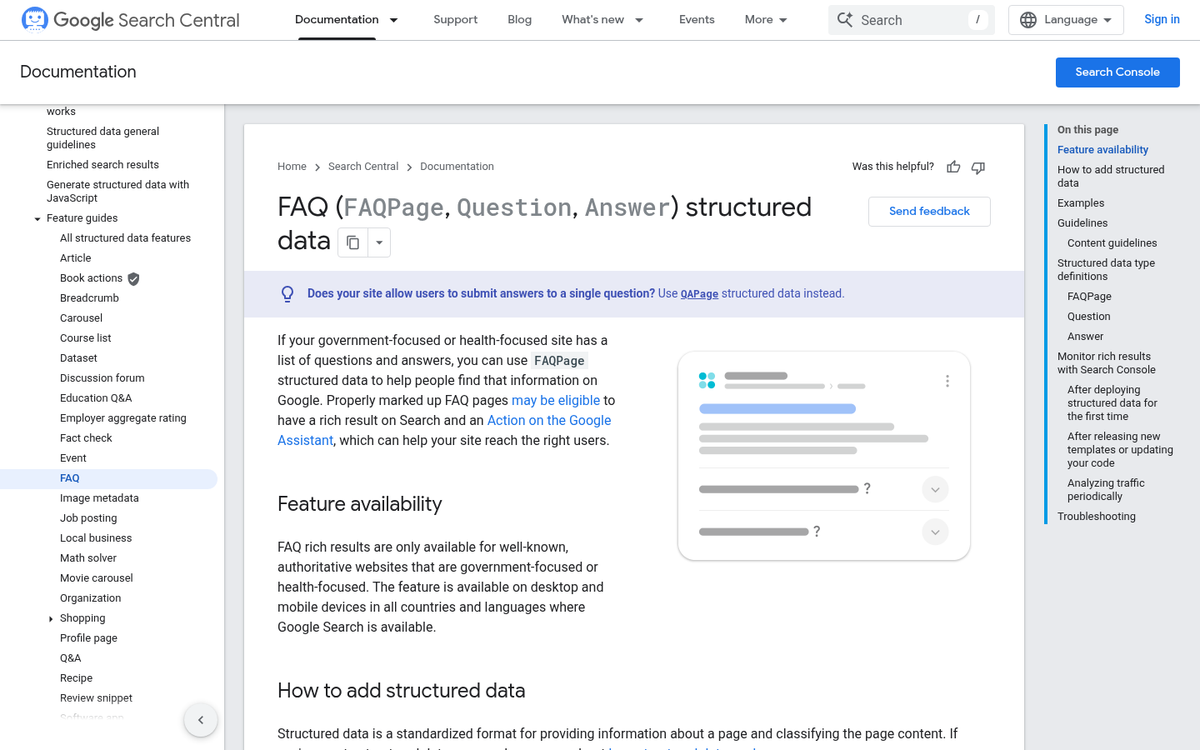
Use descriptive H2 and H3 headers throughout your pages so the content is scannable in sections, and each section should stand on its own so a model can lift a passage without needing the surrounding context to make sense of it. Adding structured data, like FAQ schema or HowTo schema, gives the crawler extra tells about what your content is doing.
Factual claims should be easy to verify. If you state a statistic or a date, link out to the original source or at least make the reference traceable. Pages that read like they're backed up by something get picked up more than pages that feel like general opinion.
Technical Basics That Still Matter
Page speed and crawlability still matter. If your page loads slowly or blocks crawlers with restrictive robots.txt rules, no amount of content will get it cited. Check that Perplexity's crawler, PerplexityBot, is not blocked in your settings.
A short checklist of actions to prioritize:
- Write a direct answer in the first two sentences of each section
- Use question-based H2 or H3 headers where it fits naturally
- Add FAQ or HowTo schema to relevant pages
- Link out to primary sources when you make factual claims
- Confirm PerplexityBot is allowed in your robots.txt file
- Keep page load times reasonable on both desktop and mobile
None of these steps take long on their own. Start with the pages that already get traffic and work from there - those are the ones most likely to be crawled and considered.
Building a Content Strategy Around Answer Engine Queries
Traditional SEO content strategy is built around ranking for large keywords and driving traffic to your site. Answer engine optimisation works differently. Perplexity users like to ask conversational questions and they want a direct answer fast.
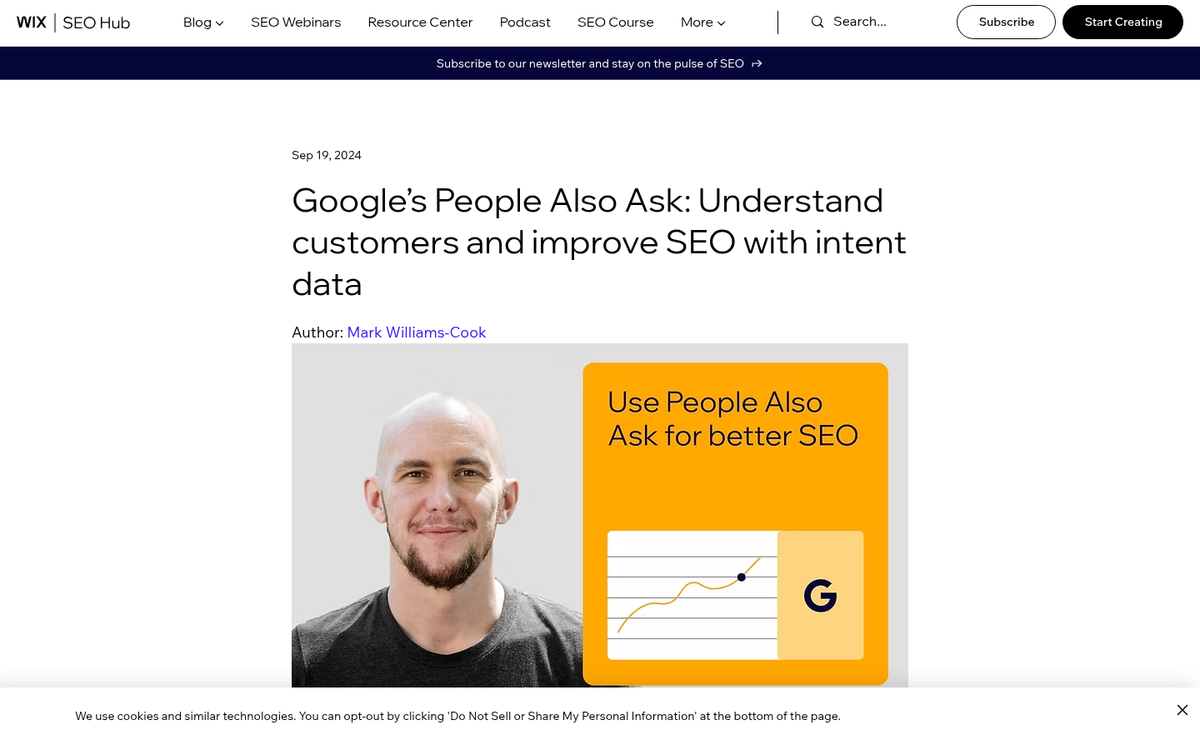
First and foremost, consider what those questions actually look like. Search forums like Reddit and Quora in your niche, look at the "People Also Ask" boxes in Google, and get started at the exact phrasing people use when they talk about your topic. These are the types of questions Perplexity is likely to pull answers for.
Why Narrow Beats Broad
A generalist page that covers a topic at a surface level is less likely to get cited than a page that goes deep on one question. If your page is the clearest, most authoritative source on a narrow subject, Perplexity has a reason to pull from it. Think of it less as covering a topic and more as owning a question.
This is an actual departure from traditional content strategy. In SEO, a long pillar page covering every angle of a topic can perform well. In AEO, a focused page that answers one question closely will usually outperform it.
Topic Clustering With an AEO Lens
Topic clusters still make sense here. But the logic changes slightly. Instead of building clusters around a large keyword, build them around a core question and then create supporting pages for every related sub-question, and each page should be able to stand alone as an answer to its own query.
For example, a site about personal finance may have a page specifically answering how compound interest works for beginners, another answering how to calculate it manually, and another comparing accounts where it applies, and each page is narrow on its own terms.
Question-Based Content Formats
Structuring content around questions works for answer engines because the format mirrors how users search. An FAQ section, a dedicated Q&A page, or a full post written around a single question all give Perplexity something concrete to pull from. The question-and-answer format makes it easy for the engine to match a query to a relevant passage.
It also helps to write in a way that assumes no prior knowledge on the reader's part. Plain explanations without technical language tend to get cited more than technical write-ups that assume a specialist audience. If you're producing content at scale, reviewing content quality from services like Constant Content can help you maintain that standard consistently.
Once you have this content in place, the natural next question is whether any of it's actually working.
Tracking Whether Perplexity Is Citing Your Site
Most site owners have no idea if Perplexity is already pulling from their content. The good news is that you can start to piece together a picture with tools you likely already have.
The most direct way is to run manual searches. Go to Perplexity and type in queries related to your niche, your brand name, or your content topics. If your site shows up in the citations panel on the right, that tells you it's being used as a source - it only takes a few minutes and gives you an answer fast.
Beyond manual checks, brand mention tracking tools like Google Alerts or more advanced platforms like Mention or Brand24 can flag when your site or brand name appears across the web. These won't always catch Perplexity citations. But they can surface threads, screenshots, or discussions where your content came up in an AI-generated answer.

Your analytics are worth checking too. Perplexity does send referral traffic in some cases, and you can find this under referral sources in Google Analytics or whatever platform you use. Look for traffic tagged as coming from perplexity.ai. That said, this data is incomplete because Perplexity answers don't cause a click at all - the user gets what they need without ever visiting your page.
Referral traffic from Perplexity is likely underreported. A citation doesn't always translate to a visit, so the absence of referral data doesn't mean Perplexity isn't using your content - it might be, and you'd never know from traffic data alone. Tools like Buffer can help increase your overall blog traffic, which may make your site a more prominent source for AI engines over time.
| Method | What It Shows | Limitations |
|---|---|---|
| Manual Perplexity searches | Direct citation of your site in answers | Time-consuming and not scalable |
| Brand mention tracking tools | References to your brand or content online | Indirect; may miss many citations |
| Referral traffic in analytics | Clicks from Perplexity to your site | Most citations don't generate clicks |
Tracking your presence in AI answers is still a developing area. The tools used for traditional search visibility don't map neatly onto answer engines. But that's likely to change as this space matures - and I'll look at what that means for the bigger picture next.
Your Site in the Age of Answer Engines
Getting your site noticed by answer engines doesn't require overhauling everything at once. The site owners seeing results are not doing more - they are doing the right things with intention. Clear structure, direct answers, credible sourcing and content that legitimately serves an audience: these are not heroic work. They are focused choices that signal to Perplexity that your content is worth surfacing.
Pick one tactic and apply it to a single page this week. That might mean tightening your answer to an important question in the first paragraph, or adding a summary table to a long post. Small moves can add up to meaningful visibility. The optimization process is only stressful if you try to do everything at once - and you don't have to.
FAQs
What is Perplexity AI and how does it work?
Perplexity AI is an answer engine that actively crawls the web in real time, retrieves relevant pages, and synthesizes a composed response to user queries. Unlike traditional search engines, it presents a direct answer with numbered citations rather than a list of links to click through.
How can my website get cited by Perplexity AI?
Structure your content with clear headers, direct answers in the first sentences of each section, and precise factual claims linked to primary sources. Adding FAQ or HowTo schema and ensuring PerplexityBot is not blocked in your robots.txt file also improves your chances of being cited.
Does Perplexity AI send referral traffic to websites?
Yes, but it is often underreported. Perplexity citations include clickable links, but many users get their answer without ever visiting the source page, meaning traffic data alone does not accurately reflect how often your content is being used.
How do I check if Perplexity is citing my site?
Run manual searches on Perplexity using queries related to your niche or brand name and check the citations panel. You can also monitor referral traffic from perplexity.ai in Google Analytics and use brand mention tools like Google Alerts or Brand24.
How is AEO content strategy different from traditional SEO?
AEO favors narrow, focused pages that answer one specific question thoroughly over broad pillar pages covering many angles. Content should mirror conversational queries, use plain language, and be structured so each section can stand alone as a direct answer.