




If you've been in any SEO or AEO conversation recently, you've probably heard the term dropped without much explanation. The assumption is usually that everyone already knows what it means and why it matters. But if you're running a website and trying to figure out if it's actually worth pursuing, the facts matter.
While Position Zero has its roots in traditional search engine optimization, it's taken on new weight as Answer Engine Optimization (AEO) has emerged as its own discipline. AI-driven tools like Google's AI Overviews, ChatGPT and Perplexity are pulling answers directly from web content - and the logic they use to choose which content to surface closely mirrors what determines a featured snippet.
This entry will talk about what Position Zero actually looks like in practice, why it matters for your site, and what you can do to improve your opportunities of earning it.
Quick Answer
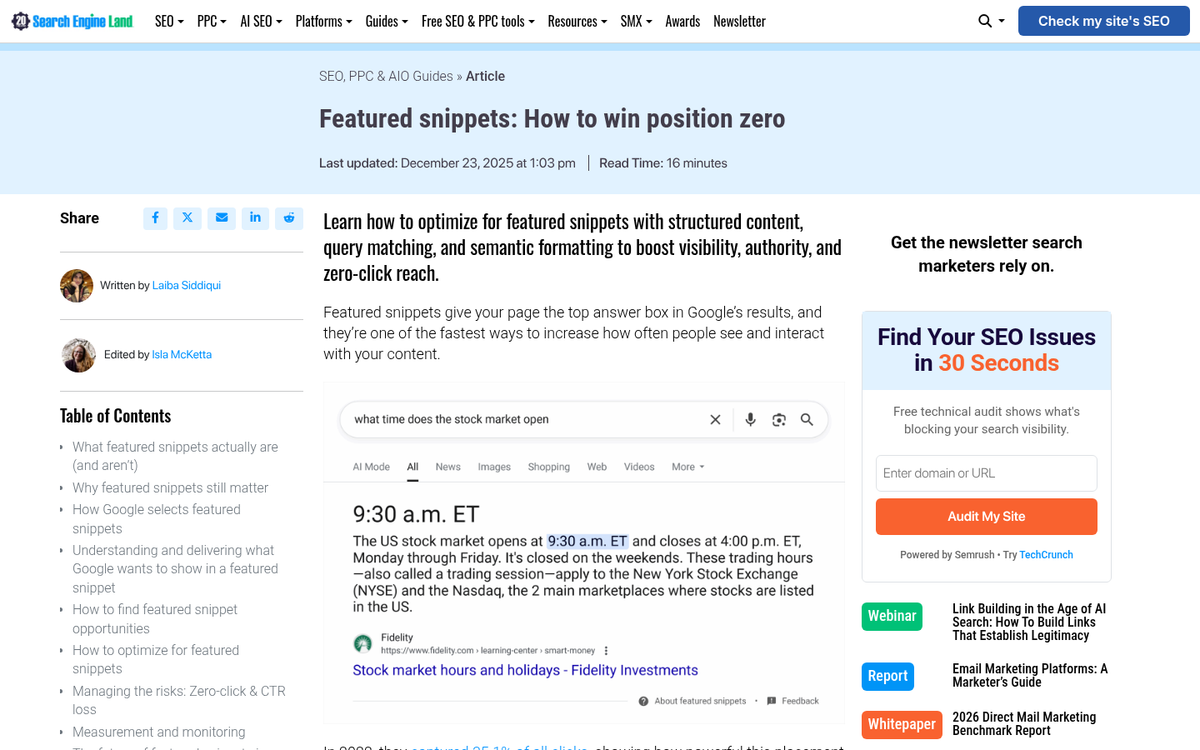
Position Zero, also known as a featured snippet, is the result that appears above the traditional organic search results on Google. It typically displays a direct answer, definition, table, or list pulled from a webpage, giving that site prominent visibility without requiring the user to click through. Earning Position Zero involves structuring content clearly, answering specific questions concisely, and using proper formatting like headers and bullet points to help Google identify and extract the most relevant information.
What Position Zero Actually Means
Position Zero is the name given to the featured snippet box that sits at the very top of Google's search results page - it appears before any of the standard organic listings, which is why it earned the "zero" label - it doesn't fit into the traditional ranking order at all. Some call it the "answer box." That nickname tells you quite a bit about what it does.
Google pulls a short extract from a webpage and shows it directly in the results, so the user can read the answer without clicking through to any site. The goal on Google's end is to make the search experience faster and self-contained - this has been part of how Google works since 2014, so it's not a new feature - but it has grown considerably in scope since then.
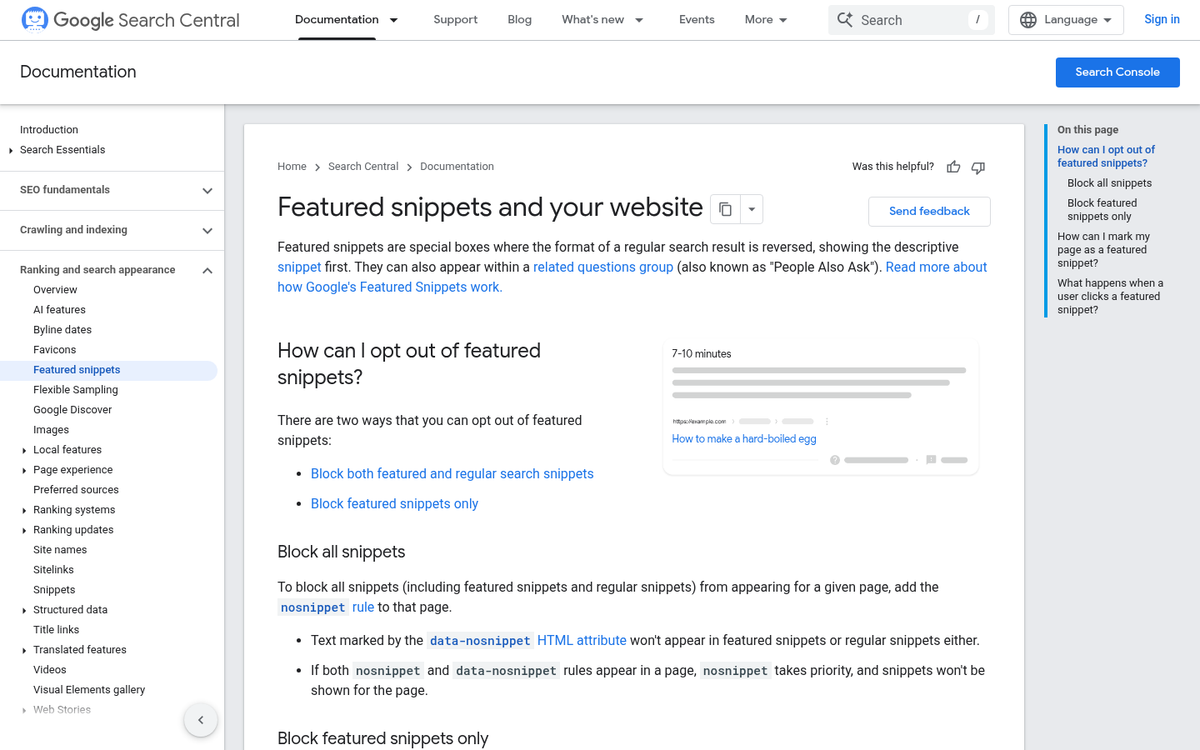
The difference between Position Zero and a standard first-place ranking is worth understanding. A traditional number one result is a blue link with a title and a short description underneath it. Position Zero gets a dedicated box with formatted content pulled directly from the page and the source link - it takes up far more visual space on the screen.
A lot of people get tripped up by this: you don't have to rank first to earn a featured snippet. Google can pull content from a page that sits anywhere in the top ten results and place it in the snippet box above everything else. A page that ranks fifth could technically appear above the page that ranks first - it's what makes Position Zero its own category - it operates by a different set of laws than the rest of the page.
It also means that chasing Position Zero is a separate goal from chasing a high organic ranking - even though the two are connected. You need to have a reasonably strong page to be in the running. But rank alone won't get you there. The content itself has to be structured in a way that Google finds easy to extract and display. Tools like Answer The Public can help shape your content around the kinds of questions that tend to trigger featured snippets.
The Four Formats Featured Snippets Take
Featured snippets don't all look the same. Google pulls content into one of four formats depending on what the search query needs and how your content is structured.
The paragraph format is the most common - it shows a short block of text that directly answers a question, and it tends to get pulled from pages that define something or explain an idea. List snippets work differently - Google either pulls a numbered or bulleted list from your page, or it builds one from your headings. These tend to appear for processes or ranked items. Table snippets show structured data like pricing tiers or comparison charts, and video snippets pull a timestamp from a YouTube video where the answer is spoken or demonstrated.
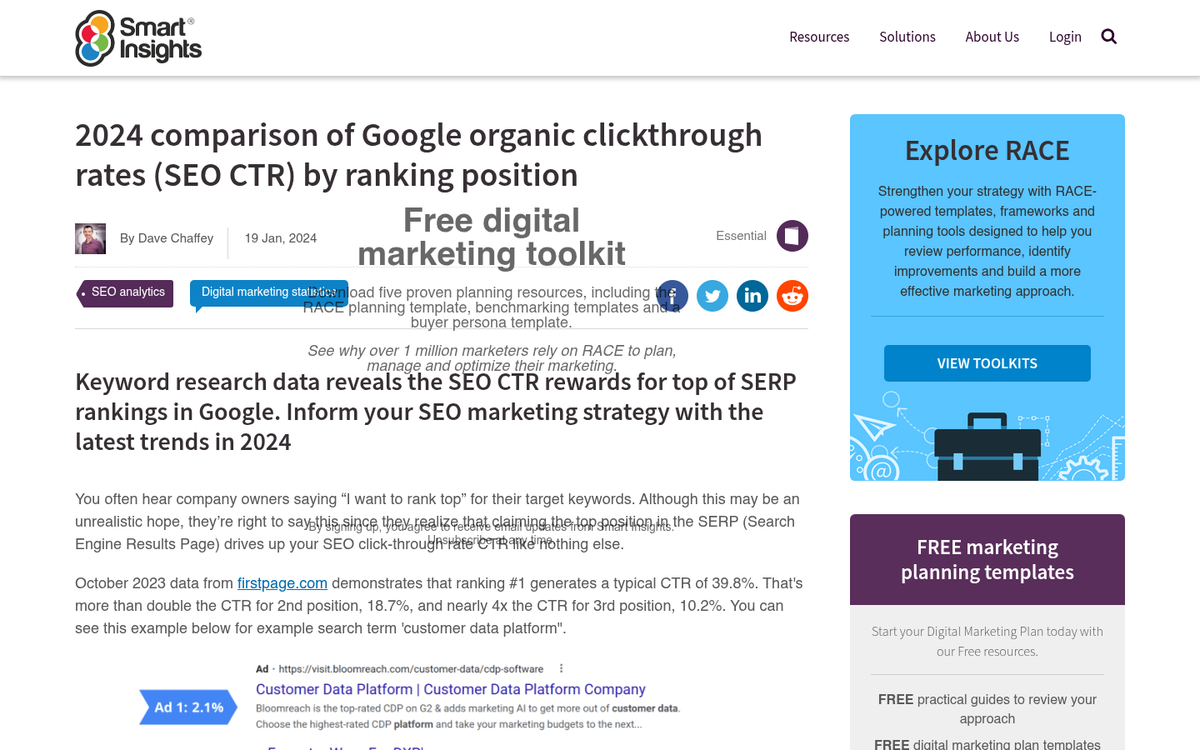
You don't choose your format. Google makes that call based on the query and your content. But writing content that matches the shape of a format makes it easier for Google to pick it up.
| Format | What It Looks Like | Content That Tends to Trigger It |
|---|---|---|
| Paragraph | A short text block beneath the query | Definitions, explanations, "what is" questions |
| List | Numbered or bulleted items | Steps, processes, ranked or grouped items |
| Table | Rows and columns of structured data | Comparisons, pricing, schedules |
| Video | A YouTube clip with a highlighted timestamp | Tutorials, demonstrations, how-to content |
If your site already has comparison pages or structured how-to content, you might already be closer to a featured snippet. The format you're most likely to land can depend on the content you already publish and how cleanly it's written.
The Click-Through Paradox You Need to Know About
Here is something that trips up website owners: landing in Position Zero does not automatically mean more traffic to your site. The numbers tell a tough story.
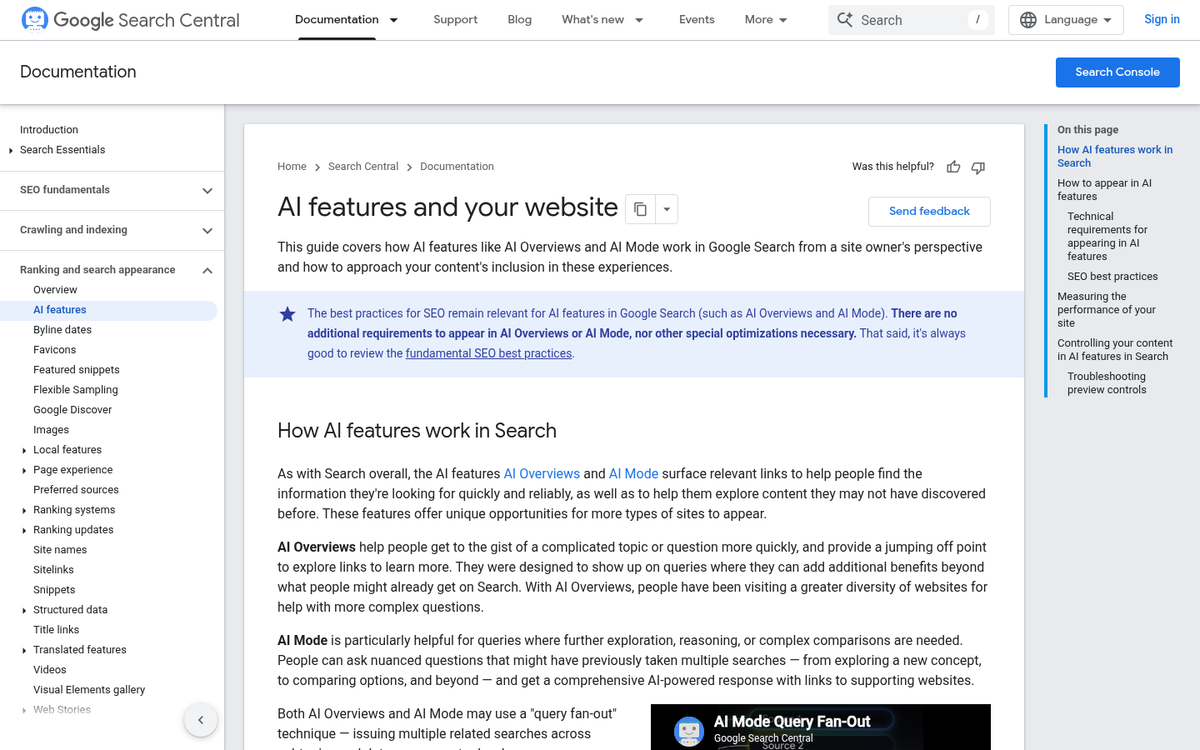
On average, a featured snippet at the top of the page pulls in about 8.6% of clicks. The result sitting directly below it gets nearly 19.6%. That gap is not a rounding error - it's a steady pattern that raises a fair question about what "winning" Position Zero actually means for your business.
The reason this happens is pretty simple. When Google shows a featured snippet, it gives the user enough information to walk away without clicking anything. Someone looking for a quick answer gets that answer right there on the results page and moves on. Your content did the work. But your website never saw the visit.
It is worth knowing that featured snippets and knowledge panels together account for around 42% of all clicks on a search results page. That is a large share of available traffic going to a single area at the top of the page, and it does not flow through to personal websites the way a standard blue link would.
Whether Position Zero is worth pursuing can depend on what you are trying to get out of it.
For brand awareness and authority, a featured snippet puts your name in front of a giant audience - even those who never click. For traffic-dependent goals like lead generation or product sales, the calculus looks different. A second-place result with a strong title and meta description can outperform the featured snippet on raw clicks alone. If you want to supplement your organic reach, it may be worth exploring using an RSS aggregator for traffic generation alongside your search strategy.
None of that means you should write off Position Zero entirely. The choice to go after it should align with your goals - not the assumption that the top position always delivers the most value. The relationship between visibility and traffic here is uneven, and that tension has only grown more pronounced as search and user behavior has changed.
How AI Search Has Raised the Stakes for Position Zero
AI-powered search tools like Google's AI Overviews don't sit alongside featured snippets - they actively draw from them. When a generative search tool builds an on-page answer, it frequently pulls from the same content that earns Position Zero. That connection between featured snippets and AI answers makes the estate at the top of search results more loaded than it has ever been.
Answer Engine Optimisation (AEO) is built on this exact principle. Content structured to win a featured snippet is also better positioned to be referenced by AI-generated replies. These two goals have become closely intertwined, and what you do to chase one will usually help with the other.
Things get tougher, though. Data from the GSQI tracking project showed a sharp decline in featured snippet frequency between late 2024 and early 2025 - between 35% and 57% across tracked domains; it's a big drop and it has raised questions about what Google is actually doing.
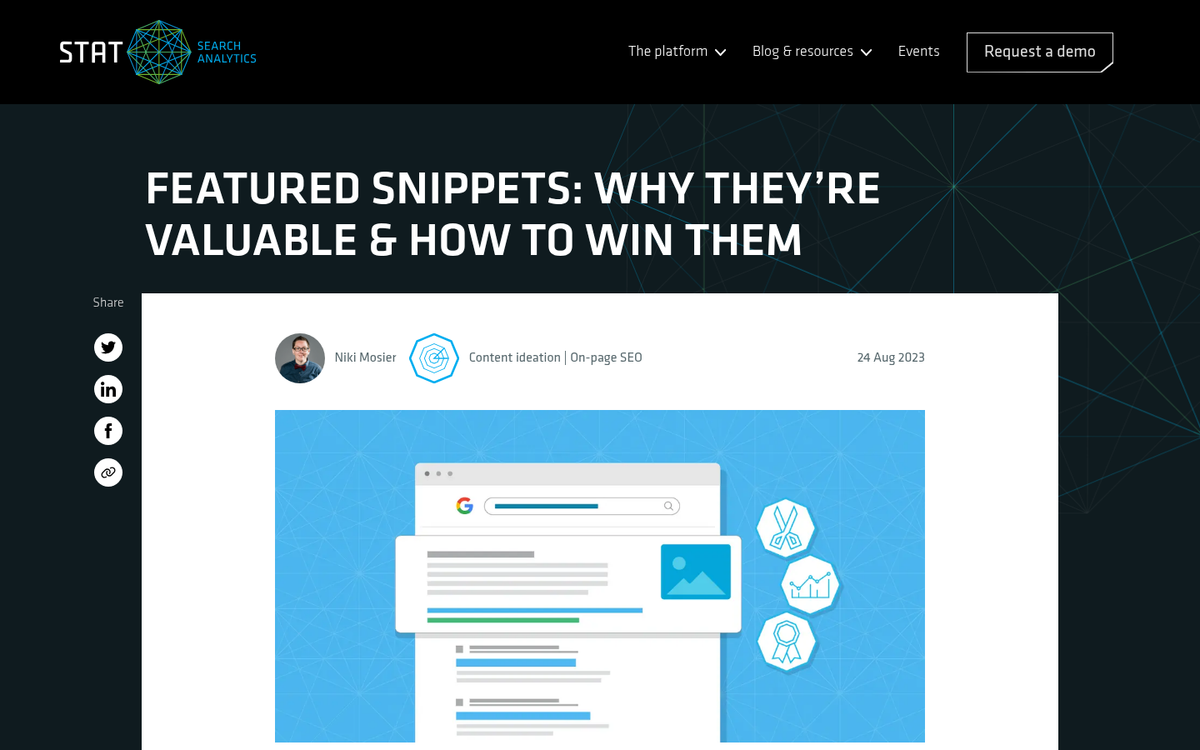
One interpretation is that Google is pulling back on snippets to push users toward AI Overviews instead. Another is that Google is being more selective about which queries deserve a snippet and which are better handled by its AI layer. The distinction matters because your approach to content would look different depending on which one turns out to be true.
This doesn't necessarily mean Position Zero is losing value. The bar to earn it may be higher, or the format of "winning" is changing. A drop in snippet frequency doesn't automatically equal a drop in the importance of being the source that AI tools reference.
For anyone building an AEO strategy, this period of transition is the most helpful time to pay attention. The rules aren't settled, which means the sites that understand the relationship between snippets and AI answers - and structure their content accordingly - are the ones most likely to stay visible as the dust settles.
Which Pages on Your Site Are Eligible
Not every page on your site is a candidate for Position Zero, so it helps to know what Google is actually looking for before you start optimizing anything.
The most important thing to know is that featured snippets usually come from pages that already rank on page one. Studies have put this figure at around 99.58% of all featured snippets - meaning Google pulls the answer from a page it already trusts and ranks well. If a page is sitting on page two or three, it's very unlikely to win a snippet no matter how well the content is structured. So your starting point is to look at pages that already have some traction in search results.
The other factor is query type. Google tends to show featured snippets for searches where it wants a direct answer. Question-based queries like "how do I," "what is," and "why does" are strong triggers, and so are comparison searches and definition-style queries. These search types signal that the user wants a quick, confident answer instead of a list of links to browse through.
This gives you a helpful way to audit your own content. Go through your ranking pages and see which ones actually answer a question. A product page that talks about features is less likely to get a snippet than a page that explains what something is or walks through a process step by step. The answer has to be there, in plain language, without the reader having to dig for it.
It also helps to remember the topics your audience searches for before they are ready to buy or follow anything. Educational content, how-to guides, and explainer pages match the intent behind snippet-triggering queries more closely than sales-focused pages do.
Once you have identified which of your pages already rank reasonably well and answer a genuine question, those are the ones worth focusing your attention on. The next step is to look at how the content on those pages is structured.
Structuring Your Content to Win the Snippet
Once you've identified which pages have a shot, the next step is to change the content in a way that makes Google's job easy. The format of your answer matters just as much as the answer itself.
Start with your headers. Use H2 or H3 tags to phrase your subheadings as direct questions - the thing someone would actually type into a search bar - this tells Google what your content is answering and where the answer lives on the page.
Then write your answer in the paragraph directly below that header. Google tends to pull paragraphs that fall between 40 and 55 words for featured snippets, so shoot for that range. You want to be thorough enough to satisfy the question but tight enough that Google doesn't need to trim your response. You want to get to the point, then stop.

For questions that lend themselves to steps or comparisons, you can use numbered lists, bullet points, or tables. Google will sometimes display these formats as their own snippet type, which can take up even more space on the results page. A clean, well-labeled table can be especially helpful for queries that involve comparisons or structured data - similar to how comparing WordPress.com Premium to a self-hosted blog benefits from a structured layout.
Schema markup won't directly win you a featured snippet. But it does help Google understand your content more accurately. Adding FAQ schema or How-To schema to the right pages gives you an extra layer of signaling that works in your favor.
One of the most helpful things you can do is look at who currently holds the snippet for the queries you're targeting. Pull up those results and check out the format. How long is the answer? Is it a paragraph, a list, or a table? You don't need to copy it - but what Google is already rewarding gives you a baseline to work from. This same research mindset applies when you're finding popular content on platforms like Pinterest to understand what formats resonate.
Just don't over-optimize. If your content starts to read like it was written for an algorithm instead of a person, that's a problem. Google is good at recognizing natural language and so are your readers, so keep the writing human.
Tracking Whether Your Snippet Efforts Are Working
Google Search Console is the best place to start. Go to the "Search results" report, click "Search type" and filter by "Web" - then look at the queries where you're already ranking. You can cross-reference position data with CTR to get a sense of what's going on at the top of the results page.
There isn't a dedicated "you own this snippet" label inside Search Console. But a sudden CTR jump on a query you're ranking for is a strong sign you've picked one up. Impressions climbing while your average position is the same is another indicator worth watching. These changes don't always announce themselves loudly, so it pays to check in on your top queries at least once a month.
Third-party tools like Semrush, Ahrefs and Moz can flag snippet ownership more easily. They track which domain holds the featured snippet for a given keyword and will show you when that changes. If you're targeting a few queries at once, these tools make it much easier to see the full picture without manually checking each one.
The three metrics that matter most are impressions, click-through rate and ranking position. Impressions tell you how visible you are. CTR tells you if that visibility is actually bringing visitors to your site. Position changes can point to the fact that Google is re-evaluating how your content fits the query.
A lost snippet doesn't automatically mean something went wrong. A competitor may have restructured their page, or Google may have changed the format it wants for that question type - it's worth investigating before assuming your content needs to change. Keeping an eye on how your content performs across metrics can help you spot these shifts early.
The most helpful mindset is to treat snippet tracking as a standard process instead of a one-time check. Update a page, wait a few weeks, then look at the data. If the numbers move in the right direction, you've learned something helpful. If they don't, that's helpful too - it points you toward the next thing to test. This kind of iterative approach is also useful when you're trying to grow visibility for a newer blog.
Small, deliberate changes tend to produce clearer data than overhauling a whole page at once. Keep your changes focused so you can tell what made the difference.
Position Zero Is a Signal, Not Just a Trophy
Yes, the click paradox exists. Some users will take the answer and move on. But that tradeoff can become less concerning when you find that clarity and directness - the same properties that win snippets - are also what convert the users who do click through. Optimizing for Position Zero and optimizing for your audience are not competing goals. They reinforce each other.
Treat snippet optimization not as a separate tactic, but as a discipline that sharpens your content. Answer questions. Use structure that helps readers and crawlers get through your logic. Cut the preamble. As AI-powered search continues to change how people find information, content that communicates clearly will always have an advantage - whatever the algorithm looks like next.
FAQs
What is Position Zero in search results?
Position Zero is a featured snippet box that appears above all standard organic search results on Google. It displays a short extract from a webpage directly on the results page, allowing users to read an answer without clicking through to a site.
Does ranking first guarantee a featured snippet?
No. Google can pull content from any page within the top ten results for a featured snippet. A page ranking fifth could appear above a page ranking first, meaning Position Zero operates by different rules than standard organic rankings.
Does Position Zero always increase website traffic?
Not necessarily. Featured snippets average around 8.6% of clicks, while the result directly below can receive nearly 19.6%. Because Google displays the answer on the results page, many users never click through to the source website.
What content formats can earn a featured snippet?
Google pulls featured snippets in four formats: paragraph, list, table, and video. The format chosen depends on the search query and how your content is structured. Writing content that matches a format's shape improves your chances of being selected.
How has AI search changed the importance of Position Zero?
AI tools like Google's AI Overviews frequently draw from the same content that earns featured snippets. This means optimizing for Position Zero also improves your chances of being referenced in AI-generated answers, making snippet optimization more strategically important than before.