




For years, SEO practitioners focused on a well-established set of ranking signals: backlinks, page speed, keyword relevance, mobile usability, and so on. Those still matter. But as AI answer engines take on a bigger role in how people find information, the signal landscape has expanded. AI systems don't rank pages - they pull from them, synthesize them, and choose which sources are credible enough to cite or quote. That changes what "ranking" even means for your content.
If you manage a website, ranking signals matter more than they ever have. The rules haven't been thrown out. But they've been rewritten in places. Content that performs well in traditional search doesn't automatically get picked up by AI engines, and the signals that drive AI selection - things like authority, structured formatting, and factual accuracy - deserve just as much attention as your existing optimization work.
This entry breaks down what ranking signals are, how they work across traditional and AI-driven systems, and what you can do to make your content more competitive in both environments.
Quick Answer
A ranking signal is a factor or data point used by search engines (like Google) to evaluate and rank web pages in search results. Common ranking signals include backlinks, content relevance and quality, page speed, mobile-friendliness, user engagement metrics, and domain authority. Search engines use hundreds of signals simultaneously, weighted by algorithms to determine which pages best satisfy a user's query. No single signal guarantees top rankings; rather, strong performance across multiple signals contributes to better search visibility.
How Ranking Signals Work Inside Search and AI Algorithms
Google uses over 200 ranking signals to determine where a page lands in search results. No single factor wins on its own, and each one gets weighted against the others, and the algorithm combines them to produce a score that reflects how well a page fits a given query.
A page with strong backlinks but thin content will lose to a page that does reasonably well across all signals. The algorithm is looking for the best fit, not the highest score in one category.
AI answer engines like Google's AI Overviews, Perplexity, and ChatGPT search work a bit differently. They don't just match keywords to queries - they try to understand the intent behind a question and find content that answers it accurately. That means they weigh things like entity relationships, semantic relevance, and how well a source connects related concepts together.
An entity, in this context, is any person, place, thing, or idea that the algorithm can recognise and link to other known information. When your content establishes these connections, AI systems can place it more confidently within a topic. That makes your content easier to surface as a direct answer.
The weighted ecosystem idea is worth sitting with for a bit - it explains why there's no shortcut to rank. Optimising one signal in isolation won't move you far if other signals are weak. The algorithm fills in the full picture before it decides.
Traditional search and AI answer engines do share some common ground. Both reward content that shows genuine expertise, earns trust from other credible sources, and loads in a way that's accessible to users. The difference is in what they do with those signals once they have them.
Search engines use signals to rank a list of pages. AI engines use them to decide if your content is worth citing as a direct answer; it's a meaningful distinction because it changes what you're actually competing for. With AI, the goal isn't always to be first in a list - it's to be the source the system chooses to quote.
The Signal Types That Actually Move the Needle for AEO
For answer engine optimization, not all signals carry the same weight. Some tell AI systems what your content is about, and others tell them whether to trust it enough to quote it.
Content Quality
Google's Helpful Content system and the March 2024 core update pushed in the same direction: content written for real users outperforms content written to game algorithms. AI engines look for the same thing. They need to pull a clean, direct answer from your page, so content that buries its point or pads out its word count gets passed over in favor of pages that get to the point.
Authority Signals
Backlinks are no longer the top-tier signal they once were. But they still matter. For AI systems, links from trusted external sources act as a vote that your content is worth referencing. What matters is relevance - a link from a known site in your field carries more weight than dozens of links from unrelated pages. Free directory submission sites with high PR can be a starting point for building that kind of relevant link profile.
Technical Signals
Page speed is one technical signal that has a direct, measurable result. Research has shown that 53% of mobile users leave a page that takes more than three seconds to load. A page that doesn't load fast enough to be read won't be indexed well enough to be cited. AI crawlers need to access and parse your content without friction, so a slow or broken page is a disadvantage. Even elements like how you inject ads into your WordPress posts can affect load performance if not handled carefully.
Structured Data
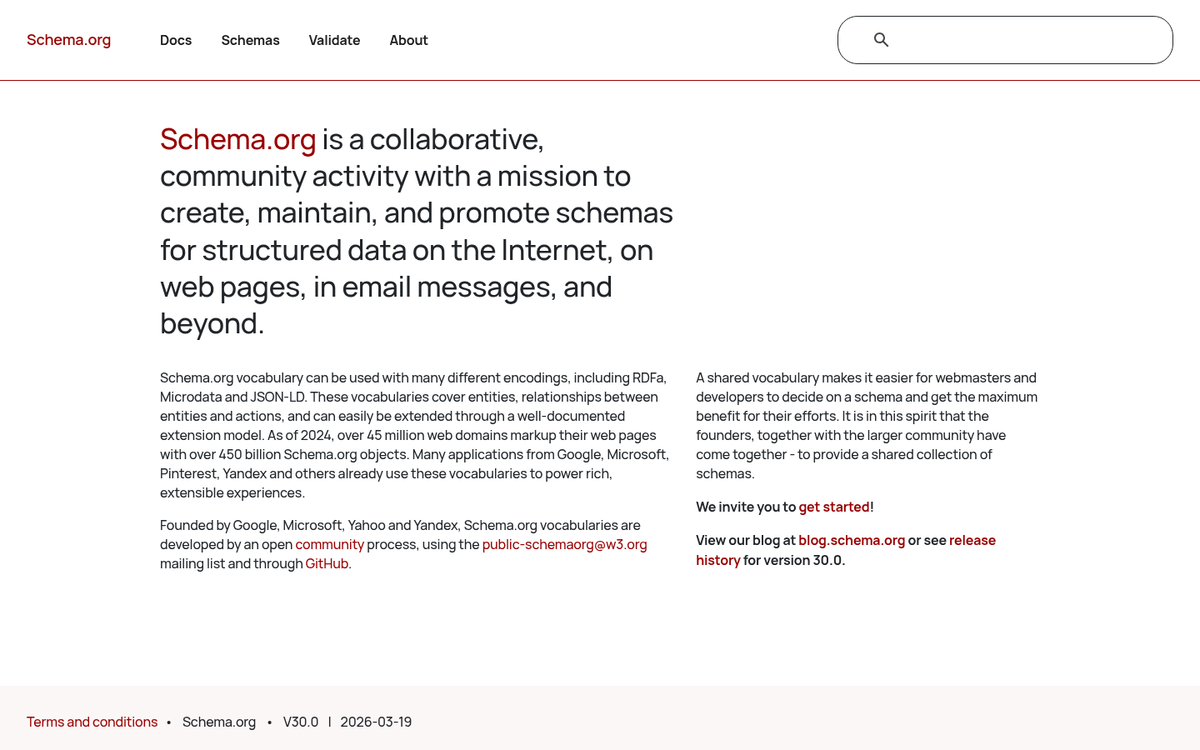
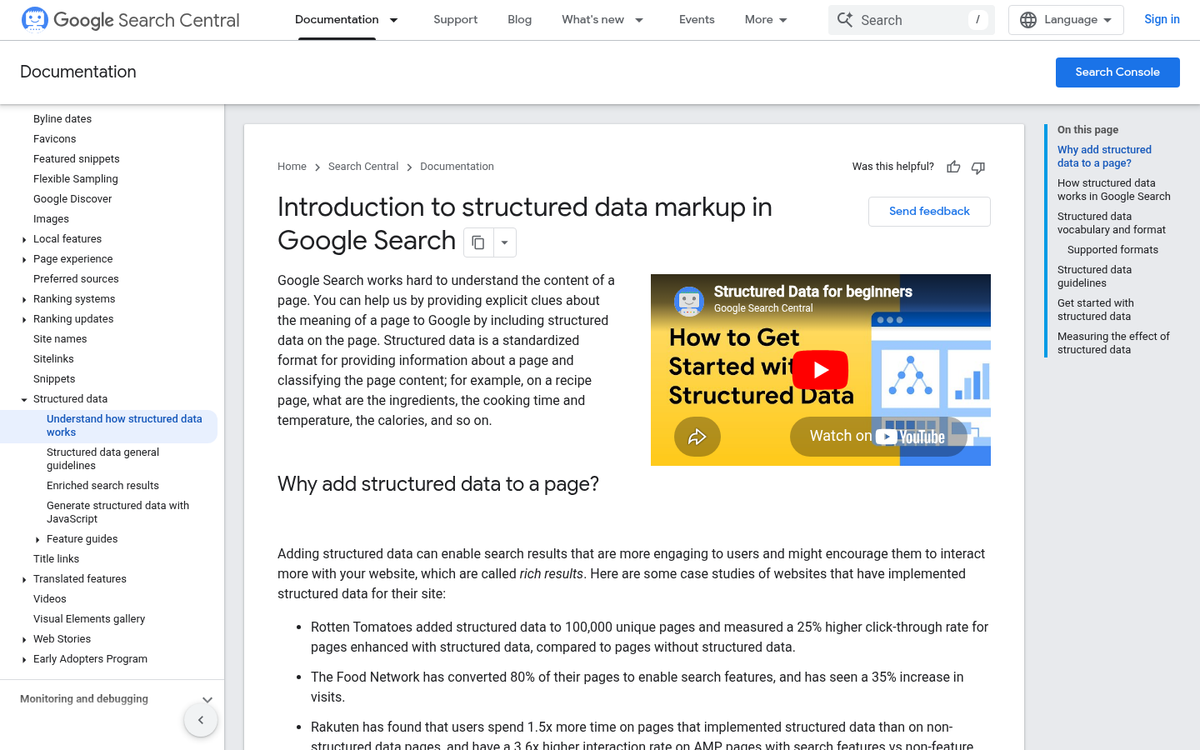
Schema markup is how you tell search and AI engines what your content contains. Around 72% of page-one results use schema in some form - it helps AI systems identify if your page holds a definition, a how-to, a product, or an FAQ. That is what lets them pull your content as a featured answer.
| Signal Type | What It Measures | AEO Relevance |
|---|---|---|
| Content Quality | Helpfulness and clarity for real users | High - AI engines favor direct, readable answers |
| Authority (Backlinks) | Trust and relevance from external sources | Medium - supports credibility for citations |
| Technical Performance | Load speed and crawlability | High - slow pages get skipped by crawlers |
| Structured Data | Content type and context via schema | High - enables AI to extract and display answers |
Where AI Overviews Change the Rules for Website Owners
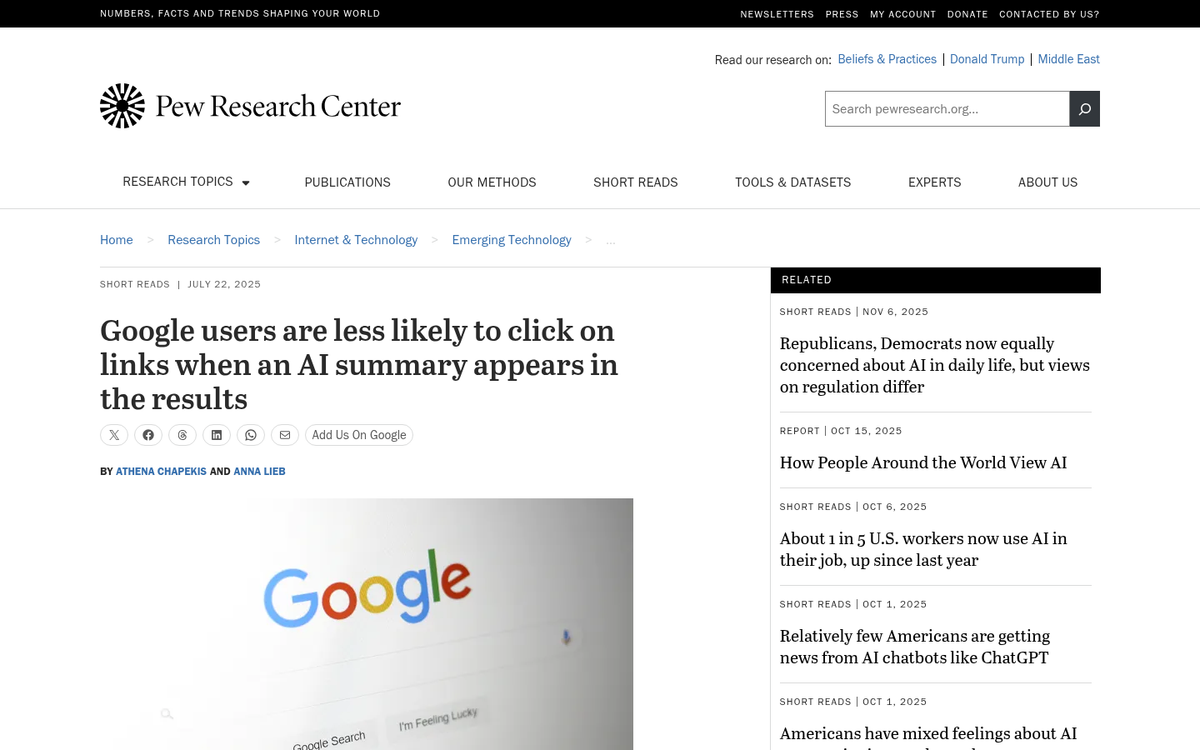
AI Overviews now appear on roughly 30% of U.S. desktop searches, and that number has consequences for organic traffic. On queries where an AI Overview appears, organic click-through rates drop from around 1.76% to just 0.61%; it's not just a bit of a dip - it's the difference between a page that drives leads and one that barely registers.
The uncomfortable part is that you can rank number one and still lose the click. The AI Overview sits above traditional results and answers the question directly, so a large portion of users never scroll down to your link. Your ranking signal is strong. But your traffic signal shows something completely different.
That's worth sitting with for a bit. Traditional SEO has always treated a top ranking as the goal, and for years that logic held up. But when the search result itself can become the answer, a high ranking can become more of a credibility checkpoint than a traffic driver.
That pushes website owners toward a harder question. If your whole strategy is built around ranking well in the ten blue links, you could be optimizing for a version of search that works less and less for certain query types. Informational searches - the "what is," "how does," and "why does" questions - are where AI Overviews appear most, and those are the queries that content-heavy sites have traditionally relied on to pull in new visitors. promoting a new WordPress blog often leans heavily on exactly these informational queries, which makes the shift particularly noticeable for newer sites.
| Query Type | AI Overview Frequency | Impact on Organic CTR |
|---|---|---|
| Informational | High | Significant drop |
| Navigational | Low | Minimal impact |
| Transactional | Low to moderate | Moderate impact |
The sites that do well here are the ones that get cited inside the AI Overview itself; it's a different target, and it calls for a different strategy in how you structure and frame your content. Tools like Buffer can help extend your reach beyond search alone, which matters more now that organic clicks from informational queries are harder to count on.
Signals You Can Actually Control and Optimize Right Now
Several of the tells search engines use to rank and pull answers are ones you can act on. A massive budget or a team of specialists is not required to make actual progress here.
Schema markup is one of the highest-impact changes you can make - it tells search engines what your content is about - a product, a review, an FAQ, or a how-to guide. If you don't have it, engines have to guess and they don't always guess right.
Content structure matters just as much. Pages that use headers, short answer blocks, and FAQ sections give AI systems something easy to extract and reference. If your page buries the answer in a wall of text, it's less likely to be pulled into an AI Overview or a featured result. Write the direct answer first, then expand on it.
One place site owners lose ground is in chasing backlinks while leaving on-page structure untouched. Backlinks still matter. But AI-driven engines parse page structure directly to find answers. A well-structured page with schema can outperform a poorly structured one with more links pointing to it.

Page speed and E-E-A-T signals round out the most accessible improvements. E-E-A-T stands for Experience, Expertise, Authoritativeness, and Trustworthiness - and you can strengthen it by adding author bios, citing credible sources, and keeping your content accurate and up to date. Internal linking helps too, because it shows search engines how your content connects and which pages carry the most weight on your site. If you're running WordPress, managing your theme's footer links is another small but worthwhile cleanup that affects how engines read your site structure.
| Signal | Optimization Action | Impact Level |
|---|---|---|
| Schema Markup | Add structured data for content type (FAQ, How-To, Product) | High |
| Content Structure | Use headers and direct answer blocks near the top of the page | High |
| Page Speed | Compress images and reduce unnecessary scripts | Medium |
| E-E-A-T Signals | Add author credentials, cite sources, and update content | Medium |
| Internal Linking | Link related pages together with descriptive anchor text | Medium |
| FAQ Sections | Answer common questions in a structured Q&A format | High |
These aren't advanced plans reserved for large sites. A small business with a well-structured service page and schema can compete with much bigger competitors in AI-driven results.
Your Ranking Signal Checklist Before You Hit Publish
Before you hit publish, run through this quick gut-check:
- Schema in place? Make sure the page has appropriate structured data so both search engines and AI systems can parse its context without guessing.
- Core Web Vitals passing? Speed and stability are table-stakes signals - a slow page bleeds trust before anyone reads a word. A free CDN can make a measurable difference here.
- Direct answer visible early? Lead with the clearest version of your answer. AI engines surface the most unambiguous response, not the most thorough one buried in paragraph six.
- Internal links logical? A coherent link structure signals topical authority and helps crawlers - human or AI-driven - understand where this page fits.
- E-E-A-T signals present? Author credentials, cited sources, and updated dates all reinforce the trust layer that newer ranking systems weight heavily.
The landscape will keep changing as AI answer engines grow more refined. But the underlying principle stays stable: signal-aware content earns its place in any result format and each structural choice - a clean heading, a well-placed schema tag, a faster image - is a small deposit into an account that pays out across every platform that decides if your content is worth surfacing. Stay aware of how these systems evolve and you'll never be caught rebuilding from scratch.
FAQs
What are ranking signals in SEO?
Ranking signals are factors search engines use to evaluate and position content in results. They include backlinks, page speed, keyword relevance, content quality, and structured data. Algorithms weigh these signals together rather than relying on any single factor.
How do AI answer engines differ from traditional search?
Traditional search ranks a list of pages, while AI answer engines select specific content to cite or quote directly. AI systems prioritize authority, structured formatting, and factual accuracy to determine which sources are credible enough to surface as direct answers.
Why are AI Overviews reducing organic click-through rates?
AI Overviews appear above traditional results and answer queries directly, meaning many users never scroll to organic links. Click-through rates drop from around 1.76% to just 0.61% on queries where an AI Overview appears.
What is schema markup and why does it matter?
Schema markup is structured data that tells search and AI engines what your content contains, such as a product, FAQ, or how-to guide. Around 72% of page-one results use schema, helping AI systems extract and display your content as a direct answer.
What quick optimizations improve AI and search visibility?
Add schema markup, structure content with clear headers and direct answer blocks, improve page speed, strengthen E-E-A-T signals with author credentials and cited sources, and use logical internal linking to establish topical authority.