Key Takeaways
- Live chat builds direct trust with visitors, potentially replacing proxies like testimonials or brand logos.
- Users are three times more likely to return after live chat, and abandoned carts decrease by 15%.
- Tidio, Intercom, and Tawk.to are top picks, covering budgets from free to enterprise-level needs.
- AI-powered hybrid models now let businesses offer 24/7 chat coverage without full-time human staffing.
- Live chat also provides free, real-time UX research by revealing what information visitors couldn't find.
Live Chat Scripts: Are They Still Worth It in 2026?
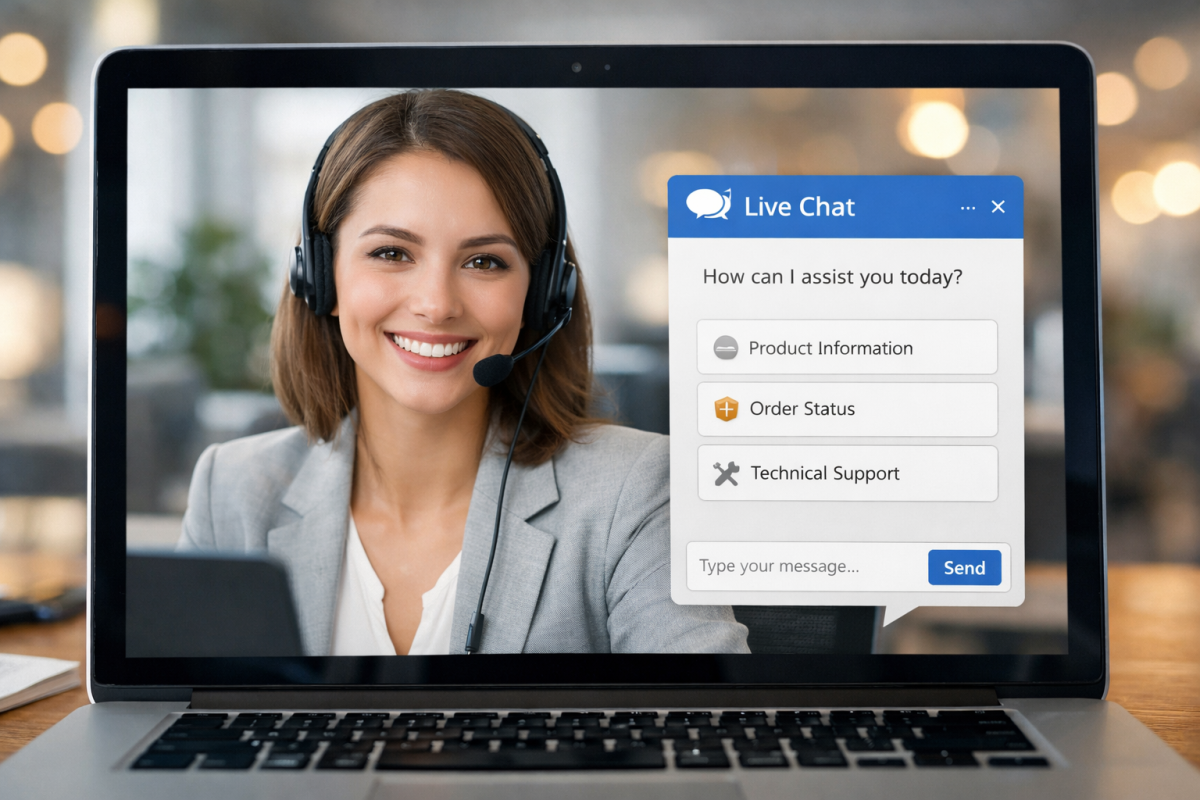
You've probably seen it more and more while browsing websites - a little button that pops up on the side of your screen asking if you'd like to chat for live support. A box appearing in the corner, mimicking an incoming message, with a greeting from someone who supposedly works for the site you're on. Maybe an exit-intent popup asking if you have any questions before you leave.
All of these are examples of live chat scripts - tools designed to connect a user to a real human being (or increasingly, an AI assistant) who is standing by to answer questions and follow up on leads. A skeptical web user might wonder if these things actually work. They might suspect the person on the other end is copy-pasting scripted responses from a call center halfway around the world. So what's the truth - and do live chat scripts actually move the needle in 2026?
The Benefits of a Live Chat Script
Think about a website conversion as a matter of trust. A lot of what you're doing in marketing is getting people to trust your site when you're not physically there to reassure them. You know why SEO matters so much? It gets you into the top spots on Google - and those spots earn that traffic because users trust that Google has vetted the results. If it's ranking highly, it's probably legitimate.
The same principle applies to site design, social proof, testimonials, and recognizable brand logos. All of it is a proxy for trustworthiness. With a live chat script, you don't need a proxy. You can be there directly - or at least, someone from your team can be.
With a single click, a visitor can be connected to a real conversation with an employee of your company, ready to answer questions in real time. If they're on the fence about converting, or they have a concern your FAQ doesn't address, you can resolve it on the spot and secure the sale before they bounce.
Live chat also gives you something invaluable: direct feedback. You can see your traffic in real time, and when a user initiates a chat, you learn exactly what information they couldn't find or what concern nearly cost you the conversion. That's free UX research you can act on immediately. If you want to go deeper on understanding user behavior, free website heatmap tools can complement what you're learning from chat sessions.
The numbers back this up too. According to Unbounce, users are as much as three times more likely to return to your site after using live chat to speak with one of your employees. For users with questions at the checkout stage, live chat decreases abandoned shopping carts by 15%. Chat is also inherently engaging - and engaged users spend more time on your site, which is good for both conversions and your SEO signals. If you're still seeing traffic without sales, live chat may be one of the most direct fixes available.
It's also worth noting that in 2026, AI-powered chat tools have changed the landscape significantly. Many businesses are now using a hybrid model - AI handles common questions instantly, 24/7, while human agents step in for more complex conversations. Tools like Intercom, Drift, and Tidio have leaned heavily into this model, and for good reason. If you don't have the staff to monitor a live chat full-time, you might consider how to inexpensively outsource your live chat operator - an AI-assisted setup can cover the gaps without the experience feeling impersonal or broken.
Top Live Chat Scripts Worth Using in 2026

The live chat space has evolved considerably. Some older players have faded, while others have grown into full customer communication platforms. Here are some solid options depending on your needs and budget.
Tidio - One of the most popular choices for small to mid-sized businesses right now, and for good reason. Tidio combines live chat with AI-powered chatbots, email, and Messenger integration in one dashboard. The free plan is genuinely usable, and the paid tiers are reasonable. It integrates easily with WordPress, Shopify, and most major platforms. If you want a modern, hybrid human-plus-AI chat setup without a steep learning curve, Tidio is hard to beat.
Intercom - The heavy hitter for businesses that are serious about customer communication. Intercom has grown well beyond a simple chat widget - it's a full customer messaging platform with AI agents, product tours, help centers, and robust automation. It's not the cheapest option, but for SaaS businesses or anyone with a complex sales or support funnel, it's extremely powerful and worth the investment.
Tawk.to - If budget is a concern, Tawk.to is entirely free and has been for years. It's straightforward, reliable, and supports multiple agents, unlimited chats, and chat history. It won't wow you with cutting-edge AI features, but it does the fundamentals well. There's also an optional paid add-on if you want Tawk.to's own agents to handle chats on your behalf, which is a nice option for small teams.
Notable Mentions
Olark - One of the older names in the space, Olark is still around and still functional. It integrates with Salesforce, WordPress, Magento, and HubSpot. It's clean, easy to use, and well-suited to teams that want a no-fuss live chat without a lot of complexity. The free tier is limited, but it's a solid entry point.
Pure Chat - Still used by over 150,000 businesses, Pure Chat remains a quick and easy option. The free version is limited to one active widget with caps on monthly chats and saved history, but the paid version starts at just $5 a month - genuinely one of the more affordable options out there for what you get.
AI-First Chat Tools (Drift, Freshchat, HubSpot Chat) - Worth mentioning as a category. If your business is already using HubSpot CRM, their built-in chat tool is a natural fit and integrates seamlessly with your contact records and pipelines. Freshchat is another solid mid-market option. Drift has repositioned itself as a revenue acceleration platform, making it more relevant for B2B sales teams than small blogs or ecommerce stores.
The bottom line is this: live chat scripts still work, and in 2026 they work better than ever thanks to AI assistance filling in the gaps when human operators aren't available. Whether you're a solo operator running a WordPress blog or managing a full ecommerce operation, there's a live chat solution at every price point - including free - that can meaningfully improve your conversion rate and the experience visitors have on your site.