Content decays over time. When your site is, overall, losing traffic, you want to do something about it. The challenge in 2026 is that the rules have changed significantly - it's not just about refreshing old content anymore. AI Overviews, Core Updates, and a fundamental shift in how Google surfaces information have all made traffic recovery more complex than it used to be. That said, there's still plenty you can do. Often, you can restore meaningful traffic by putting a little care into your older pages. Other times, it's a specific page that's losing its appeal, and you want to boost it back up. How can you do so?
Key Takeaways
- AI Overviews reduced organic CTR by 61%, meaning traffic loss may be structural and not fixable through content refreshing alone.
- Categorize declining content as low-quality, outdated/timely, or salvageable-only the third category is worth investing time to revive.
- Refresh evergreen content by updating outdated data, preserving the original URL, and adding original expertise to reduce AI Overview vulnerability.
- Strategic internal linking within body content-not just widgets-can drive 15-20% traffic recovery at no cost.
- Check Google Search Console for manual penalties, technical errors, slow page speed, and hosting issues before assuming content is the problem.
Understand Why Traffic Is Declining in 2026
Before you do anything else, it's worth understanding the landscape you're operating in, because the reasons your traffic is declining may have changed dramatically.
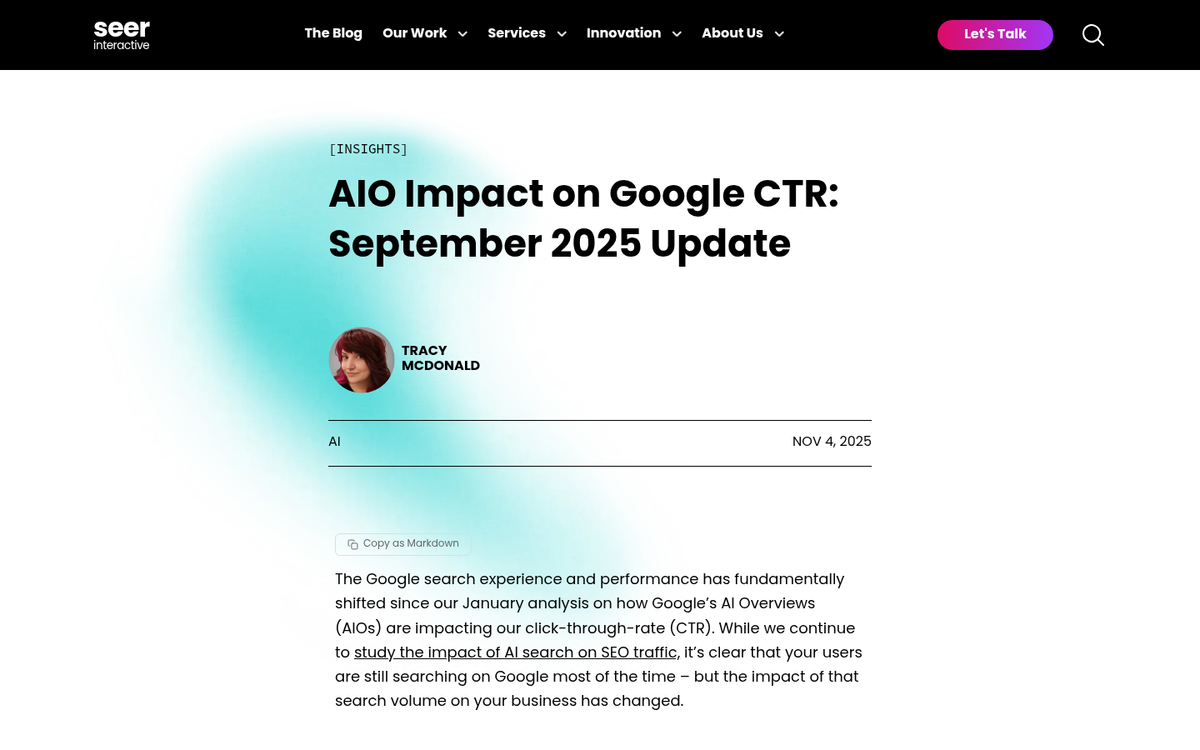
Google's AI Overviews - the AI-generated answer summaries that appear at the top of search results - are now a major factor in organic traffic loss. A September 2025 study by Seer Interactive found that organic CTR dropped 61% for queries where AI Overviews appeared (falling from 1.76% to just 0.61%), while paid CTR crashed an even more dramatic 68%. Ahrefs has similarly found that AI Overviews reduce clicks by 35.5% on average. If your content covers informational topics that Google can now answer directly in search results, that alone could explain a significant portion of your traffic loss - and no amount of content refreshing will fully reverse it.
On top of that, Chartbeat data showed that Google search traffic to publishers declined globally by roughly a third in the year leading to November 2025, with Google Discover referrals to publisher websites down 21% year-on-year. Google's December 2025 Core Update hurt rankings for 40-60% of sites, with affiliate-heavy sites hit hardest at 71%.
The point here isn't to be doom and gloom - it's to make sure you're diagnosing the right problem before you start applying solutions.
Analyze the Existing Content
Once you have a sense of the broader picture, take a good look at the content that already exists. There are two things you're looking for: relevance and quality.
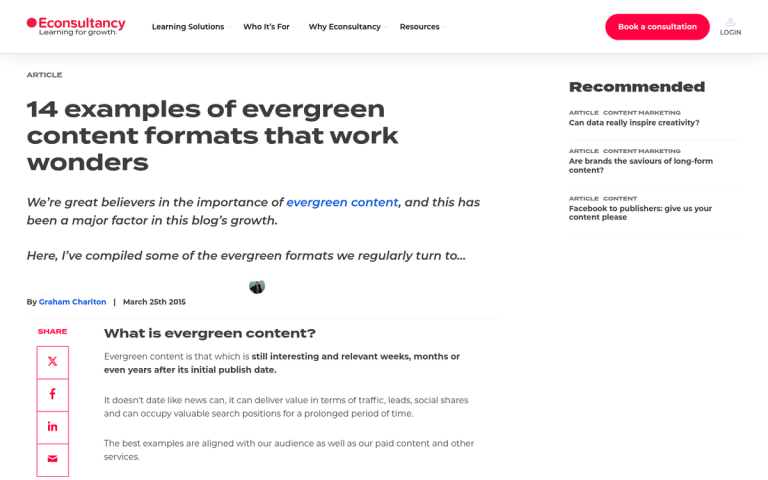
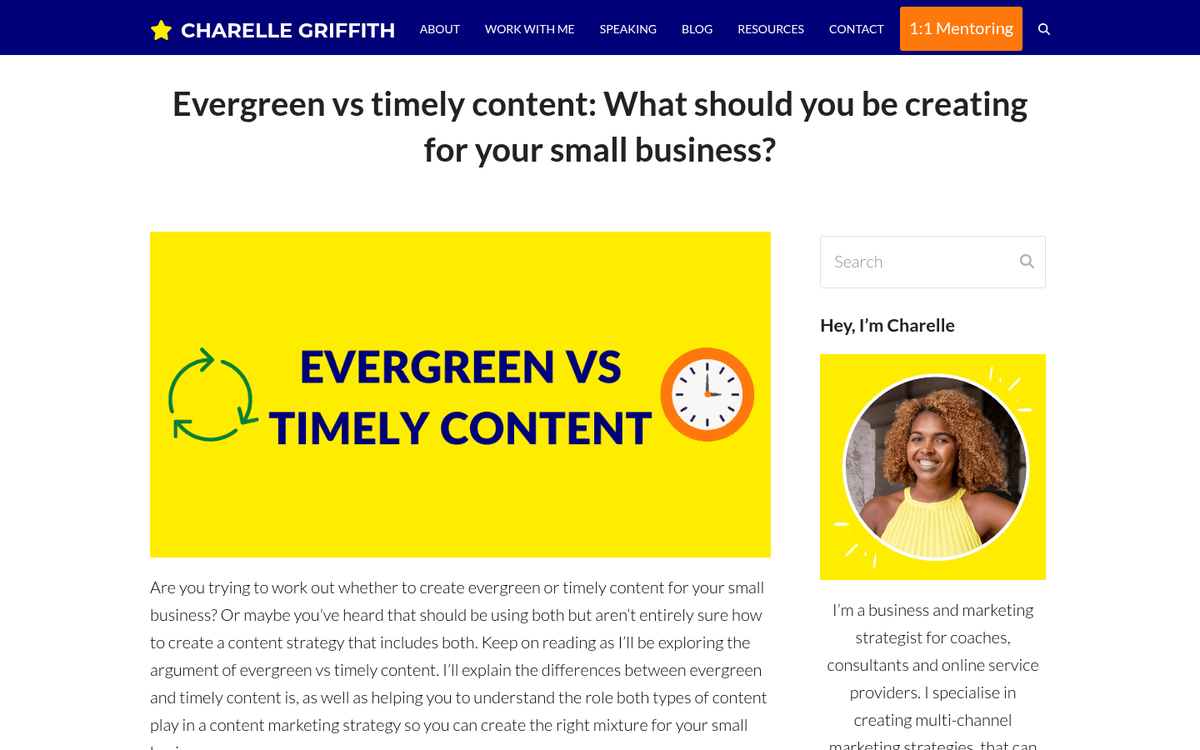
On the relevance front, you may have heard these terms before - there are two types of content. One is timely content, and the other is evergreen. Evergreen content, like the trees, sticks around indefinitely. Evergreens don't shed their leaves and lie dormant - they're rich and full throughout the year. Evergreen content is genuinely useful and interesting regardless of when someone reads it. Meanwhile, timely content is only relevant for a short window. Think of all the articles written speculating about a new product launch - once the product ships, most of that content becomes irrelevant almost overnight.
Timely content is difficult to keep alive because the topic is inherently less valuable as time passes. It may still have some historical interest, but it's not pulling in new readers with intent to learn or act.
That said, timely content still has value on your site as part of a broader history of good content. Just because it's no longer actively driving traffic doesn't mean you should remove it. There's generally no reason to delete it, even if some of the predictions or claims it made turned out to be wrong. There's not much you can do to revive traffic to these timely posts, so treat them as a sunk cost and focus your energy elsewhere.
Evergreen content, by contrast, is much easier to perk back up. More on that shortly.
As for quality, Google's content quality signals have only gotten more sophisticated over time. The days of the "Panda update" as a distinct, named event are long gone - quality signals were rolled into the core algorithm years ago and have been refined continuously since. What's changed in the past few years is that Google's bar for what counts as genuinely helpful content has risen considerably, in part because of the Helpful Content system and the way AI-generated content flooded the web.
Length still matters, but it's no longer the primary lever it once was. A well-structured 800-word post that directly answers a specific question can outperform a bloated 3,000-word post that meanders. That said, if your content is thin - under 1,000 words on a topic that genuinely warrants more depth - expanding it with substantive information is still a good move. There's no hard upper limit on length, but if you're pushing past 4,000 words, consider whether you're better off splitting it into multiple focused pieces.
The real purpose of this analysis step is to categorize your content and determine whether it is:
- Too low quality to keep and potentially hurting your site by existing.
- Old, irrelevant, or timely - not actively harmful but not worth investing in.
- Potentially valuable with a little care and a little work.
Hopefully, the page you're looking to restore traffic to falls into the third category. The first two don't have much you can do to meaningfully revive them.
Revamp the Old Content

If you've determined that the old content is worth revamping, it's time to figure out what to do with it. There are two main approaches: the total replacement and the redirection.
The total replacement technique is for content that has a solid skeleton but is lacking in substance - often evergreen content that was good at the time but now relies on outdated data, old statistics, or references to tools and platforms that no longer exist or have changed. The goal is to take what's there, strip out what's stale, and rebuild it around current information.
A classic example: Buffer has historically gone back to update their social media timing guides every six months or so, refreshing the data, updating the conclusions, and keeping the URL intact. That's exactly the right approach. You keep the old URL - which is important because it preserves whatever search equity and inbound links you've built - and you update the content itself to reflect what's true and useful today.
When you do this, add an "Updated [date]" line at the top of the post. Update the publication date if your CMS allows it. This signals to both readers and search engines that the content has been actively maintained. It won't trick Google into thinking it's a brand new post, but that's not the goal - the goal is to show that it's current.
One thing worth adding in 2026: when refreshing content, think about whether your updated post is at risk of being absorbed by AI Overviews. Purely informational, question-and-answer style content is most vulnerable. If your evergreen post is largely answering factual questions that Google can now answer in a snippet, consider whether you can add depth, original data, personal expertise, or a unique angle that makes the full article worth clicking through to read.
The redirection method is for cases where the original topic is sound but the original content has virtually nothing left to salvage. Write a new post on the same topic - ideally detailed and authoritative - publish it, and redirect the old URL to the new one. This transfers the link equity from the old post while letting you start fresh with the content itself.
This method also works well for consolidation. If you have two or three older posts covering different aspects of the same topic, you can write one comprehensive piece covering all of them and redirect the old URLs to the new one. Consolidation has become increasingly important as sites that grew quickly in the 2010s now sit on archives full of thin, overlapping content. If you're unsure how this affects your overall metrics, it's worth understanding how to calculate the true cost per published article before deciding which posts are worth the investment to revamp versus retire.
Make New Internal Links
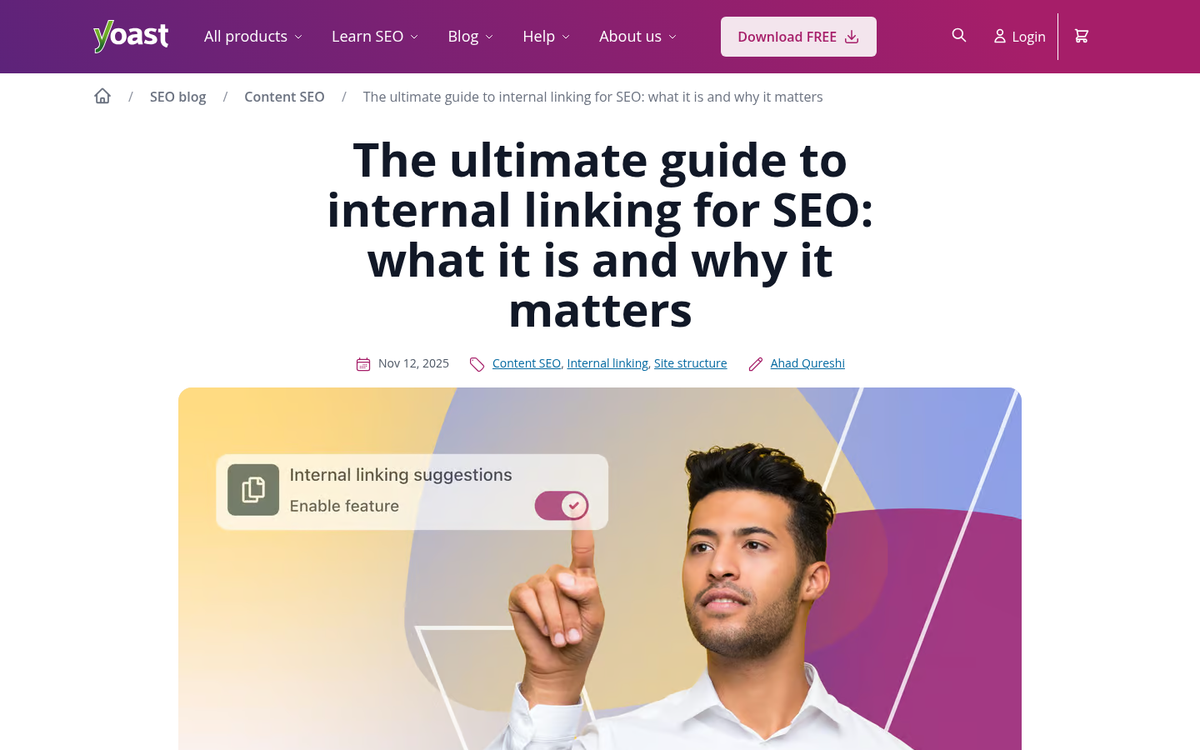
One of the most underrated and cost-effective things you can do is stop neglecting your internal links. Strategic internal linking has been shown to produce 15-20% traffic recovery on its own, according to data from Connective Web Design - and it costs nothing except time.
The idea is straightforward: link to the page you're trying to revive from other relevant, well-trafficked pages on your site. Use descriptive anchor text that gives readers (and Google) a clear sense of what they'll find on the other end. This passes authority from established pages to the one you're trying to boost, and it creates natural pathways for readers to find it.
A lot of sites rely on related post widgets and call it a day. The problem is those widgets often get ignored - visually they blend in with native advertising placements, and readers have learned to tune them out. Links embedded naturally within the body of your content are far more effective. When you mention something in passing that you've covered in depth elsewhere, link to it. That's internal linking done right.
Internal links are a subtle force. You won't add a handful and immediately see your rankings jump. Think of them as long-term infrastructure - they keep readers on your site longer, distribute authority across your content, and over time contribute meaningfully to how Google understands the relationship between your pages.
Look for External Link Opportunities
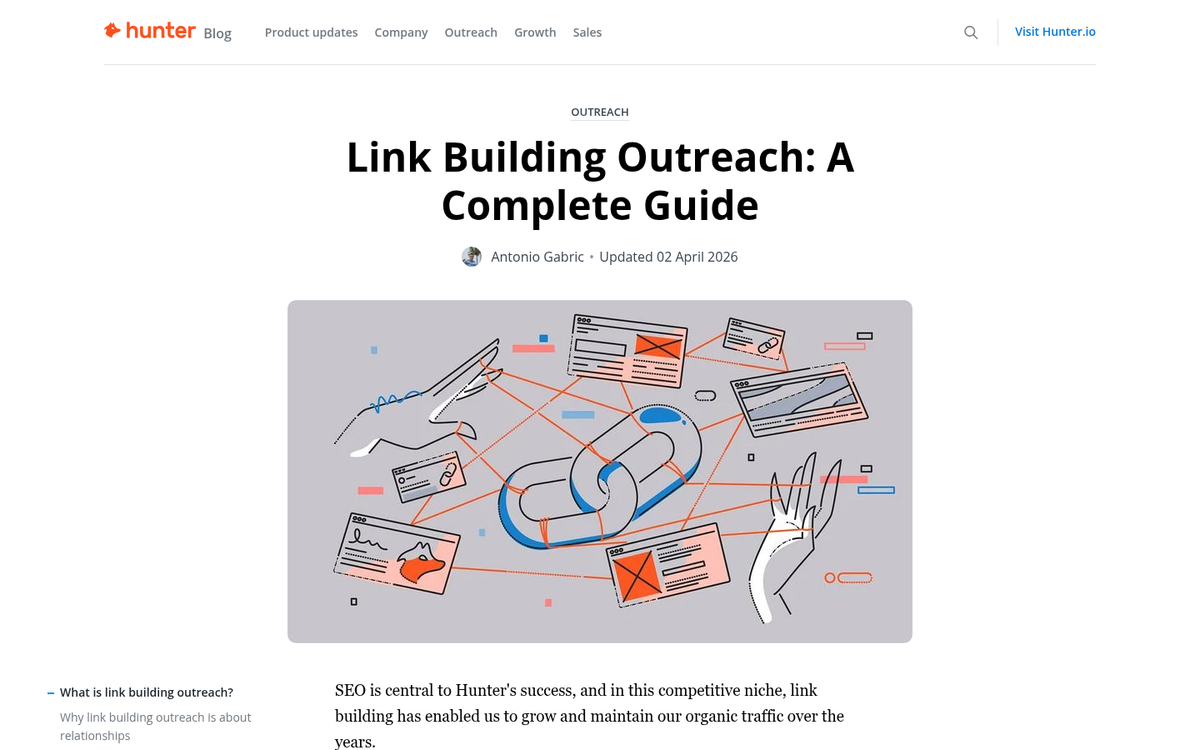
Once you've refreshed the content and strengthened your internal links, it's time to look for external link opportunities. A few approaches that still work well:
- Share the updated content as if it were new. Push it through your normal social channels - LinkedIn, X (formerly Twitter), relevant subreddits, Facebook groups, wherever your audience lives. A refresh is a legitimate reason to reshare.
- Send it to your email list. Email remains one of the most direct ways to drive traffic to a specific piece of content. Even if only a fraction of your subscribers are content creators who might link to it, that's still worthwhile.
- Find sites that linked to the old version and reach out. Let them know the post has been significantly updated with new information. You're not begging for a link - you're giving them a heads-up that the resource they're pointing to has been improved. Most site owners appreciate that.
- Find sites actively covering the topic and reach out with the updated post. If they've recently written about it, engage with their content and introduce yours as a related resource. This works best when you're genuinely adding something they didn't cover.
- Repurpose the content into other formats. Turn a well-performing post into a short video, an infographic, or a slide deck. Distribute that content on YouTube, Pinterest, or SlideShare with a link back to the original article. This builds additional inbound links without cannibalizing the original.
One thing worth noting in the current environment: being cited in AI Overviews has become its own form of link equity. Brands that are cited in AI Overviews earn 35% more organic clicks and 91% more paid clicks, according to recent data. Getting there isn't a simple checklist item, but it generally comes down to being a credible, authoritative source - original research, strong E-E-A-T signals, and content that clearly demonstrates expertise tend to help.
The Wrong Side of the Law

All of the above assumes your content was naturally declining with age. But sometimes the content itself is fine, and the drop has a different root cause entirely.
Log into Google Search Console (formerly Webmaster Tools) and check for any manual actions. A manual penalty can tank your rankings quickly, and if you've received one, you'll need to address it directly before anything else matters.
It's also possible you introduced a technical error during a recent site update - accidentally blocking crawlers in your robots.txt, misconfiguring a meta noindex tag, or breaking a redirect chain. These are easy to overlook and easy to fix once you find them.
Page speed is another factor that's grown in importance. Sites with a Largest Contentful Paint (LCP) greater than 3 seconds lost 23% more traffic compared to faster competitors. Core Web Vitals are a real ranking factor now, and if your site is slow - particularly on mobile - that could be contributing to your decline. Run your pages through Google's PageSpeed Insights and take the recommendations seriously.
Your web host can also be a silent culprit. If they're having issues with server response times or reliability, your rankings can suffer. Shared hosting has real limitations, and setting up an uptime monitor like UptimeRobot is a simple, free way to keep tabs on this.
Finally, it's always possible that a stronger competitor has entered the space and is outranking you. Find them, study their traffic sources, and figure out how to do it better. That's a slower fix, but it's a real one.