Marketers and SEOs have had to rethink how they create and structure content. Two strategies have emerged from that reckoning: Answer Engine Optimization (AEO) and Generative Engine Optimization (GEO).
Both are replies to the same underlying problem - the old model of ranking for clicks is losing ground to a new model where AI systems surface information. Both need you to think past the traditional blue link. And both have generated a fair amount of uncertainty about whether they're the same thing with different names.
They're not - but the distinction is soft enough that the uncertainty is understandable. If you landed here because you searched for that comparison, you're in good company. The vocabulary is still settling across the industry, and even experienced practitioners sometimes use the two terms interchangeably when they shouldn't.
I'll break down what AEO and GEO each mean, where they overlap, and where they legitimately diverge - so you can make well-informed decisions about which one (or which combination) deserves your attention right now.
Key Takeaways
- AEO and GEO are related but distinct strategies - AEO targets Google SERP features while GEO targets generative AI responses.
- Both strategies share roughly 80-90% tactical overlap with traditional SEO, including structured data, E-E-A-T signals, and conversational formatting.
- GEO carries a significantly higher traffic risk, with AI Overviews reducing click-through rates by 20-80% versus AEO's 5-15% drop.
- Industry confusion persists because marketers, tools, and content creators frequently use AEO and GEO interchangeably without distinguishing their differences.
- The smartest approach layers both strategies - one well-structured page can earn a featured snippet and an AI citation simultaneously.
What AEO Actually Means and Where It Came From
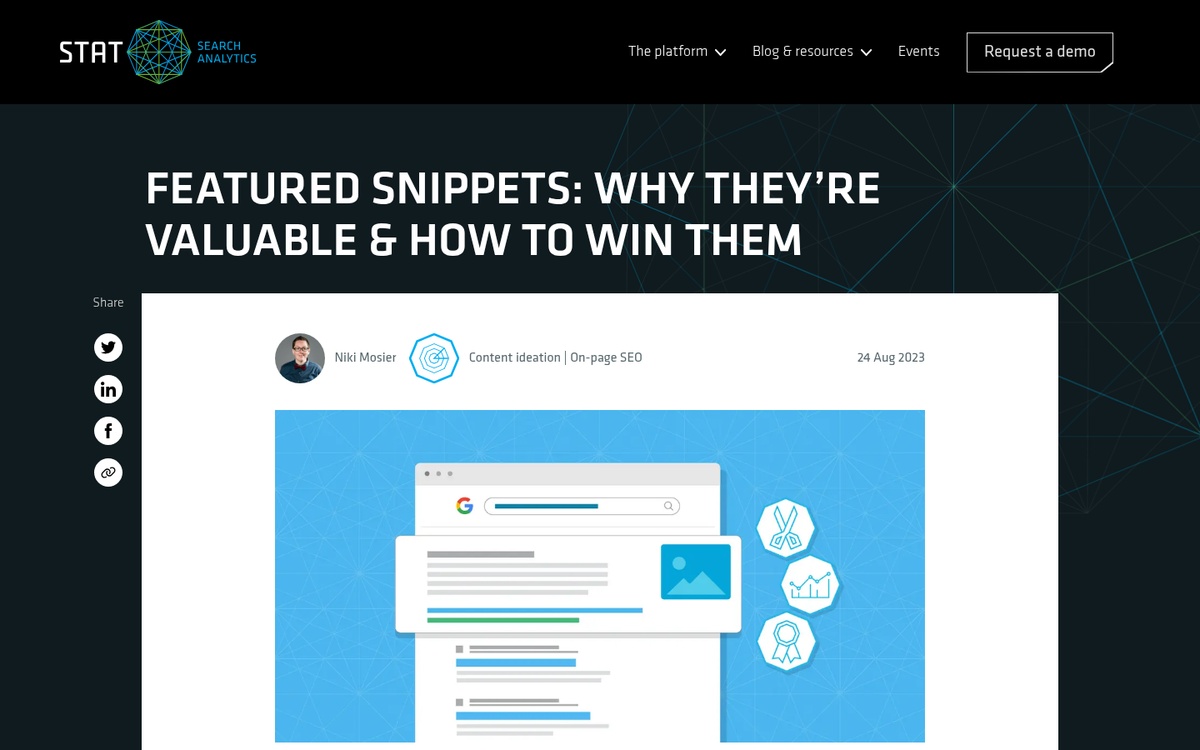
Answer Engine Optimization is the practice of structuring content so search engines can pull it as a direct answer. Think featured snippets, knowledge panels, and voice search replies - the types of results that show up before a user even clicks a link.
The concept started to gain traction around the mid-2010s as Google began to change how it handled search results. Instead of just returning a list of links, Google started to answer questions directly on the results page. Zero-click searches became a measurable trend and content creators had to respond to that.
Voice assistants accelerated this change. When someone asks Alexa or Google Assistant a question out loud, there's no list of results to scroll through. The assistant picks one answer and reads it aloud. That made it matter to be the source that gets chosen instead of just a result that ranks well.
AEO targets a specific type of query - conversational, question-based, and direct. Things like "what is," "how do I," and "what does X mean" are the bread and butter of AEO content.
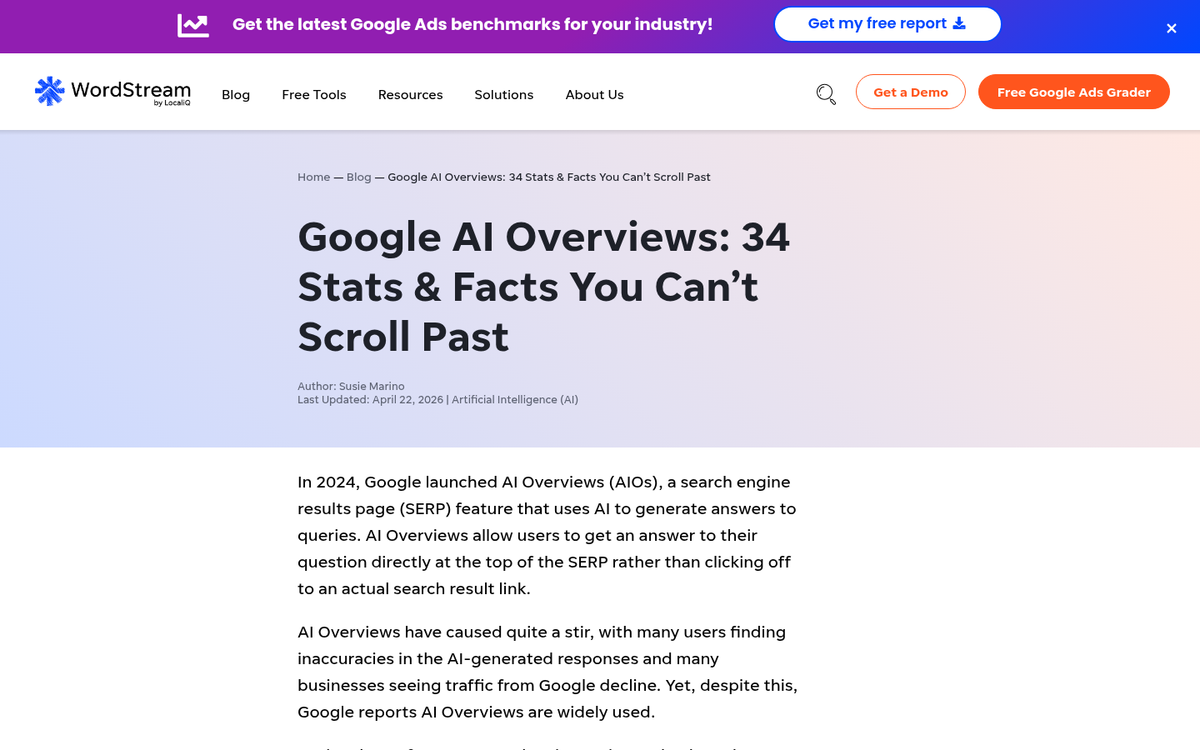
The content formats that work well for AEO are fairly recognizable. Short, factual paragraphs that directly answer a question perform well. Structured formats like FAQ sections also help because they match the way people ask questions. You want to be easy for a search engine to extract and surface without much interpretation.
AEO was always tied closely to Google's ecosystem. Featured snippets, People Also Ask boxes, and voice replies from Google Assistant were the main targets - part of what makes AEO feel like an extension of traditional SEO instead of something very separate from it.
The underlying logic of AEO is about readability for machines as much as for people. A well-optimized answer is accurate and formatted in a way that a search engine can pull cleanly into a result. Headers, short paragraphs, and direct language all give you that. Speakable schema is one technical tool that helps signal exactly which content is meant to be read aloud.
AEO also pushed content creators to think differently about what success looks like. Ranking on page one used to be the goal. With AEO, the goal became something closer to owning the answer - being the source a search engine trusts enough to quote directly to a user, usually without that user ever visiting the page.
What GEO Actually Means and How It Differs in Origin
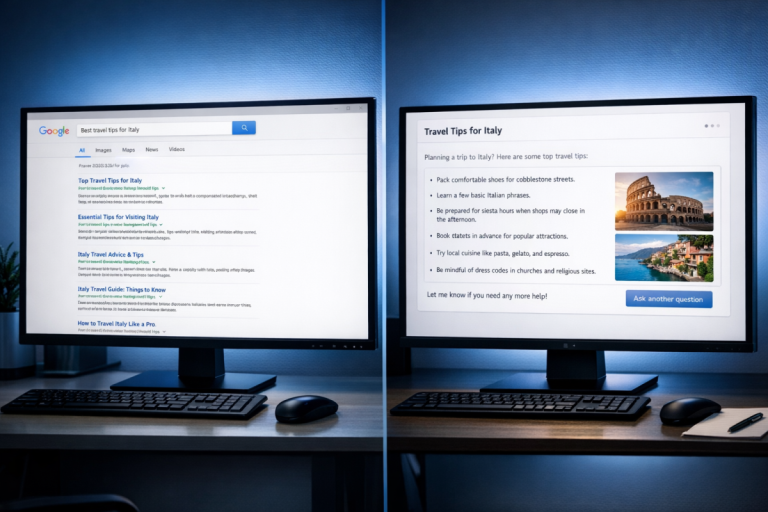
Generative Engine Optimization - GEO - is a newer term, and it was born from a very different problem. While AEO grew up alongside voice assistants and featured snippets, GEO came about because of large language models. Tools like ChatGPT, Perplexity, and Google AI Overviews don't retrieve and display information the way a search engine does. They generate replies from scratch, pulling from training data and live sources to produce something that reads like an answer written by a person.
That distinction matters more than it looks.
A traditional search engine with a featured snippet finds a passage on your page and surfaces it. A generative AI tool synthesises content from multiple places and produces something new. Your original words may never appear at all. But your information might still shape the answer; it's a fundamentally different relationship between content and result.
The scale of generative AI also made it impossible to treat this as a footnote to AEO. ChatGPT now has around 800 million weekly active users. Perplexity processes roughly 1.2 billion queries a month. Google AI Overviews appear on approximately 83% of informational queries. These aren't niche tools - they've become a primary way that people find and consume information.
GEO needed its own name instead of a stretched definition of AEO because the inputs and outputs are different enough to warrant a separate frame. AEO is largely about structuring content so a search engine can extract a clean, direct answer. GEO is about making content credible, citable, and helpful enough that a language model will draw from it when it builds a response.
There's also the question of where these tools get their information. Search engines index pages and rank them. Generative models are trained on data, fine-tuned, and then sometimes augmented with live retrieval. Getting into that pipeline means something different than winning a featured snippet position.
GEO also puts more emphasis on things like authoritativeness, factual accuracy, and source reputation - because language models are designed to produce reliable-sounding replies and they favour credible material to do it. This isn't irrelevant to AEO, but it plays a much bigger role in GEO specifically.
Where AEO and GEO Share Common Ground
The overlap between these two strategies is significant - it's probably what's causing uncertainty about whether they're the same thing. Most of the foundational work looks identical on the surface.
Both use structured data to help machines read and interpret content accurately. Both treat E-E-A-T signals - experience, expertise, authoritativeness and trustworthiness - as an absolute must. Content that doesn't show credibility won't perform well under either framework.
Conversational content matters too. AI systems and answer engines pull from content that reads naturally and addresses questions directly. Formal or dense writing tends to get passed over in favour of content that sounds like a human explanation.
Formatting plays a big part too. Headers, short paragraphs and well-organised structure help AI-generated replies and answer boxes pull the right information. In that sense, the two strategies reinforce each other.
It's also worth mentioning that both strategies sit close to traditional SEO - closer than you might expect. Estimates put the tactical overlap with standard SEO at around 80 to 90 percent; it's a lot of shared ground even before you get to what makes each one distinct.
| Tactic | AEO | GEO |
|---|---|---|
| Structured data markup | Yes | Yes |
| E-E-A-T signals | Yes | Yes |
| Conversational content style | Yes | Yes |
| Clear heading structure | Yes | Yes |
| Authoritative sourcing | Yes | Yes |
| Direct question-and-answer format | Yes | Yes |
That table raises a fair question about whether the shared foundation is so large that the differences feel minor by comparison - it's worth sitting with that before drawing any conclusions.
The reason both strategies demand the same core ingredients comes down to where they're trying to land - in front of a system that evaluates content quality before picking what to surface. The criteria those systems use are largely the same, so the preparation overlaps almost entirely.
Where AEO and GEO Actually Diverge
AEO and GEO share some overlap, but the two disciplines are not interchangeable. Once you look at what each one targets, the differences become hard to miss.
AEO is built around features inside Google's search results page. Think featured snippets, People Also Ask boxes, and knowledge panels. You want to get your content pulled into one of these places so a user sees your answer before they click anything. You still appear within the search results page and your content is still attributed to you in a visible way.
GEO works differently - your content is cited or referenced inside a generative AI response, from tools like ChatGPT, Perplexity, or Google's AI Overviews. The AI might paraphrase your content, summarize your data, or draw on your expertise without ever linking back to you at all. There is no click, and there's sometimes no visible credit either.
That distinction matters quite a bit when you look at traffic. Featured snippets, which are the bread and butter of AEO, tend to cut back on click-through rates by around 5 to 15 percent. That is a cost. But it's manageable and the drop is pretty predictable. AI Overviews are a different story.

Studies have shown that AI Overviews can cut back on organic click-through rates by 20 to 25 percent on average. Research from Authoritas put the drop as high as 80 percent in some cases. The traffic impact of GEO is bigger in scale and far less predictable.
| Factor | AEO | GEO |
|---|---|---|
| Primary target | SERP features (snippets, PAA boxes) | Generative AI responses and citations |
| Traffic impact | 5-15% CTR drop | 20-80% CTR drop |
| Attribution | Visible, linked to your page | Inconsistent, sometimes none |
| Where it shows up | Google search results page | AI tools and chatbots |
| Core tactic | Structured, direct answer formatting | Authority signals and entity coverage |
The core strategies also pull in different directions. AEO leans heavily on formatting, so question-and-answer structure, definitions, and schema markup do the work. GEO asks you to build authority across the web so AI systems find your content trustworthy enough to draw from.
They share a foundation. But they are solving two different problems for two different environments.
Why the Confusion Between AEO and GEO Keeps Spreading
If you've been going back and forth on these two terms, you're not alone. A lot of experienced SEOs and content marketers are in the same position, and the uncertainty is not a reflection of anyone's knowledge gap.
Part of the problem is that the terms sound like they mean the same thing: "optimize your content so AI picks it up." That's not wrong. But it flattens a distinction into something that feels interchangeable. When two terms share surface-level meaning, it's almost natural to use them as synonyms.
Marketing content has made this worse. A lot of blog posts, tool landing pages, and social content use AEO and GEO interchangeably to describe the same plans. When you see terms used in the same breath week after week, the line between them gets harder to see.

SEO tools have added to this too. Many places now bundle AEO and GEO features together under one tab or one label, without much explanation of which is which. That packaging sends a message that they're basically the same thing - even when the underlying strategies are different.
There's also a data point worth looking at here. According to Similarweb, GEO pulled in around 54,300 monthly searches in January 2026. But AEO sat at around 30,000. That gap doesn't necessarily mean GEO matters more as a strategy - it more likely reflects the fact that "generative engine optimization" has become the trendier label right now, and people are gravitating toward it regardless of whether the intent behind the search matches GEO specifically.
Terminology in SEO has always moved fast and not necessarily in a logical direction. A term gains traction, gets picked up by tools and content marketers, and it's everywhere before the industry has agreed on what it means.
The industry might not need two separate terms long-term - it can depend on whether the distinction continues to matter in practice. Right now it does, because the two strategies target different outputs and different places in ways that are worth separating. But if AI search continues to bring together how answers get generated and served, the difference between the two terms may get harder to justify over time.
So, Same Thing or Not? Here's How to Think About It
The smartest move is to stop picking between them and start layering them. Content that answers questions, shows expertise transparently, and is structured for extraction and citation does not have to be written twice - it just has to be written intentionally. One well-designed page can earn a Google featured snippet and a citation inside a ChatGPT or Perplexity response. That is not a coincidence; it's a strategy.
Here is where to start:
- Audit your top-performing pages for snippet eligibility - are questions answered in clean, concise citation-ready blocks within the first few paragraphs?
- Check your author and source signals - do your pages make it easy for an AI model to identify who wrote the content, why they are credible, and when it was last updated?
- Run your brand or topic through AI platforms like ChatGPT, Gemini, and Perplexity to see whether you are being cited at all - and if not, identify which competitors are.
- Prioritize depth over volume - a single comprehensive, well-sourced page will outperform five thin ones in both AEO and GEO environments.
AEO and GEO are related but not the same, and a strong content strategy will need to account for both. Build your content to satisfy a search engine snippet and an AI citation in the same breath, and you'll be ahead of most of the field before the landscape has changed.