Even now in 2026, links remain one of the biggest SEO factors, and by far one of the most important indicators of quality. It's not enough to have quality content on your own; you need the community at large to give you their votes of confidence. Only then will you succeed where others fail and become a powerhouse in search.
According to recent data, 84.6% of SEO experts rely on the relevancy of the linking domain when building backlinks, and 72% of SEO professionals focus specifically on acquiring links from sites that share the same niche. The message is clear: relevant, authoritative backlinks are what move the needle in 2026.
How can you build backlinks without falling afoul of the strict rules Google has put into place to regulate them? How can you keep on the right side of the line, while doing everything you can to grow your position?
Key Takeaways
- Relevant backlinks are critical; 84.6% of SEO experts prioritize linking domain relevancy when building backlinks.
- Black hat link-building tactics provide short-lived gains but risk severe Google penalties, offering no sustainable long-term growth.
- Digital PR is now the most popular link-building method, used by 67.3% of marketers, earning high-authority placements.
- Personalized outreach boosts reply rates by 30.5%, and follow-up emails generate 40% more backlinks from campaigns.
- Link-building results take approximately 3.1 months to appear; consistency and patience are essential throughout the process.
Avoid the Black Hat
There are a number of black hat techniques, from link wheels and pyramids to purchased links, that circulate widely. Make no mistake; they are often quite effective, despite the warnings against using them. The problem comes later. You'll get an initial boost to your search traffic, but that boost will be short-lived. Google's systems have only gotten sharper over time at identifying manipulative link patterns, and when they catch up with you, the penalty can be severe.
Your ranking will drop, possibly lower than where it had been before, and you will be forced to deal with a penalty. You can invest in those black hat links again and repeat the cycle, but in the end you have no long-term growth. That's the problem with black hat techniques; the effects they have are never lasting. With Google's continued algorithm improvements, the window of benefit grows shorter every year.
Produce Quality Content
Every link has a starting point and an ending point. The starting point is the industry-related authority site you're targeting. The end point is a page on your site. While you're focusing on the starting point, you can't neglect the end point. You need high quality content on your site as a destination for readers and website owners. They won't want to link to your site if you're not providing something of value for them to link to, after all.
The data backs this up: articles with 3,000+ word counts get 3.5x more backlinks than shorter articles. That's not a coincidence. Longer, more comprehensive content gives other creators more to reference, cite, and link to. This means spending a great deal of time identifying the content people want to see and writing it thoroughly.
One reasonable way to create content is to look at your industry and identify the content that already exists and is doing well. If someone wrote a popular top 10 list post, you can write a top 20 list post including - or refuting - their choices, and including more of your own. Adopt the idea that anything they can do, you can do better. Of course, how much you invest in that content will play a big role in how well it performs.
Digital PR: The Link-Building Method of Choice in 2026
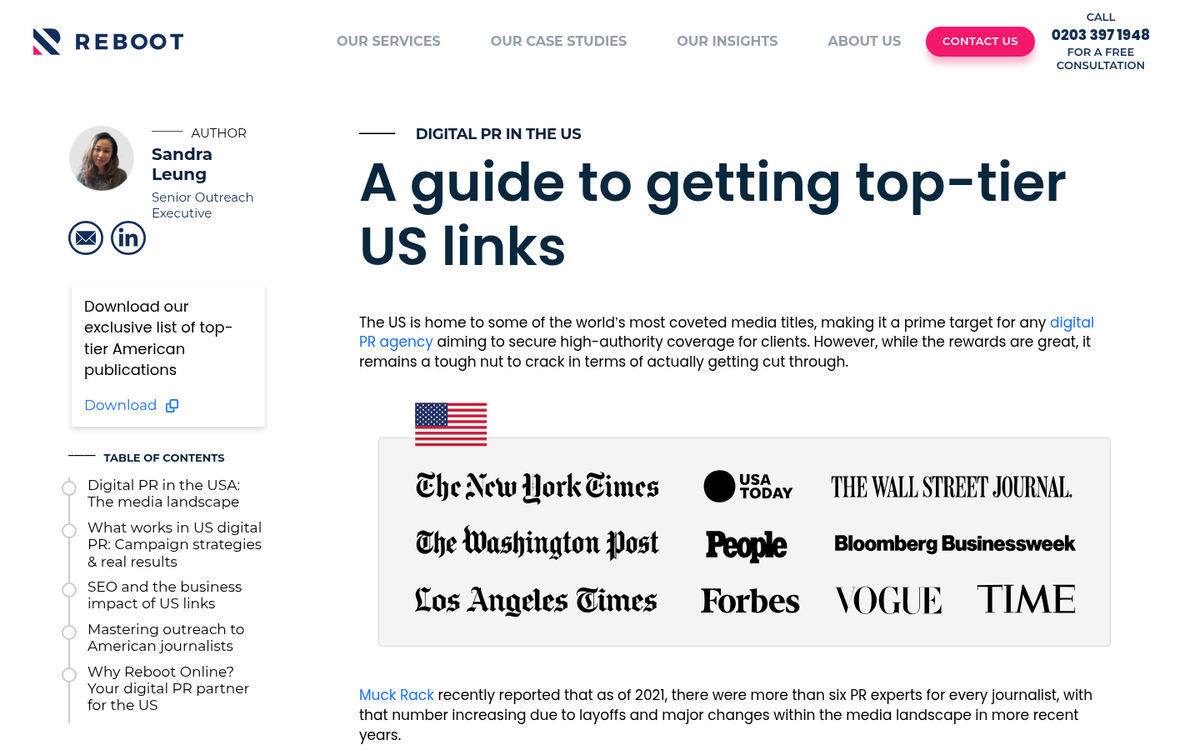
If you're not investing in digital PR yet, you're behind the curve. It's now the most popular link-building method, used by 67.3% of marketers. Digital PR involves creating genuinely newsworthy content - original research, compelling data, bold industry takes, or timely stories - and pitching it to journalists, editors, and publishers who will cover it and link back to your site.
Unlike traditional link outreach, digital PR earns you placements on high-authority news sites and industry publications that you simply can't reach through a standard email pitch. Think original surveys, industry reports, or data-driven studies that journalists actually want to write about. If you have the resources to commission even a small-scale study or survey, it can pay off in links many times over.
Notify Other Bloggers

Once you have content published, one good way you can begin to create backlinks is by notifying other bloggers. You can do this in a few ways.
- Identify potentially interested blogs and send their owners messages.
- Create a mailing list of content creators to send messages when you publish.
- Broadcast your content on social media.
- Leave comments on related content, particularly if your content is a response.
The common theme between these options is to notify other content creators that you have created content they may be interested in reading, referencing, or responding to on their sites.
One critical tip: personalize your outreach. Research shows that personalized subject lines boost outreach response rates by 30.5%. With only 8.5% of outreach emails receiving a reply on average, every edge you can get matters. Generic, copy-paste pitches get ignored. Take the time to reference their specific content and explain why your link genuinely adds value to their readers.
Also, don't give up after one email. Implementing a follow-up strategy generates 40% more backlinks from outreach campaigns. A single, polite follow-up a week after your initial email can dramatically improve your results. For more guidance on building your content marketing approach, these expert tips can help you sharpen your overall strategy.
Mention Other Bloggers
This is a bit more direct as a method for gaining the attention of other content creators. It is, however, much more targeted than the widespread mailing list or social media options. Specifically, you need to reference the content posted by other bloggers. When you reference that content, typically in a favorable light, you link to them.
As you should know from your own site, linking to a site stands out. The site owner, when they next check their analytics, will see traffic coming in from this new source. They will investigate your content and will see that you mentioned them favorably.
Unfortunately, this does not directly earn you a backlink. Instead, it puts you in the minds of the content creators you mention. If they like your content, they may explore more. If they find some inspiration, they may then reference your site on their blogs. This gives you the backlink you wanted, and the potential for more in the future.
Guest Post with Quality Content
Guest posting remains a proven and widely-used tactic - it's the second-most popular link-building method, used by 38.9% of marketers. Google has long said it frowns on low-quality, spammy guest posting at scale, but genuine, high-quality guest contributions to reputable sites in your niche are still very much fair game. You can earn that legitimacy by creating high quality content for your guest blogs.
- Approach any blog in your industry with a sufficient reputation - equal to or greater than your own - regardless of their "write for us" policies.
- Become a repeat writer, even if you only post once per month on each blog. When you post once, it looks like link fishing.
- Don't worry about dofollow or nofollow; take what they give you.
- Put your backlink as a contextual reference within your quality post. Save bio links for social media accounts.
Contribute to Discussions

Every industry has its share of communities. Web forums, subreddits, LinkedIn groups, Slack communities, Discord servers, industry newsletters - they're all places where thought leaders, veterans, and hobbyists gather to discuss trends and share ideas. Make yourself a part of these communities. Don't go in guns blazing and posting links to your content; it won't work. Instead, respond to discussions and show your insight. Only once you're a genuine part of the community can you recognize when good opportunities to share your content naturally arise.
Network via Social Media

Social media is valuable for link building in the opposite sense as targeting content creators. Instead of linking to individual blogs and gaining their attention for a long-term benefit, you're putting your link in front of hundreds or thousands of readers. Some of those readers will share your post, which puts it in front of even more. The more people share it, the more people see it. As this audience swells, people are going to see it who may have blogs or publications of their own. It's untargeted, but it's an organic way to grow backlinks.
The Moving Man Method

The moving man method is a way to build links that already exist. Essentially, the starting point is already there, but the ending point has moved. Your goal is to insert yourself into that endpoint. How? Just notify those starting points of their broken link and point them in the direction of your content.
This method relies on you having content that serves as a valuable replacement to the link that has since disappeared. If your content isn't a good fit, the original creator won't link to you - they'll just remove the link and call it good. That's why it pays to have a valuable stash of quality content on your site.
Set Realistic Expectations

One final note worth emphasizing: link building takes time. According to a survey of 755 link builders by Authority Hacker, link-building efforts take approximately 3.1 months to deliver noticeable results. Don't panic if you're not seeing movement in the first few weeks. Stay consistent, keep producing quality content, keep reaching out, and follow up on your pitches. The results will come - they just require patience.