





HubPages has been one of the larger networks of amateur online content on the web since its founding in 2006, launched with a $2 million investment from Hummer Winblad. Over the years it has grown through a combination of organic expansion and acquiring other content hubs, most notably Squidoo.
HubPages attracts writers for one core reason: they pay. More importantly, they accept virtually anyone, on the premise that the best content rises to the top and earns the most for its authors. Content that doesn't meet expectations settles to the bottom and is either quietly removed or largely ignored.
Those familiar with SEO might wonder about this strategy. Wouldn't such variable quality lead to search engine penalties? HubPages was indeed hit hard by Google's Panda update and spent years recovering. Part of their solution was filtering their worst performing content onto subdomains, reserving their main domain for only the best content.
The end result is that the main HubPages site is full of stronger content, which reinforces the quality and search rankings for everything housed there. Poor content is quietly shuttled off where it earns almost nothing.
As a writer looking to make money from HubPages, this means you need to produce great content. If you produce mediocre or poor content, it will end up in a dead corner of the site where views are minimal and payments are measured in pennies. Get your content featured on the main site and you have a real shot at building meaningful income over time.
That said, HubPages is an incredibly fickle place to make money online. Some writers earn hundreds of dollars per month. Others struggle to make pennies and abandon the platform quickly. The reality, backed by real data, is sobering: one writer reported 315,098 total views earning $1,188.88, meaning you need roughly 333,000 views to earn $1,000. That puts the earnings rate at approximately $2-$5 per 1,000 views, which aligns with HubPages paying writers roughly 60% of ad revenue. Scale matters enormously here, and a small percentage of top Hubs earn over 70% of HubPages' total income.
Key Takeaways
- HubPages pays roughly $2-$5 per 1,000 views, meaning you need around 333,000 views to earn $1,000.
- Writers receive approximately 60% of ad revenue through HubPages' earnings program, plus optional Google AdSense and Amazon Associates integration.
- Articles must exceed 700 words to get featured; unfeatured Hubs are essentially invisible to search engines.
- Strategic keyword research is essential - writing without targeting search demand leaves most writers earning near zero.
- Significant income can take up to two years to materialize, requiring consistent publishing and realistic long-term expectations.
How Earning Money Works on HubPages
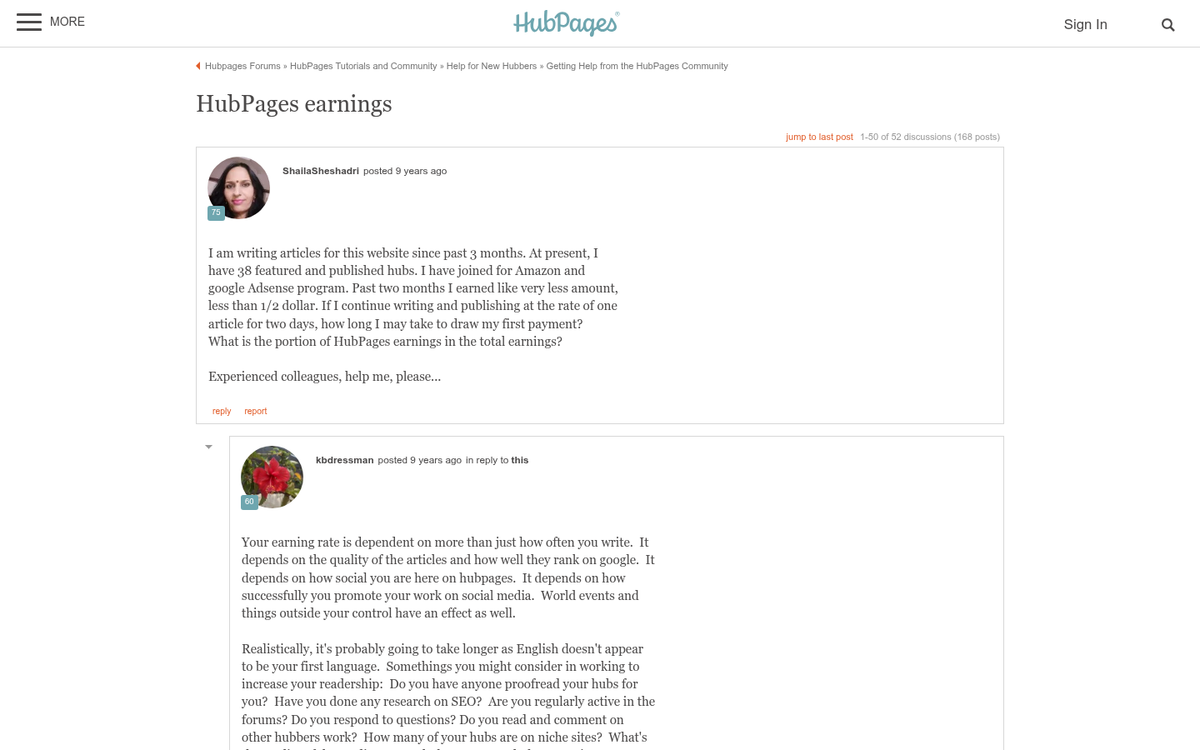
Before you can figure out how to make money, you should understand how the monetization process works. It's fairly straightforward.
Essentially, all you have to do is publish content and sign up for monetization. From there, advertisements are added to your content. When readers interact with those ads, HubPages earns a commission, and you as the referring writer earn your share.
This is essentially CPM and affiliate marketing through a centralized hub. In addition to the standard HubPages Earnings Program, you can also sign up for Google AdSense integration and their Amazon Associates program. Note that HubPages dropped their eBay affiliate program integration some years ago, so that option is no longer available.
Earnings are paid out once they reach the $50 threshold, deposited via PayPal on the 28th of the following month. If you're just starting out, reaching that threshold can take a considerable amount of time.
Making Money on HubPages

If you're looking to make money on HubPages - real dollars, not cents - here's a practical guide. Be forewarned: it takes a significant volume of content and a long runway before earnings become meaningful. Some writers report waiting up to two years before seeing significant income.
Step 1: Sign Up
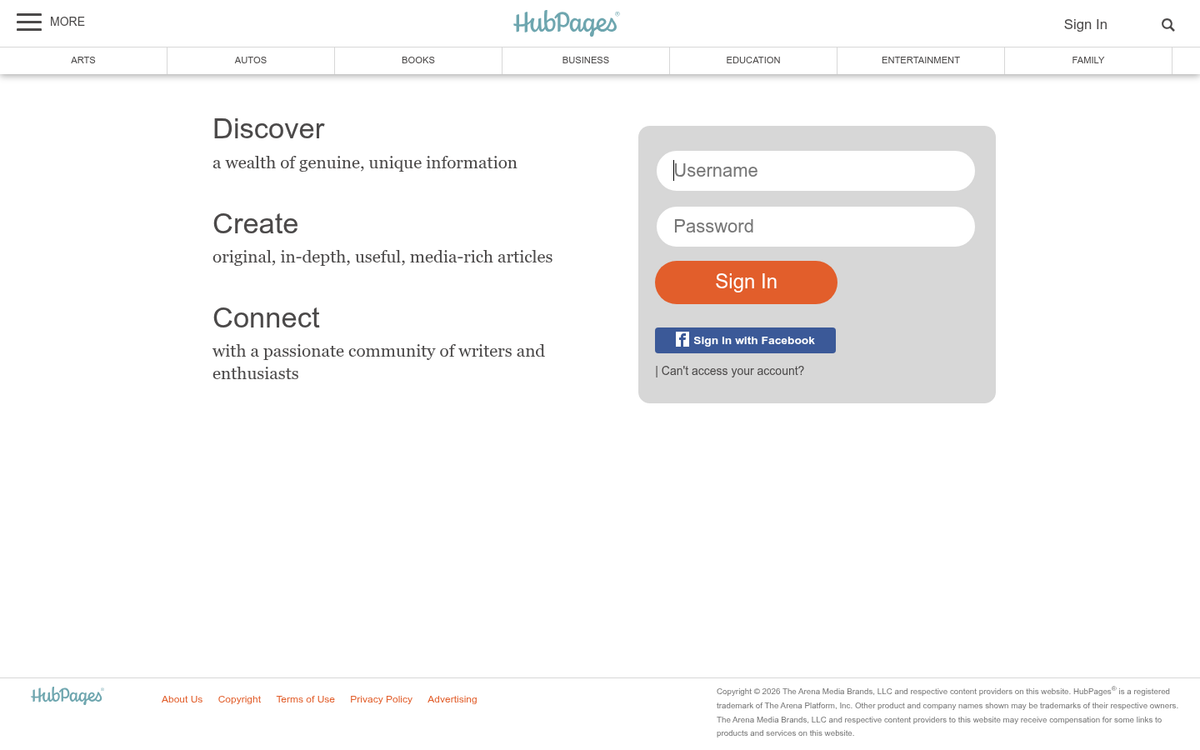
The registration process is straightforward. All you need to do is fill out a quick form with a pen name, an email address, and a password. You may need to complete some introductory tutorials before publishing your first Hub.
Step 2: Write Content

On HubPages, individual pages are called Hubs. A Hub is essentially a long-form article with some additional formatting flexibility. You don't control the site design, but you have more creative input than a bare content submission form allows.
One important threshold to know: articles must be at least 700 words to get featured. Unfeatured Hubs are essentially invisible to search engines, so hitting that minimum - and ideally going well beyond it - is non-negotiable if you want your content to earn.
When you're new, HubPages admins monitor your early submissions and may reject content that doesn't meet their guidelines. Take this feedback seriously; staying in their good graces keeps your content visible. If you're struggling with why your content isn't ranking well, it's worth reviewing common mistakes before publishing on any platform.
Step 3: Register for Monetization
HubPages offers several monetization options. You need to sign up for the HubPages Earnings Program first, which acts as the umbrella program giving you access to the rest.
From there, you can connect Amazon Associates and Google AdSense. HubPages operates on a revenue share model where you receive approximately 60% of ad revenue, with HubPages retaining the remainder. Rather than directly cutting your payment, they effectively split impressions - the majority of visitors to your Hub see ads tied to your account, while a portion see ads tied to HubPages' account.
Step 4: Realize Content Alone Isn't Enough

At this point you'll probably notice that your earnings are at or near zero. This is the trap most new writers fall into: writing about anything rather than writing about what people are actively searching for. To make serious money, you need to choose topics strategically based on search demand. That means learning keyword research.
Step 5: Research Keywords

The world of SEO keyword research is too large to cover in full here, but it has been covered extensively elsewhere. I recommend this guide from Moz as a solid starting point, though many quality resources exist.
One advantage HubPages offers over running a standalone blog or website is flexibility. You aren't locked into a single niche. You can write about any topic where you find a keyword with meaningful search volume and manageable competition.
Step 6: Write More Content
Now that you understand how to choose topics by their potential value, write consistently and write a lot. If certain topics perform better than others, investigate related keywords and expand in that direction. In most cases, publishing a new Hub is more productive than obsessively editing an existing one - unless you have strong reason to believe an update will meaningfully boost traffic.
Step 7: Share Your Content
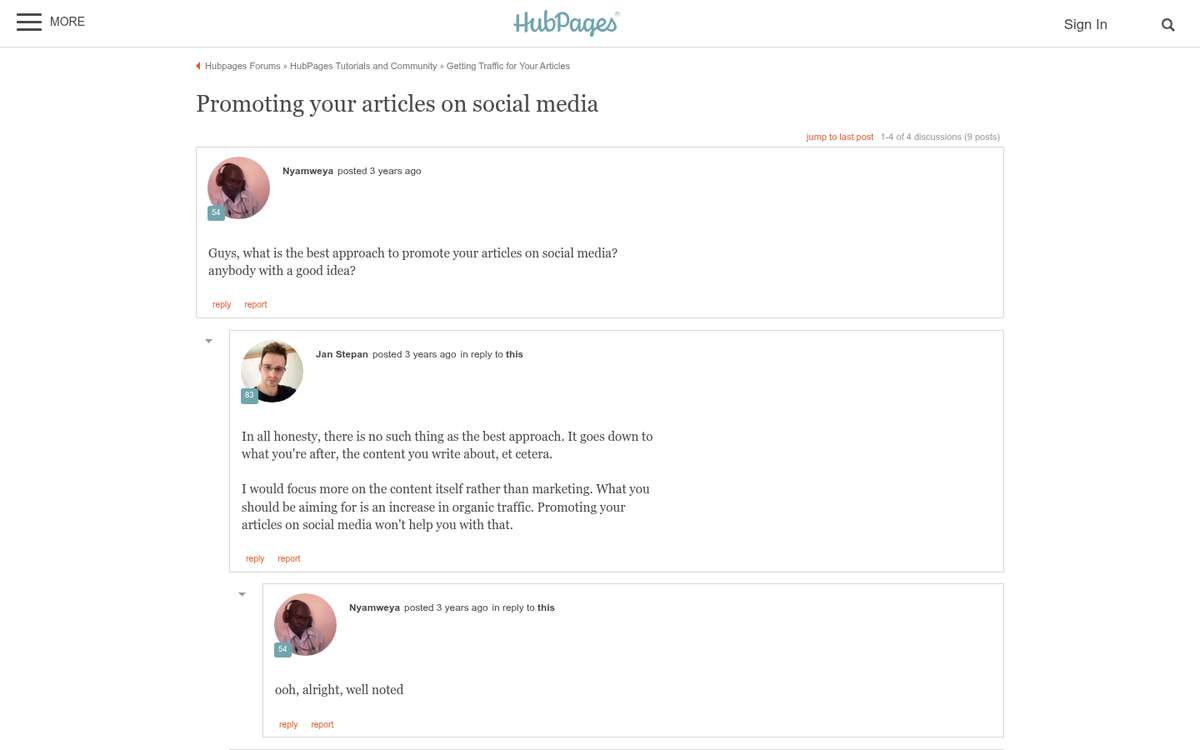
Hubs earn money through views and ad interactions. Increase views by sharing your content legitimately - on social media, in relevant online communities, or as a resource in discussions where it genuinely adds value. Avoid spam tactics; they'll hurt your reputation and ultimately your rankings.
Step 8: Keep At It - And Set Realistic Expectations
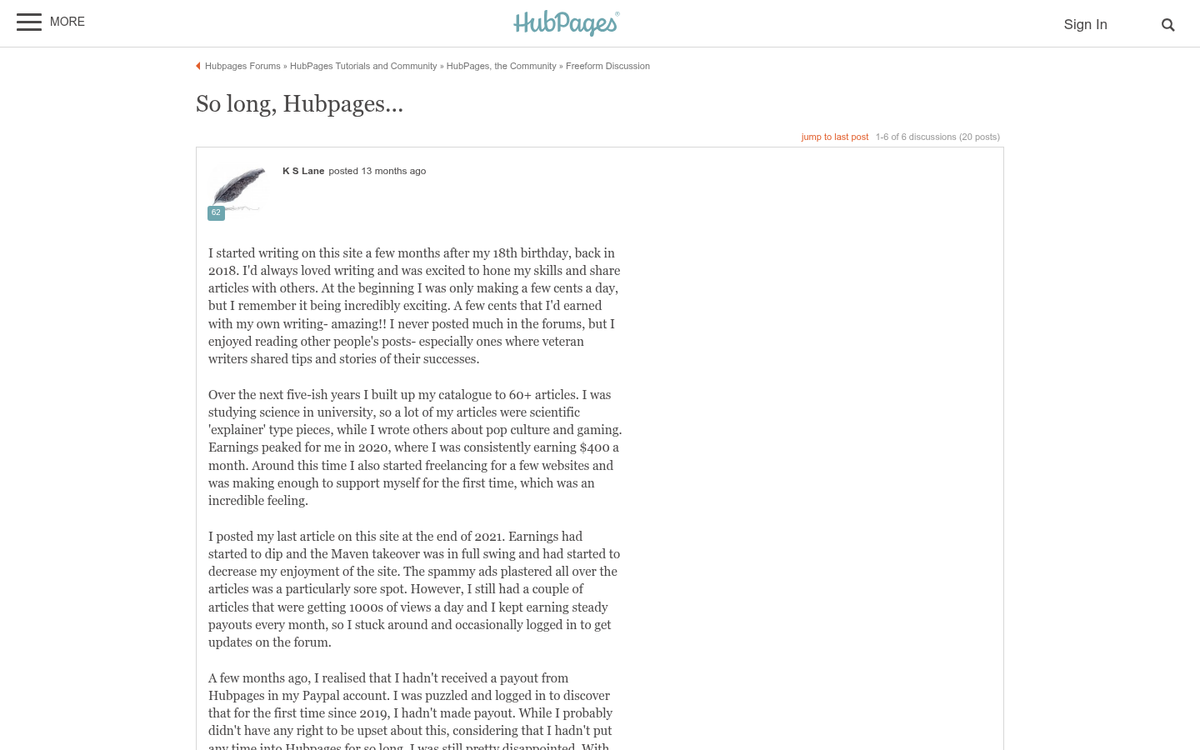
Building enough search authority to generate consistent traffic takes time. Learning what works on HubPages takes additional time on top of that. Given the earnings rate of roughly $2-$5 per 1,000 views, and the fact that significant income may not materialize for up to two years, you need to go in with realistic expectations. Think of HubPages less as a quick income stream and more as a long-term content asset that compounds slowly. Write a lot, publish consistently, optimize for search, and be patient.


7 responses
Thoughtful replies only - we moderate for spam, AI slop, and off-topic rants.
Thanks for the tips, we've been considering using Hub Pages, now I don't see a reason why we shouldn't.
Hubpage is great source to make money. Thank you for this post James
Great summary, James! Hare Krishna and thank you.
This seems to be a cool way. Can we use HubPages for affiliate product? Will be there any benefit? I am new into all this so I lack knowledge and expertise.
This article must be older? It's my understanding that the HubPages Earnings Program is not a program in itself, where you can earn money, but the door to opening your Adsense account and affiliate programs, where you can then earn money. Without an Adsense account, you're basically writing for free on Hubpages (plus some contest entries).
Do they pay via payoneer?
Hi Azka! HubPages doesn't currently offer Payoneer as a payment option. They typically pay through PayPal or via check. So you'll want to make sure you have a PayPal account set up to receive your earnings. If PayPal isn't available in your country, it's worth checking their official help center for any updated payment options they may have added. Hope that helps!