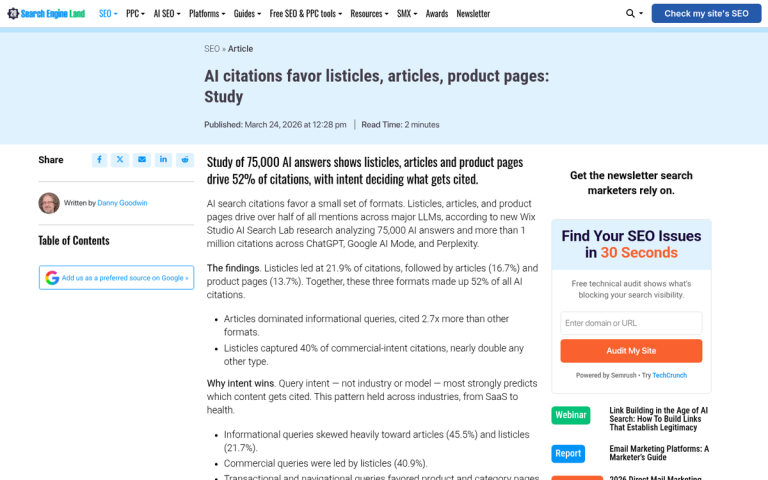
What makes this even more interesting is how few websites have bothered with structured data at all. Only about 12.4% of websites currently use any schema markup, which means the competitive community here is fairly open. Most content on the web isn't even in the running for whatever structural benefits schema might give you - it's before we even get into which schema type performs better.
The two types that get the most attention from SEOs and content strategists are HowTo schema and FAQ schema. Both are designed to help Google understand the shape and intent of your content. Both have been around long enough to have a track record. But with AI Overviews increasingly becoming the first thing users see on a results page, questions about which one actually gets picked up - and how - have moved from theoretical to legitimately urgent.
There's noise around this topic and not much signal. What follows is an attempt to cut through the uncertainty with data, examples, and a clear-eyed look at what the evidence actually shows.
Key Takeaways
- Only 12.4% of websites use schema markup, leaving significant competitive opportunity for those who implement it correctly.
- AI Overviews match content shape to query intent - HowTo schema suits procedural queries; FAQ schema suits explanatory questions.
- Mismatching schema to content (e.g., HowTo on a listicle) sends mixed signals Google can detect and won't reward.
- Schema is a label, not a fix - thin or vague content won't earn AI Overview citations regardless of markup applied.
- Both schema types can coexist on one page, provided each only wraps the content it accurately describes.
What AI Overviews Actually Pull From Your Page
Google AI Overviews don't work the way traditional search rankings do. Instead of picking one page and sending traffic to it, they pull pieces of information from multiple sources and build a synthesized answer right in the search results.
That distinction matters quite a bit for how you think about your content. Getting cited in an AI Overview doesn't mean Google thinks your page is the best - it means a part of your page answered a part of the query well.
So what makes Google pull from your page instead of someone else's? The tells that seem to matter most are structure, clarity, and how directly your content addresses what the user is looking for. Pages that answer questions in a predictable, easy-to-parse format are much easier for AI systems to extract from than pages written as long flowing prose.
That's where structured data starts to become relevant. Schema markup tells Google what content is on your page before it has to figure that out on its own. Two schema types come up repeatedly in conversations about AI Overview citations: FAQPage schema and HowTo schema.
They serve different purposes and Google treats them differently as a result. FAQPage schema was built to mark up question-and-answer content, so it tells Google that your page contains direct answers to questions. HowTo schema is built for process content, and it maps out a process with a beginning, middle, and end.

When an AI Overview is being assembled, those two content types don't get used in the same way. A synthesized answer to "how do I fix a leaky faucet" needs sequential steps, so HowTo-structured content is well-positioned to give you that. But a query like "what is the difference between a fixed and variable rate mortgage" is looking for a direct explanation, and FAQPage-formatted content fits that shape more.
The underlying point is that AI Overviews are pattern-matching tools. They look for content that fits the shape of the question being asked. Schema markup helps your content announce its shape so Google doesn't have to guess.
It's also worth mentioning that schema alone doesn't get you cited. The content itself has to be accurate, well-written, and legitimately relevant to the query. Schema is more like a label on a well-stocked shelf than a substitute for what's actually in it.
That said, pages without any structured markup are at a disadvantage because they ask Google for more interpretive work. When two pages cover the same topic at a similar quality level, the one with cleaner structure is easier to extract from and likely to show up in a synthesized result. If you're also thinking about ways to reduce bounce rate on your blog, improving content structure and clarity helps on both fronts.
A mismatch between the two sends a mixed signal - and mixed signals don't get cited.
How HowTo Schema Gets Used Inside AI Overviews
HowTo schema works differently from FAQ schema at a structural level. Instead of pulling a question and a matching answer, Google uses HowTo markup to map out a sequence of steps and present them as a guided process.
When searching for something procedural - "how to replace a light switch" or "how to make sourdough starter" - AI Overviews will sometimes reproduce a numbered walkthrough pulled directly from structured step data. The schema gives Google a clean, ordered blueprint to work from instead of raw paragraph text it has to interpret on its own.
What content actually benefits from HowTo markup
The best candidates are tutorials, DIY guides, and any post where the reader has to take actions in a specific order. If skipping step three would break the outcome, that's a strong sign your content fits the HowTo mold. Recipe pages, software setup guides, home repair walkthroughs, and make projects all fall into this category.
Process-based content written out in flowing paragraphs can still benefit from HowTo markup added underneath. Google doesn't need the page to look like a numbered list visually - it just needs the schema to tell it where each step starts and what it means.

Why structured steps matter to Google's procedural answers
Procedural search queries put pressure on accuracy and order. If Google will generate an answer, it needs to trust that the steps are complete and correctly sequenced. HowTo schema makes that verification easier because each step is explicitly labeled and separated in the markup.
A page without schema can still rank and appear in AI Overviews. But the model has to work harder to extract the structure from natural language. Explicit markup cuts back on that friction and makes your content a more reliable source to draw from.
HowTo and FAQ are not competing for the same job
HowTo schema is not a stronger or weaker version of FAQ schema. They address very different content shapes. FAQ schema answers discrete questions and works when users want a quick, self-contained response. HowTo schema guides through a job and works when the answer is inherently sequential.
Using FAQ schema on a tutorial page - or HowTo schema on a Q&A-style page - gives you a mismatch between your markup and your content's structure. Google is reasonably good at detecting when schema doesn't go well with what's on the page.
The question to ask is not which schema type performs better - it's whether your page is answering a question or walking through a process. That distinction is what should drive your markup decision, and it's also what shapes how AI Overviews will probably use your content when they do.
Matching Schema Type to Your Content's Intent
The simplest way to choose which schema to use is to look at what your page is actually asking the reader for. A page that walks them through a process with a start and an end serves a different job than one that answers questions about a topic. That distinction does most of the heavy lifting.
If a user lands on your page to do a job - install something, make something, fix something - it's procedural content. HowTo schema fits that because it mirrors the way the content is structured: one step follows another and the goal is to get from A to B. AI Overviews pick up on that structure and use it to present content in sequence.
FAQ schema works differently - it's not about moving through steps, but giving direct answers to discrete questions. Think of a page that explains what a term means, breaks down how a policy works, or addresses common problems around a product. The reader wants answers, not a process to follow.
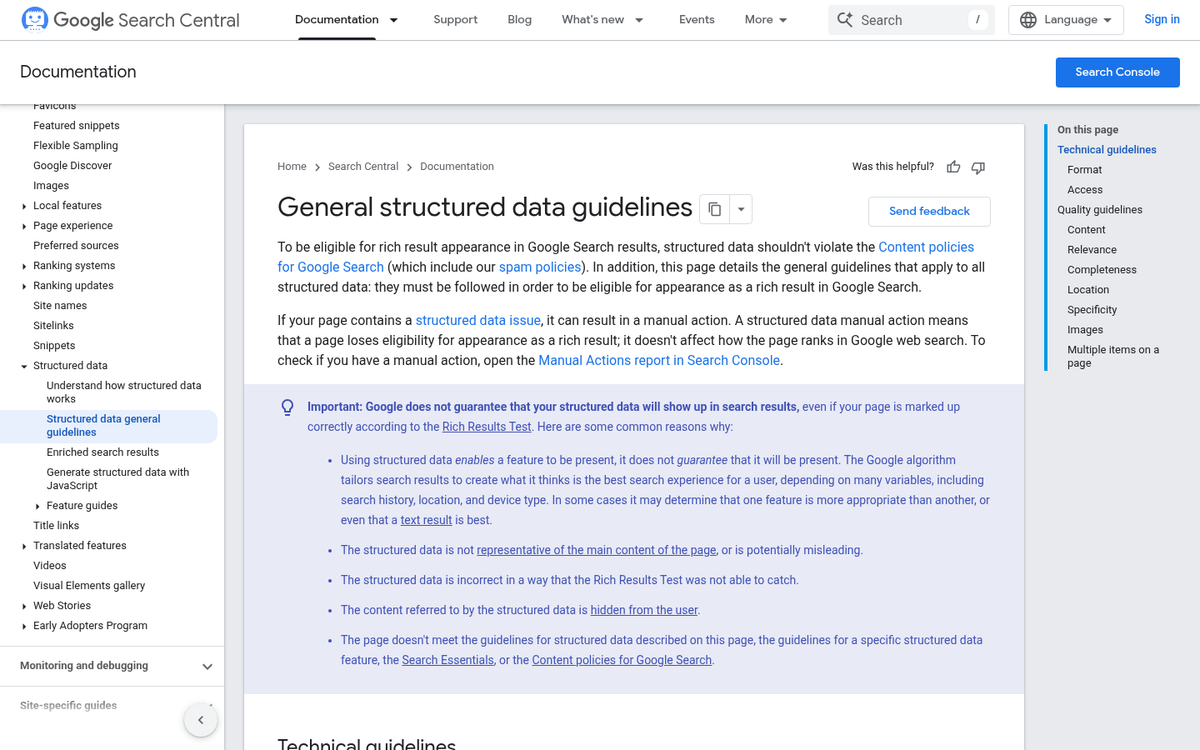
Here is an easy way to map that out:
| Content Type | User Intent | Recommended Schema | AI Overview Use Case |
|---|---|---|---|
| Step-by-step guide | How do I do this? | HowTo | Maps procedural steps |
| Q&A or explainer | What does this mean? | FAQPage | Extracts Q&A pairs |
| Hybrid guide with FAQs | Both | Both (where appropriate) | Mixed extraction |
The hybrid case is worth a look. A lot of long-form guides include a walkthrough and a set of follow-up questions at the bottom. In that situation, you can technically apply both schema types to the same page, and that's not a problem as long as each schema matches the content it's tagging. The HowTo markup should only wrap the procedural section and the FAQPage markup should only wrap the Q&A content.
Where things go wrong is forcing one schema onto content that does not quite fit it. A general explainer post marked up as HowTo because it has a numbered list is a loose match at best. Numbered lists and procedural steps are not the same thing, and the structure of the markup should match what the content legitimately does. How you use heading tags in blog posts follows the same logic - structure should reflect function, not just appearance.
A helpful test is to see what a reader would type into a search engine to find that page. A query that starts with "how to" points toward HowTo schema. A query that starts with "what is" or "why does" or "can I" points toward FAQ schema. That framing cuts through the uncertainty faster than anything else. Tools like a content grader built for AEO can also help you evaluate how well your page is positioned for AI-driven results.
Common Schema Mistakes That Hurt AI Overview Visibility
Even after you've matched schema type to content intent, there are a few ways things can still go wrong. The most common is applying schema to content that doesn't actually fit the format.
A listicle with headers like "5 Ways to Improve Your Sleep" is not the same as a genuine process. Marking it up with HowTo schema tells Google the page walks users through a job in sequence. But if the content doesn't do that, it creates a mismatch between the markup and the page itself. Google is good at detecting that gap, and it won't reward you for it.
The same goes for FAQPage schema. A page that ends with a single "What is X?" section buried below 800 words of general content is not a Q&A page. Wrapping that one question in FAQ markup doesn't change the page into something it isn't. The schema needs to match what the page actually does from top to bottom.
Schema Can't Fix Thin Content
Schema is a label, not a fix. If the underlying content doesn't answer the question well, no amount of markup will change that.

AI Overviews pull from pages that legitimately satisfy the search intent behind a query. A page with weak explanations, vague steps, or incomplete answers won't get featured just because it has structured markup attached to it. The schema helps Google understand the format of your content. But the content still has to do the heavy lifting. If you're also concerned about how sourced material affects your rankings, it's worth reading about whether using quotes in articles can hurt your blog post rankings.
Audit your pages before adding schema, not after. If the content isn't strong on its own, the markup won't carry it.
Over-Marking Pages to Chase Appearances
There's also a temptation to load pages with schema in the hope that more markup means more visibility. In practice, stacking multiple schema types on a page that only fits one can dilute how the page communicates its purpose to Google. This kind of over-optimization shares some logic with why certain technical choices can quietly hurt your blog rankings even when the intent behind them is good.
Pick the schema type that best matches what the page is doing and apply it well. A how-to page marked up with clean, accurate HowTo schema will perform better than a page marked up with HowTo, FAQPage, and Article schema all at once when only one of them actually fits. Pairing good schema with a broader effort to improve your blog's E-A-T score will put you in a much stronger position overall.
| Mistake | Why It Hurts |
|---|---|
| Using HowTo schema on a listicle | Creates a mismatch between markup and actual content format |
| Applying FAQPage to one buried question | Doesn't reflect the page's real structure or intent |
| Adding schema to thin content | Markup can't compensate for content that doesn't answer well |
| Stacking multiple schema types | Muddies the page's purpose and reduces clarity for Google |
Schema Is a Signal, Not a Shortcut
Schema adoption across the web is still fairly low - which means the opportunity to look great in AI Overviews and answer engines is legitimately open - but it will not stay that way forever. The most helpful thing you can do is audit what you already have. Look for pages where schema is missing entirely, was added as an afterthought, or where the type of schema does not match the structure of the content underneath it. If you're also thinking about how your site appears in search, learning how to get Google sitelinks on your blog is a worthwhile next step.
If you want that work done right, without it falling to the bottom of your to-do list, that's where BlogPros comes in. Our AI-hybrid content process pairs machine efficiency with human editorial oversight, and every piece of content we produce is built with AEO and schema optimization from the start - not tacked on after the fact. We engineer content to get cited, get surfaced, and get chosen across Google, ChatGPT, Perplexity, Gemini, and every answer engine that matters. You can see how it works without spending a dollar first. Start your free month with BlogPros - no contracts, no credit card, no commitment. Just content that's built for where your customers are already searching.