





Key Takeaways
- Ad blocking has surged from 11% in 2017 to 43% of internet users worldwide by 2026, making it fully mainstream.
- Bypassing ad blockers through obfuscation is ineffective long-term, as blockers update constantly and maintain consistent effectiveness.
- Adblock walls cause high bounce rates, as most ad block users simply leave rather than disable their blocker.
- Politely asking users to whitelist your site, while promising non-intrusive ads, is the most effective goodwill-preserving approach.
- AdBlock Plus's Acceptable Ads program offers a practical solution, with 90% of whitelisted entities paying nothing to participate.
Ads and Ad-blocking software are in an ongoing arms race
Ads and Ad-blocking software are in an ongoing arms race, one that many users don't even see in their daily lives. On the one hand, you have websites looking to monetize their content via ads that pay them per view, per click, or per conversion. On the other hand, you have users who don't want disruptive ads all over their browsing experience. If the websites win, users have no options but to consume advertising regardless of their preferences. If the users win, websites have far fewer ways to make money, and many will simply fold and close up shop. There's a delicate balance to be found, but there are always people trying to push past the line in the sand, so it's likely that this war will continue indefinitely.
A History of Ad Blockers
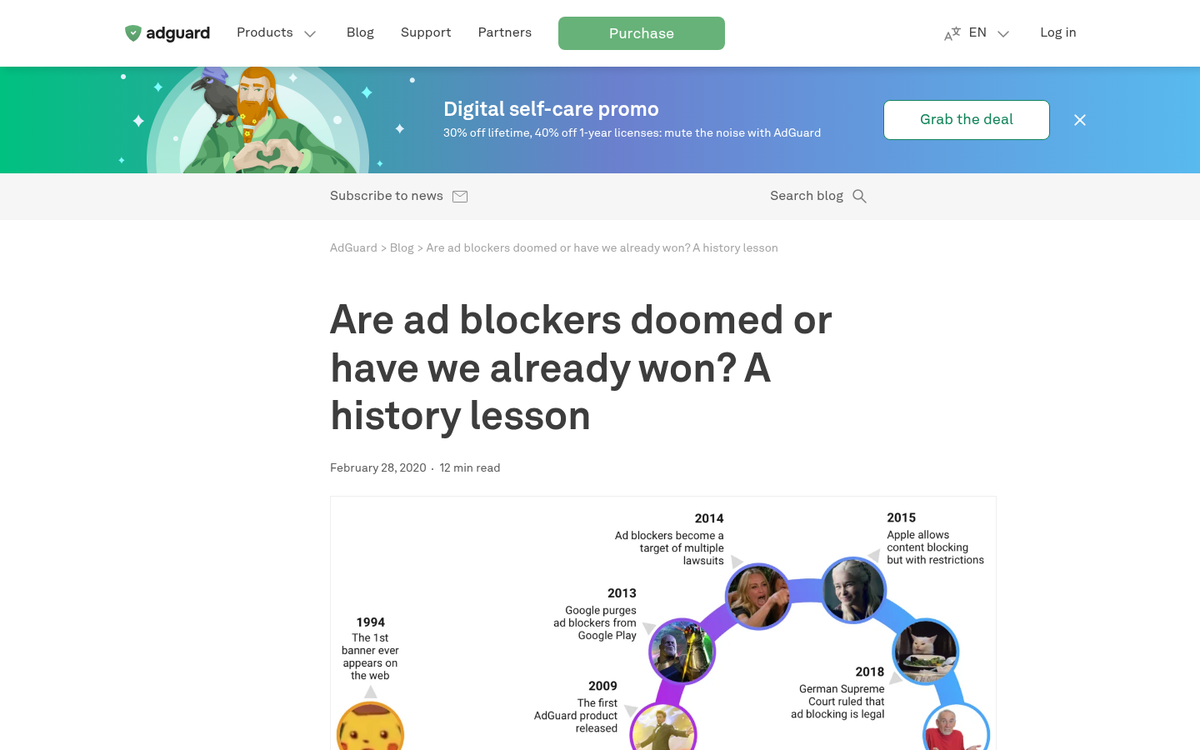
Before the creation of ad blockers, websites were free to monetize with ads as they saw fit. Many sites kept it light, adding a banner up top or along the side of their content. Others decided to go all-in with it, putting banners and monetized links in every position possible, including redirects and pop-ups. With some scripts, you can keep a user locked into a redirect cycle from which they can never escape. Of course, that's a good way to alienate readers and lose views, but some people considered the brief, minor payout worth the sacrifice to long-term growth.
Then users got fed up with the over-prevalence of advertising and their own lack of control. They created ad blockers, which identified ad code and prevented it from rendering on the website. This often worked via blacklisting the URLs of ad services. Over time, these extensions grew more sophisticated, detecting more ads with fewer false positives.
For a while, certain types of ads would make it through, as the extensions didn't have a valid way to block them. Video ads on platforms like YouTube were once notoriously difficult to block, but that's largely no longer the case. By 2026, ad blockers have become remarkably effective, and the cat-and-mouse game between ad networks and blocker developers has never been more intense.
Google also got involved at some point along the line, putting pressure on website owners that cram too many ads into their sites. Google can drive rankings down and absolutely tank traffic entirely. Meanwhile, ad blocking has grown more and more prevalent - and the numbers today are staggering compared to just a few years ago.
Facts About Ad Blocking in 2026
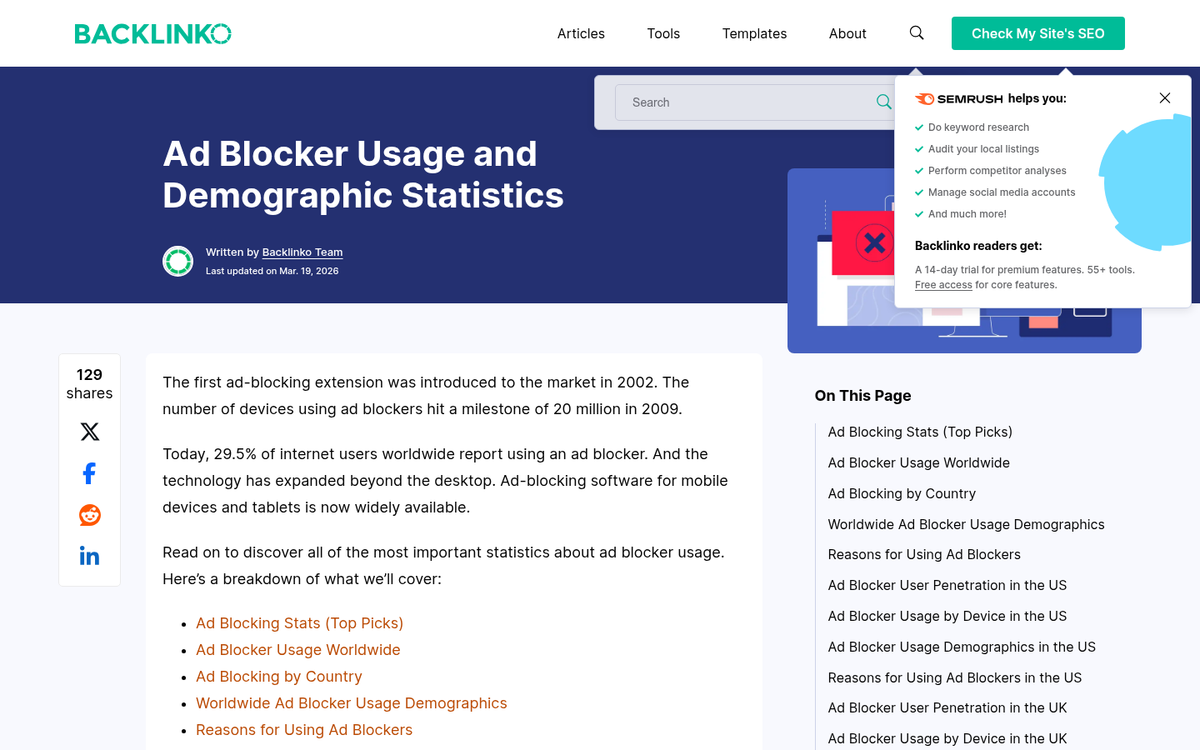
Ad blocking has exploded in adoption over the past decade. What was once a niche tool for tech-savvy users has gone fully mainstream. Here's where things stand today:
- 43% of internet users worldwide now use some form of ad blocker, according to Cropink. This is a massive leap from the roughly 11% reported back in 2017.
- 75% of AdBlock users are okay with seeing some ads to support sites they visit, while 25% don't want to see any ads at all, per Adblock Plus's own research.
- 83% of Adblock Plus users don't mind seeing Acceptable Ads, according to Adblock Plus's internal data.
- Adblock Plus has been downloaded over 250 million times and has over 50 million active users, according to its parent company Eyeo.
- A February 2026 study published in Proceedings on Privacy Enhancing Technologies found no statistically significant drop in ad-blocking effectiveness across a 924-site sample test - meaning the blockers are still winning, at least for now.
- The number one reason users block ads remains consistent: ads interrupt their experience or risk serving malware. If you're relying on ad revenue, it's worth understanding how pop-under ads work and how users typically respond to them.
All of this makes sense when you think about it, and I'll refer back to a few of these points later on. If you're still building toward monetization, you may also want to know how much traffic you need before using AdSense.
Why Ad Blocking is Good

Yes, as a site looking to monetize via ads, ad blocking represents potentially significant lost income. The typical ad block user tends to be younger, more educated, and relatively tech-savvy. College campuses have historically been a major vector for spreading ad blocking software knowledge, and that trend has only continued. If your primary audience skews that way, you're likely dealing with above-average ad blocking rates on your site.
Ad blocking is, however, a generally good thing. Most ad blocker users are perfectly willing to whitelist a site they like, whose ads they don't find offensive or risky. The use of ad blocking software protects users from ad-served malware. Security is a huge concern on the web, and the risk to the average user is real. There's no "don't download strange files" sensibility involved when a banner ad simply injects code into your computer.
Ad blocking also puts negative pressure on sites that try to overload users with spammy, disruptive, or otherwise negative experiences. We've all visited a website only to have the browser hijacked by redirects, pop-ups that trap you in a loop, or autoplay video ads with no mute button. No one wants that, particularly when they're trying to do something productive like research.
Many ad blockers also have functionality beyond simply blocking ads. They're selective element blockers with pre-programmed lists, but they can block virtually any element of a page.
- You can block specific elements of a page layout, like comment sections or chat bars on social platforms.
- You can block tracking cookies and elements like the Facebook Pixel, preventing not just advertising but full-scale tracking and remarketing.
- You can block a list of known malicious domains full of spyware, malware, viruses, and other nasties.
- You can block autoplay videos on sites that give you no option to disable them.
- You can block social locking apps, often with the side effect of revealing the content they were hiding, because they simply don't load to block it.
That said, I fully understand the goal of putting some pressure back on ad block users to whitelist your site and allow you to monetize them. There are four main ways to approach this problem.
The Adblock Obfuscation
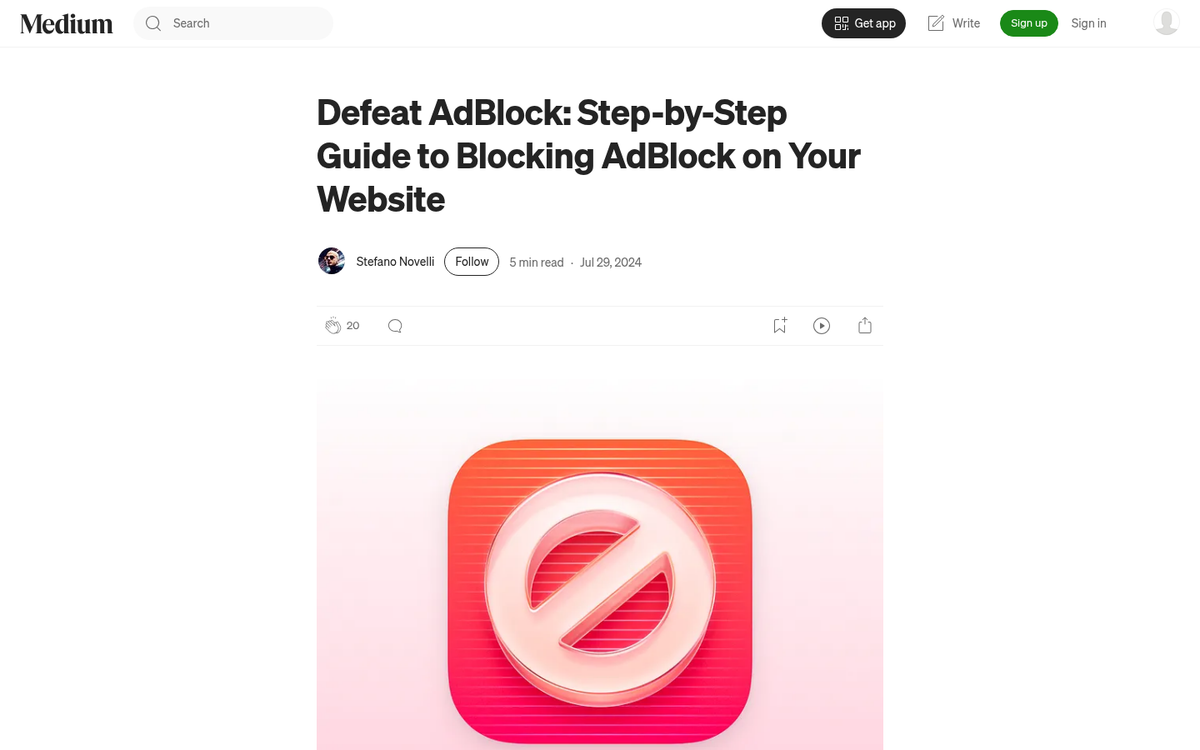
The first solution is to bypass the ad blocker itself. To do this, you need to understand how an ad blocker works. It scans your site for code that matches entries in its blocklist and prevents that code from loading. The code could be anything from an image URL to a JavaScript file.
You might think you can simply avoid anything on those lists, but this has two main flaws. First, the major ad networks are all on the list. If you want to use Google Ads or any other mainstream ad service, you're going to be blocked. Second, these lists are always evolving. Individual users can add elements to their own personal lists, and developers can push global updates. There are also a wide variety of lists, so loopholes close quickly.
The most common obfuscation approach is to hide the code that pulls your ads behind external files or other indirect loading mechanisms. Similar to how affiliate marketers cloak links, you can obscure the actual ad code to avoid triggering blocklists.
The fundamental problem is that ad blockers update constantly. When your method is discovered and reported enough times, updates will be pushed to close that gap. A February 2026 study found no statistically significant drop in ad-blocking effectiveness across nearly 1,000 sites tested - which is a pretty clear signal that obfuscation, as a long-term strategy, has a poor track record.
The Adblock Wall

The second method is to set up an adblock wall. If you've used an ad blocker in the last several years, you've almost certainly run into one of these. The site detects that you're running a blocker and either refuses to show you content or nags you persistently until you disable it.
This approach has a fundamental problem: it turns potential readers into bounces at an extremely high rate. The data hasn't changed much over the years - the majority of ad block users will simply leave rather than disable their blocker. I'm guilty of this myself. If the content isn't something I specifically need, I'm gone immediately. And I still have sites in my mental blacklist because they pulled this stunt years ago.
This is the attitude you'll encounter if you implement an adblock wall. Loyal readers will leave, new visitors won't return, and you'll have poisoned the well with a significant chunk of your potential audience.
The Adblock Guilt
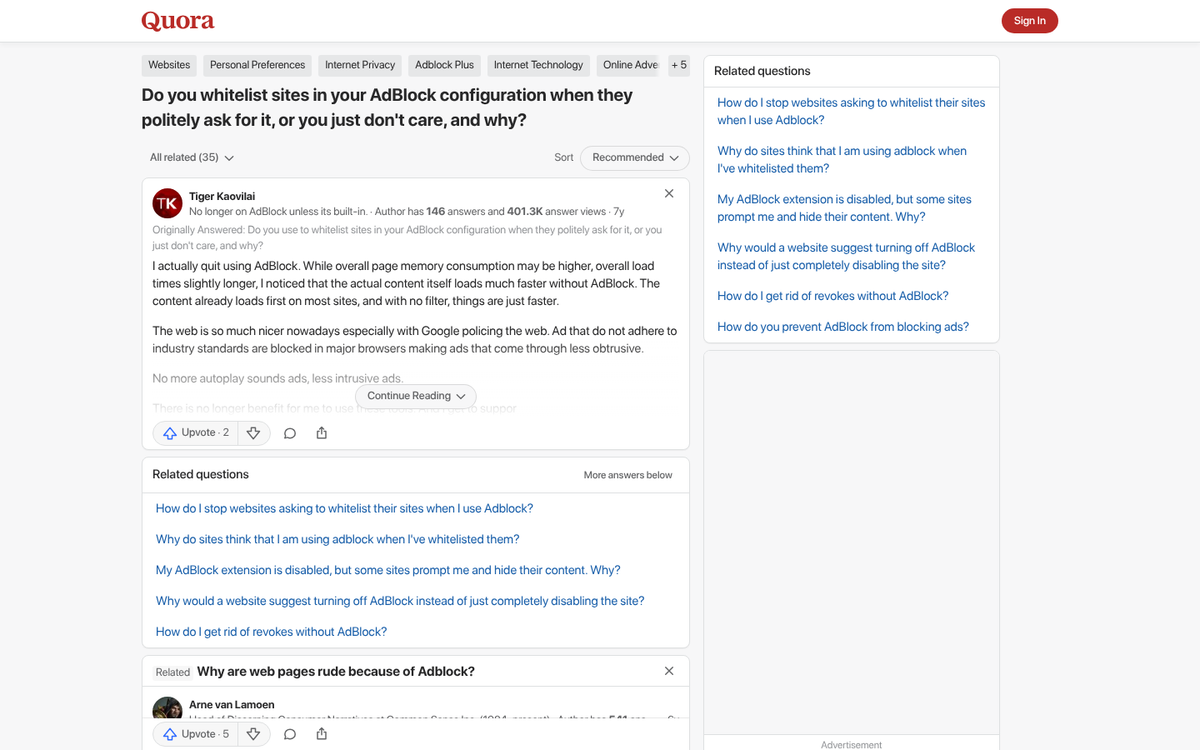
The third way is to simply point out that the user is blocking ads, explain that you need ads to keep the site running, and ask them nicely to whitelist you. This is the least aggressive approach, and it's also the most effective at preserving goodwill.
The key to making this work is a two-fold approach. First, you need to genuinely assure users that your ads aren't disruptive and never will be. If someone whitelists your site and is immediately hit with overlays, autoplay video, or aggressive pop-unders, they'll turn the blocker right back on. But if they whitelist you and only see a clean, relevant banner ad, they'll likely keep you whitelisted - and might even click.
Second, provide a way for users to report objectionable or malicious ads. Google Ads has some of this built in, but having a direct feedback mechanism on your end helps you catch problems quickly and reinforces trust.
This is generally the route you should take if you're committed to doing something about ad blocking. Combine the guilt message with a genuine offer: a paid, ad-free membership option for users who simply don't want to see ads at all. Given that 25% of ad block users say they don't want to see any ads regardless, this gives that segment a legitimate alternative rather than a wall.
Fixing Your Ads
This fourth method is the ideal long-term solution, even if it's the hardest to execute. Remember that 75% of ad block users say they're willing to see some ads to support sites they visit. That's your target audience. A few discreet, relevant, non-intrusive ads are not just tolerable - they're acceptable to the majority of people blocking ads right now.
The problem is that ad blockers are blunt instruments. It's largely all or nothing. A user with a blocker enabled won't know your ads are reasonable until they whitelist you - and they won't do that unless you ask them. The only path to the ideal is to keep your ad experience genuinely clean, use the guilt approach to communicate that, and earn your whitelists one reader at a time. You can't control what other sites do, and aggressive advertisers will always give users a reason to keep their blockers running. The best you can do is make your own house an exception worth making.
AdBlock Plus and the Acceptable Ads Program
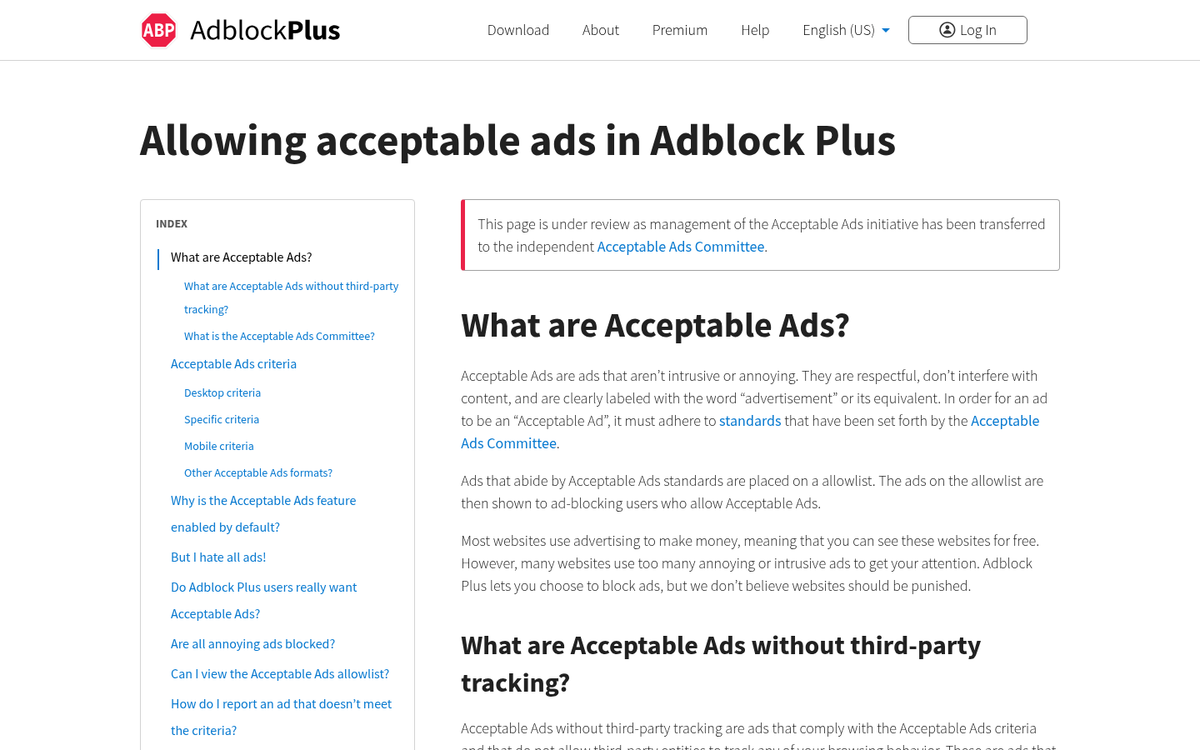
Everything above applies to ad blockers generally, but AdBlock Plus deserves specific attention. It's one of the most widely used blockers in the world - downloaded over 250 million times with more than 50 million active users - and it has a unique feature that no other major blocker offers.
AdBlock Plus operates an Acceptable Ads program, a whitelist of sites and ad formats that meet their criteria for non-intrusive advertising. If your ads qualify, your site can be added to this list and shown to AdBlock Plus users who have Acceptable Ads enabled (which is the default setting).
In 2017, the governance of the Acceptable Ads initiative was transferred from Eyeo to an independent body called the Acceptable Ads Committee, designed to give the program more transparency and credibility. This was a meaningful step toward making the program less of a "pay to play" arrangement and more of a genuine standard.
Here's how the program works in practice:
- About 90% of entities on the whitelist don't pay anything. The program is free for most participants.
- Larger entities - specifically those who gain more than 10 million additional ad impressions per month through participation - are charged a licensing fee. Those who do pay are held to the same criteria as those who don't.
- 83% of Adblock Plus users are comfortable seeing Acceptable Ads, which means being on the whitelist actually reaches the overwhelming majority of the blocker's user base.
To apply, make sure your ads meet the Acceptable Ads criteria, then submit your site for review. If accepted, the community can raise concerns if your ad practices change down the road - so there's ongoing accountability built into the process.
It's not a perfect solution, and it won't help you with users running uBlock Origin or other blockers that don't have an equivalent program. But given the sheer size of AdBlock Plus's user base, it's one of the more practical and low-friction tools available to publishers trying to recover ad revenue from blocker users.


1 response
Thoughtful replies only - we moderate for spam, AI slop, and off-topic rants.
Thanks for coming up with a number of solutions. Adblocking has surged in recent years and has become big problem for publishers. Adblocking issues are needed to tackle. As yet I have used Adzsafe. It disables adblocker right from user's browser and lets my ads to be loaded and viewed safely. But I would definitely try these smart solutions. Thank you.