Key Takeaways
- Yahoo Gemini no longer exists; it evolved into Yahoo DSP and Yahoo Advertising after Apollo Global Management acquired Yahoo in 2021.
- Yahoo's native advertising remains its core strength, with studies showing native ads viewed 53% more frequently than banner ads.
- Yahoo typically offers lower CPCs than Google due to less advertiser competition, making budgets stretch further despite lower volume.
- Yahoo Finance and Yahoo Sports provide access to unique, high-income audiences not easily replicated on other major ad platforms.
- Yahoo Advertising suits advertisers already maximizing Google and Meta budgets; small businesses should master dominant platforms first.
Yahoo Advertising in 2026: Is It Still Worth Your Time?
Yahoo's paid advertising program has had a remarkably turbulent history. Always playing second fiddle to Google, Yahoo has been through more corporate restructurings than most companies see in a lifetime. But here we are in 2026, and Yahoo advertising is still standing - so let's talk about where things actually stand today and whether it's worth your ad spend.
From Yahoo Gemini to Yahoo DSP: A Quick History Lesson
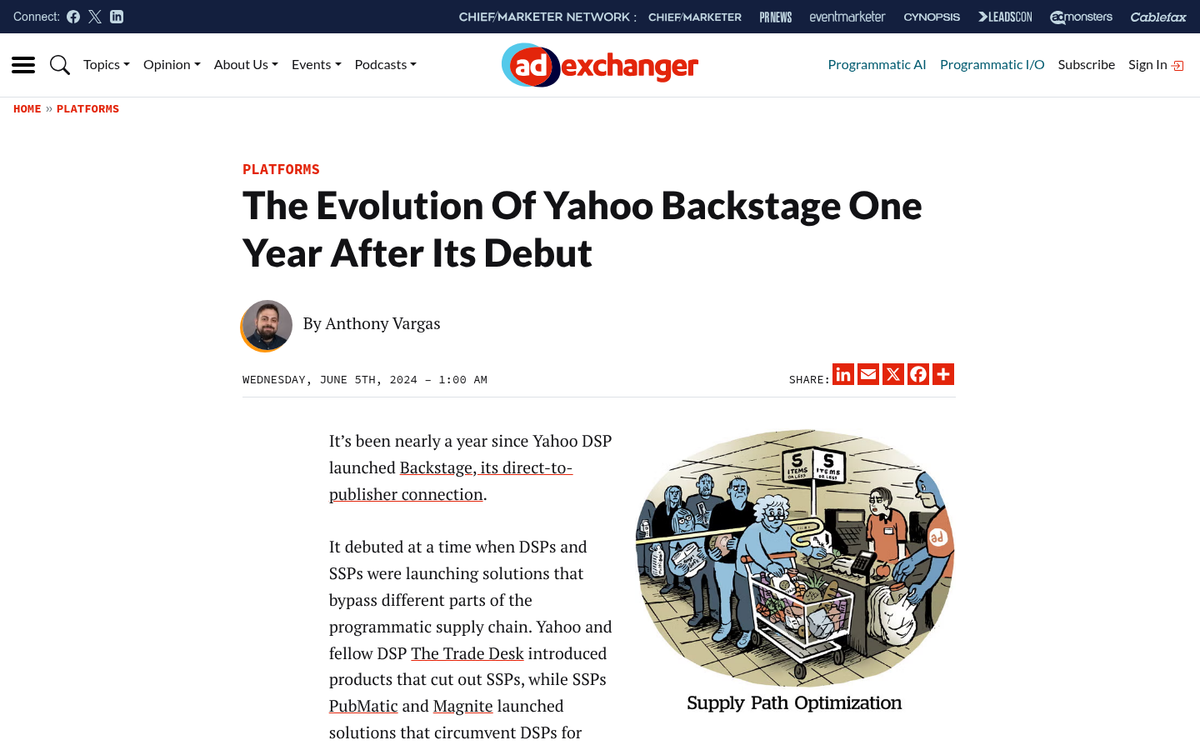
If you're coming back to this topic after a few years away, a lot has changed. Let's quickly recap how we got here.
Yahoo and AOL were, as you probably know, once-dominant internet companies. Both struggled after the dot-com bubble and limped through the 2000s and early 2010s. In 2015, Verizon acquired AOL, and shortly after made a deal to acquire Yahoo's core internet properties - a deal that closed at a reduced price after Yahoo disclosed a series of catastrophic data breaches affecting billions of accounts.
Verizon rolled both companies into a subsidiary called Oath, which later rebranded to Verizon Media. Under Verizon Media, Yahoo Gemini was the flagship advertising product, combining search and native ads across Yahoo, AOL, HuffPost, TechCrunch, Engadget, Tumblr, and other owned properties.
Then in 2021, things shifted again. Verizon sold its media assets - including Yahoo and AOL - to private equity firm Apollo Global Management, and the combined entity was rebranded simply as Yahoo. Verizon Media was gone. Oath was gone. And Yahoo Gemini, as a named product, was eventually sunset and folded into what is now the Yahoo DSP (Demand-Side Platform) and Yahoo Advertising, the unified ad platform that exists today.
So if you've been searching for "Yahoo Gemini" and finding broken links and confusing documentation, that's why.
What Is Yahoo Advertising Today?
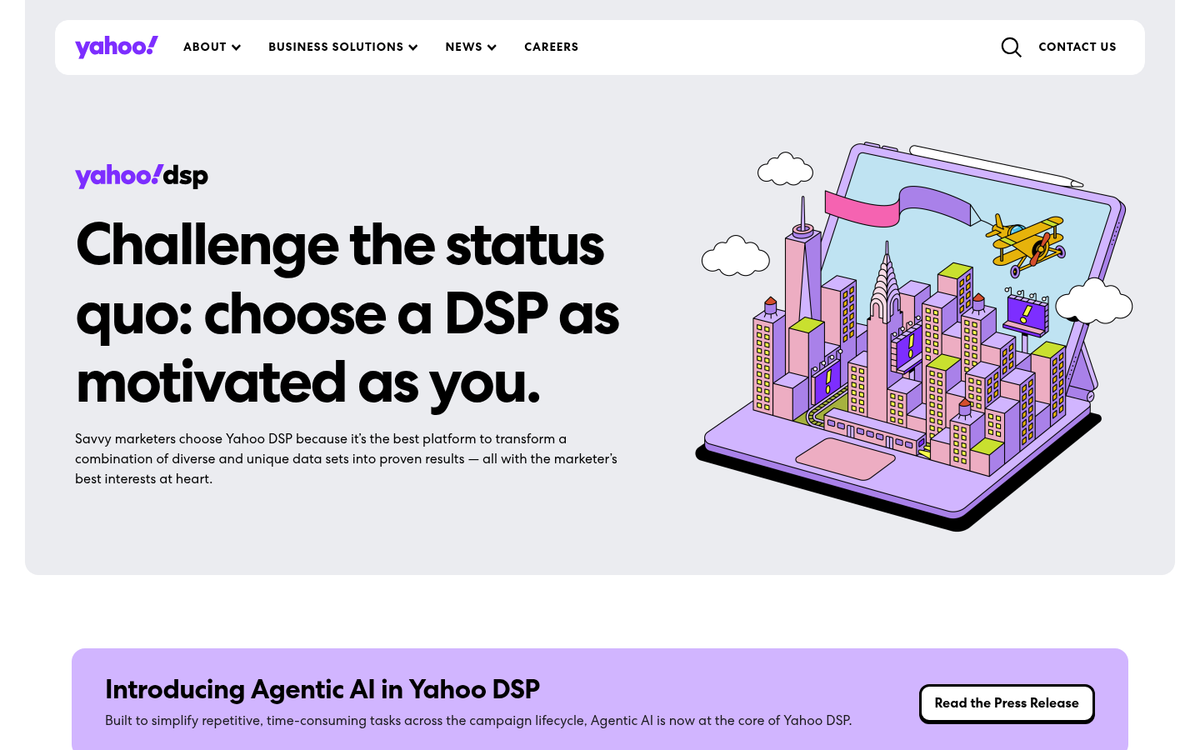
Today, Yahoo operates its ad platform under the Yahoo Advertising umbrella, which includes the Yahoo DSP - a programmatic demand-side platform - as well as native, search, and display advertising options across its owned and operated properties.
The core inventory Yahoo can offer advertisers still includes Yahoo Search, Yahoo Mail, Yahoo News, Yahoo Finance, Yahoo Sports, and Yahoo Entertainment. These are genuinely high-traffic properties. Yahoo Finance in particular remains one of the most-visited financial news sites on the internet, and Yahoo Mail still has a surprisingly large user base. The original Gemini claim of over 1 billion monthly active users across properties has held roughly true, though the competitive landscape has obviously shifted dramatically.
The Yahoo DSP, meanwhile, gives advertisers access to programmatic inventory well beyond Yahoo's owned properties - reaching across the open web through real-time bidding. This is a meaningful evolution from the old Gemini model, which was specifically not an ad exchange and only offered access to Oath/Verizon-owned properties. Today's Yahoo advertising product is both a premium publisher network and a programmatic platform, which makes it considerably more flexible. Advertisers looking to understand how ad networks compare for different business types may find Yahoo's hybrid model worth evaluating alongside other options.
What About the Microsoft and Bing Relationship?

This is where things get interesting in 2026. The long-standing search partnership between Yahoo and Microsoft has continued in various forms, though the specifics of how ad revenue is split and who serves what ads has been renegotiated multiple times over the years.
For practical purposes as an advertiser: Microsoft Advertising (formerly Bing Ads) and Yahoo Advertising are separate platforms. You manage them independently. There is some audience overlap given Yahoo Search still partly relies on Bing's search index in certain markets, but the ad platforms themselves are not linked, and running campaigns on one does not automatically extend to the other.
If you're running search ads, it's still worth considering Microsoft Advertising separately - particularly given Microsoft's heavy investment in AI-powered search through its Copilot integration, which has meaningfully increased Bing's visibility and usage since 2023.
Native Advertising: Still Yahoo's Core Strength
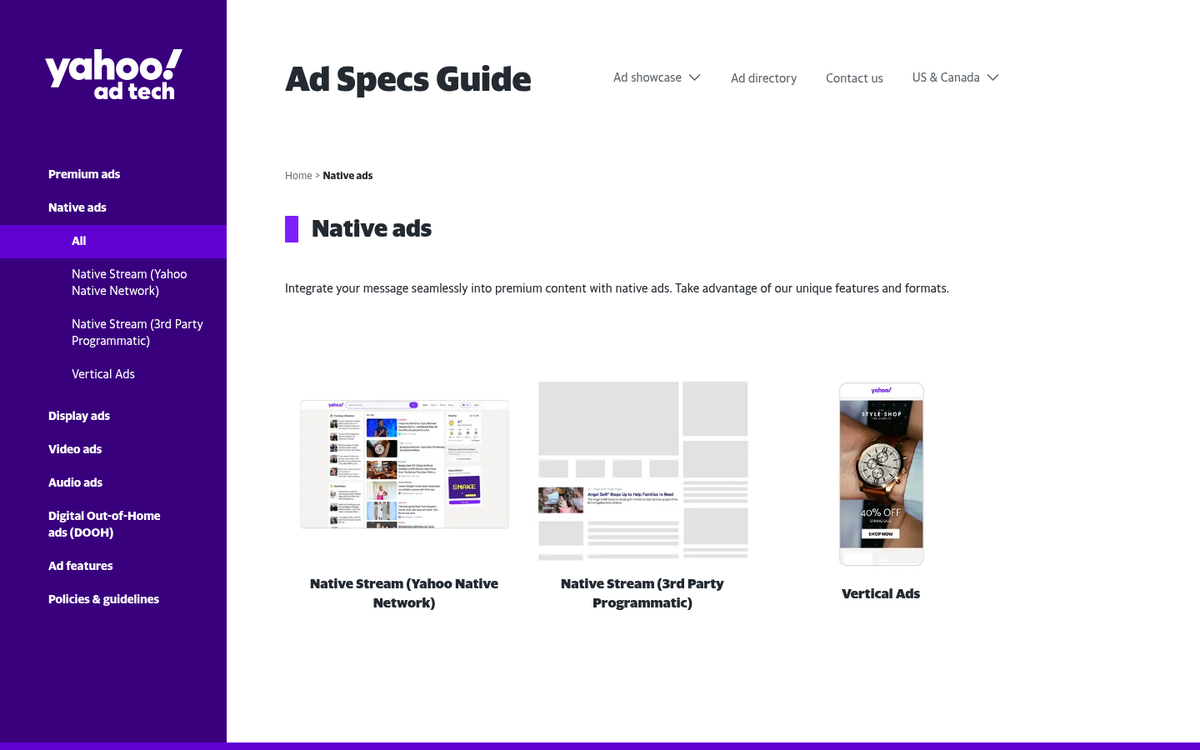
One thing that hasn't changed is Yahoo's emphasis on native advertising - ads designed to blend naturally into editorial content rather than interrupt it. This was a cornerstone of Gemini's pitch back in 2014, and it remains a key differentiator for Yahoo's ad products today.
The logic behind native holds up well. A Sharethrough study found people were 25% more likely to look at native ads than banner ads and viewed them 53% more frequently. Display advertising has continued its long decline - banner blindness is near-total for most audiences, and ad blocker adoption has only grown. Native ads, sponsored content, and in-feed placements continue to outperform traditional display in most head-to-head comparisons. For a closer look at how these formats stack up, comparing PPC and PPM ad types can offer useful context.
Yahoo's inventory across Yahoo News, Yahoo Finance, and Yahoo Sports is well-suited to native placements, particularly for brands in finance, lifestyle, sports betting, health, and consumer products. If your target audience skews toward 35-65 year olds in Tier 1 markets - the US, UK, and France account for over 50% of Verizon Media's former traffic base, and that demographic composition has remained relatively stable - Yahoo's properties are worth taking seriously.
How Does Yahoo Advertising Stack Up in 2026?
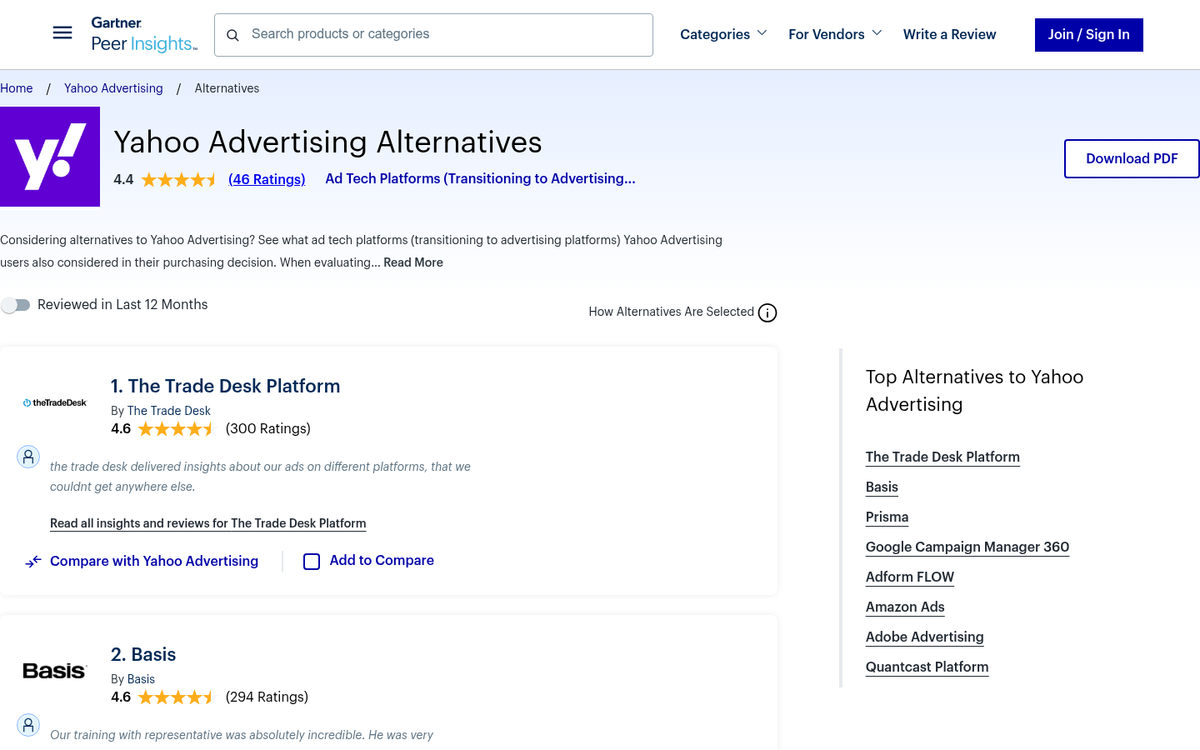
Compared to Google and Meta, Yahoo is still third-tier in terms of raw scale and platform sophistication. That's just reality. Google dominates search intent. Meta dominates social targeting. Neither of those things has changed.
But here's where Yahoo can still make a case for itself:
Lower CPCs. Historically, Yahoo and Bing have offered lower cost-per-click than Google, sometimes significantly so. That dynamic still holds in many verticals. Less competition for the same keywords means your budget stretches further, even if the absolute volume is lower.
Unique audience access. Yahoo Finance's audience of engaged, higher-income users interested in financial news and investing is genuinely valuable and not easily replicated on other platforms. Same goes for Yahoo Sports and the fantasy sports audience. If your product aligns with these contexts, Yahoo's contextual targeting can be highly effective.
The Yahoo DSP for programmatic. If you're running programmatic display or video campaigns, the Yahoo DSP gives you another credible option alongside Google DV360 and The Trade Desk. It's not the market leader, but it's a real platform with real inventory. You can also explore the best video ad networks to compare your options.
Less crowded. Fewer advertisers actively managing Yahoo campaigns means less auction competition, which translates to better placement at lower costs if you're willing to put in the work most advertisers skip.
Setting Up Yahoo Advertising Campaigns in 2026

The setup process has been streamlined compared to the old Gemini interface. You'll want to head to advertising.yahoo.com to access the current platform. If you have old Yahoo account credentials from the Gemini era, you may need to create a fresh account or go through a migration process depending on how long ago you last logged in.
From the dashboard, campaign creation follows a familiar flow:
Campaign objective first. Yahoo now follows the same objective-based campaign structure common across modern ad platforms - choose from awareness, consideration, or conversion objectives before building out your ad sets.
Audience and targeting. You have access to keyword targeting for search, contextual targeting for native placements, demographic and interest targeting, and geographic targeting down to metro area or radius. Device targeting remains available, and you can separate mobile browser, mobile app, desktop, and tablet traffic - a granular control that was a selling point of Gemini and has been maintained.
Ad formats. Current formats include native image ads, native video, sponsored content, search ads, display banners, and mail ads within Yahoo Mail. If you're running video, Yahoo's programmatic video inventory through the DSP is worth exploring.
Budget and bidding. You can set target CPC or CPM, daily and total campaign budgets, scheduling, and start/end dates. The minimum deposit to get campaigns running has changed over time, so check current requirements on the platform directly.
Importing from Google. Yahoo has maintained the ability to import campaign data from Google Ads, which makes testing Yahoo alongside your existing Google campaigns relatively low-friction. It's a useful feature if you want to run a parallel test without rebuilding everything from scratch.
Should You Be Running Yahoo Ads in 2026?
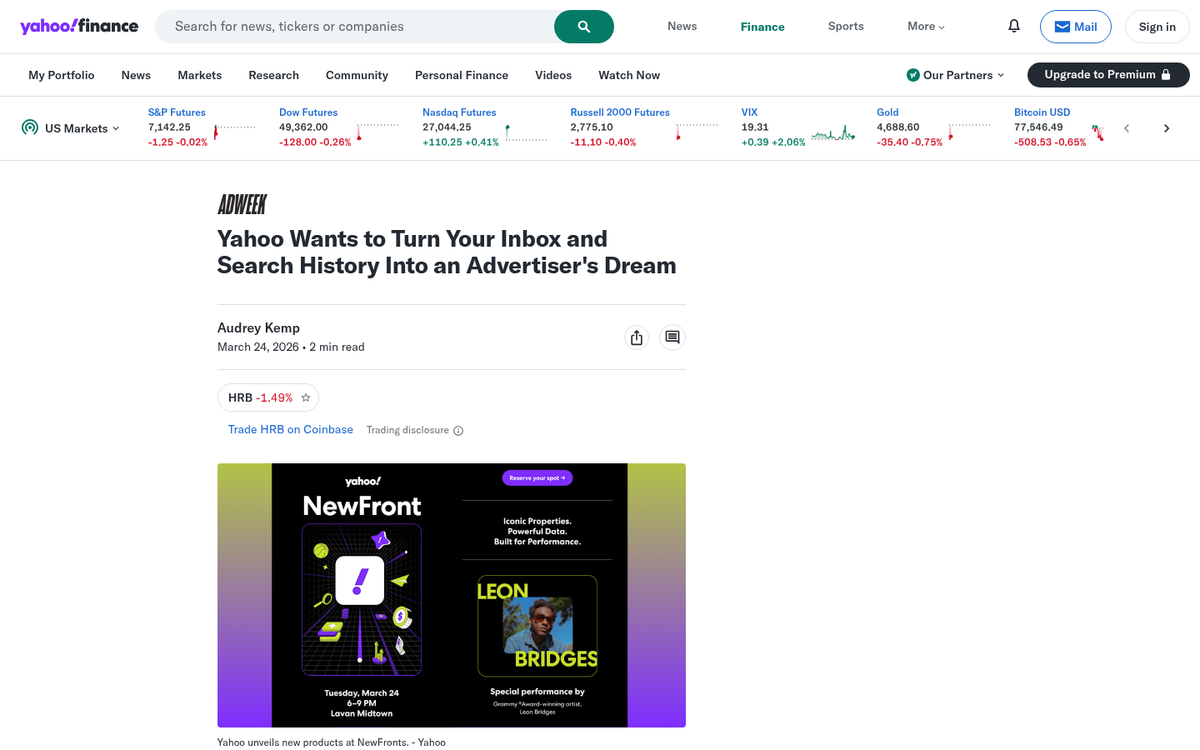
Honestly? It depends on your situation, but the answer is more often yes, test it than it used to be.
If you're already maxing out your Google and Meta budgets and looking for incremental reach, Yahoo is a legitimate next step. If you're in a vertical well-matched to Yahoo's audience - finance, sports, news, lifestyle - it deserves a serious look. If you're running programmatic campaigns and not currently using the Yahoo DSP as one of your demand sources, that's a gap worth evaluating.
If you're a small business with a limited budget still finding your footing on Google, Yahoo probably isn't where you start. Master the dominant platforms first, then diversify. What to do when your AdWords ad is limited by your budget is a good place to start before expanding into secondary networks.
The platform has had its share of rebrands and corporate chaos, but in 2026 Yahoo Advertising is a more coherent and capable product than it was in the Gemini years. It's not glamorous, it won't generate the conference keynote buzz that Meta AI campaigns or Google's Performance Max will, but for the right advertiser, understanding your ideal cost per action across platforms is what separates a solid ROI from wasted spend.
Have you run campaigns through Yahoo Advertising recently? I'd love to hear how it's performing for you - drop your experience in the comments, especially if you've compared it head-to-head against Google or Microsoft Advertising.